
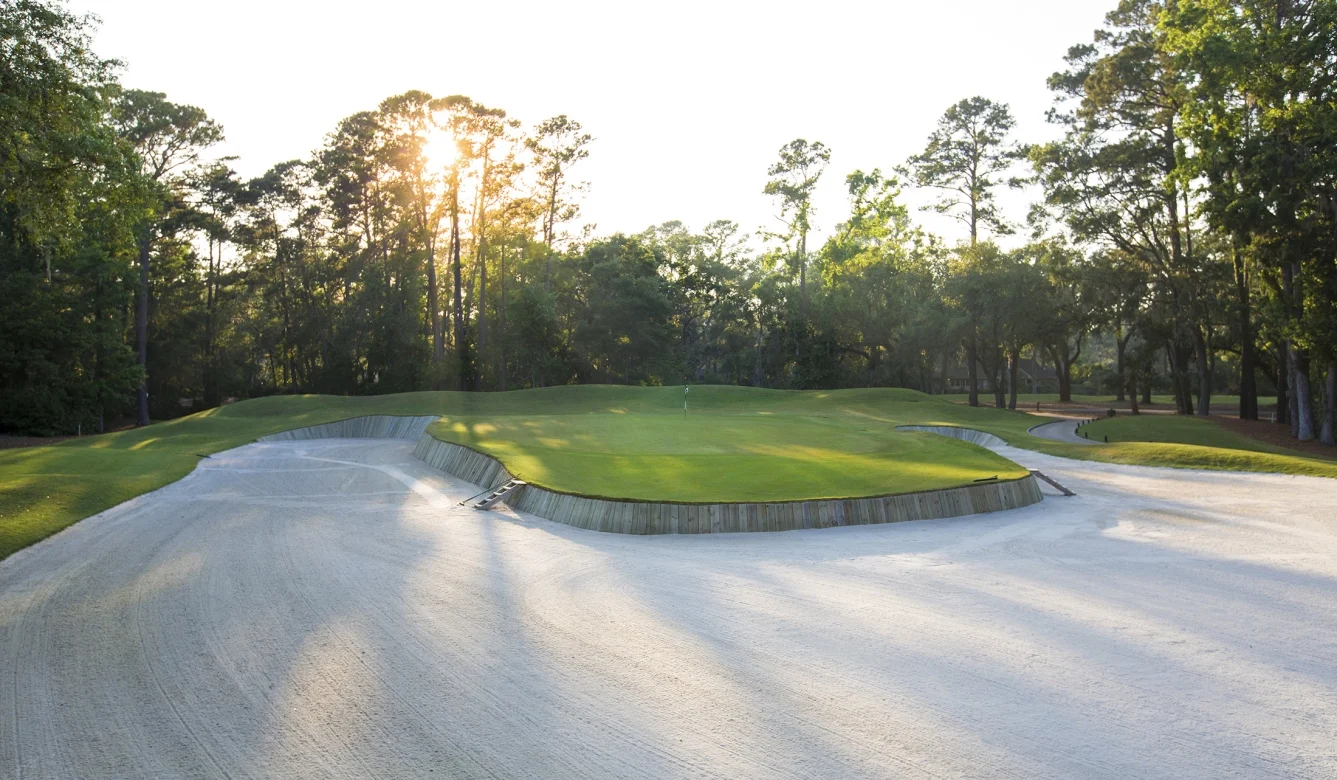
CR&J Final Rating: 55/80 (Very Good)
The dueling sibling course of Atlantic Dunes and the third of the Sea Pines collection on Hilton Head Island is Heron Point, a Pete Dye reconstruction opened in 2007, which was a reconstruction of the Sea Pines’ Sea March course, designed by none other than 1964 Pete Dye.
This course was reviewed as part of a broader Journal entry exploring public golf courses in the Hilton Head area.
Pete Dye’s design language changed considerably from 1964 to 2007, and the 2007 version of the course probably is more recognizably Pete Dye. Heron Point delivers all the small pot bunkers, long skinny bunkers, random bunkers, visual clutter, and railroad ties you’d normally expect. Heron Point was in similar condition as Atlantic Dunes, but had a distinctly different character, reflecting Dye’s bold design language.
What Works: Pete Dye kind of always works, particularly in his more modern form. Like Atlantic Dunes, Pete was kind of boxed in by his prior work here but adapted it into some inventive hole designs that were distinctively his own. A few of the holes remind me of TPC Sawgrass, just with a more lowcountry vibe. The first and eighteenth could be put right into TPC Sawgrass or Dye Fore and feel like they belong. However, unlike any of the other Dye courses I’ve played, Pete used a ton of hard doglegs at Heron Point, likely boxed in by his early shot-shaping dominant course design. The fifth, ninth, eleventh, and seventeenth all elbow at more than 50-degrees. This creates a hybrid of the two Pete Dyes; one that forces some shot shaping to occur, but also has to deal with the typical Dye hazards and traps.
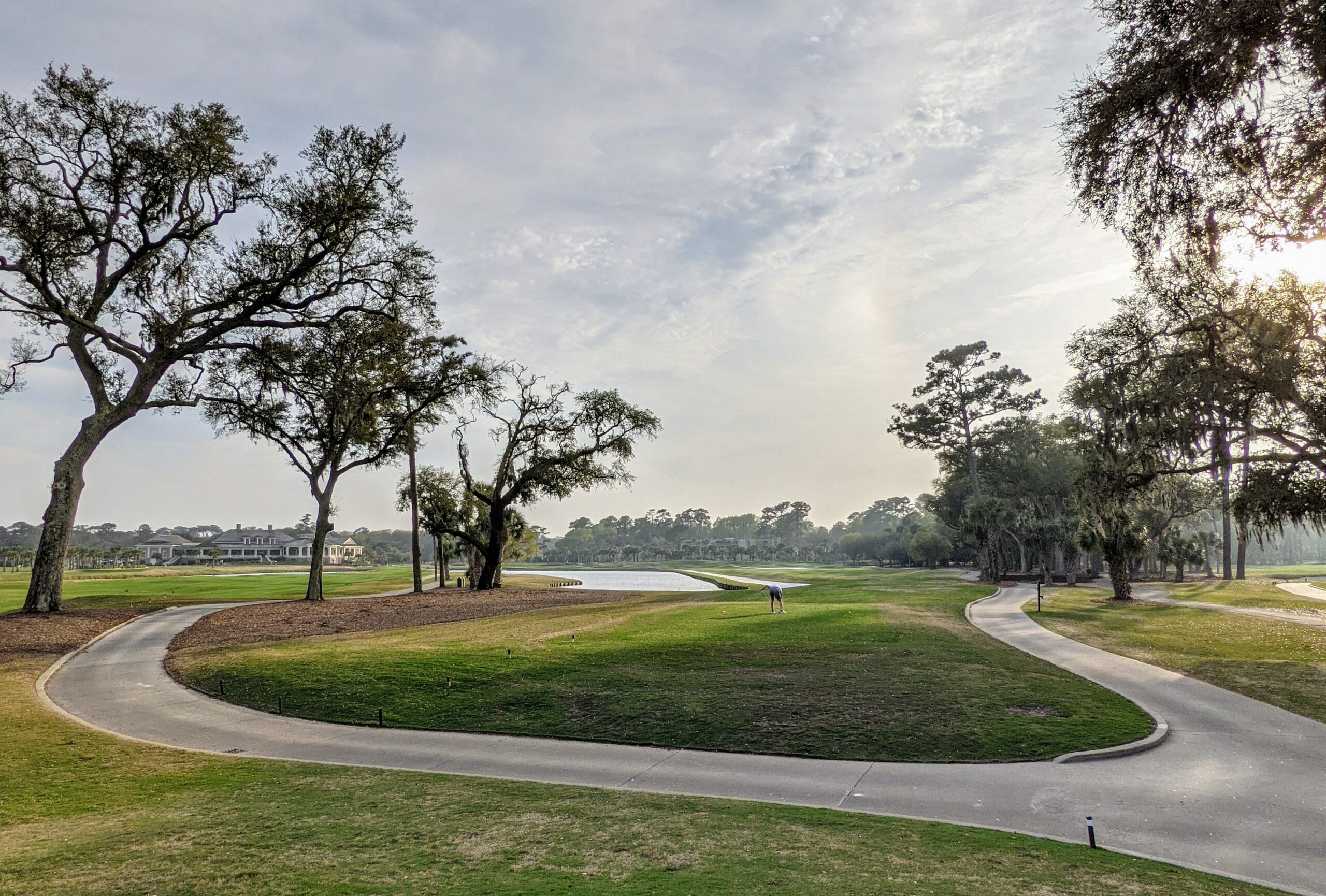
Best Hole: The massively redesigned eighteenth hole takes best hole at Heron Point, as I am a sucker for a short, option-laden par-4 hole. This one is under 400-yards and works its way around a lake to the left, with a classic Pete Dye flat-bottom skinny bunker between the fairway and the lake that ends right at the end of the driving area. This hole, just a two-option hole is just Pete Dye executing good golf design in a simplistic way.
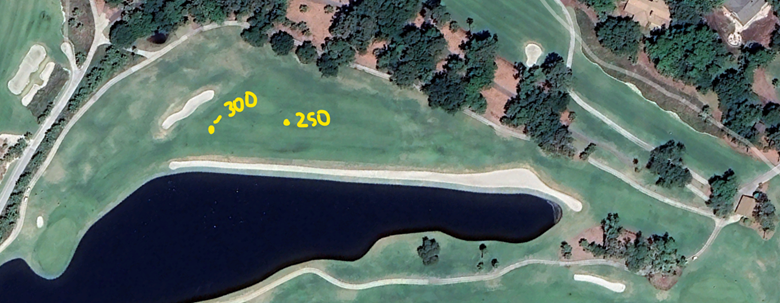
Pete gives a reasonable option to use driver but pinches the landing area between the angling bunkers to just 25 or so yards, narrowing by the yard. However, the reward might be worth it, because if the player succeeds, the second shot is played from a great angle right up the green, and the second shot will not have to travel over the water hazard on its flight to the green. The second option from the tee is to hit less than driver, which plays into a football field of width behind the angling bunker. But if the fairway is hit, a longer approach awaits from a cornering angle that makes the green much shallower and requires some water carry. The hole is a masterclass on simple, effective course design.
Interesting Hole: I have got to be honest, I’m not really sure what Dye was thinking on this mid-length par-5. First the hole requires you to navigate a very short, forced layup into a tight area of fairway. The tee shot tests distance control with a fairway wood more than direction. Then, the hole aggressively turns at around a 100-degree angle to the left leaving another shot of the same distance into the green.
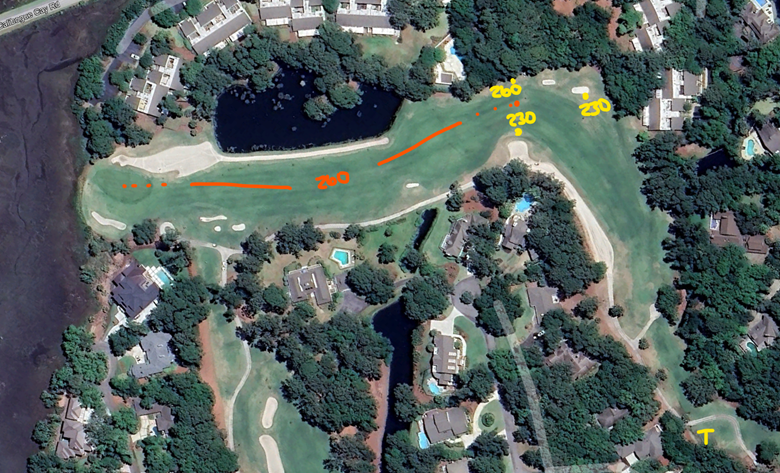
I am not a huge fan of forced-layup par-5s, but I think it is okay sometimes; this one feels particularly penal and disorienting due to the nose of that inside bunker choking any depth out of the fairway. This was a unique and memorable par-5, but perhaps not the most rewarding; the best way to play this hole is probably with three irons.
Limitations: Much like Atlantic Dunes, the limitations that Dye faced when rebuilding this course was that his canvas had been boxed in by houses from the previous routing, leaving little room for adjustments. I’d imagine he may have made a few different decisions if he were truly rebuilding the course on a blank canvas. Where he had more room, he did make significant changes on the first and eighteenth holes that are less surrounded by residential real estate. Comparing Heron Point with Atlantic Dunes is inevitable due to them sharing the same property and clubhouse, so I will partake. Heron Point is less aesthetic than Atlantic Dunes, and the holes are significantly less distinctive. The holes that really stand out in my mind are the first and second, fifth and sixth, ninth, eleventh, and eighteenth. Many of the other holes get lost inside my mind.
Final Thoughts: Pete Dye being Pete Dye, the course is challenging and has a lot of that Pete Dye character that you would expect. Heron Point has a distinct and different character than Atlantic Dunes and Harbour Town, due to that difference in Dye’s modern design language, and represents a moderately fun round with a few questionable design decisions. Overall, if I were staying at Sea Pines, I would play Heron Point, but I would probably pass it up on a non-Sea Pines trip, just due to the abundance of golf in the area. That said, Heron Point is a legitimate, modern Pete Dye design, and is comfortably in the best five or six courses, public or private, on Hilton Head Island.
CR&J’s Final Rating
of Heron Point:
Shot Options: 7; Challenge: 7; Layout Variety: 7; Distinctiveness: 5; Aesthetics: 6; Conditioning: 8; Character: 8; Fun: 7.
Total: 55/80 (Very Good)