
Time to Read:
|
This Ballyhack Golf Club course review is based on a round played in May of 2026.
Ballyhack Golf Club is a private course in Roanoke, VA.
CR&J’s Final Rating: 68/80 (Top 200 U.S.)
Drama. In golf literature, the word drama has become shorthand for topography that is unusual or demanding. Think: large swales, undulation, elevation change, ruggedness, or anything that makes a course visually difficult. We use words like “drama” or “theater” to describe those golf holes or golf courses.
But, properly understood, “drama” or “theater” is simply an act. It is one thing pretending to be another thing; a performance that asks you to believe the story it is telling. Ballyhack is drama. Ballyhack is the theater.
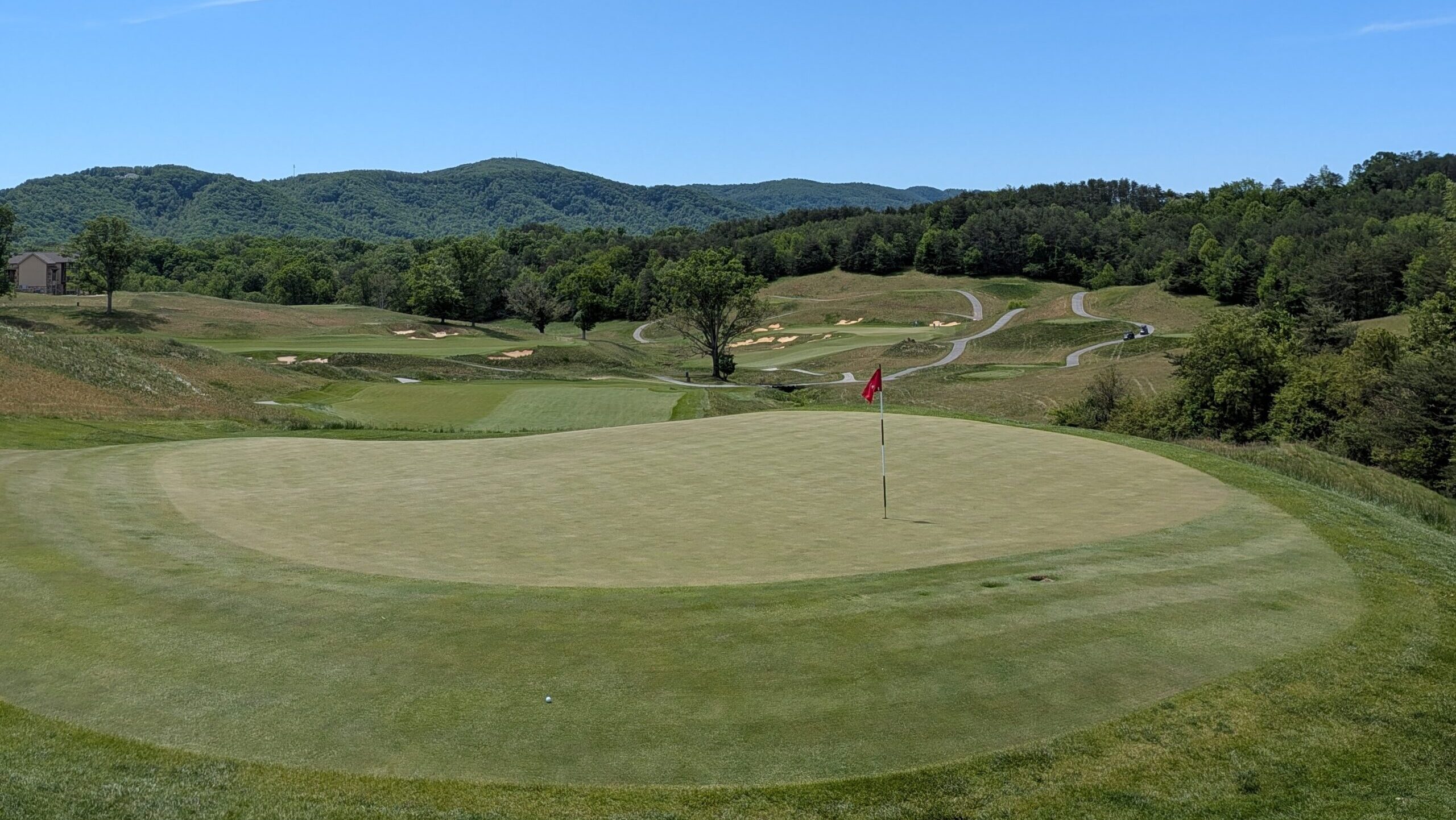
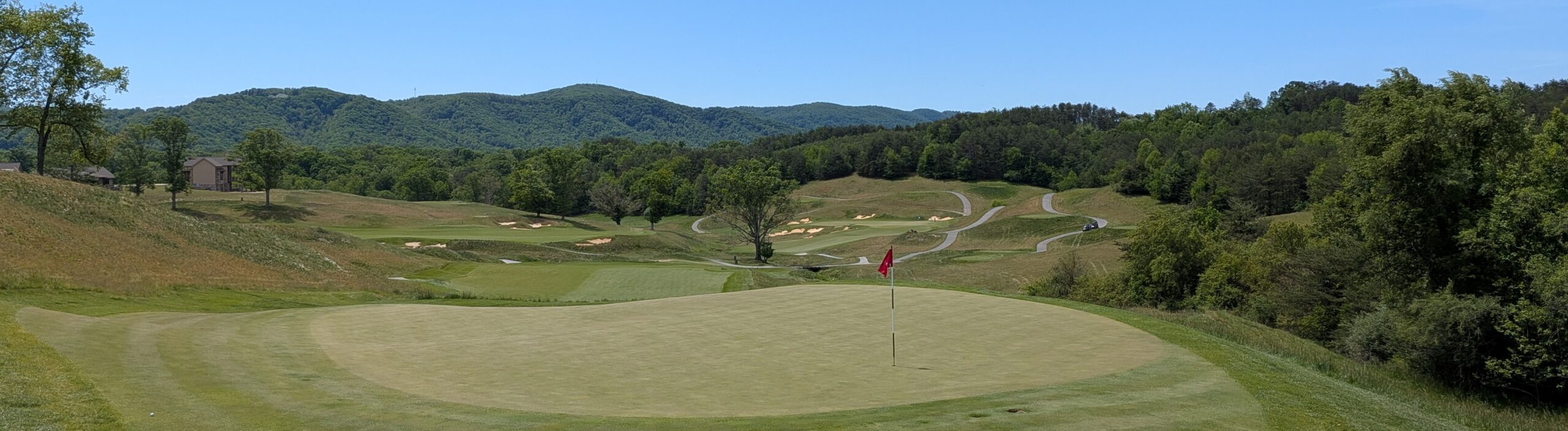
Ballyhack has a level of visual intimidation that few courses possess. The Lester George-designed Ballyhack opened in the late-2000s and appears from the moment you arrive on the property to be the embodiment of a double-bogey. Ballyhack is routed over the very hilly topography of Southwest Virginia, with the mountains of Appalachia surrounding from afar. The rugged bunkers, of which there are too many to count, and thick fescue create a gut feeling that this course may be asking more than you have to offer.
For some players, it will be. Ballyhack features tons of forced carries and fairways that turn to fescue in short order. However, for players under a 10-handicap or so (or whatever handicap folks get to where they become a bit immune to the forced carries), Ballyhack is actually very fair. Like, surprisingly fair. With generous fairways, excellent conditioning, and George’s thoughtful design, Ballyhack is simply theater; a great, playable and fun golf course pretending to be the toughest golf course you’ve ever seen.
Ballyhack’s costume is brutally scary, but underneath is a golf course begging you to be aggressive and play good golf.
As of this year’s edition of course rankings, Ballyhack has fallen out of Golf Digest’s Top-200 courses, but made the list for the first 10 courses out, effectively ranking 210th in the U.S. Other services generally agree, ranking Ballyhack as the fourth or fifth best course in Virginia. Naturally, I was excited to see if we could distinguish whether there were reasons that Ballyhack has fallen out of the Top-200.
What I found was quite the opposite. Fifteen years in, the newness has worn off, and that may have cost Ballyhack some momentum on the ranking lists. But the course itself remains one of the best, and most fun, in the country.
The First Tee
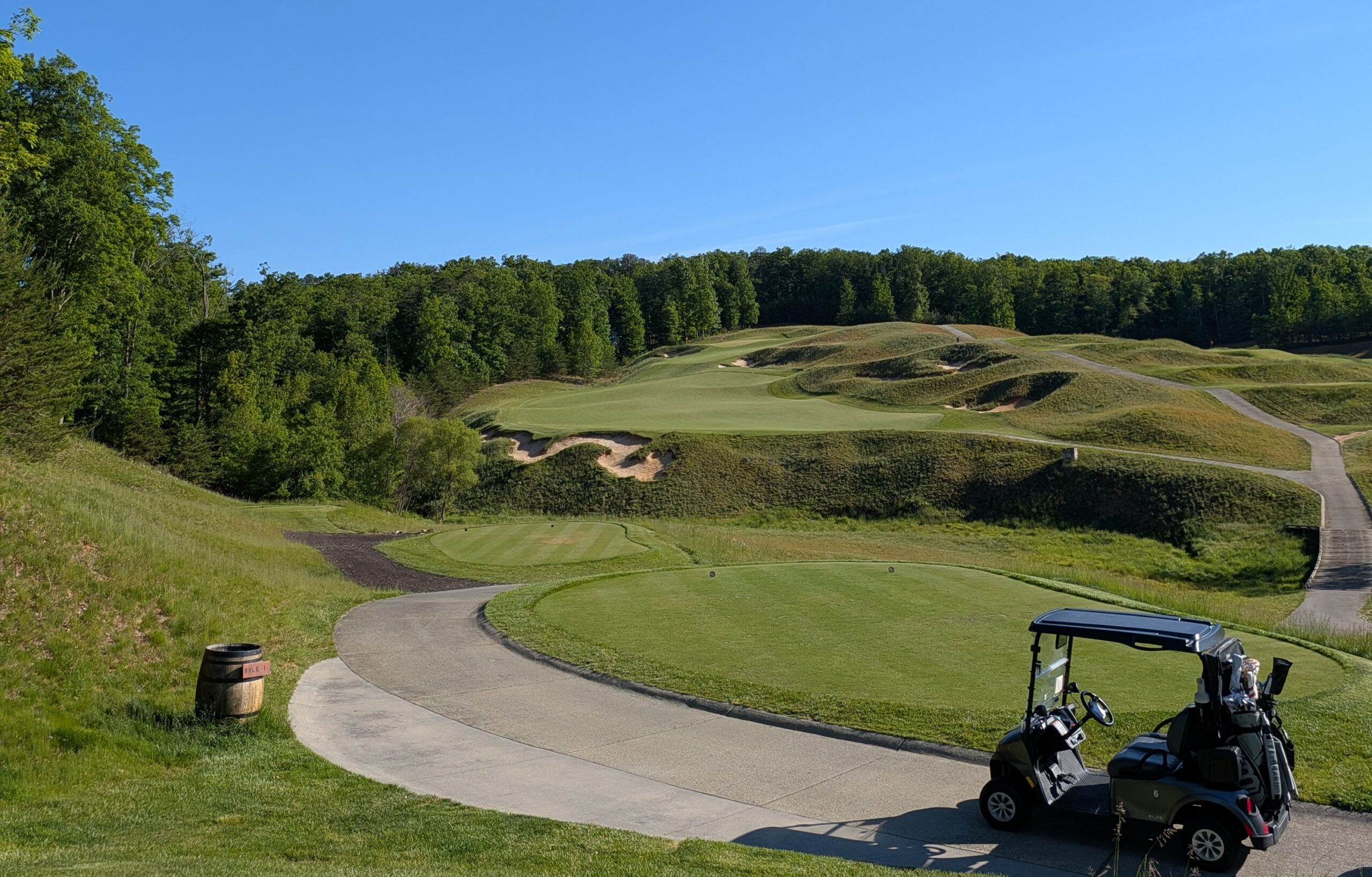
As I’ve commented before, there are very few good uphill holes in the world, especially as steep as the first. The first is a shorter par-4 that can be attacked with driver or something less off the tee. That tee shot plays moderately uphill to a fairway set into a wide, flattened part of a right-to-left slope. The fairway here is wide but little room exists to either side, with deep rough and bunkers right and certain death left.
The second shot plays massively uphill to a completely blind green. Some commenters think that this shot is a bit too difficult, but with a good drive, this shot is played with a short-iron or wedge. Those in the bunkers or weeds off the tee should consider taking the safest route possible. The green has a pretty significant false front on the right, which will repel balls back down the slope.
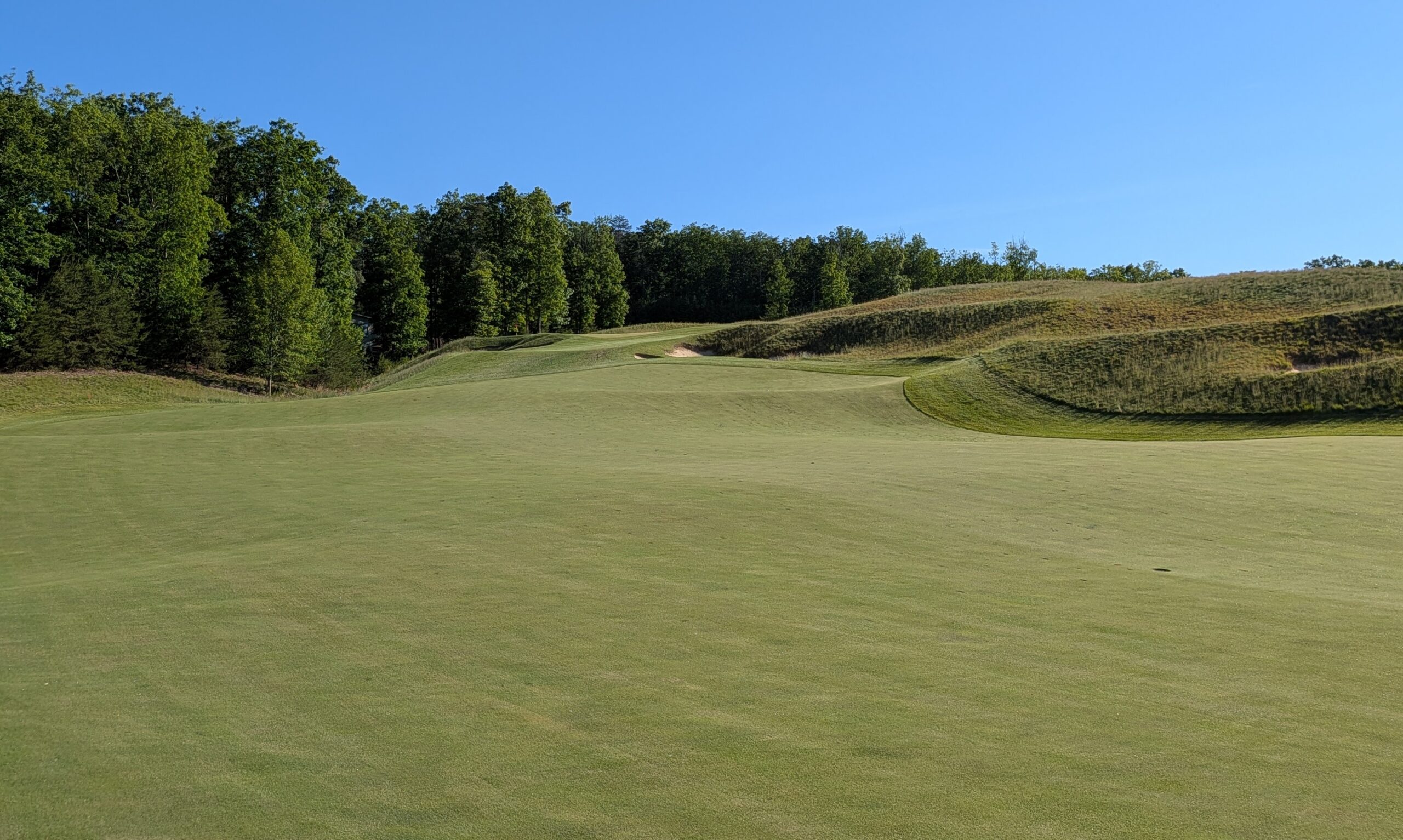
The elevation is well managed here. Nobody likes uphill golf holes, but this is a good one, with a visible drive and a short iron approach that keeps the hole playable despite its visual complexities.
That uphill climb immediately pays off for the tee shot at the second hole, the highest point on the front-nine of the property (and maybe the highest point overall). The view from the second tee is stunning. The second and fifth holes feature a conjoined fairway, separated by a few fairway bunkers. Incredibly, at one point, that fairway is uninterrupted and 228 yards wide.
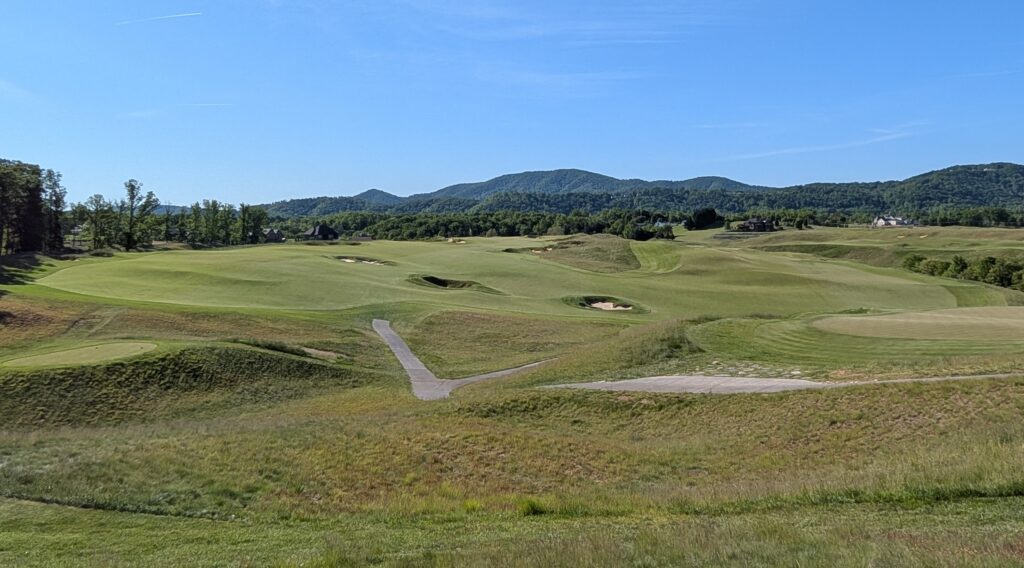
The second hole is a mid-length par-5 that should provide an early scoring opportunity, particularly given the options off the tee. The fairway is banked heavily from left to right and the only complication is a centerline bunker. Realistically, this is a double fairway hole with a centerline bunker as a disguise.
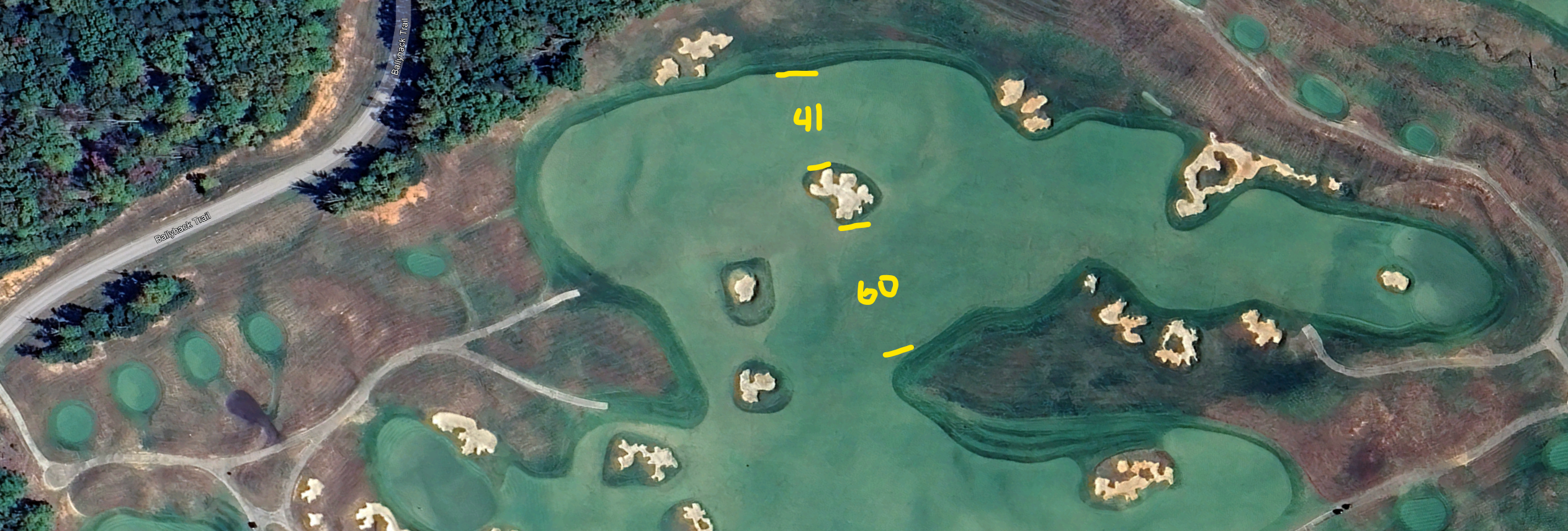
To the left of the centerline bunker, there is 41 yards of somewhat-flat width in which to play a tee shot. To the right, there is 60-yards, but the severity of the slope from left-to-right shrinks that landing area a bit. Meaning effectively, there are two equal sized, wide fairways both left and right of the centerline bunker.
The rest of the hole’s defense is basically the lion’s mouth bunker in front of the green. It’s almost as if George was trying to design a hole that was meant to be played from the edges: Off the tee, on the approach, and on the green, the center of the hole is the worst place to be.
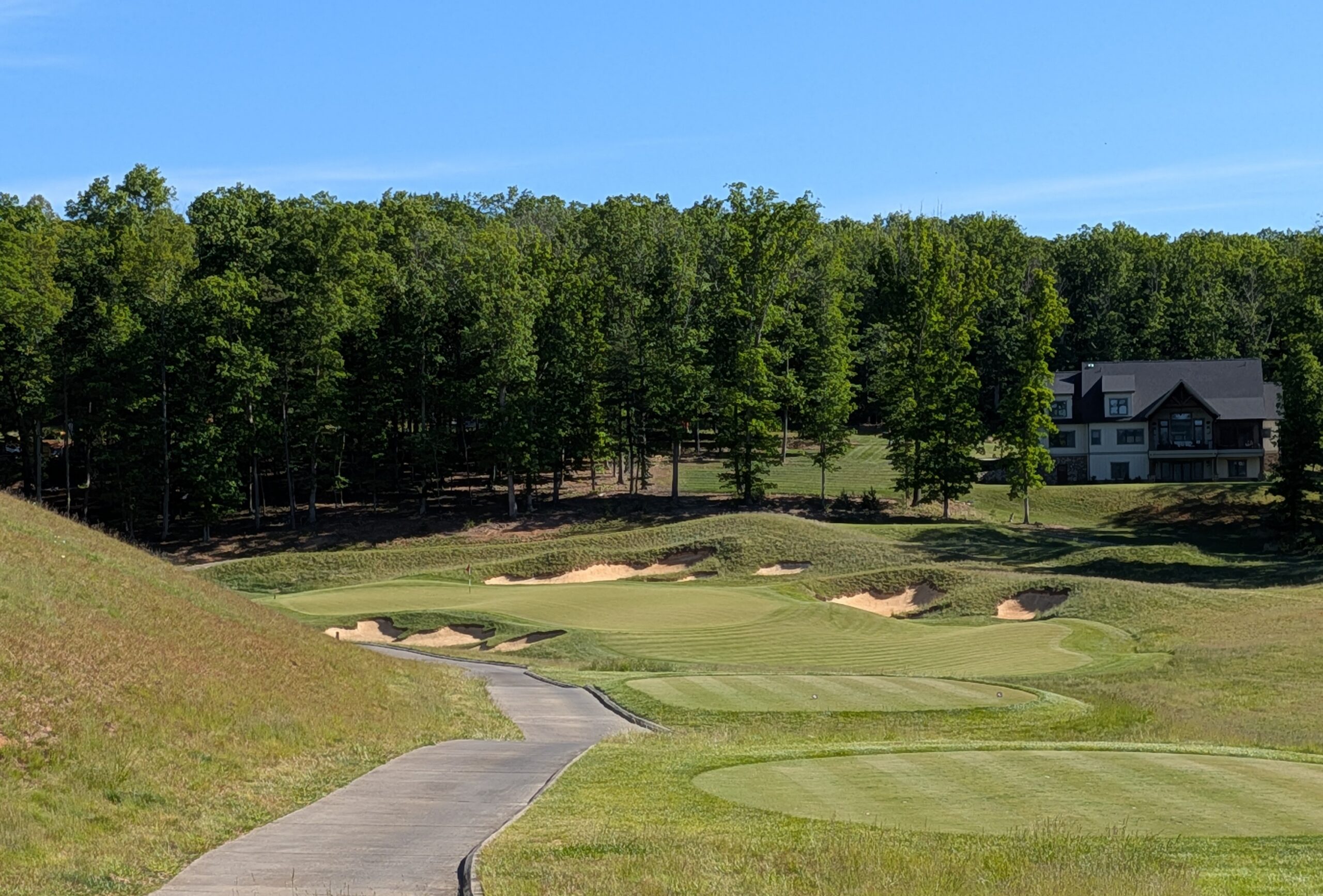
The third is a beautiful but very long par-3, playing over 250 yards from the longest tees. Somewhat hidden is a small stream that runs short of the green and encircles the green to the left. The putting surface is massive here but very tricky, as a relatively small portion is actually pin-able due to the severity of the slope. This is probably the most or second-most severe green at Ballyhack.
The fourth is a really fun hole with another centerline hazard, this time just rough, before the fairways rejoin in the landing area. The tee shot is blind and mundane; trusting the caddie is imperative here. The last bit of the fairway runs aggressively downhill. But once in the fairway, one of the most aesthetic approach shots on property opens up.
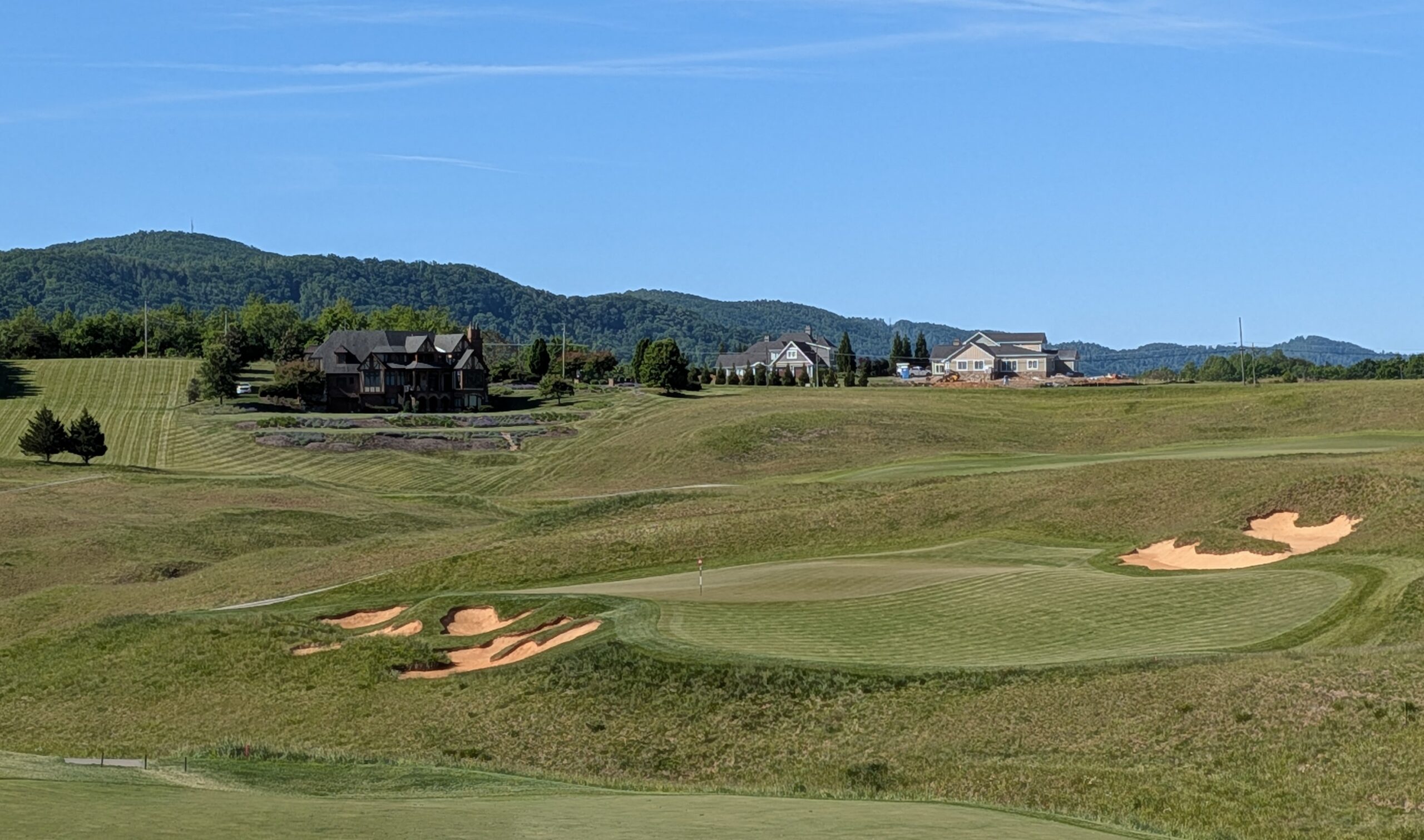
The fourth is a mid-length par-4 on the scorecard, but with a good drive, a short iron awaits to attack a well fortified green flattened into a back-to-front hillside. This was probably my favorite individual shot at Ballyhack.
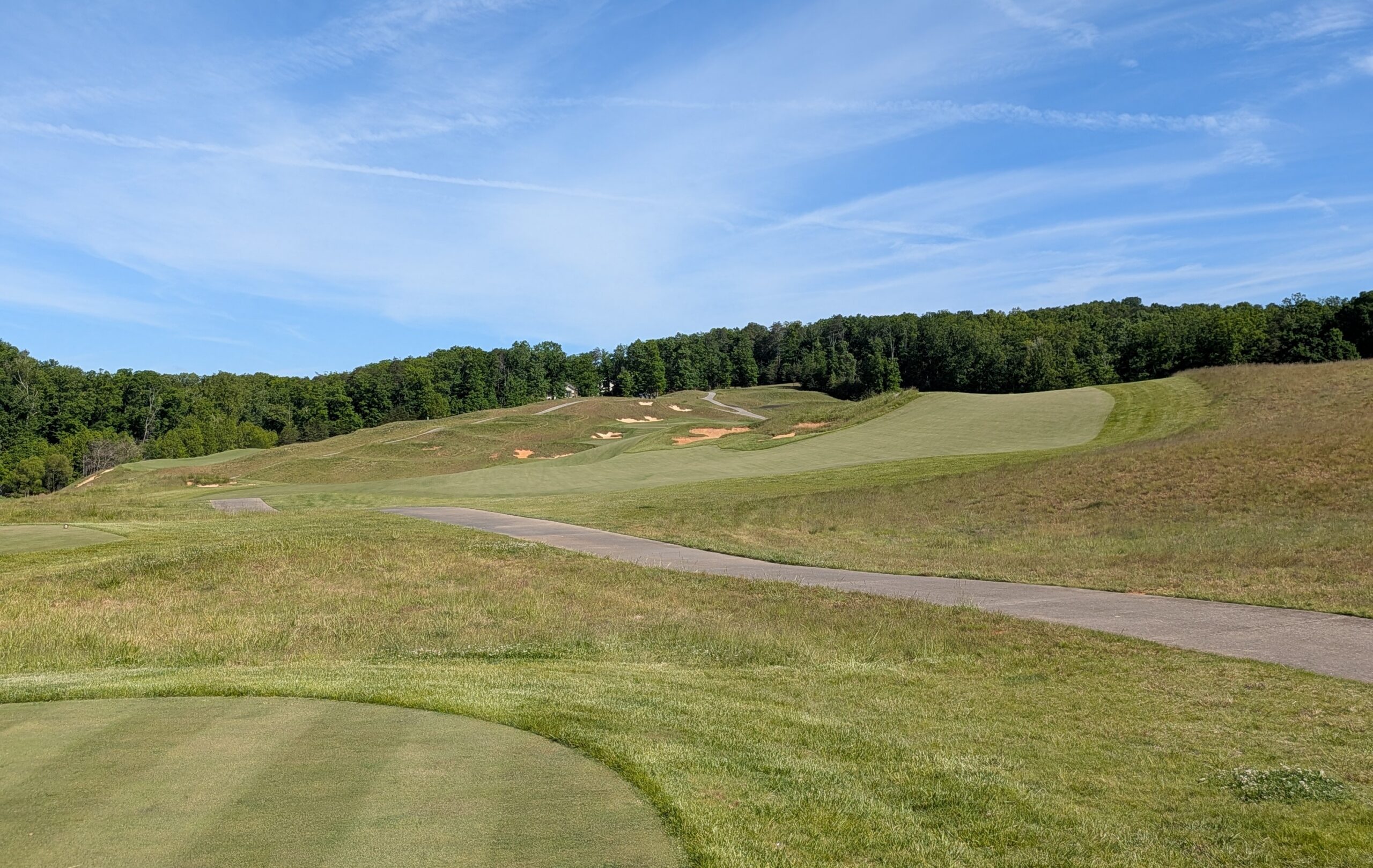
The fifth is another mid-length par-4 that plays back into the conjoined fairway from the second and way downhill on the tee shot just to come back up that hill on the approach to a well guarded green.
So far, Ballyhack has provided much of what it provides throughout the round: very wide fairways, large greens with plenty of internal undulation, slope, and swales, and some tall grass and sand to punish any wide misses. The sixth does the opposite.
The sixth is a drivable downhill par-4 that doglegs left to force a player to decide whether to take driver at the green or play something safe, and less, into the fairway.
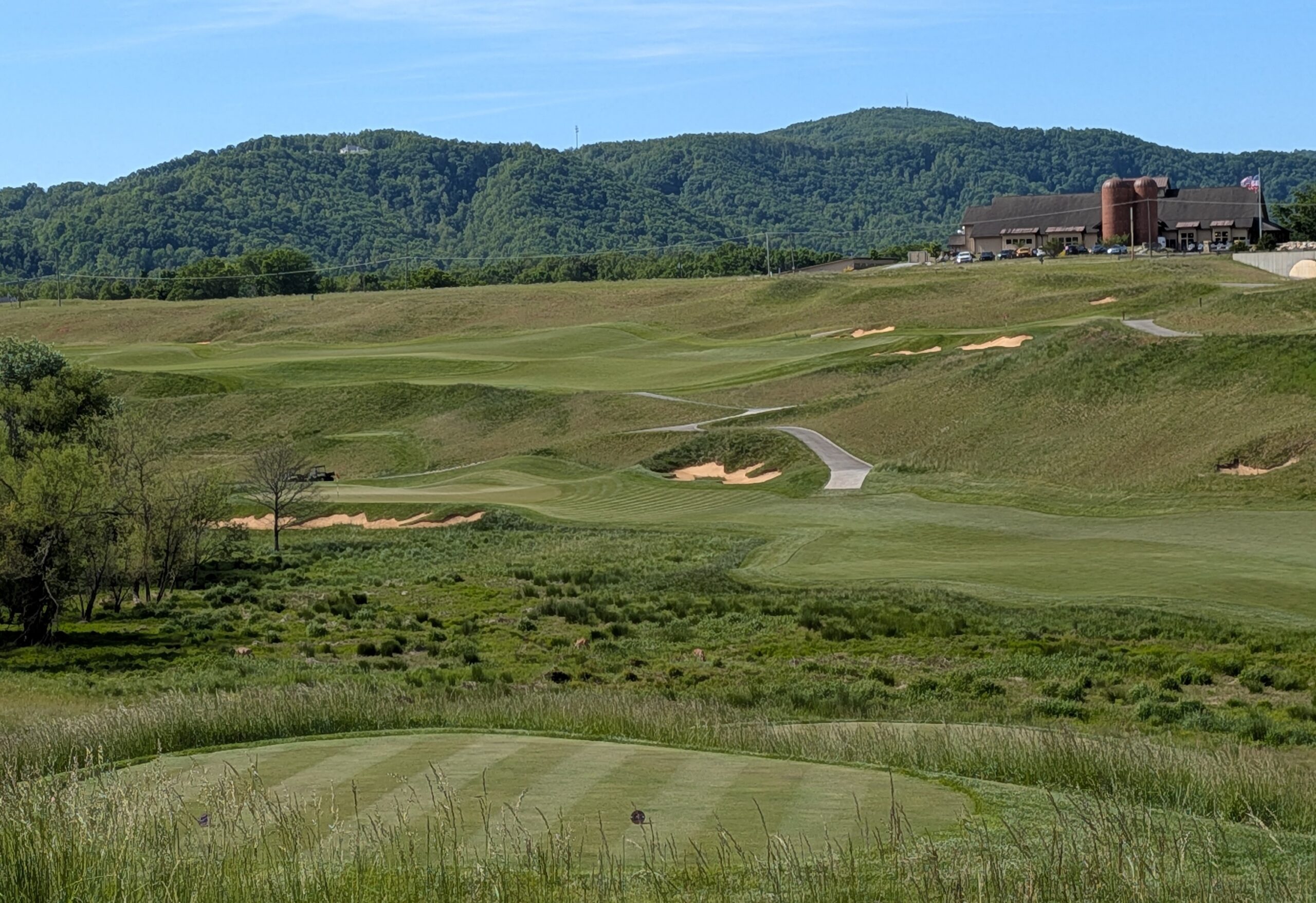
If driver is chosen, it must be accurate and long enough to at least get into the greenside bunker. Anything out to the right with driver will invariably be lost on the hillside. The green here is about half the size of many of the other greens at Ballyhack, and while this hole is slightly out of character for the course, I really enjoyed the opportunity to try and drive the green off the hillside.
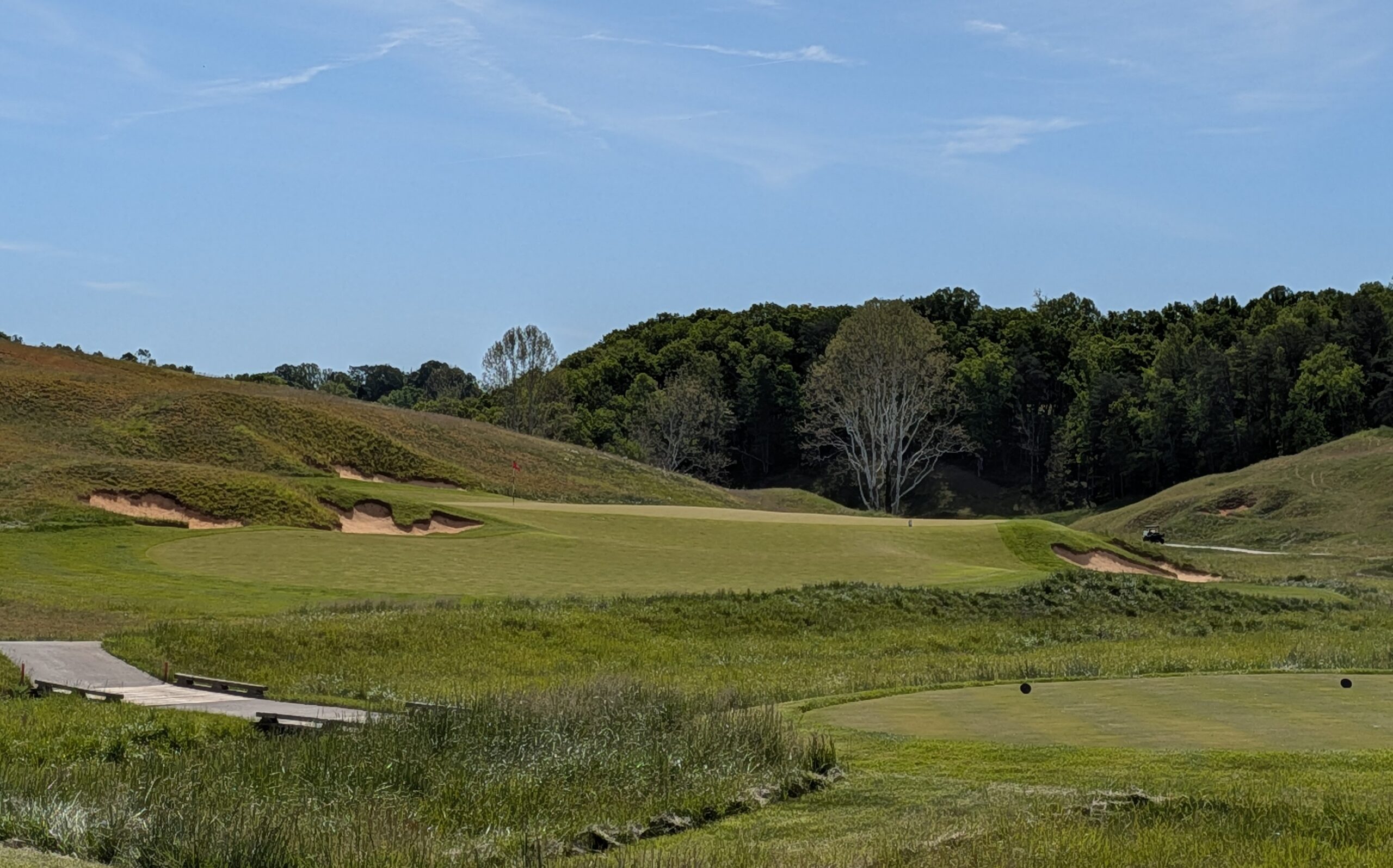
The seventh is a simple, mid length par-3 that connects to another option laden mid-length par-4 eighth hole. Both the seventh and the eighth sit in a valley between the fifth and ninth holes, and are the flattest holes at Ballyhack. Lester George clearly likes the concept of a double fairway. In the first nine holes at Ballyhack, the concept of a double or divided fairway appears on five of the holes. The eighth is perhaps the truest “double fairway” option, as the hole is rather cleanly bisected by a stream and accompanying native area.
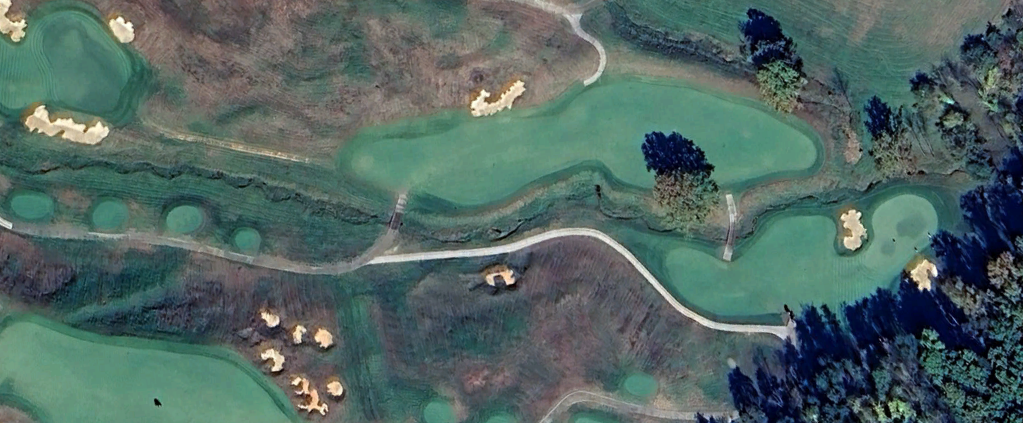
A player can choose the safer route out to the left, with minimal fairway bunkers and a wide, yet narrowing, landing area. The second shot is played from a worse angle, but the green is large enough to not worry too much about angular play.
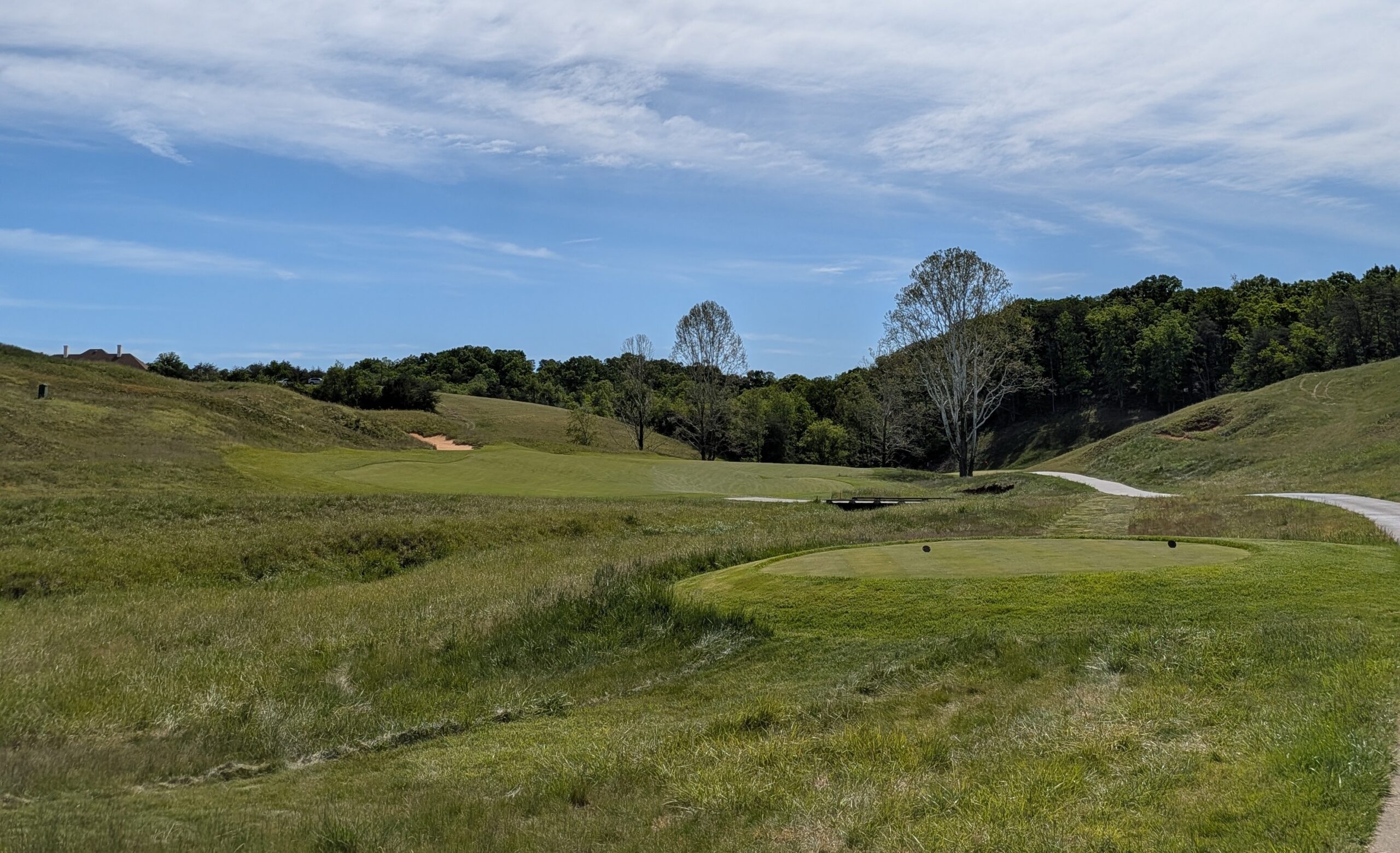
The other option is to go to the right of the large tree over the hill. There is an equally wide fairway over there that takes a bit more carry to get to, but creates a great angle and shorter shot into the hole. The caddies seemingly prefer anyone who has the length to take the right route. In two trips around Ballyhack, I tried both routes, and had similar results.
The ninth is a long par-5 that is likely the weakest hole at Ballyhack. The ninth plays along a ridge that sits above the front-9. A right miss here is guaranteed doom, and the fairway artificially narrows to an unacceptable width for driver to be played. This is essentially a forced layup, three shot par-5. I wasn’t the biggest fan of this hole, but the green is very interesting and features a two tier green where putting from the upper tier to the lower tier is basically impossible. Make sure to pick the right wedge.
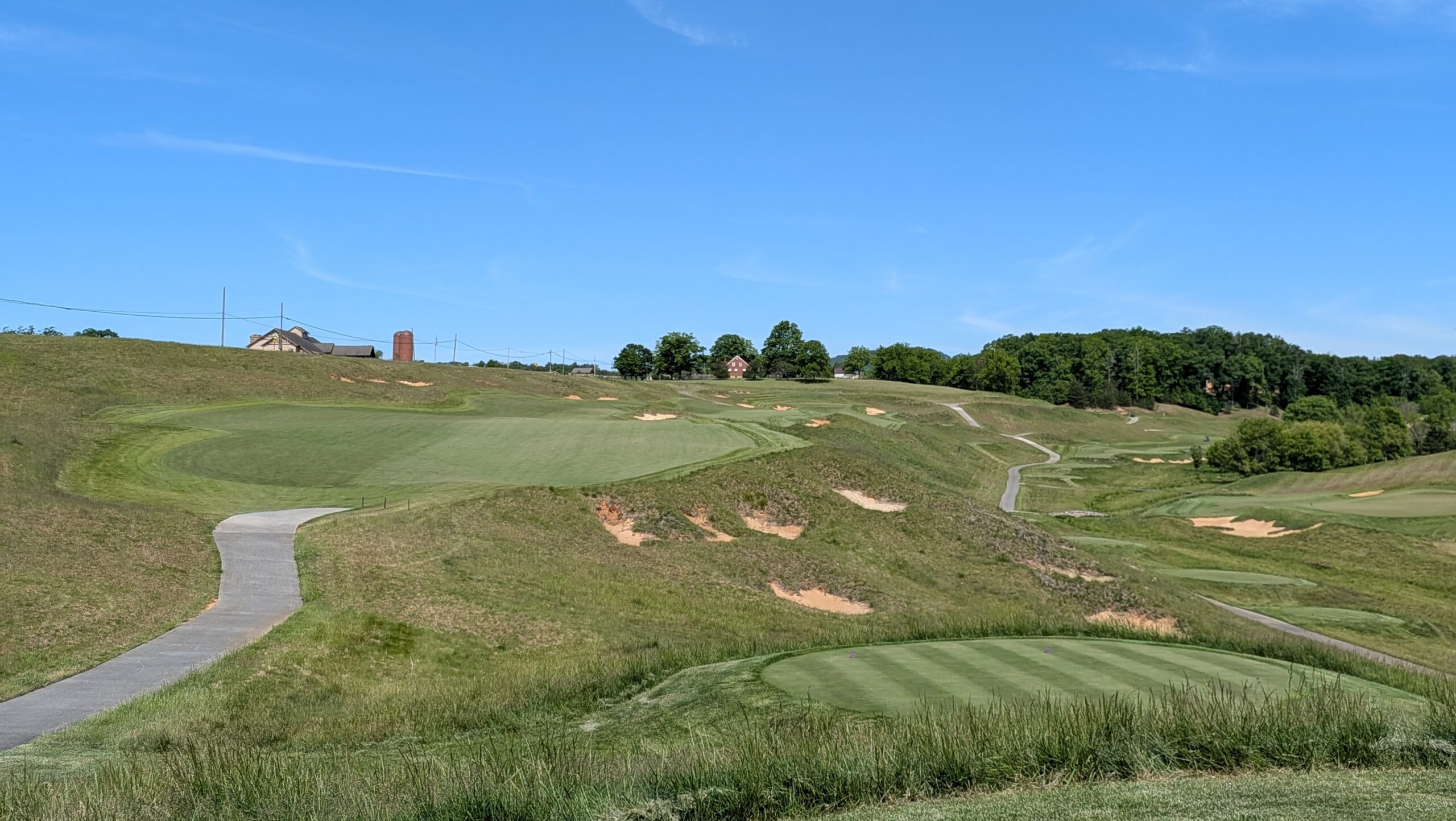
However, the ninth was not offensive enough to leave a sour taste in my mouth regarding the front nine. We played twice this day, and I found the front nine deeply enjoyable both times. Despite the complex appearance, this nine was more than playable, with plenty of width and thoughtful design. I hit every shot shape and most of the clubs in my bag. Ballyhack looks like it might be a gimmick, but this front nine is one I could regularly play and of which I would never grow tired.
Making the Turn
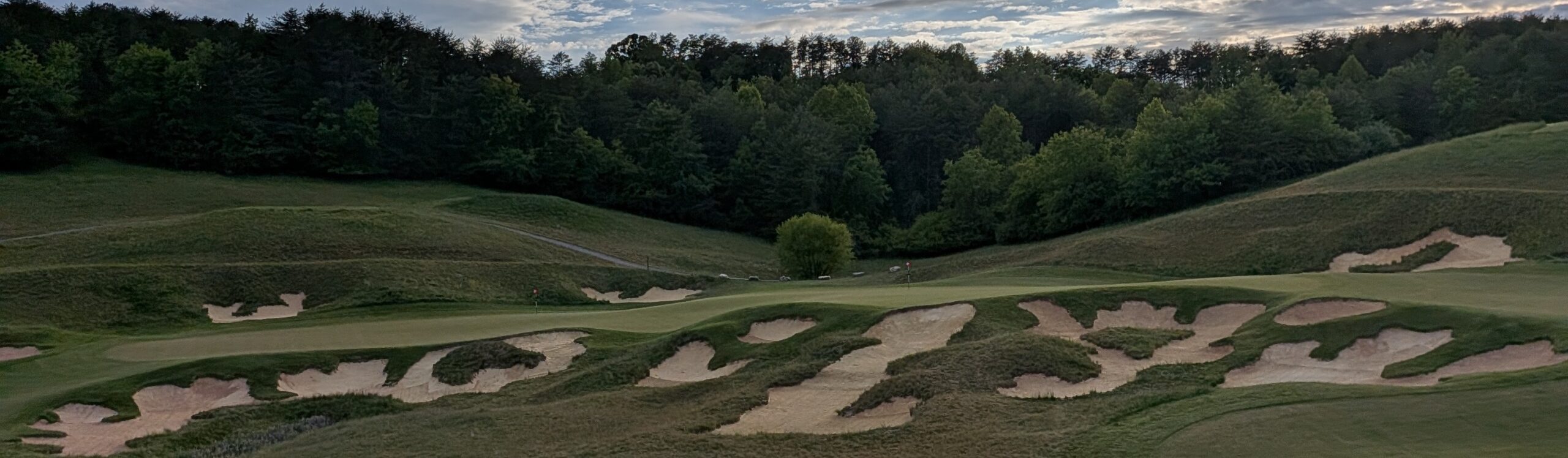
The front nine is all on one side of the road that splits Ballyhack into two sides, with the back nine all on the other side. There is a slight difference in the topography of the back nine, as well as George’s aggressiveness on how to use it. The tenth is a great example. Another long par-5, the tenth gently bends right the entire way, and while no forced layup is required, this is a three shot par-5 for all but the longest players due to a deep chasm on the front right of the green.
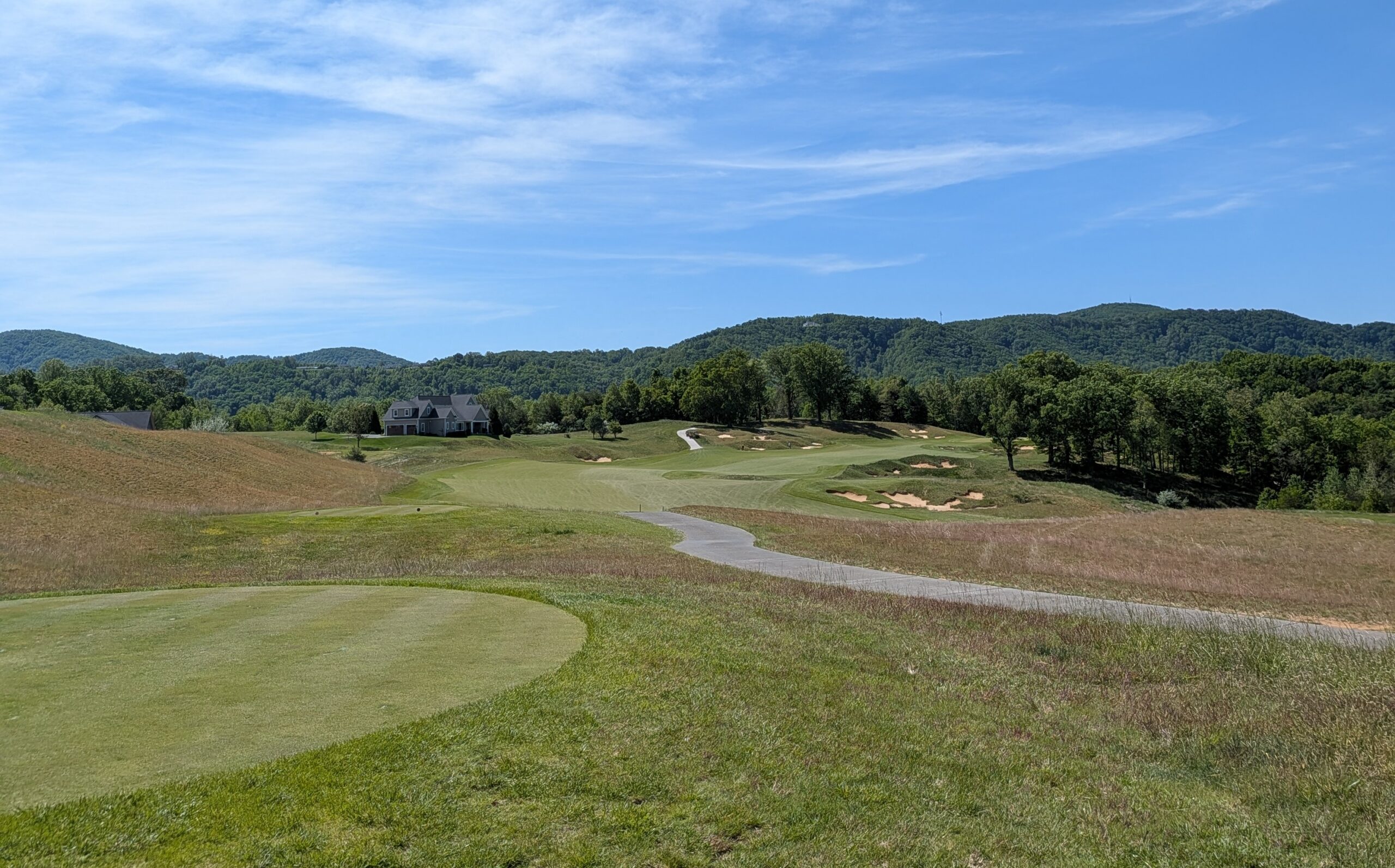
The number one goal of this hole is not to end up in that deep, thumbprint chasm, and laying up short of it is all but required, with a short wedge approach awaiting to a wide, triangular green.

Par on the tenth is an acceptable score despite it being a par-5 for even the best players. The eleventh is another uphill hole, mostly just a connecting hole on the edge of the property made interesting by it’s shorter length. From the upward tees, it is nearly drivable.
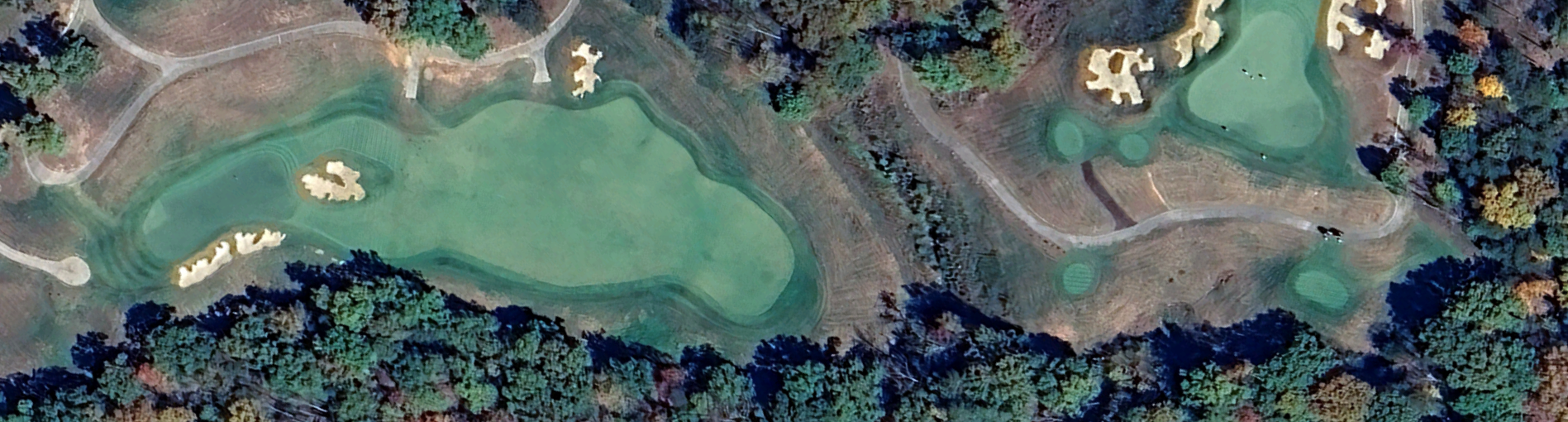
The eleventh plays significantly uphill, particularly in the last 100-yards, to a long and narrow green, meaning that most approaches here will be done in complete blindness. That is particularly complex to an angular, skinny green. When I was mapping out strategy, I laid back here. In hindsight, due to the combination of blindness and narrowness, I think it’s best to try to get the ball as close to the green as possible to help with visually identifying the target and landing areas.
The twelfth is the most fascinating hole at Ballyhack, and features the toughest tee shot on property into a narrow fairway. However, just over the landing area, the fairway waterfalls off a cliff. Provided the player has enough distance to make it to over the edge, they will find an extra 60 yards of distance into a collection area, which is a big advantage at this long par-4. The only disadvantage is that the hole plays right back up this hill to the green.
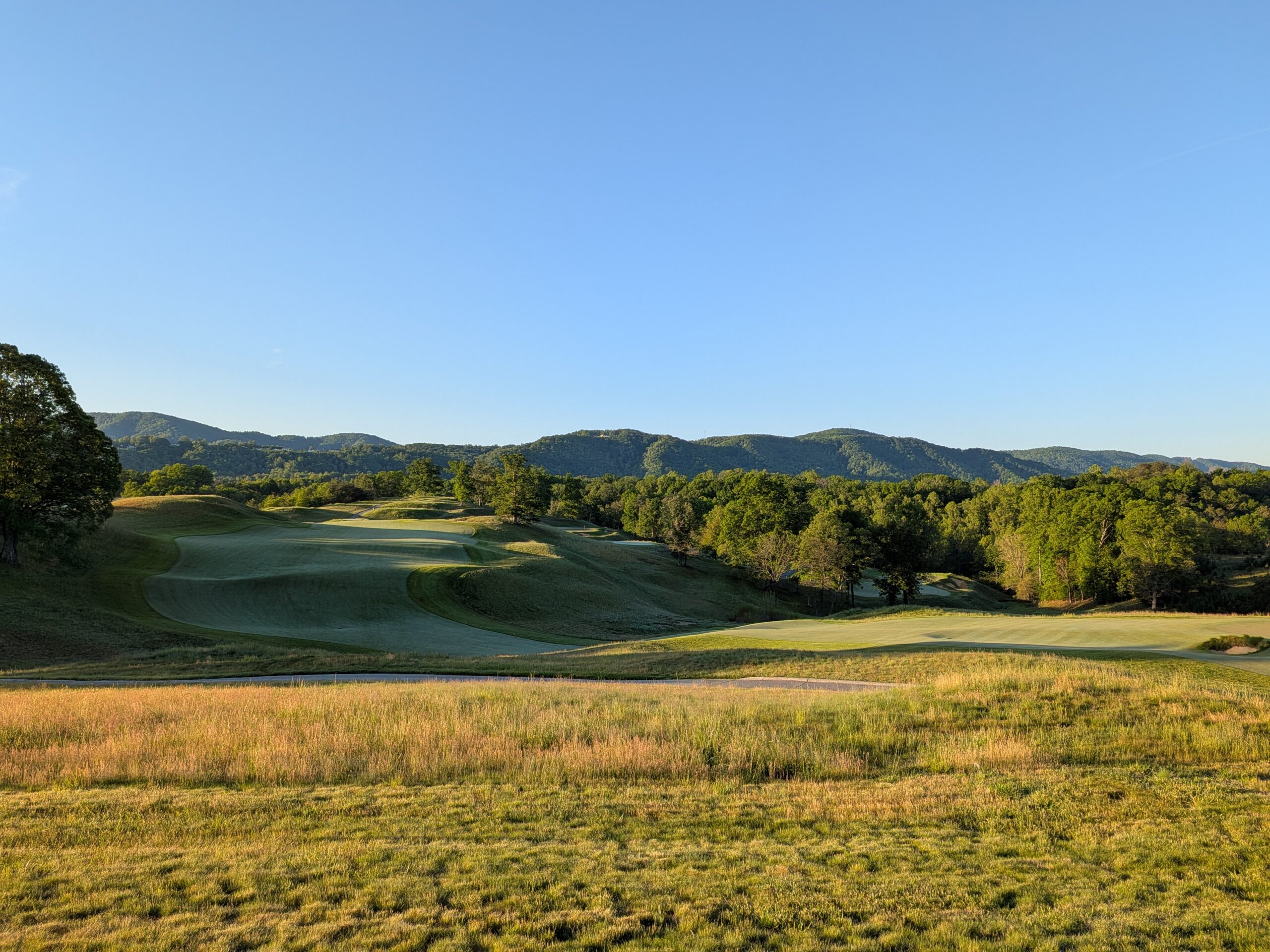
Fortunately the green at the twelfth is relatively large, although there is a pesky bunker short right of the green that poses a challenge for balls played along the ground.
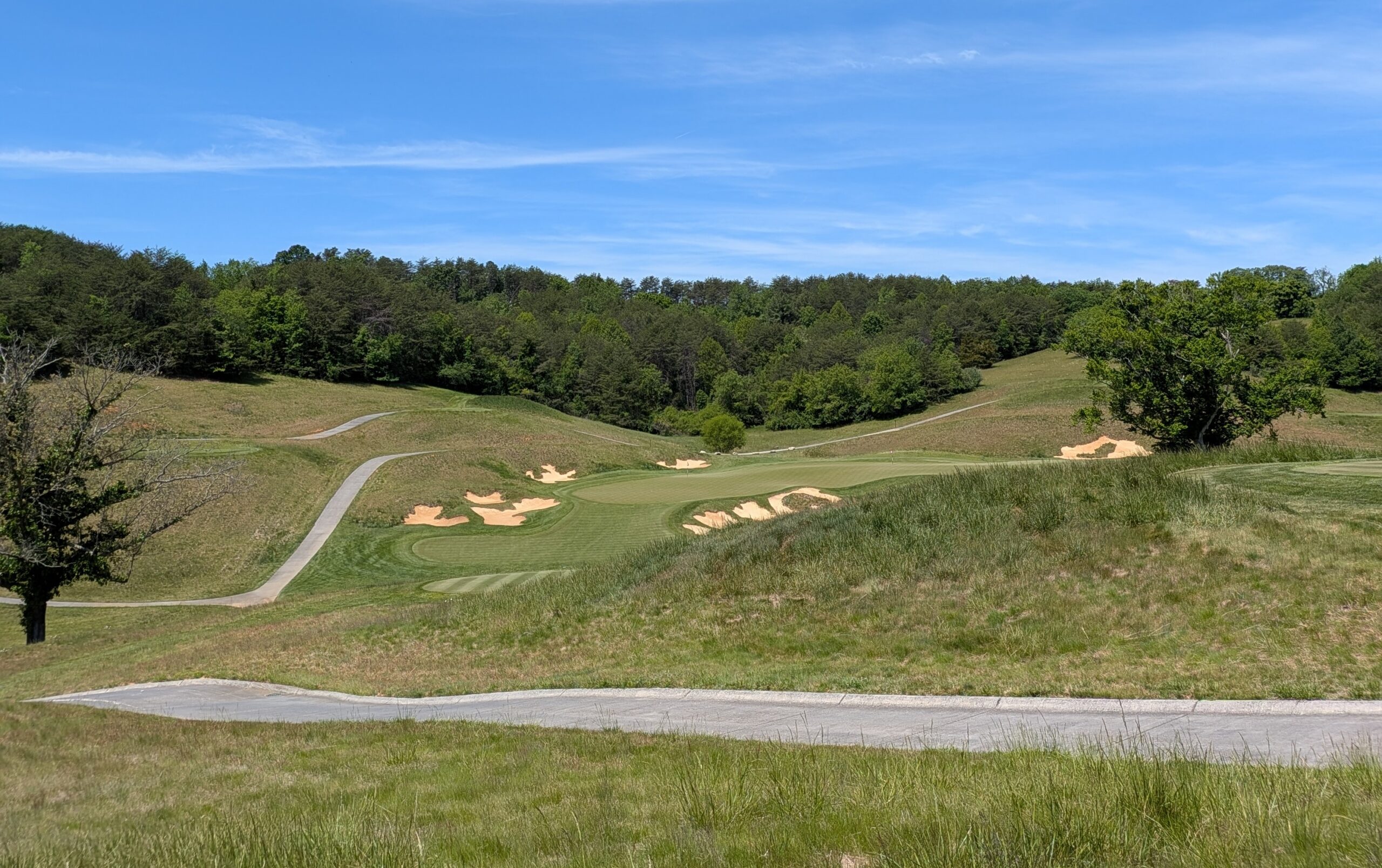
The course again goes downhill, from behind the twelfth green to a double green in which the thirteenth plays into the left half and the fifteenth plays into the right half. The thirteenth is just a longer par-3 down this hill to that massive green that is severely fortified on all sides, and rather severely sloped.
The fourteenth was my least favorite hole on the property, a mid-length par-4 that forces a layup off the tee, and then plays significantly uphill on approach to a blind green that again features a ton of internal undulation. For frequent readers, I often comment that a hole should not be blind to the landing area AND possess elements like large false fronts or significant internal swales that can carry a ball 30-40 yards away from where it lands. Blind shots demand forgiving targets; severe targets demand visibility.
The fourteenth violates both halves of this. The green is completely blind, and I would estimate that only 20-30% of the entire green has areas where hole locations can be set. Most of the center of the green is a large 8-10 degree slope that serves to repel anything that comes up short of the back of the green back down the hill.
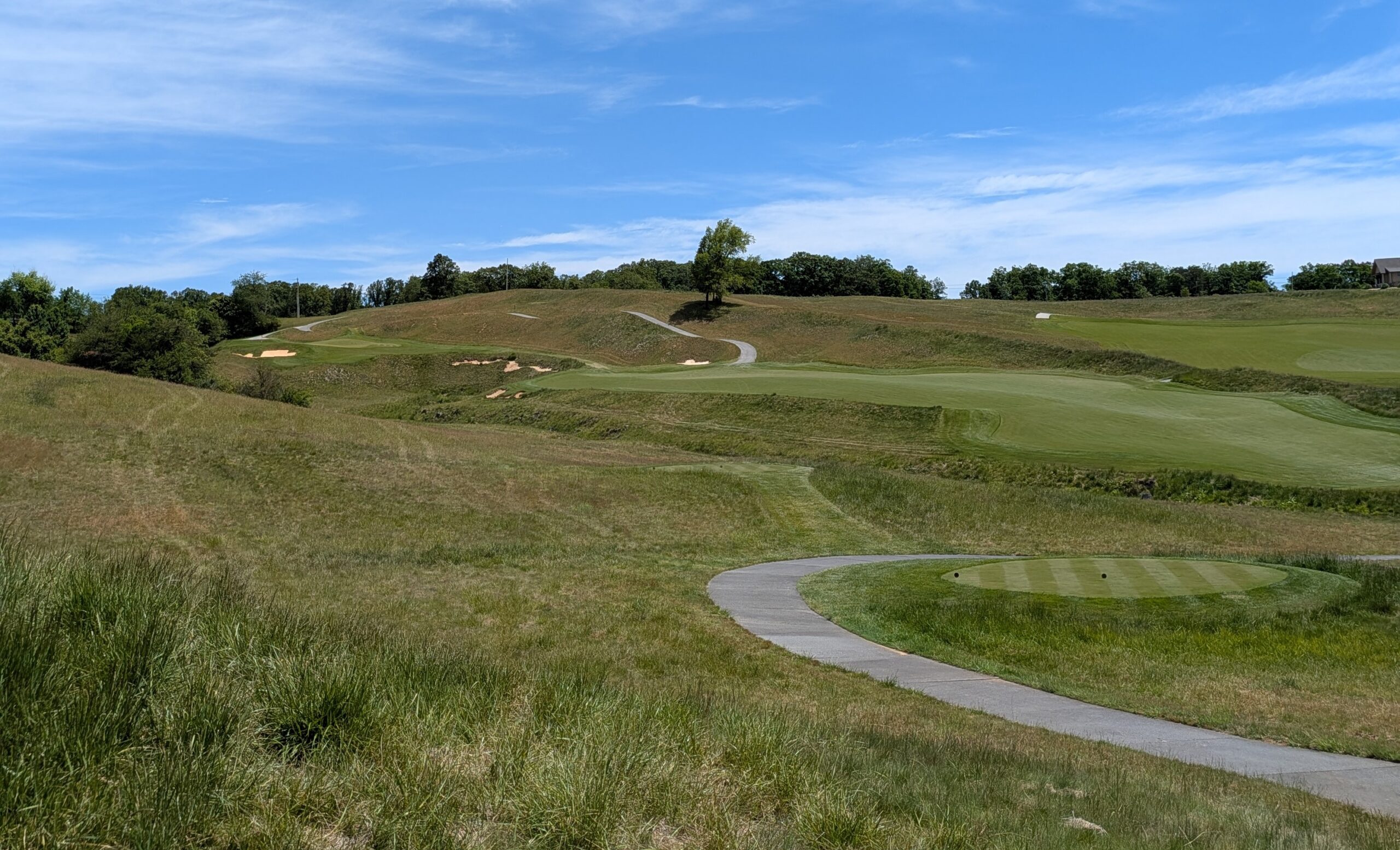
I am fine with this type of green as an element of skill, if you can see it. If you cannot see it, then the test is not whether you can execute the shot, but whether you’ve played the course before and are aware that such a ridiculous green exists. I hit the middle of the green and my ball rolled away to a 35 yard chip (without my knowledge). Greens this severe and blind shots are either/or. Both will result in a frustrated golfer and a feeling that luck plays a bigger factor in the shot’s outcome than skill.
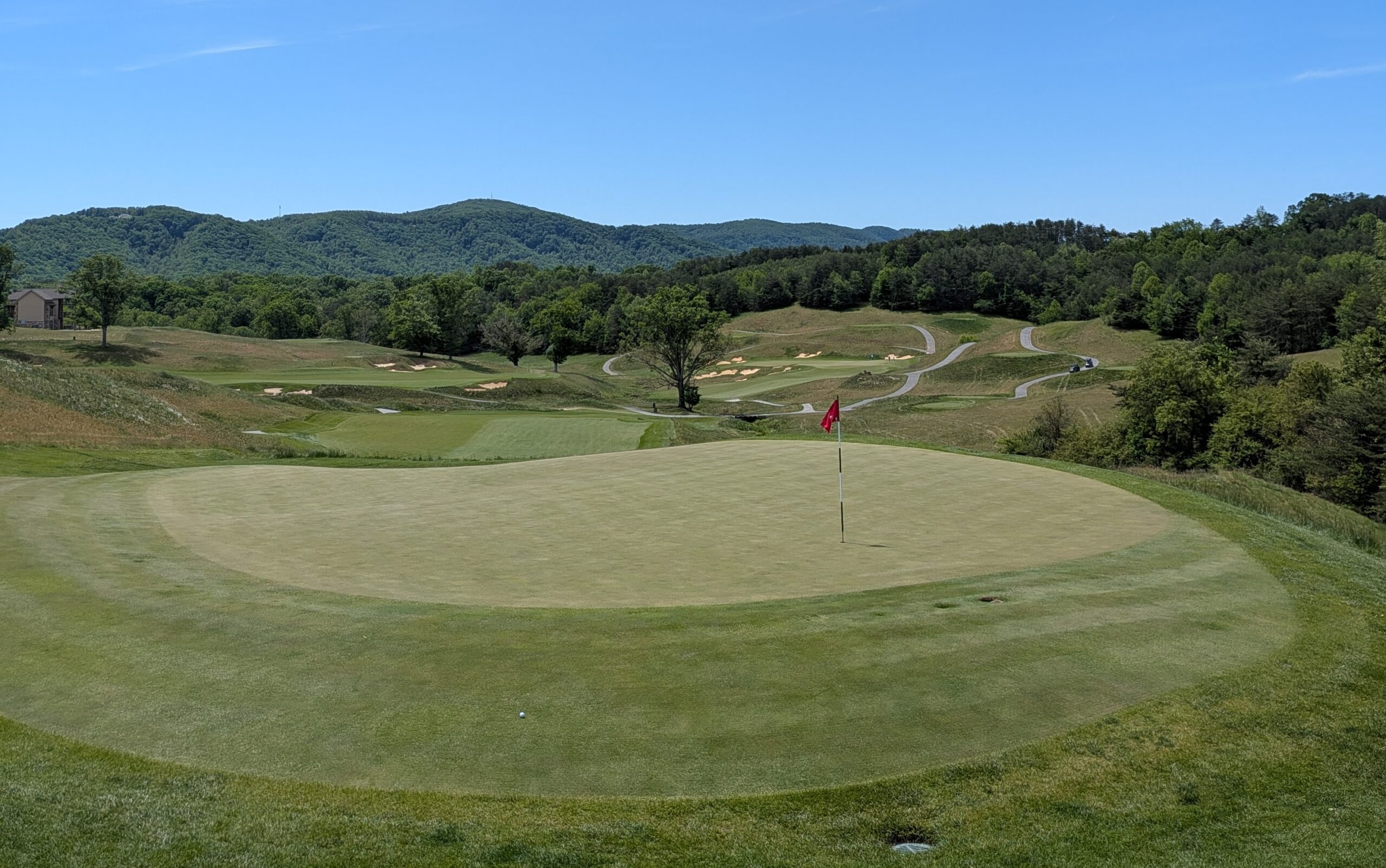
While the design of the fourteenth did not do it for me, there’s no arguing that the area behind the fourteenth has the best view at Ballyhack and the climb to the fifteenth is the other highest point on the property.
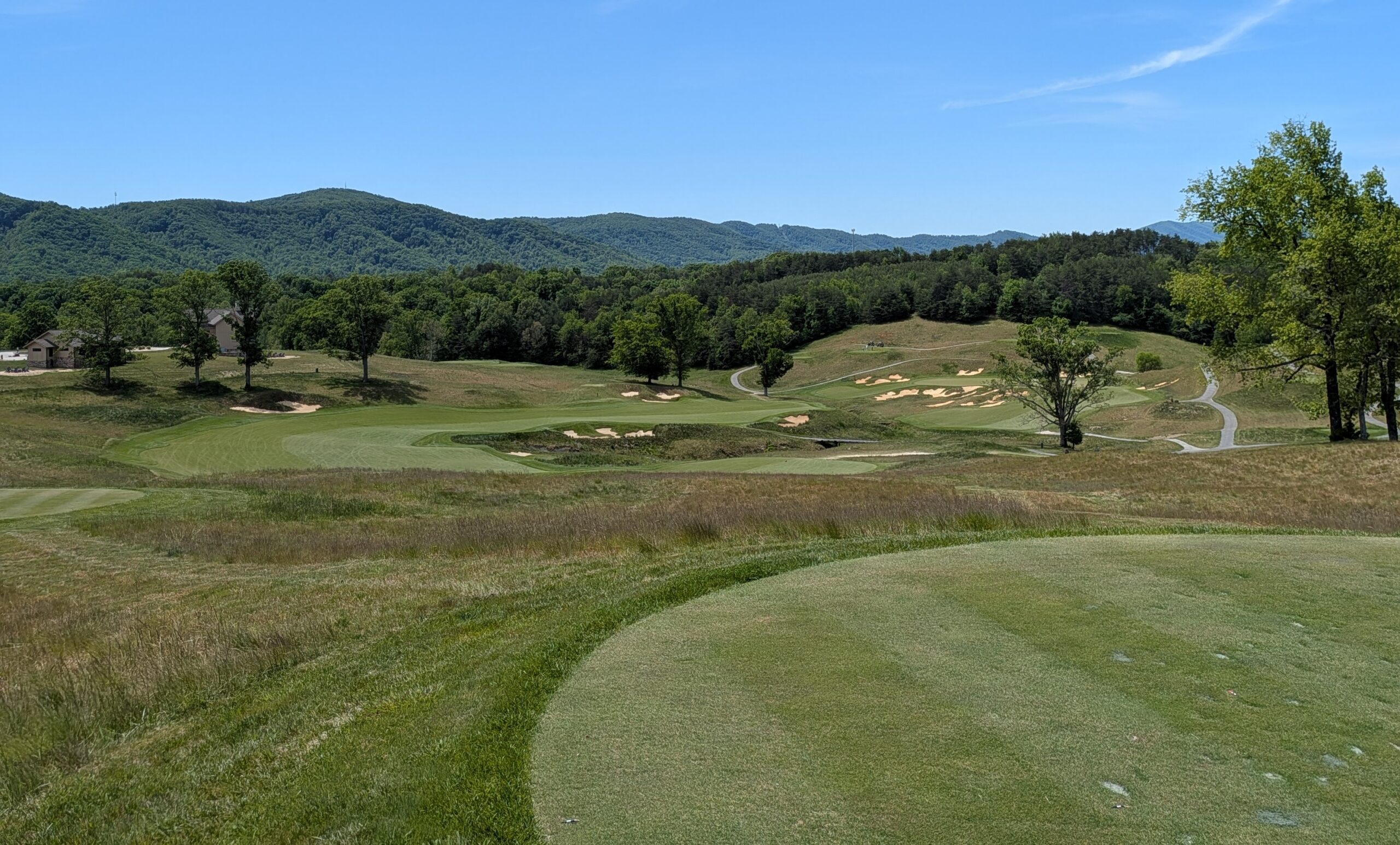
The fifteenth is another fun, downhill par-5, but if I am being honest: it is questionably designed. Now, the fun factor is high, but this double fairway hole presents such an obvious choice that nobody should do anything different. The key to a good double fairway hole is choice, risk vs. reward. On the fifteenth, the least risky way is actually the most rewarding way.
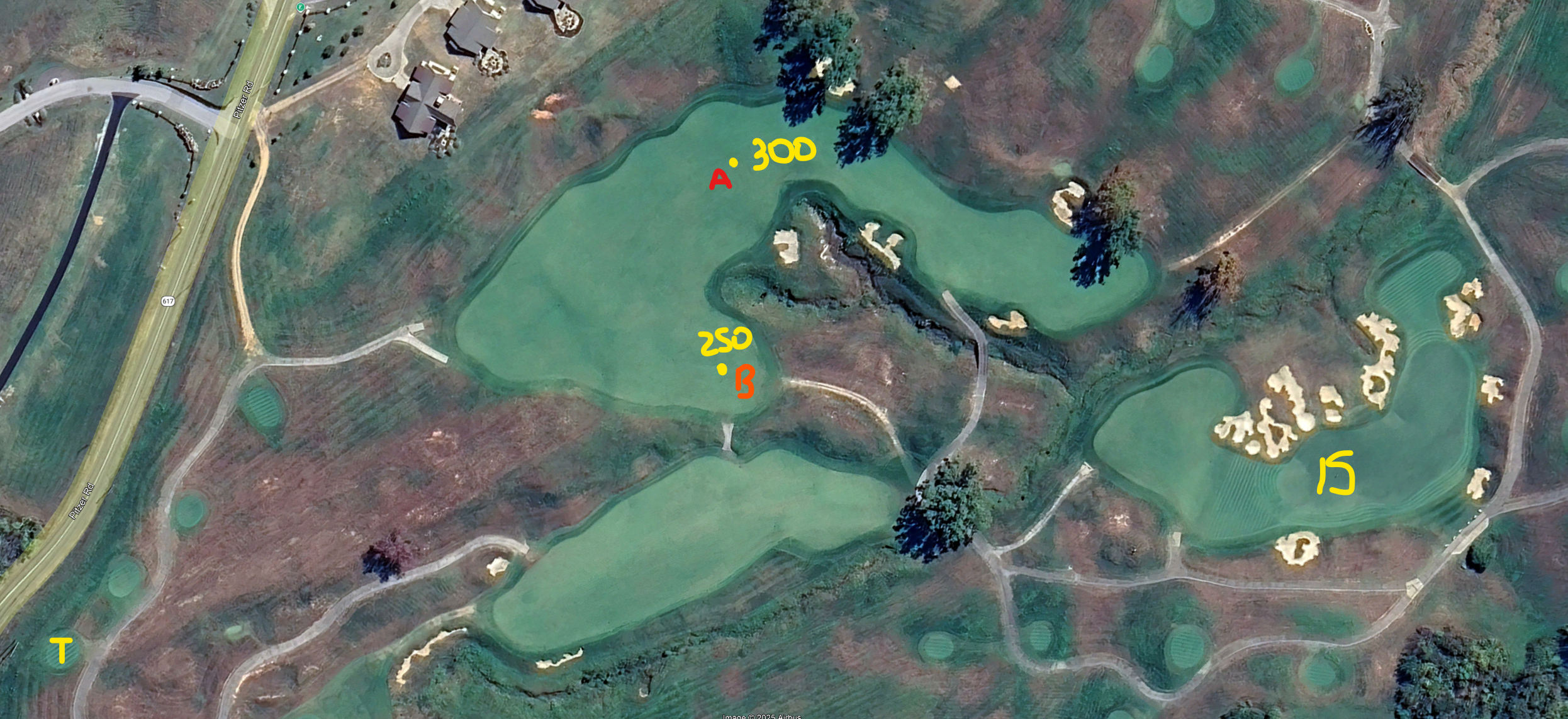
Going into the left fairway (Option A) at the fifteenth creates a tighter shot with a longer club, likely Driver, and all but eliminates the chance to get home in two. It also creates a worse angle into the green and into any type of layup. However, going right (Option B) is likely played with a long iron or hybrid, has similar width, and if successful, only leaves 230 yards from a superior angle. Nobody should ever use the left fairway at the fifteenth, as it would make the hole at least a half-shot more difficult.
The fifteenth was a fun, beautiful hole, but this may be a hole where George was forcing the double fairway concept. This hole gives you an illusion of choice, where from a strokes gained perspective, is actually giving you an opportunity to make a patently wrong decision. It would be a better (and more difficult) hole if the right fairway did not exist. Right now, the fifteenth is a really solid chance at birdie.
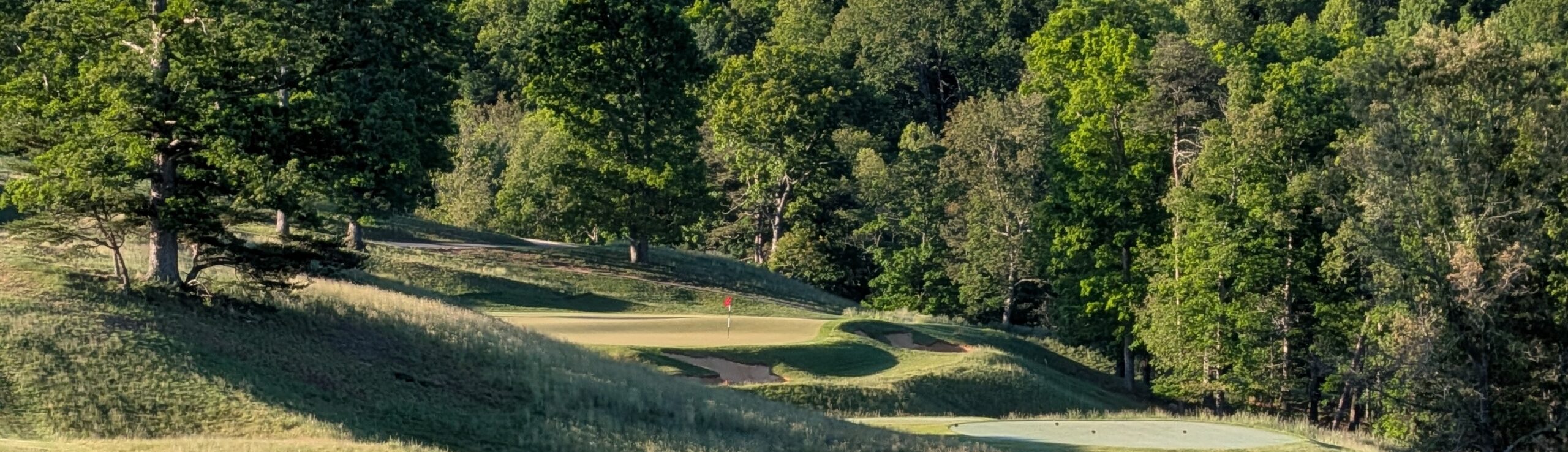
Speaking of difficult, the long par-4 sixteenth fits the billing, mostly due to its length and forced carry to the green, but features a wide fairway to find off the tee. The seventeenth offers another chance for birdie as a gorgeous short par-3.
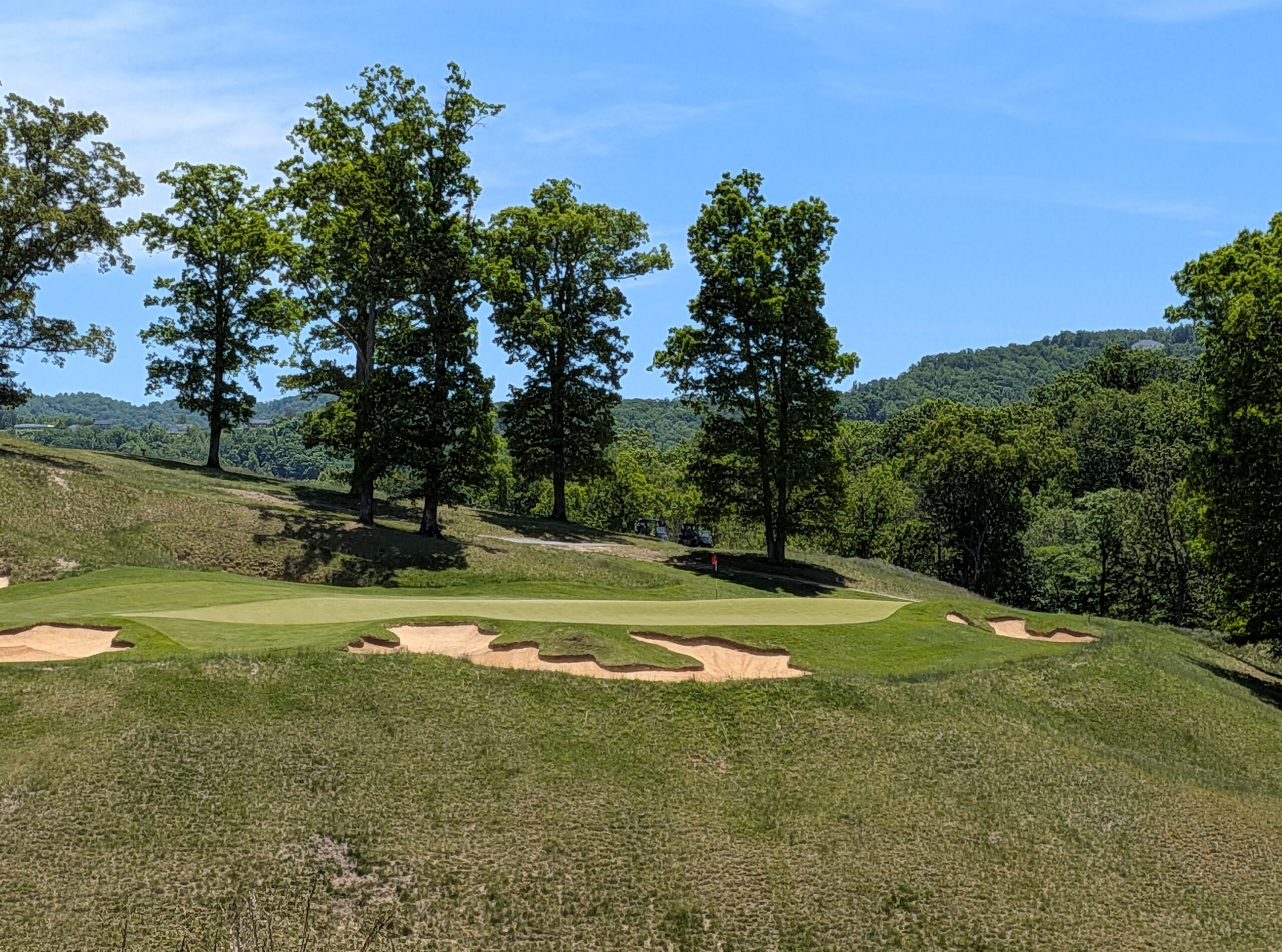
The seventeenth is simple, but the green possesses a ridge that can be seen from the tee that almost divides the green in front and back sections. Club selection and short-iron execution are paramount at the seventeenth.
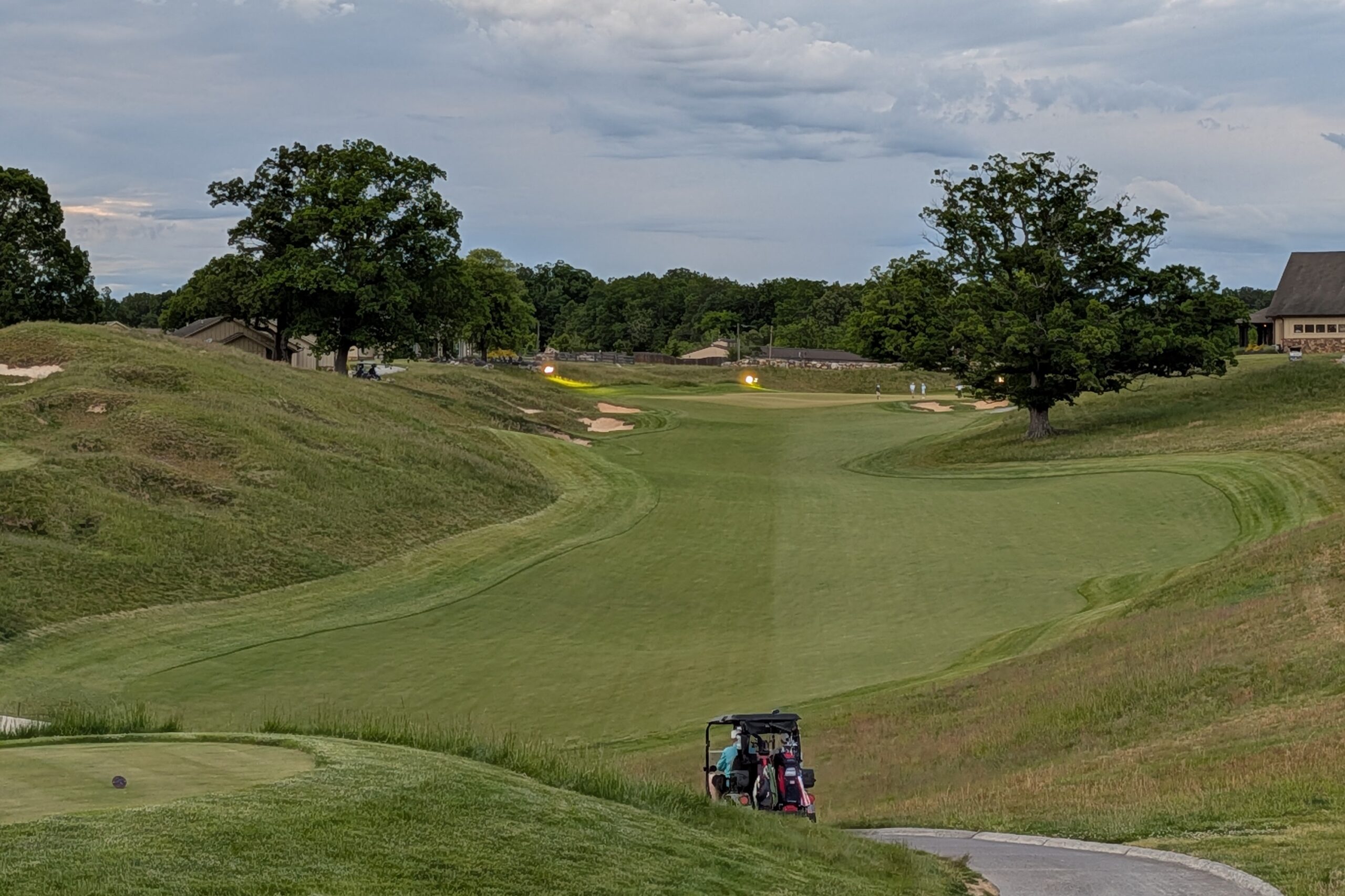
The eighteenth is a very tough longer par-4, made particularly difficult by a tree on the right that more or less blocks out shots from the right half of the fairway. The fairway here pinches narrow and the hole plays to a massive, massive punchbowl green. But, much like 2026 PGA Championship host Aronimink’s 18th hole, that tree makes an otherwise normal hole particularly complicated. Anything right of center will require a significant left-to-right shape with a longer iron, especially to right pins. Ballyhack’s difficulty may be mostly drama and theater, but the eighteenth is properly tough.
Final Thoughts
Somehow, Ballyhack accomplishes providing extreme visual intrigue without sacrificing the quality of the actual golf. There are a few gimmicks, but not enough to detract from the enjoyment of the round, and many courses with far more gimmicky designs litter the Top 200 lists. George designed a course with options, multiple ways to play, and shots that require aggressiveness and evoke adrenaline.
Ballyhack’s conditioning was fantastic, its facilities of modest but acceptable quality, and has an aesthetic value second to few inland golf courses.
As for Golf Digest’s ranking of 210th in the U.S., it is incorrect. Ballyhack is closer to being a Top-100 course than it should be to being excluded from the Top-200. It is a better course, more imaginative, and more aesthetic than courses like Canyata. It is far superior to Streamsong Red, Blue, or Black, which set out to accomplish from flat land what has already been accomplished in the hills of southwest Virginia. It is the second most underrated course we’ve reviewed thus far.
Southwest Virginia is blessed with several great golf courses, The Olde Farm and Primland’s Highland Course to name a few. Those courses are slightly better. But, both are classically good golf and easy to rate, where Ballyhack is more an experiment in audacity. And while Ballyhack might be appropriately ranked in Virginia around fourth or fifth, perhaps the golf in Southwest Virginia is simply underappreciated by raters.
Or, perhaps audacity is tough to place on a scale meant for classic hits.
But, whatever the failure, Ballyhack is a fantastic golf-course (properly ranked or not) and one I cannot wait to play again.
CR&J Final Rating:
Shot Options: 9
Challenge: 8
Layout Variety: 7
Distinctiveness: 8
Aesthetics: 9
Conditioning: 8
Character: 9
Fun: 10
Total: 68/80
Read More: How We Rate Courses
Rating Scale Details:
> 70: Top-50 U.S.
65-70: Top-200 U.S.,
60-65: Best-in-State List
57-60: Best-in-state List Contender
53-57: Very Good
48-53: Good
40-48: Average
< 40: Poor

Author: Kyle Taylor
Kyle is the lead course reviewer at The Course Review & Journal. Kyle has been playing golf for over twenty years, is a plus handicap, and actively competes in USGA and State Golf Association events. By trade, Kyle is an attorney.
Kyle Taylor is a pseudonym used by CR&J’s lead course reviewer to protect personal relationships. The reviews and opinions remain entirely the writer’s own.
Leave a Reply
You must be logged in to post a comment.