
Time to Read:
|
This The Standard Club course review is based on a round played in May of 2026.
The Standard Club is a private course in Atlanta, GA.
CR&J’s Final Rating: 63/80 (Best-in-State List)
There may be no greater dichotomy in golf than what exists in Atlanta, GA. The delta between the incredible quality of private golf in the Atlanta area and the dismal quality of public golf in Atlanta is likely greater than any other American city. Atlanta has essentially no public golf courses of note, but is a bastion of amazing private clubs: Peachtree, East Lake, and Atlanta Athletic Club, to name a few.
The Standard Club was an opportunity for us to find out just how deep Atlanta private golf actually runs. Because, according to Golf Digest, The Standard Club is the NINETEENTH best golf course within a no-traffic 90-minute drive of downtown Atlanta, and the 31st best course in Georgia. Most notably, all but one (McLemore) of those golf courses ranked higher by Golf Digest is a private club, and McLemore can theoretically only be played by a non-member once per quarter through their Friends of McLemore program.
I currently live in Nashville, and to compare, if I were playing the nineteenth best course in Nashville, it would be a public or municipal course with significant conditioning issues. But in Atlanta, with this incredible depth, what I found at The Standard Club was far from that.
The course was originally designed by unheralded (but almost always solid) course designer Arthur Hills, and was renovated by Michael Riley, who has touched a ton of golf courses in this Atlanta area and up the I-75 and I-24 corridors into Tennessee.
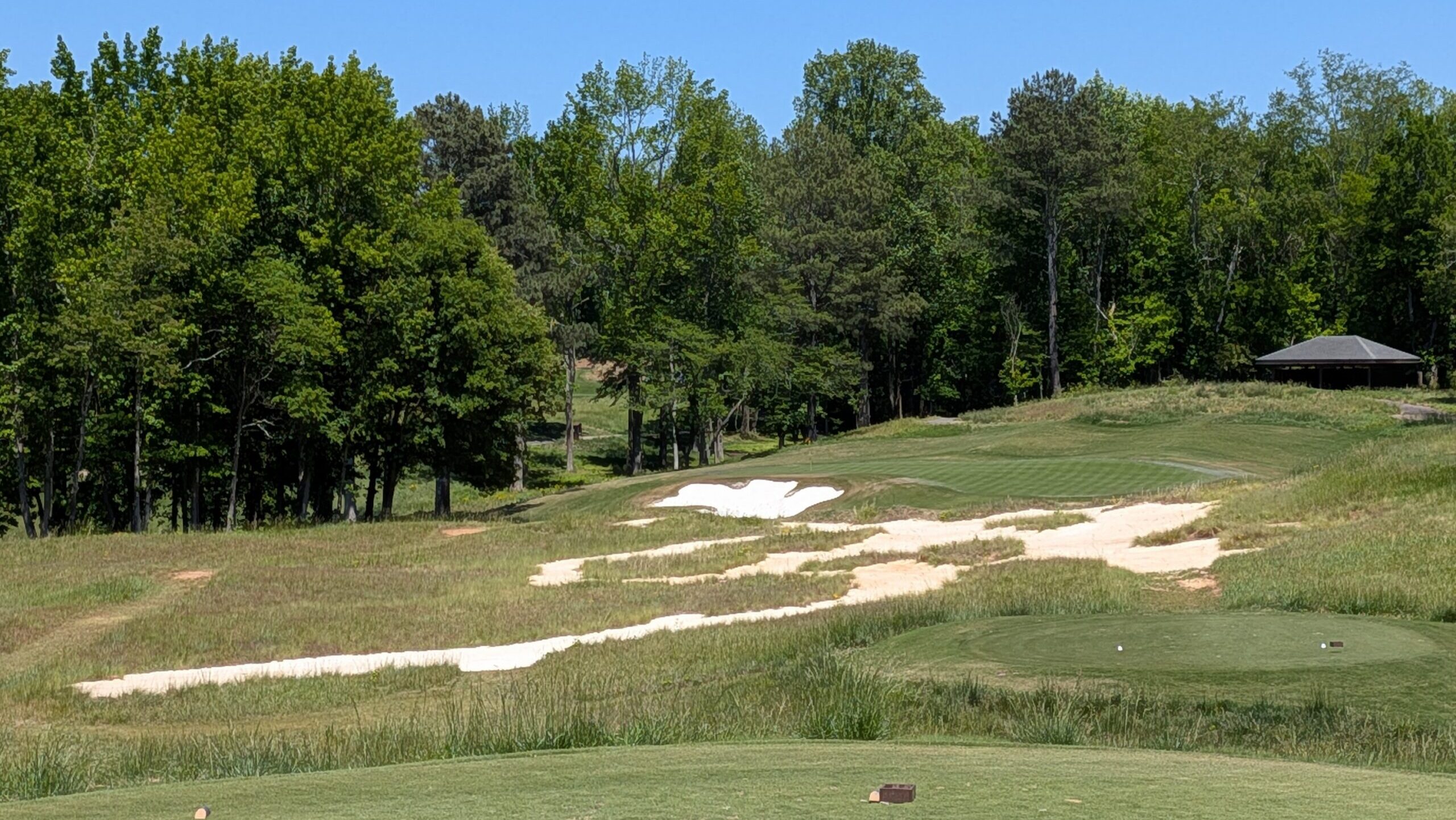
The Standard Club has a very distinctive bunkering style, using more natural edging rather than manicured grass or sand faced bunkers. They are sand faced, but only slightly so, and have a rougher appearance to them, which is quite popular right now and very aesthetic. Secondly, The Standard Club was built on an incredible parcel of land in the suburbs of Atlanta. In his original layout, Hills did a great job of very quickly getting you out of the suburbs and making you feel like you are on a golf island, without a ton of intrusion of outside noise; there are no houses on the course, which has to be a continual temptation considering all of the housing near it.
That parcel of land also has significant undulation, rolling hills, and several creeks and ponds. It is the exact type of tract that I expect a designer would salivate over. The property is mostly divided into a higher elevation section, and a low section. Accordingly, the front nine largely plays through this higher elevation section, on top of a large hill with a flat top, through the rolling hills at the top of the hill. The back-nine works its way to the valley of this ridge, and plays mostly through the flat valley section of the course, before climbing back to the hillside on the last two holes.
This creates an incredible contrast between the two nines that are distinct, yet still cohesive. On the first tee box, I could already tell, perhaps I was in for something better than the nineteenth best local course.
The First Tee
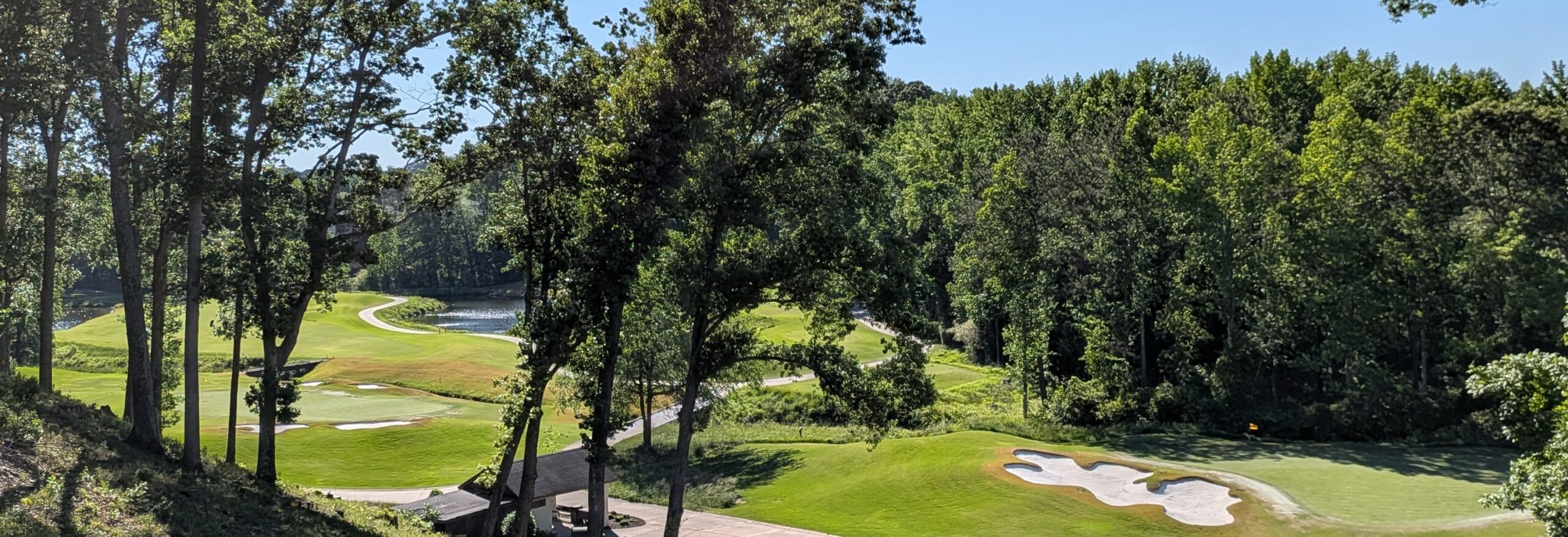
The Standard Club starts out with what might be the best hole on the course. The first is a mid-length par-4 that gently doglegs right. While the tee shot plays slightly downhill, the approach plays significantly so. I do not think the pictures quite capture the elevation change present on the first, as the fairway crests and bleeds off over the rolling hill.
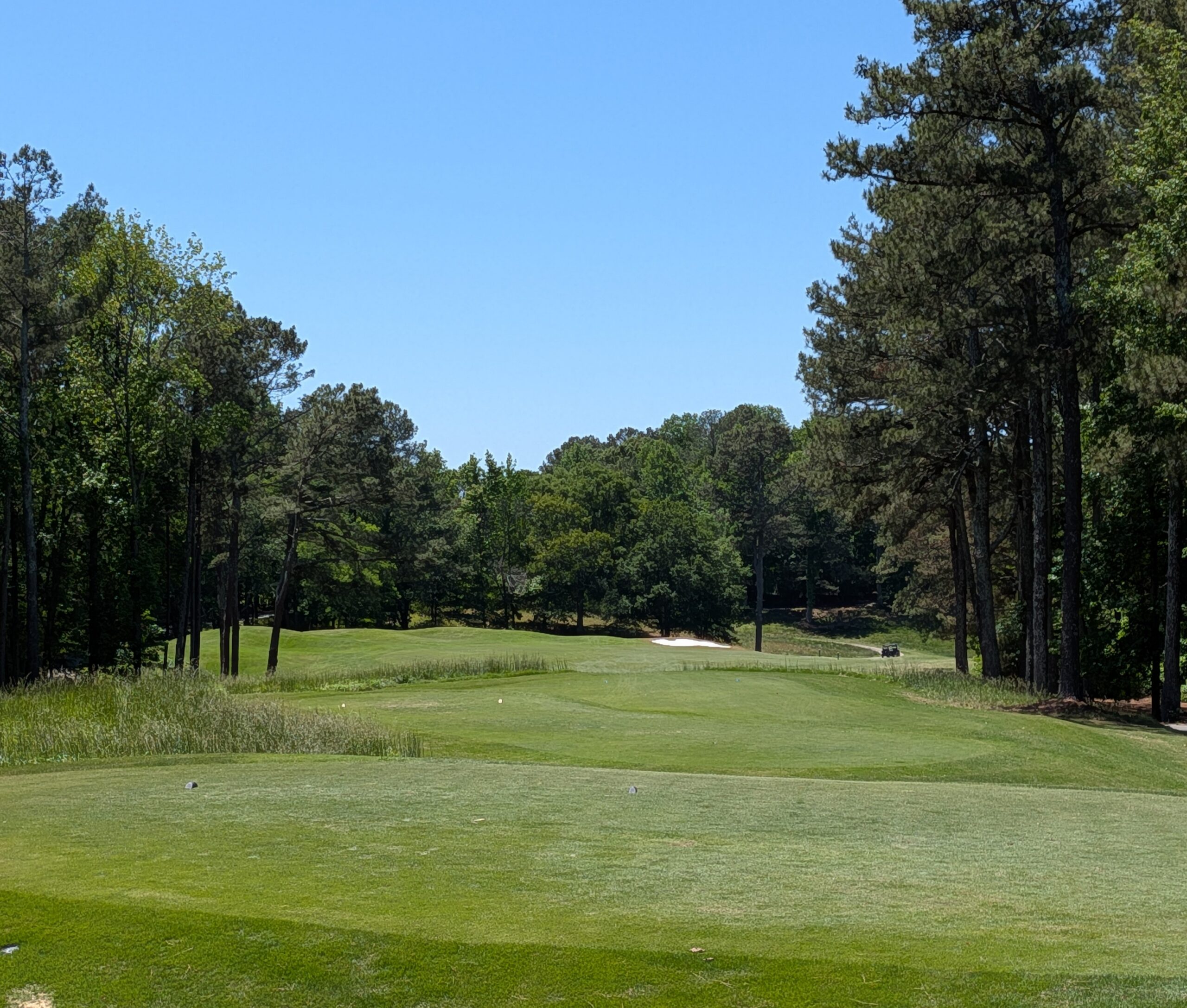
The tee shot is framed by the lone fairway bunker in the landing area, and the design calls for something in front of that bunker (likely with less than driver) and then a short-to-mid iron into the well protected green. However, it is certainly possible to use driver off the first, and a ball shaped from left-to-right could certainly get going down the hill towards the green in a significant way; a risky play into a narrowing area for a wedge in hand as reward.
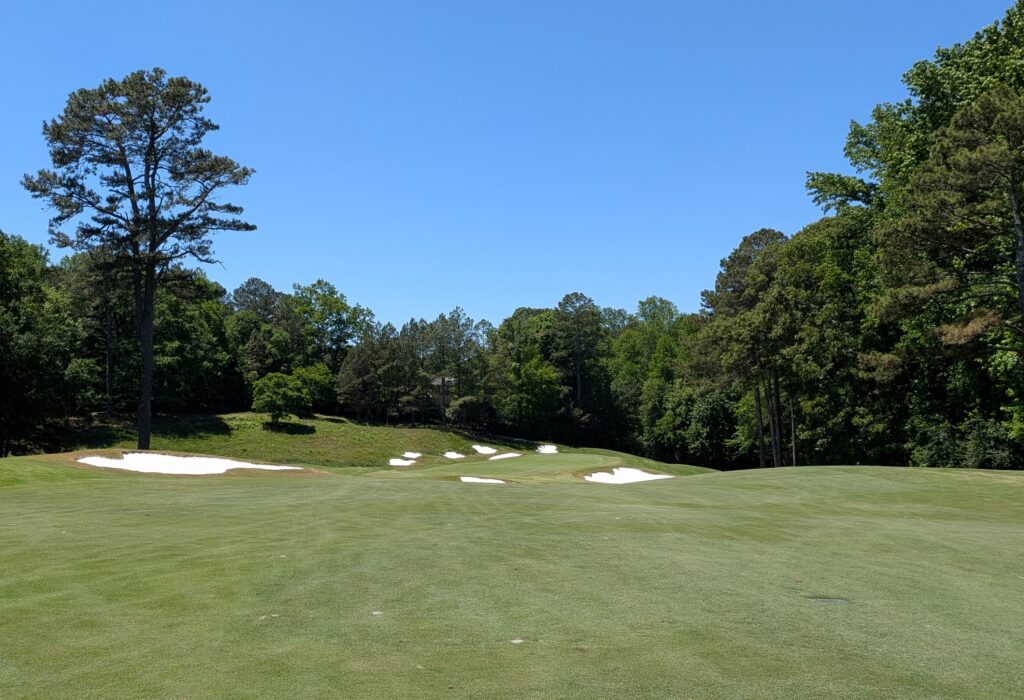
The second is a great one, two punch to start the round, as the mid-length par-5 will force a player to make two decisions early in the round.
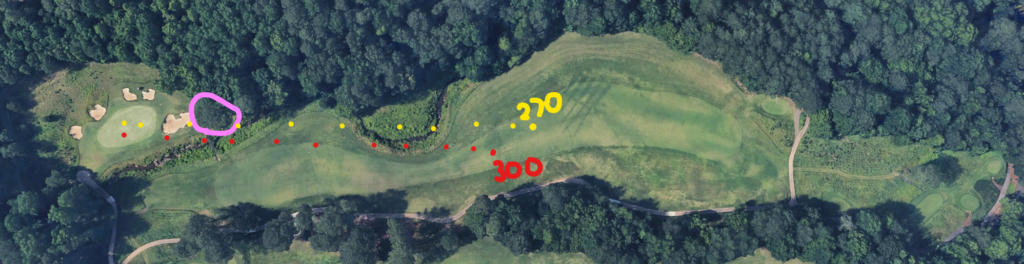
First, the player must figure out exactly how to approach this tee shot. This par-5 is very reachable with a driver, but becomes a little less so with fairway wood from the tee. But, in the landing area for driver, the fairway is significantly narrower and a creek comes into play for the longest of hitters.
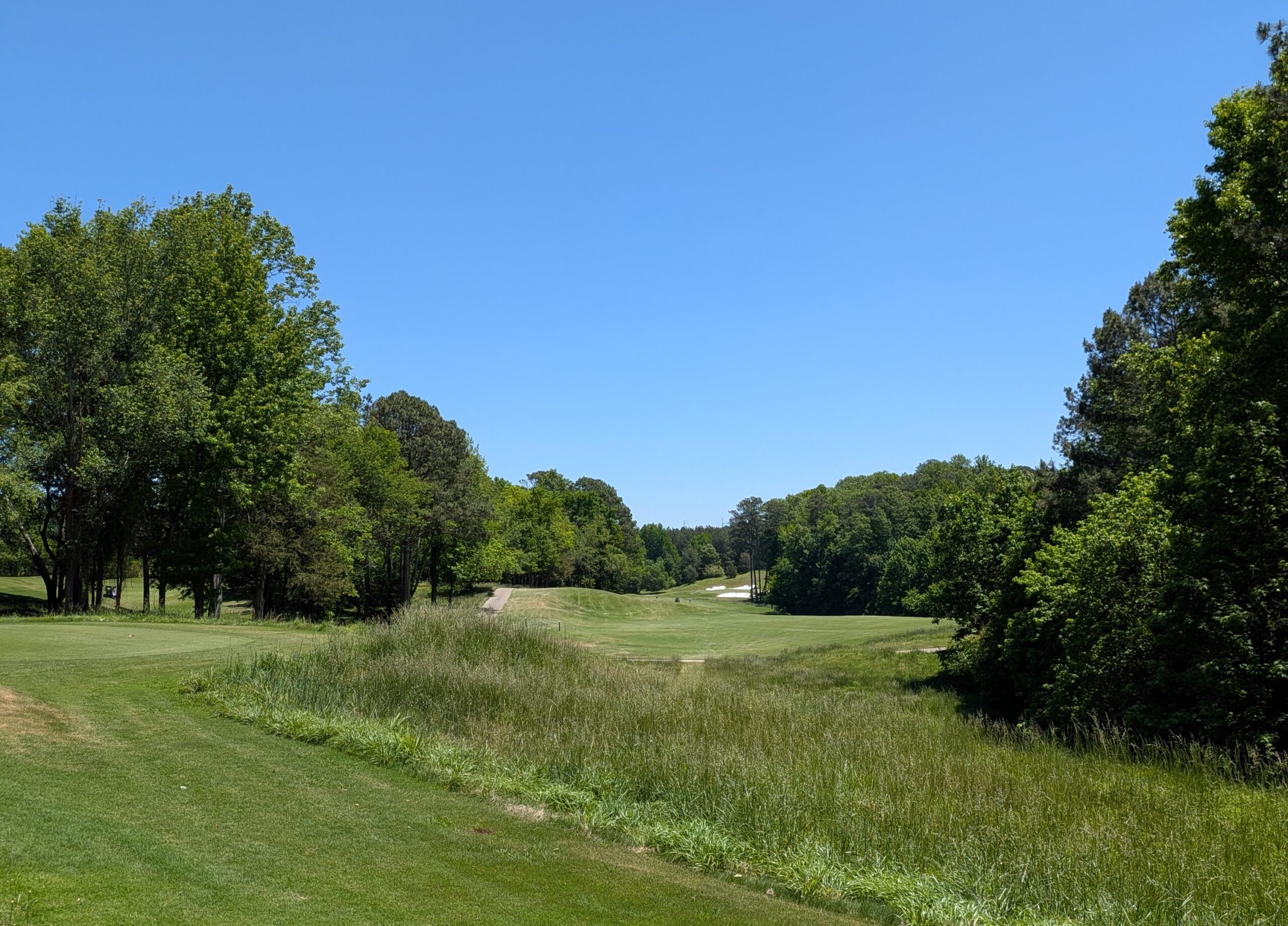
Secondly, the player must decide whether to go for the green, assessing two complicating factors: the frontal creek and the overhanging tree on the right (that I have circled in pink). The further up and left the tee shot, the less the tree has to be negotiated. Players that elect less than driver from the tee and end up in the right half of the fairway or rough are mandated to play the hole as a three-shotter. Those that elect driver and finish on the left-half will find it easier to negotiate the angle around the overhanging tree. Those inbetween will face a significant decision: layup or shape a ball around that tree.
The layup is into a wide area but the third shot is not easy, especially for righties, as the layup area is banked from left-to-right towards the creek, meaning a thinned wedge is certainly a possibility.
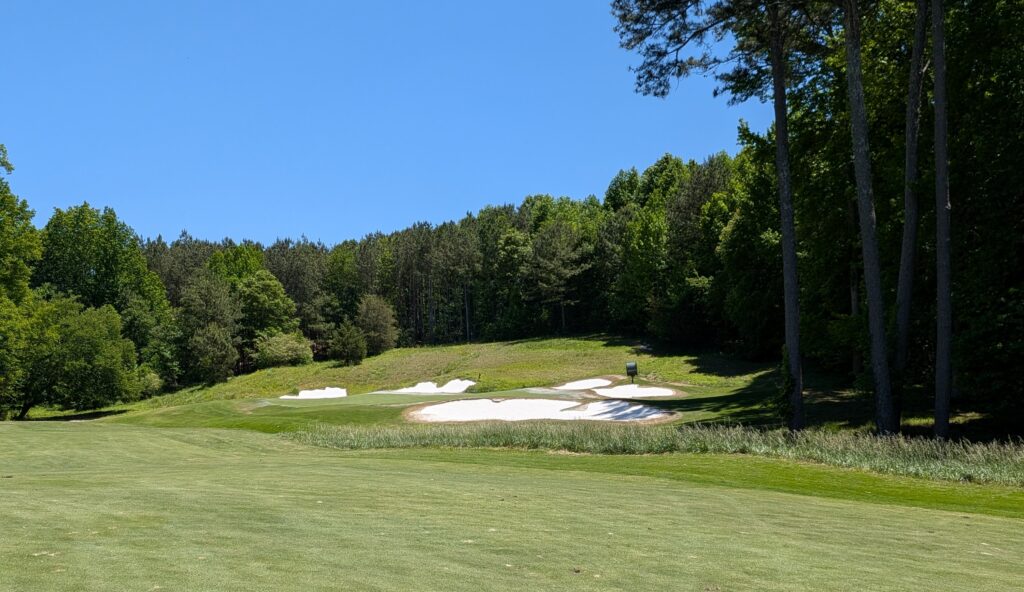
All said, this is a great hole that requires commitment to strategy above all else. One uncommitted swing at the second, and you might be playing catch up to save your score.
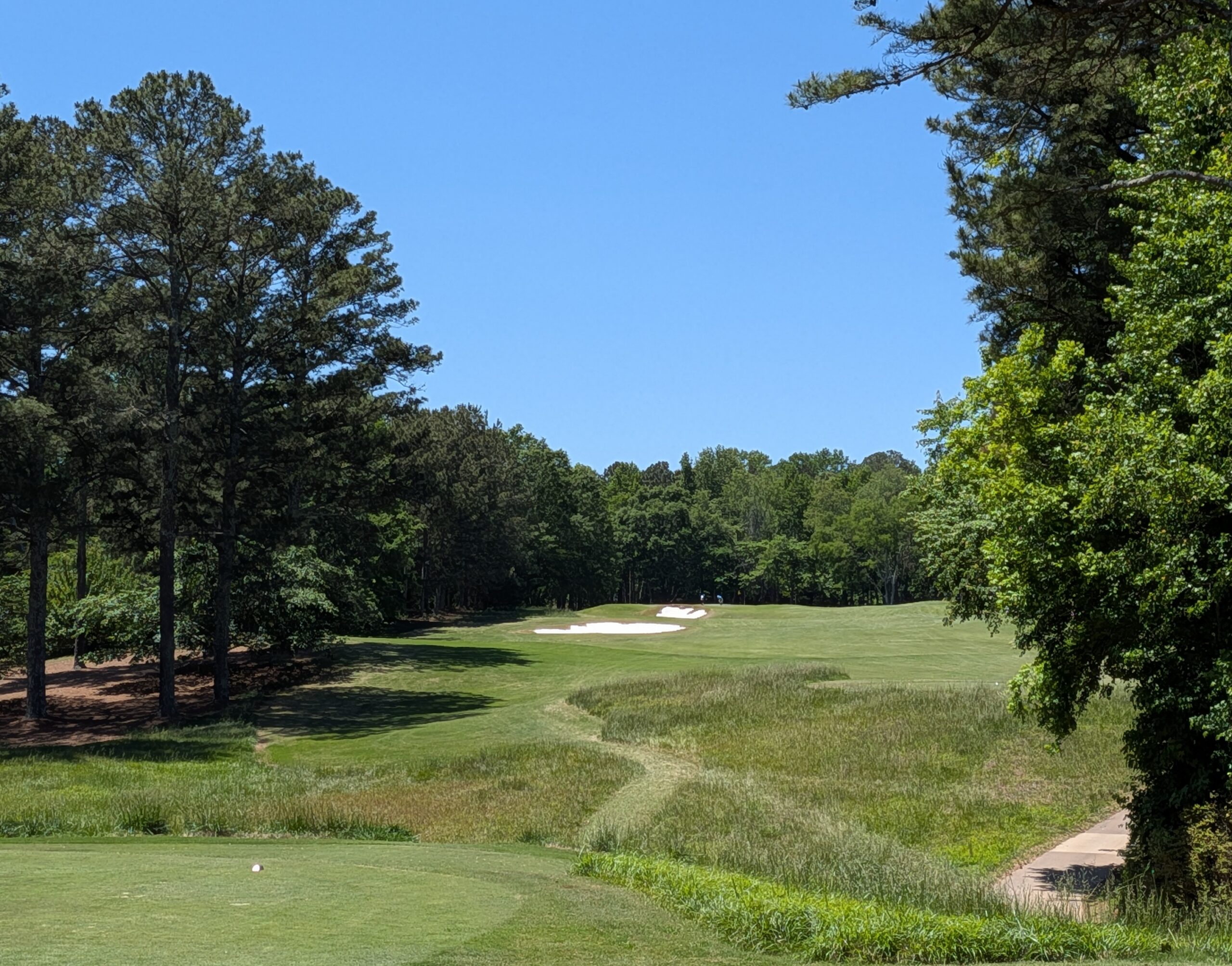
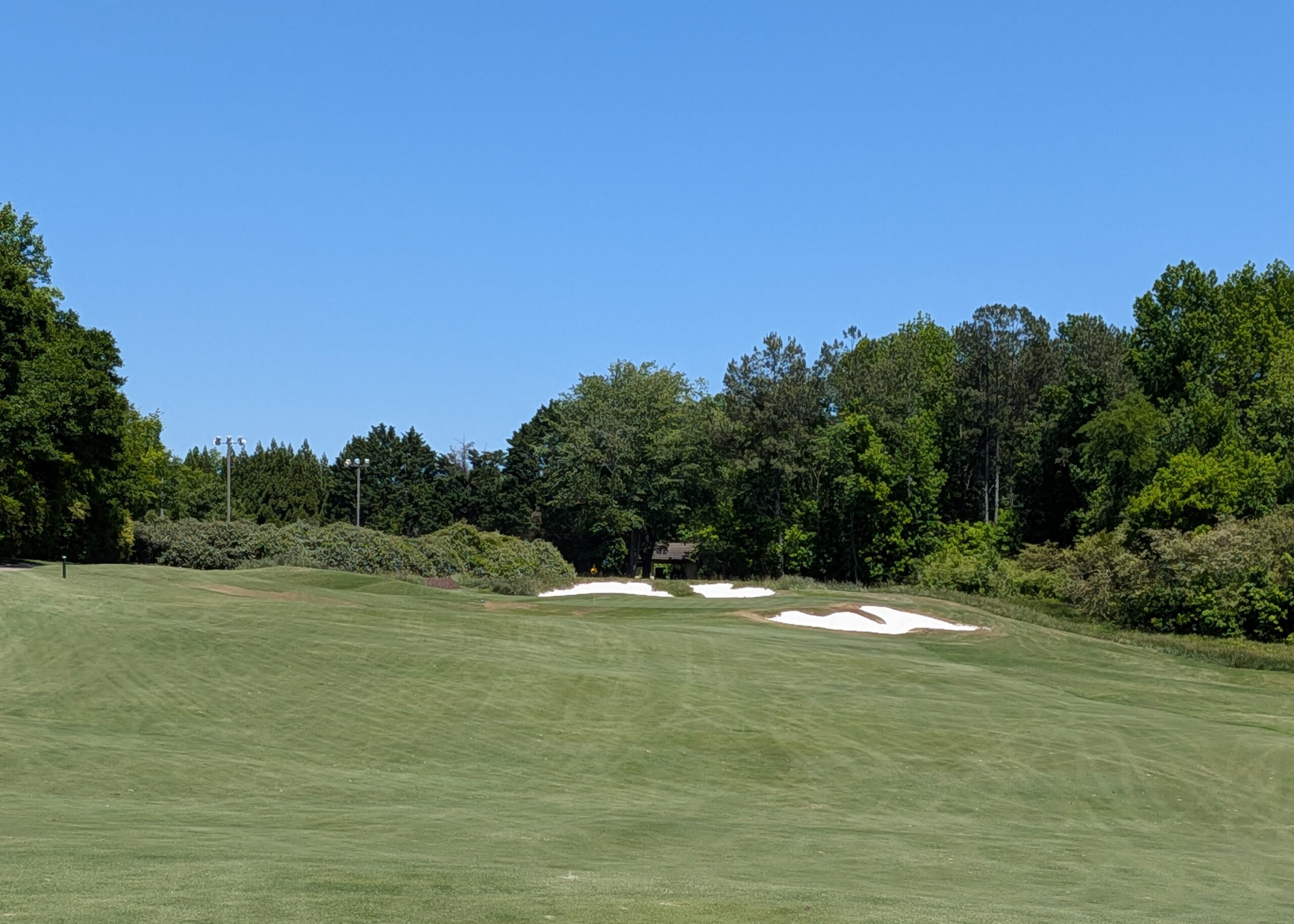
The third and fourth, while pleasant par-4s, were mostly straight, connecting holes until arriving at the fifth tee.
The fifth tee is where I found myself first thinking that The Standard Club may actually be elite, because here I was on another fantastic hole in just the first five. It would just keep getting better. The fifth through the eighth was an extremely strong and interesting stretch of golf.
First, the par-4 fifth, which is the hardest hole on the course according to the scorecard (but probably not in actuality). Rather, this is a hole with a tough tee shot, playing uphill into a forced landing area between two bunkers.
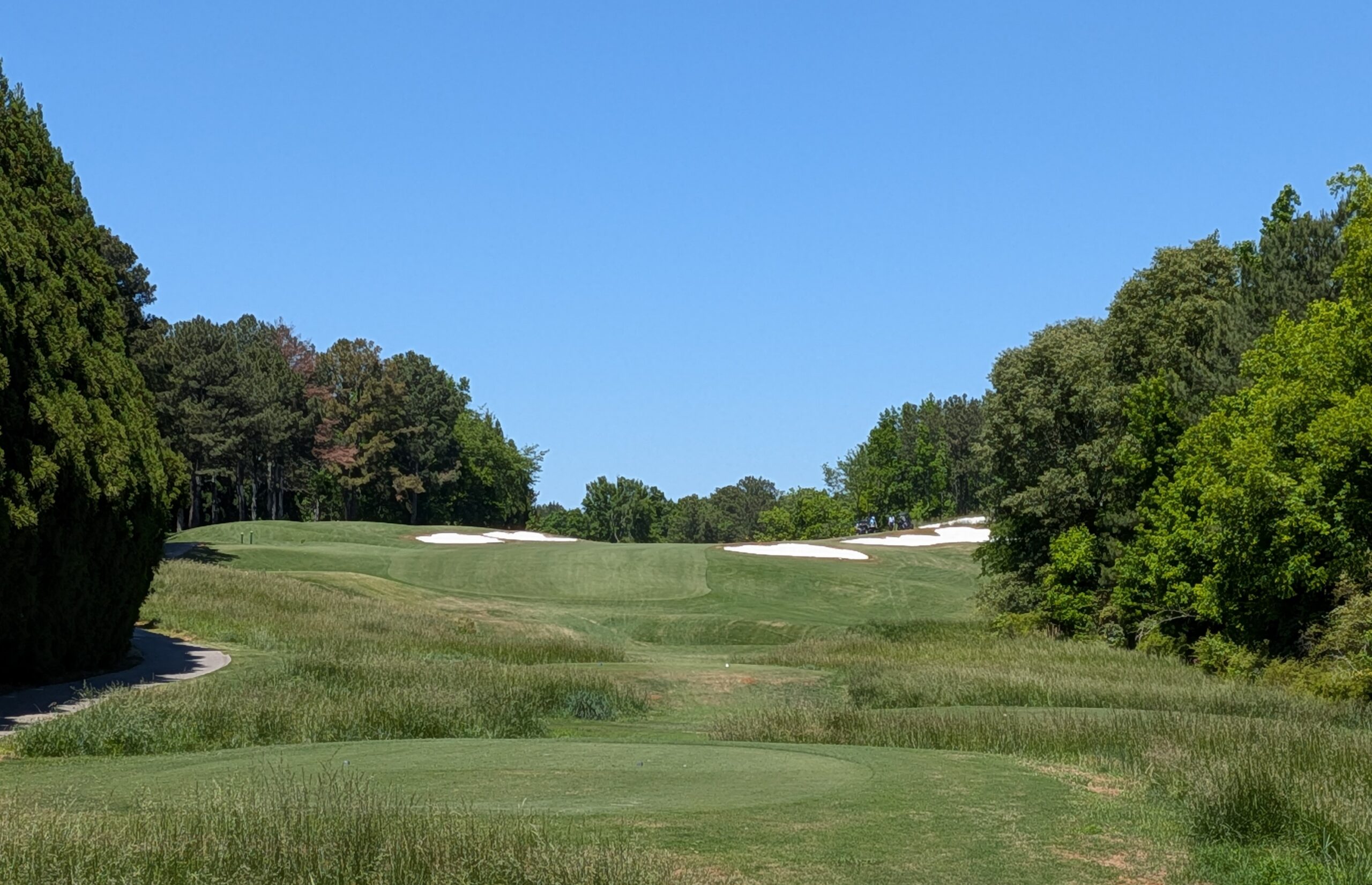
As far as semi-blind, uphill holes go, this one is as good as it gets. Hills and Riley use the placement and orientation of the fairway bunkers to expertly frame this hole; there is no mystery here what the hole is asking from you – the bunkers tell the story.
They also present a significant challenge, as the fairway is only 30 yards wide between those bunkers, which I imagine is the likely reason for the high handicap rating.
Once in the fairway, a simple approach to a long green protected by a single greenside bunker awaits, and a good tee shot will leave wedge in hand.
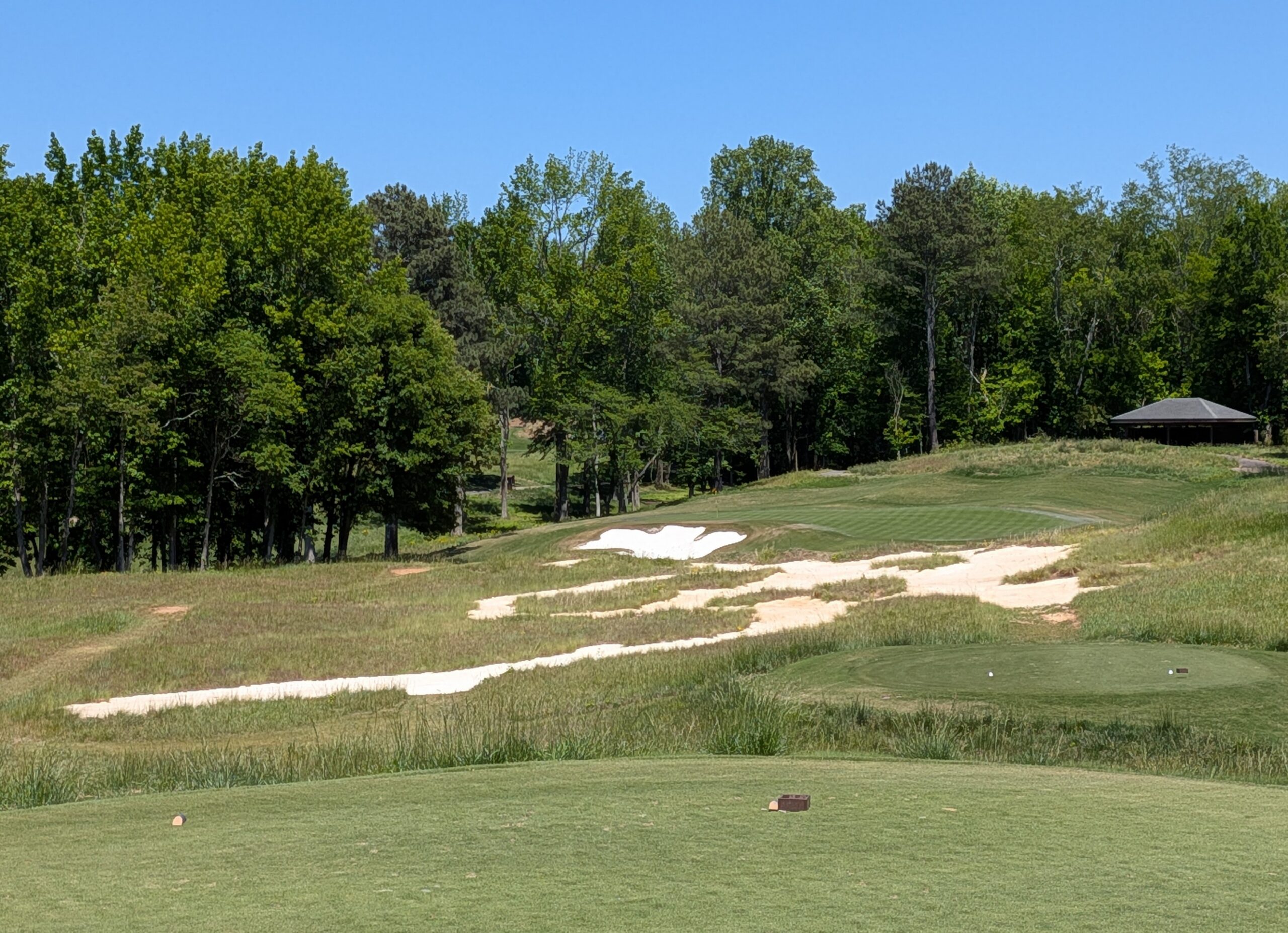
The sixth is a longer, almost out of character par-3, featuring a waste area to play the approach over. This par-3 is basically a redan hole, as I watched my playing partner kick in a ball to a left pin from the middle of the green. I also watched another playing partner drop one right by the pin and end up long and left. Here, the challenge is to shape a draw and use the slope of the green to access any left-handed pins, while the right pins are a bit more accessible. The front bunker is to be avoided at all costs and is likely a bogey for any visitors.
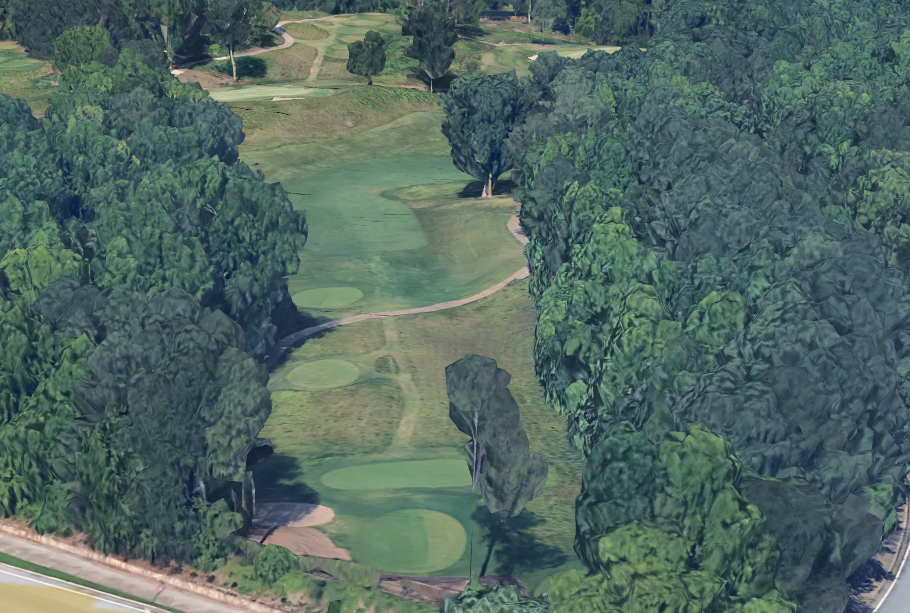
The seventh hole is a very unique downhill par-5, that is really more like a par 4 and 1/2. The tee shot plays down hill and aggressively bends right, meaning the player can take the safe route out to the left and play the hole as a three-shot par-5, or really take on the tee shot with a fade to challenge the corner.
If the fairway is found, particularly on the aggressive line, a long-iron awaits to a well protected green. A deceiving cross bunker complicates any layup shot, sitting about 50 yards short of the green.
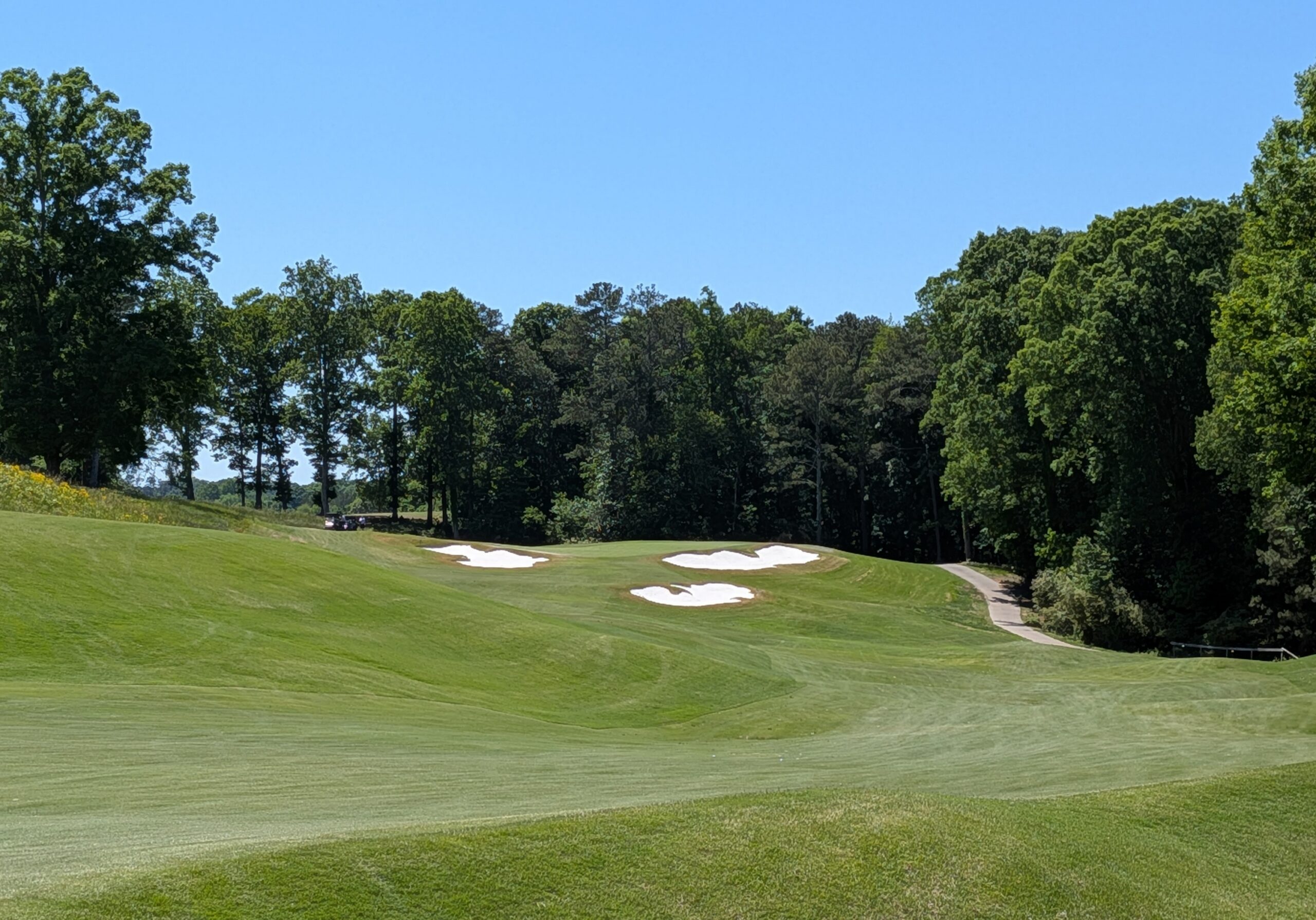
Lastly in this great four hole stretch is the par-3 eighth hole, a simple mid-length hole playing downhill to a fortified green. A simple but aesthetic hole which is significantly different than the sixth hole and requires more of a target golf approach with spin management, as the green slopes back-to-front aggressively.
I haven’t yet mentioned that the greens at The Standard Club are still bentgrass, but were decently firm and in very good shape (albeit, this was prime bentgrass season). I have to wonder though if eventually the club might transition to bermuda greens, given that many clubs in Georgia have already done so. The Standard Club is definitely becoming a late holdout on the Bermudagrass-conversion trend.
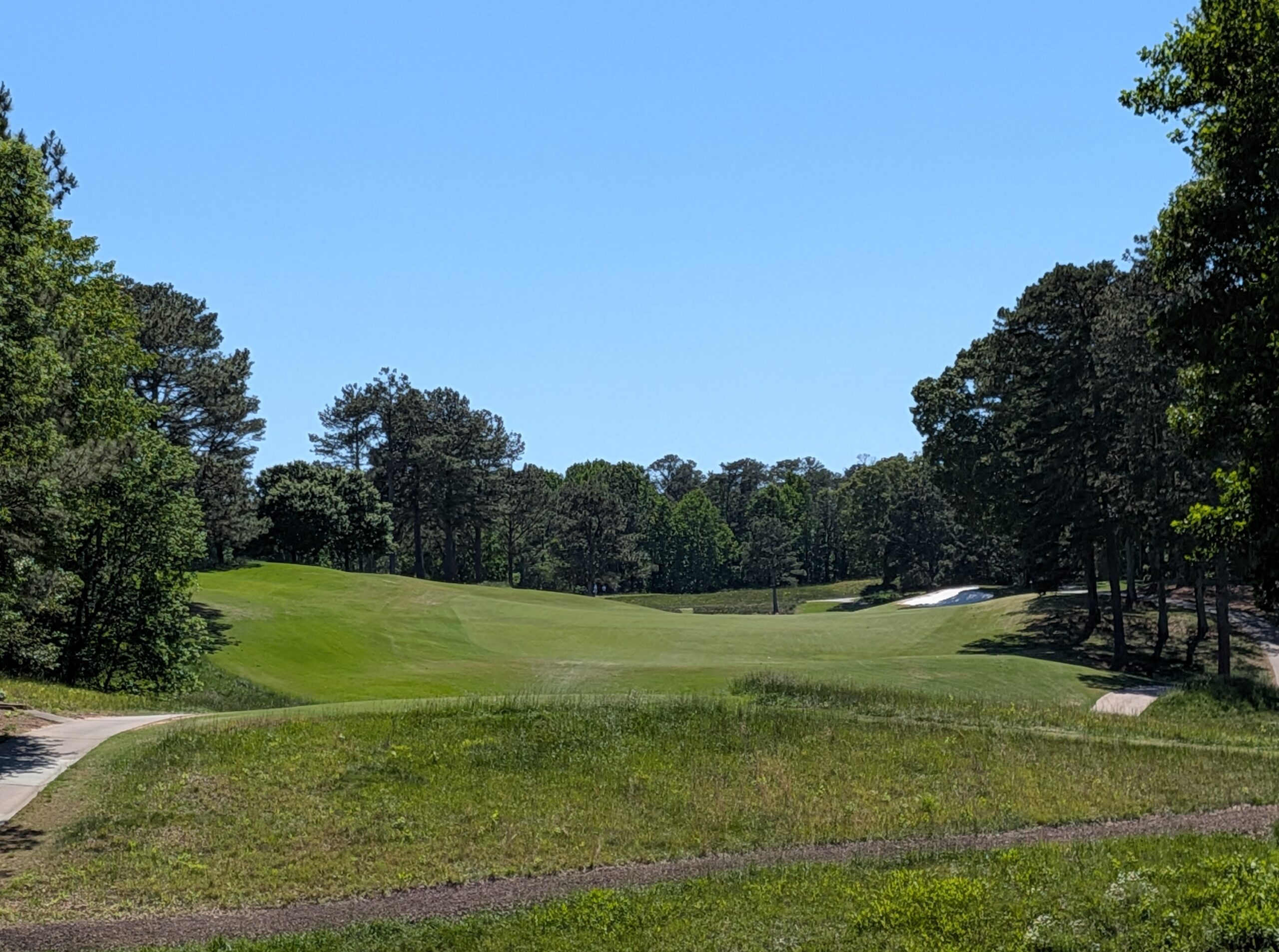
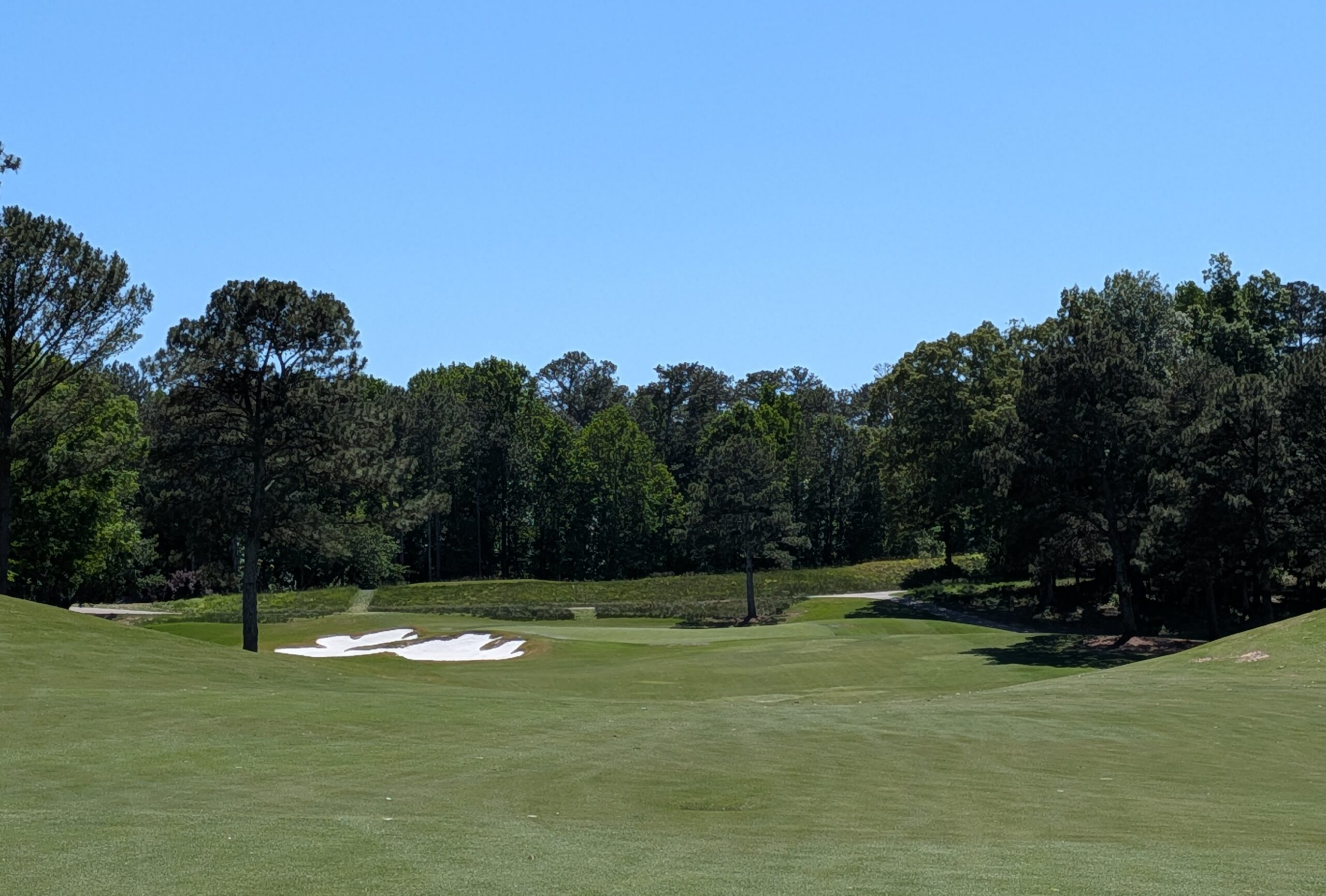
The ninth moved back to the clubhouse – a brutally long straightaway par-4 with a particularly challenging green where par is satisfactory for even the best players.
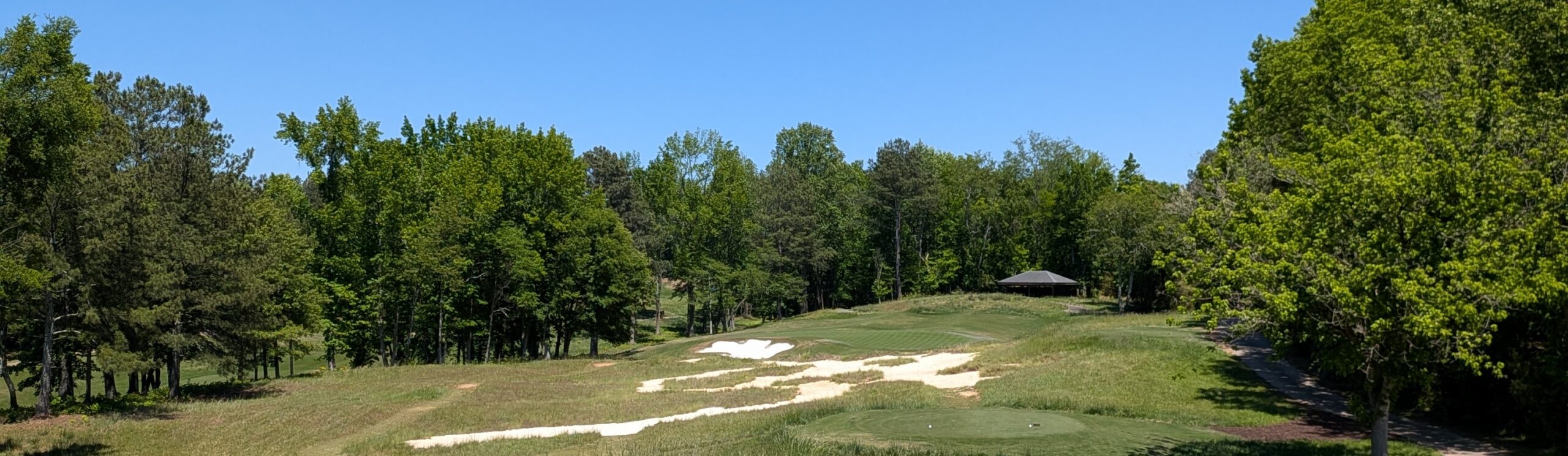
Making the Turn
If I have any criticism to offer, it is that the tenth hole is not a very good golf hole. This mid length par-4 bends to the left with a steep drop off left of the fairway. The fairway also has a significant slope which means that most shots largely end up in a similar location, funneling into the left half of the fairway. Apart from my general distaste for holes that require a draw off the tee, I found the hole to be a bit bland and uninteresting; particularly the tee shot.
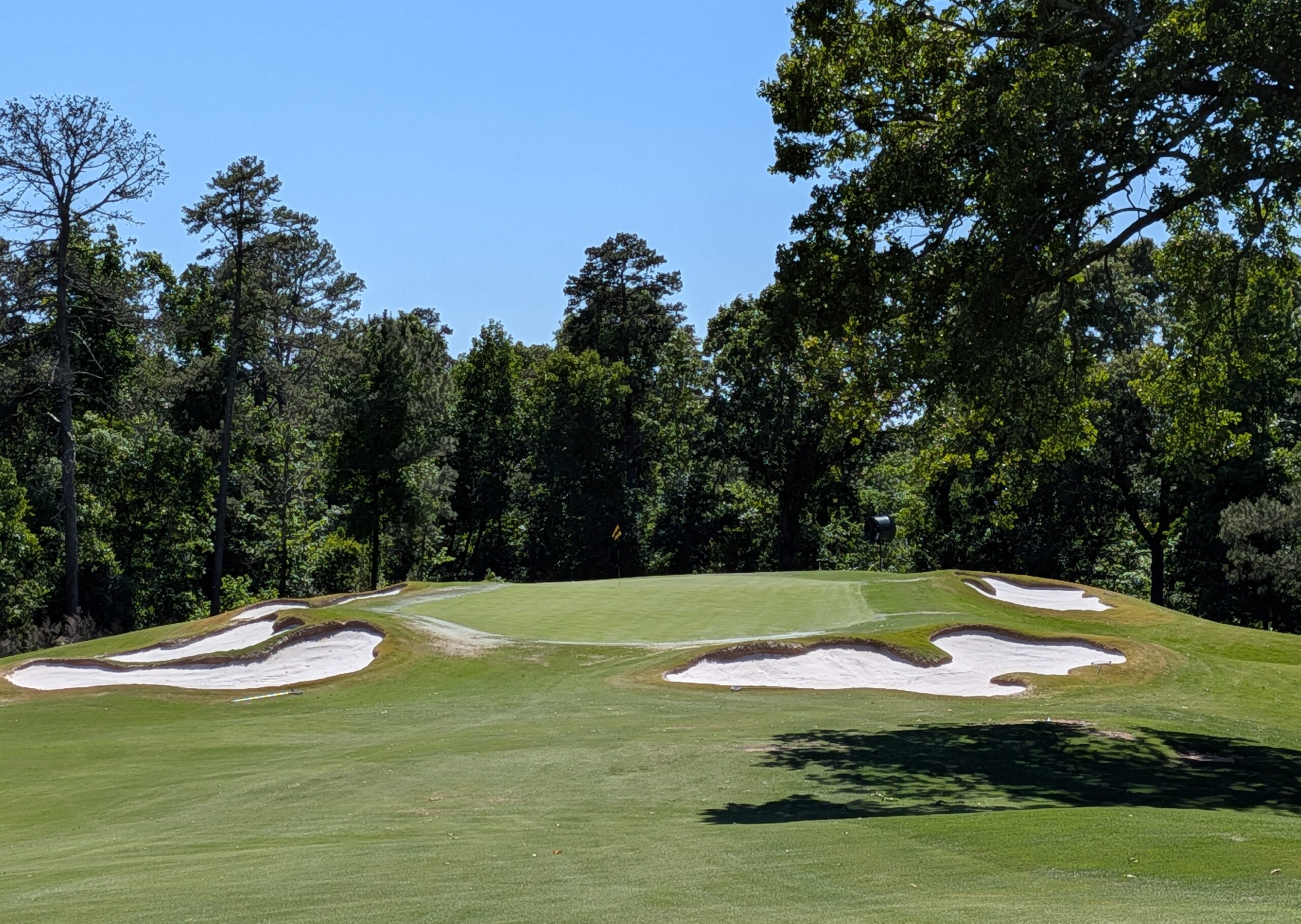
The approach is played to a well fortified green, and not a large one, with steep drop offs on the left, right, and rear.
Then, the fun begins. After a steep golf cart ride down the hill, a practically new golf course emerges. As mentioned, the next six holes will play through in the flat bottom below the hill that most of the course and clubhouse sit atop.
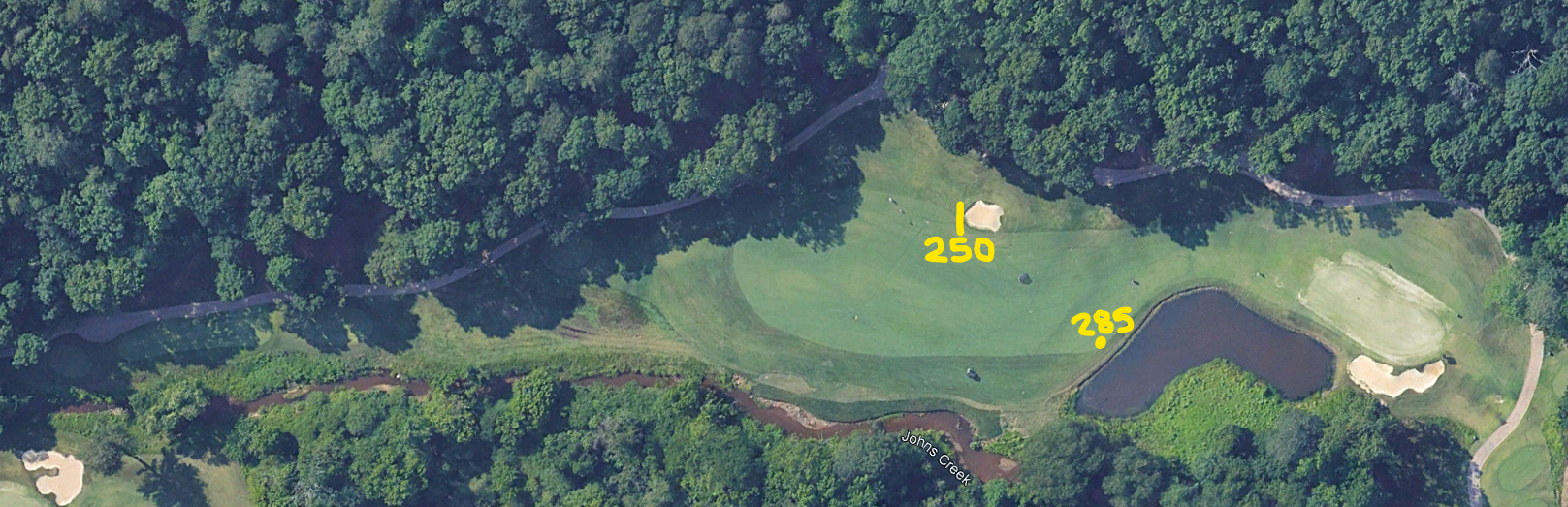
The eleventh is a fun shorter par-4 where the player must keep the tee shot short of the 285 yard mark from the back tee. The complexity comes with the bunker on the left, as it is right in the landing area for a fairway wood, and it protects the best angle into the green. With the green angled from short left to long right, the closer to the bunker the tee shot finishes, the better the angle. The short left to long right orientation of the green can make any hole more difficult, especially for righties, and the front left section has a pretty decent false front that will repel shots close to the edge away from the green. If I could place a ball in the fairway for the best angle, it would be right behind that bunker, which is a dangerous ask when the next shot must carry a pond.
For the difficulties that the right-to-left tenth caused me, the twelfth rewarded me in exactly the opposite way.
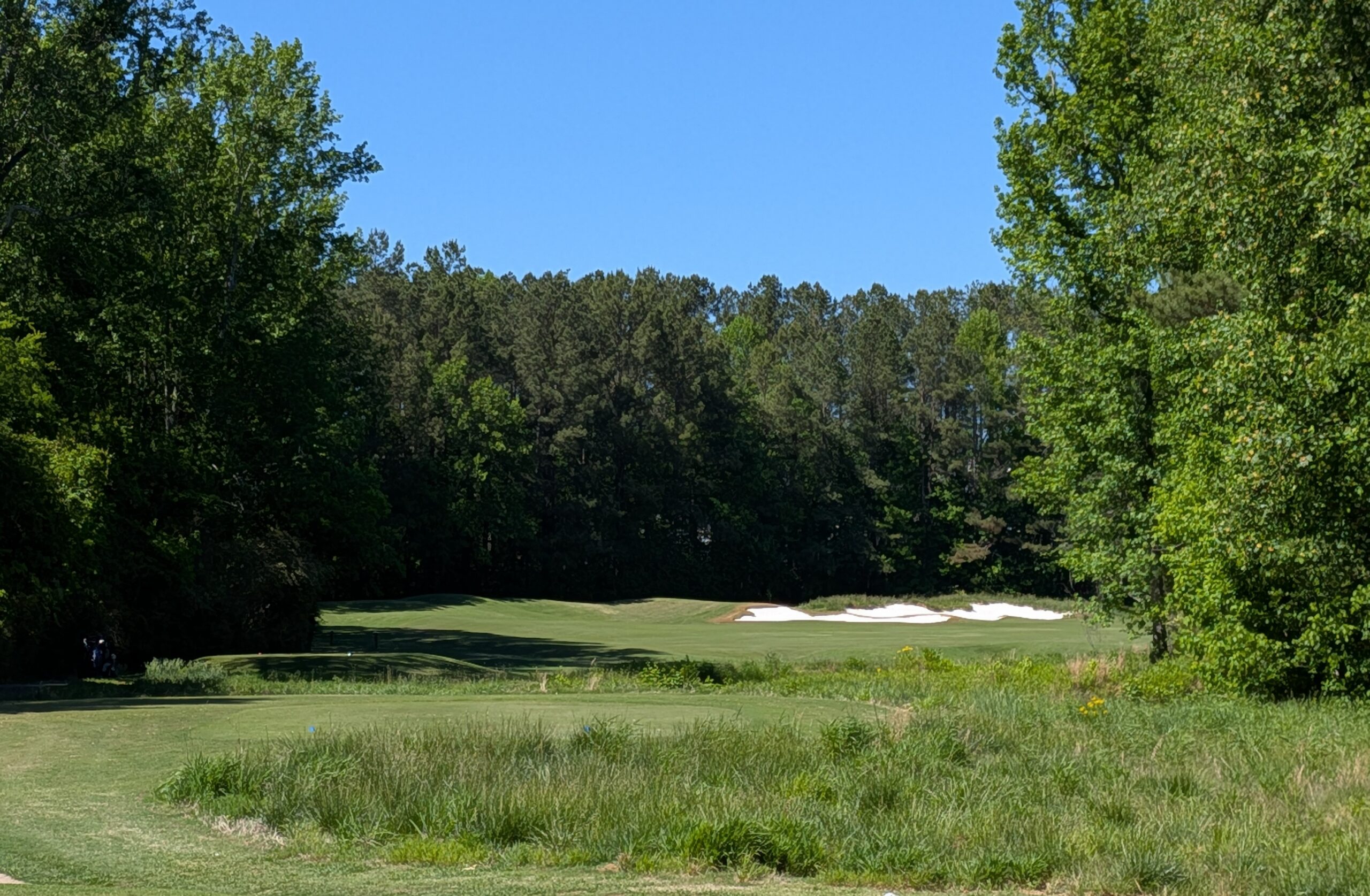
From the tee, the twelfth offers a simple choice: lay up in front of the bunkers or send a huge cut around the trees on this short par-5.
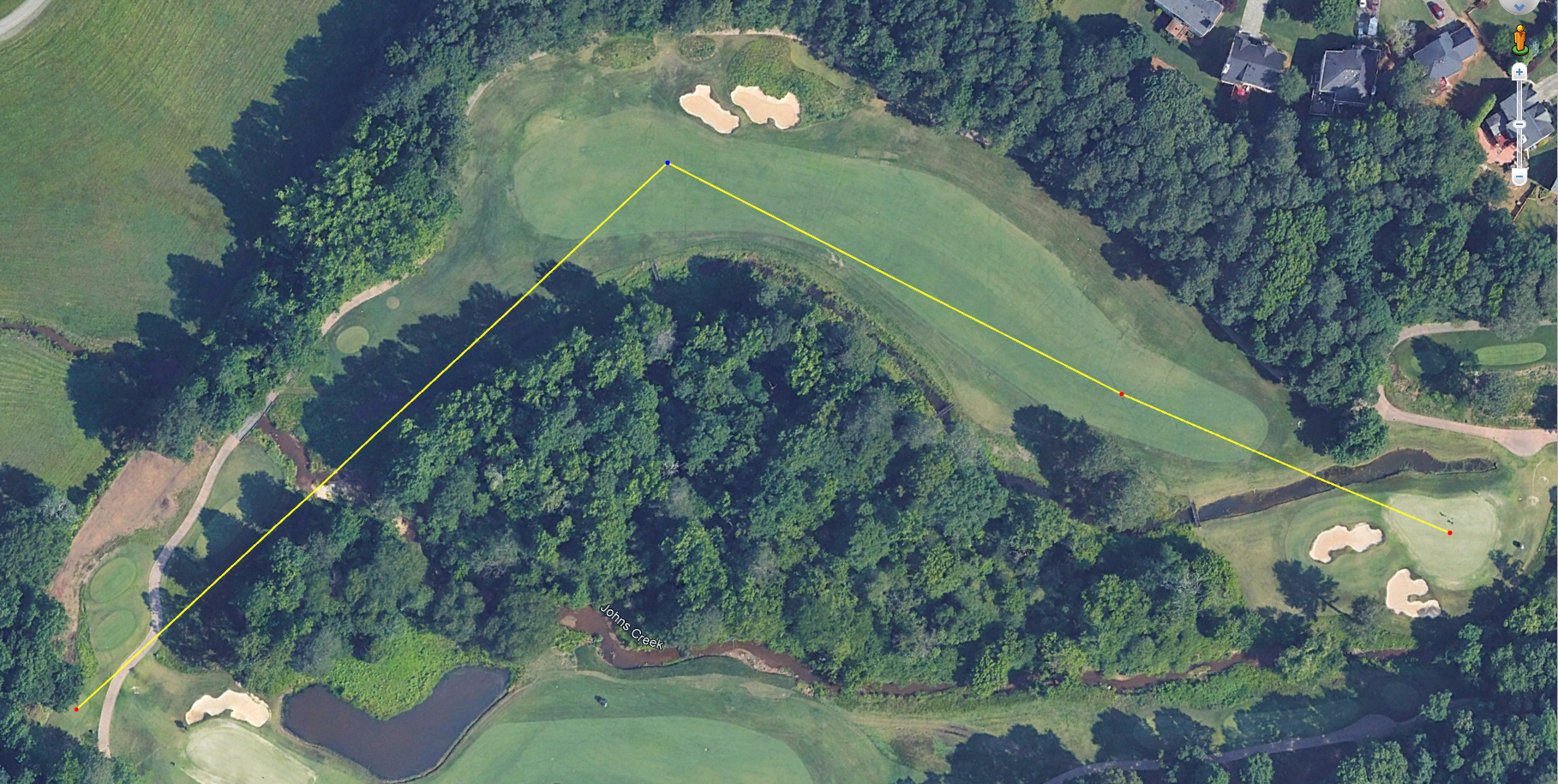
I really liked this hole as someone who can hit a comically shaped slice, but I presume most players are playing this as a forced layup, three shot par-5. Perhaps that takes some of the intrigue out of the hole for most.
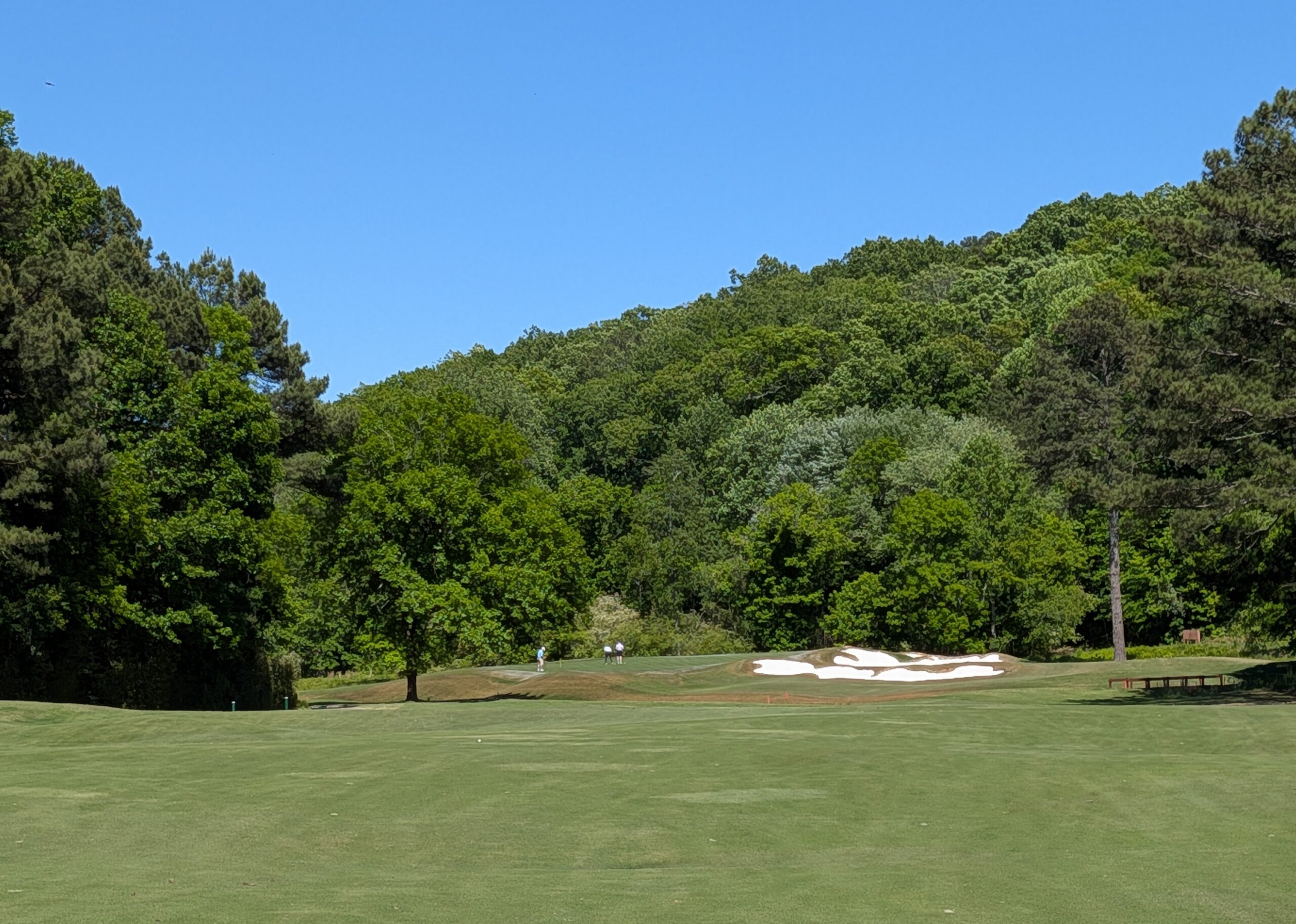
I also have never played a tournament at The Standard Club, obviously. But, I presume they must have some type of local rule that prohibits a player from playing back down the eleventh fairway. A pair of hybrid shots could easily reach the green in that direction, so long as you could get it high enough to clear the trees on the second shot.
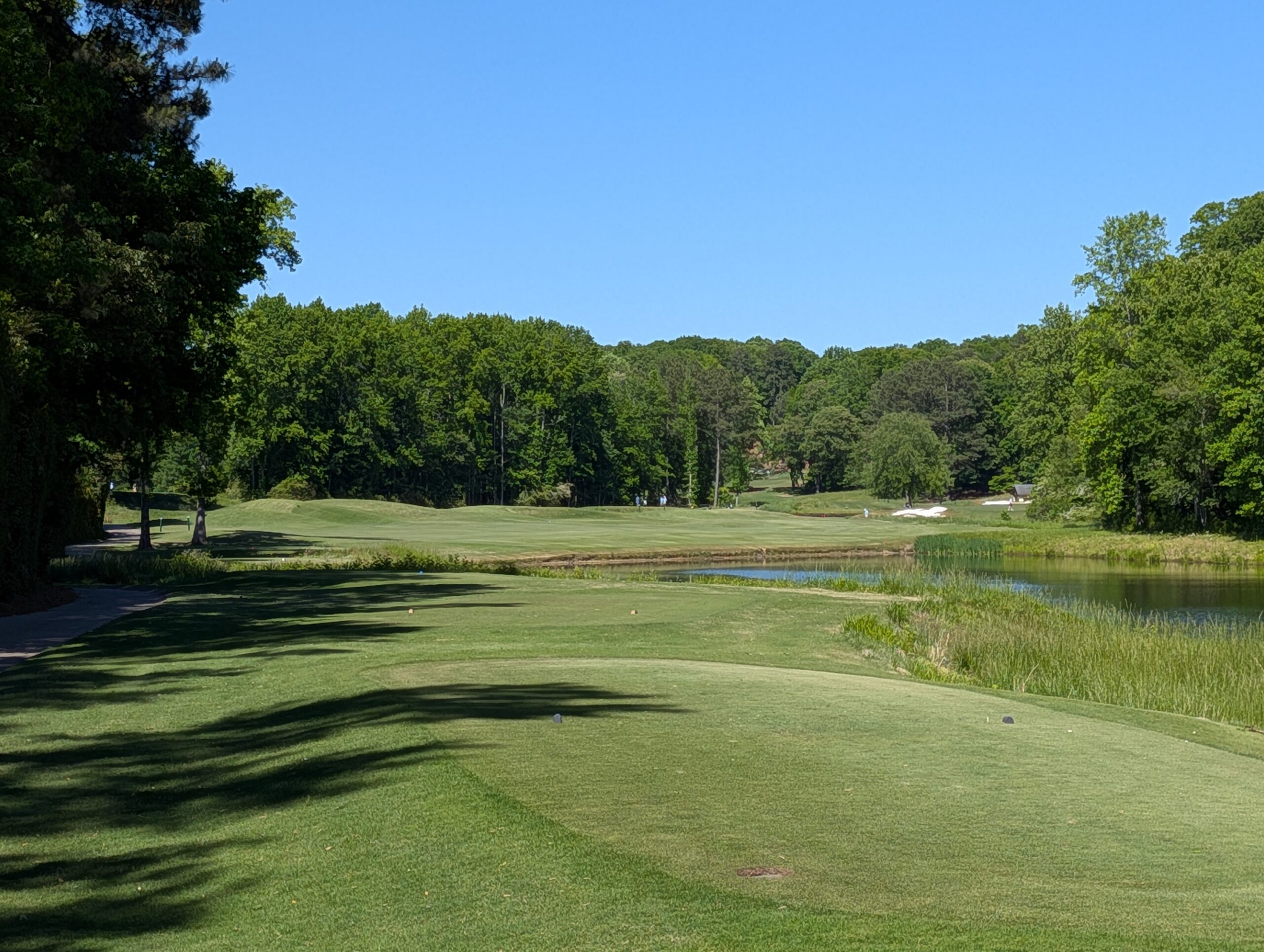
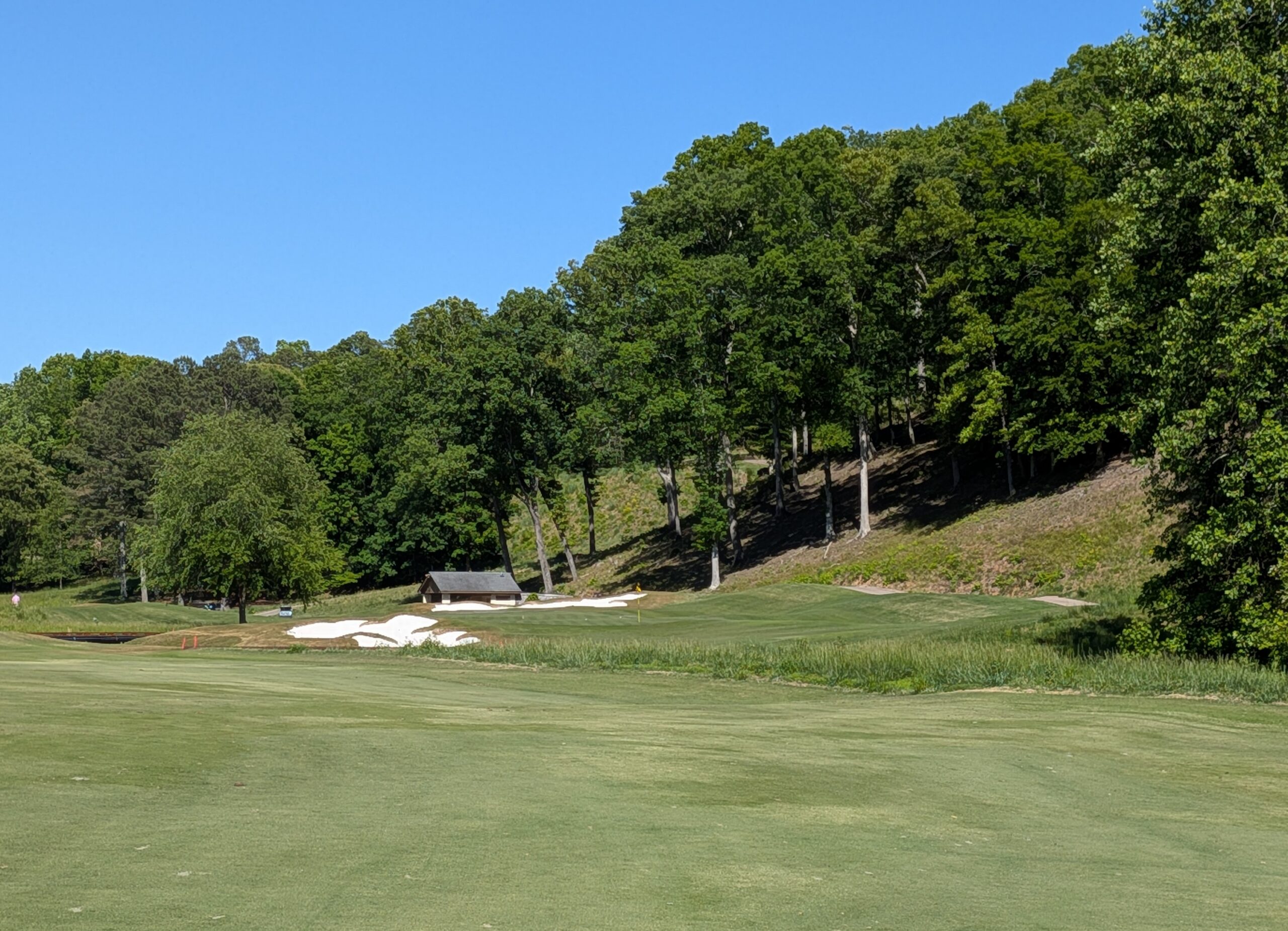
The thirteenth is another strong mid-length par-4 that could be played with either driver or fairway wood, as the fairway shimmies between a pond on the left and right of the landing area. Once in the fairway, a short-iron across the creek remains on what is probably the flattest hole at The Standard Club. I really love that Hills and Riley managed to make this flat area of the course so interesting.
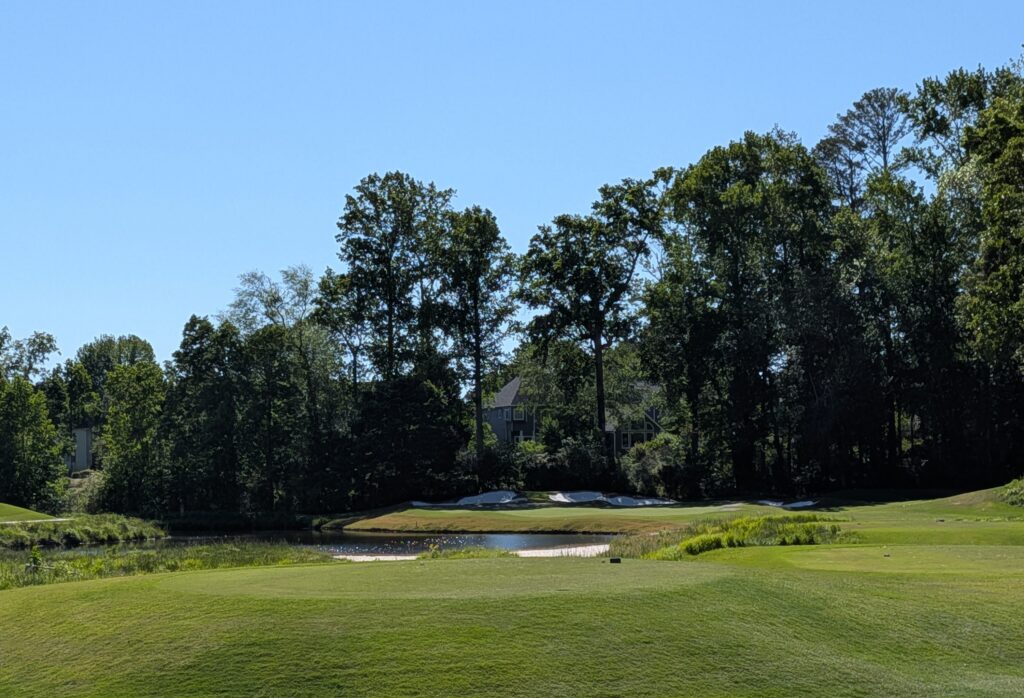
The fourteenth is the first par-3 on the back side and is absolutely gorgeous. The shadows were hitting this hole a bit unfavorably, and it is much prettier than photographed above, as the player must negotiate a frontal pond and multiple catch bunkers behind the long par-3. Again, another flat hole made very interesting by the use of water and mounding the greenside bunkers; a real masterclass of creating visual intrigue from flat land here from Hills and Riley.
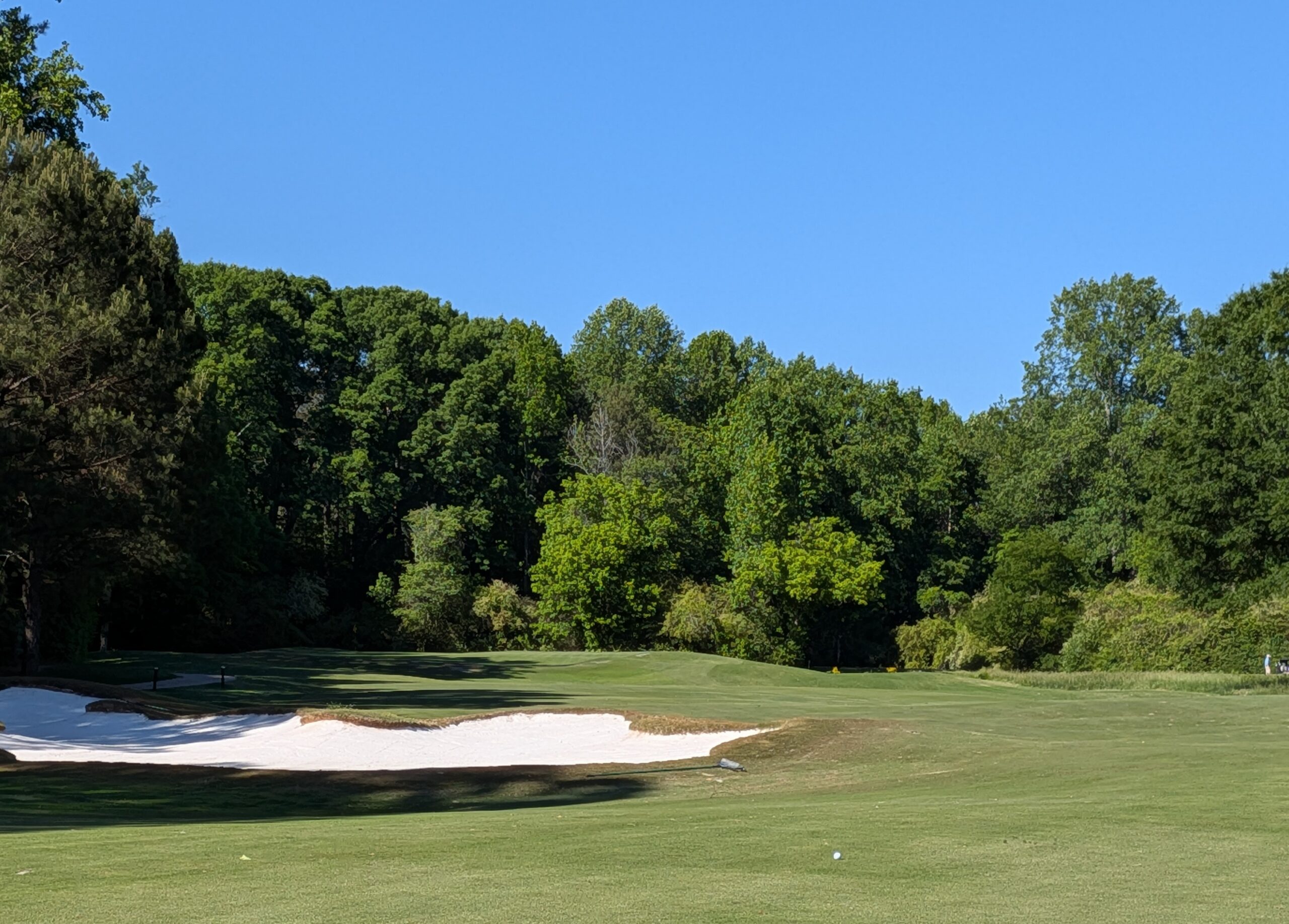
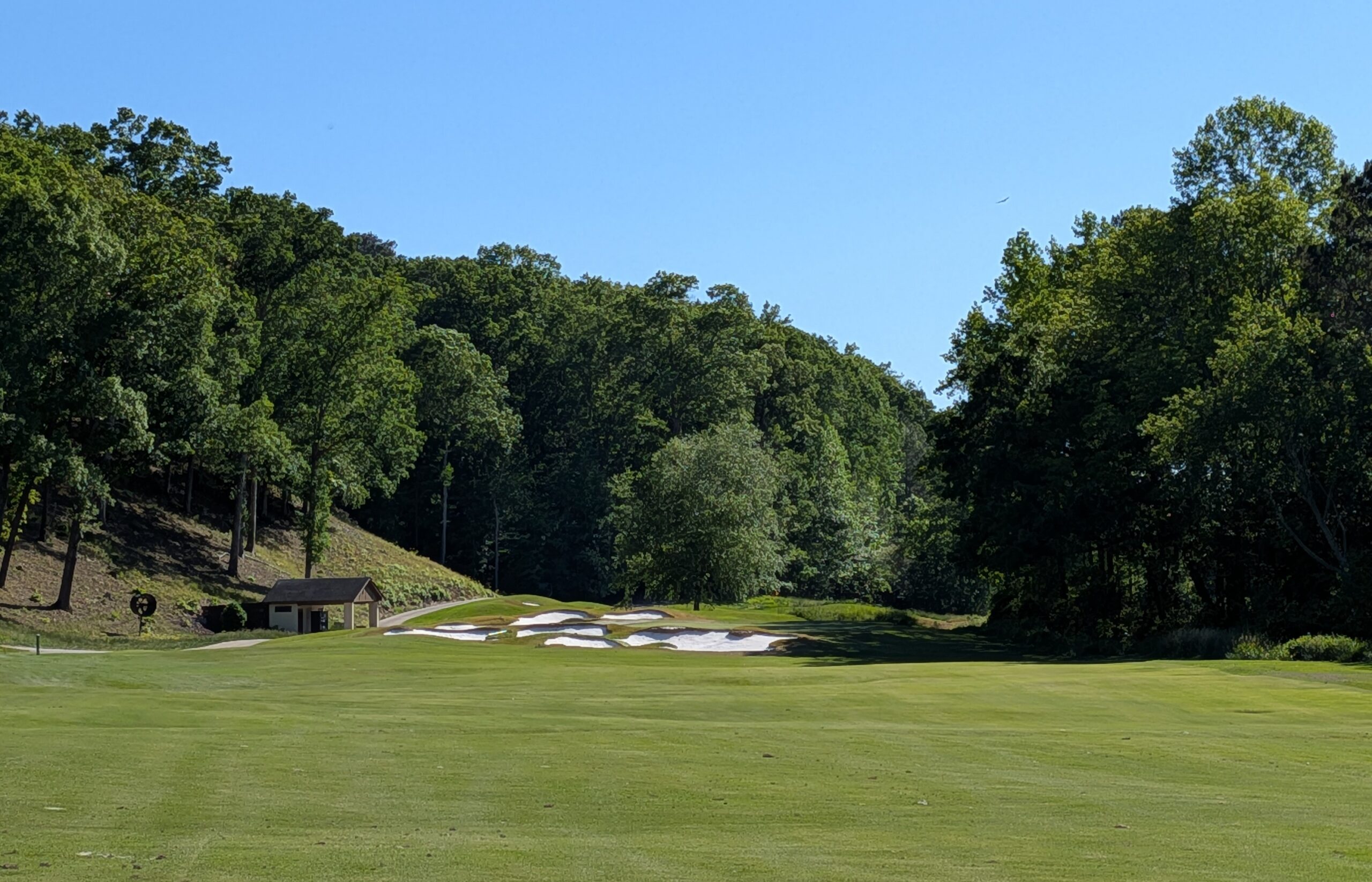
The fifteenth and sixteenth holes finished out the bottoms area of the course as dueling par-4s, one that doglegs left and one to the right. Fifteen nearly requires a draw from the tee box and sixteen greatly advantages a cut into the right side of the fairway. Both were good holes, but I loved the approach shot into the heavily guarded sixteenth with enough visual intimidation to get in even the best player’s head.
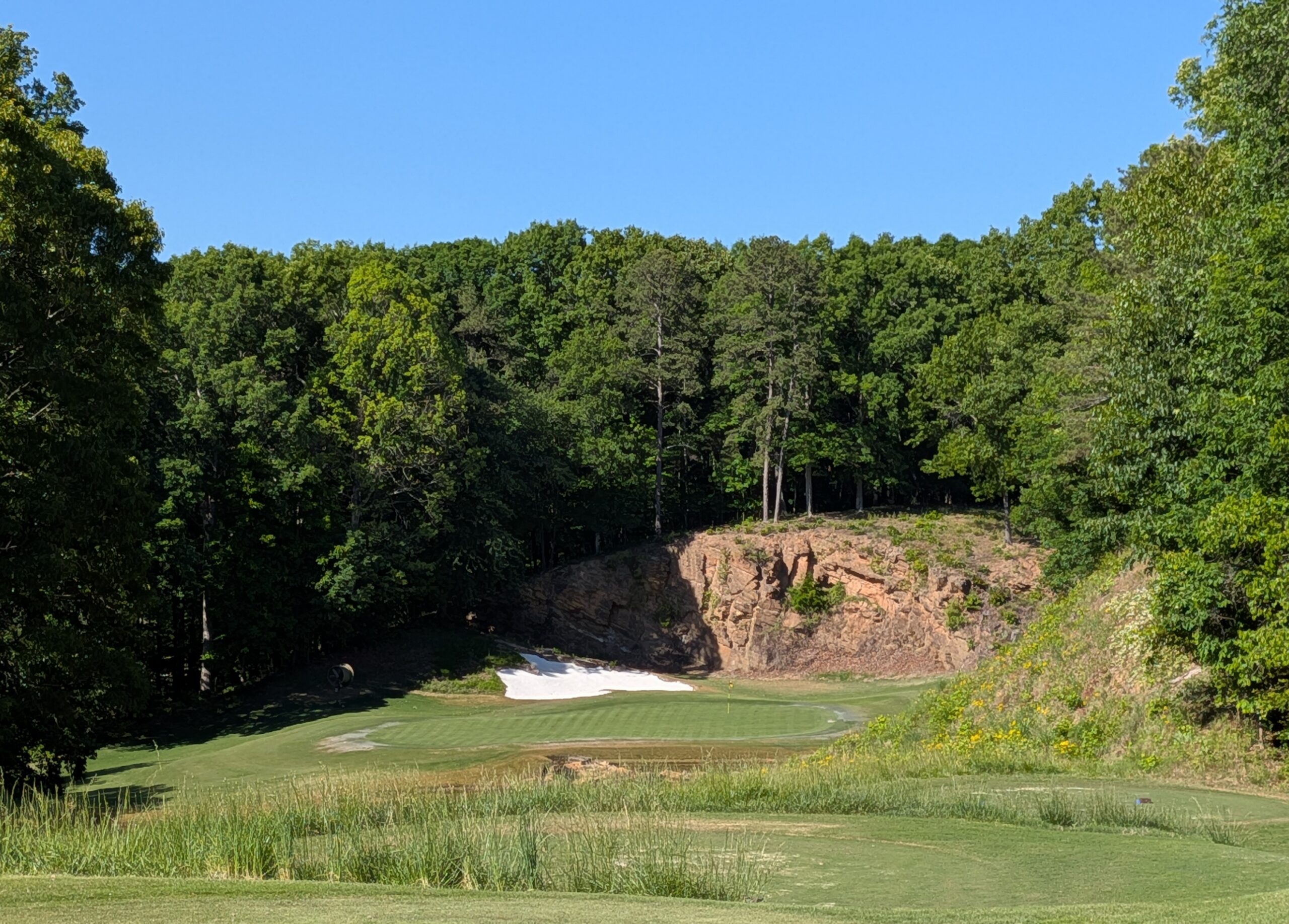
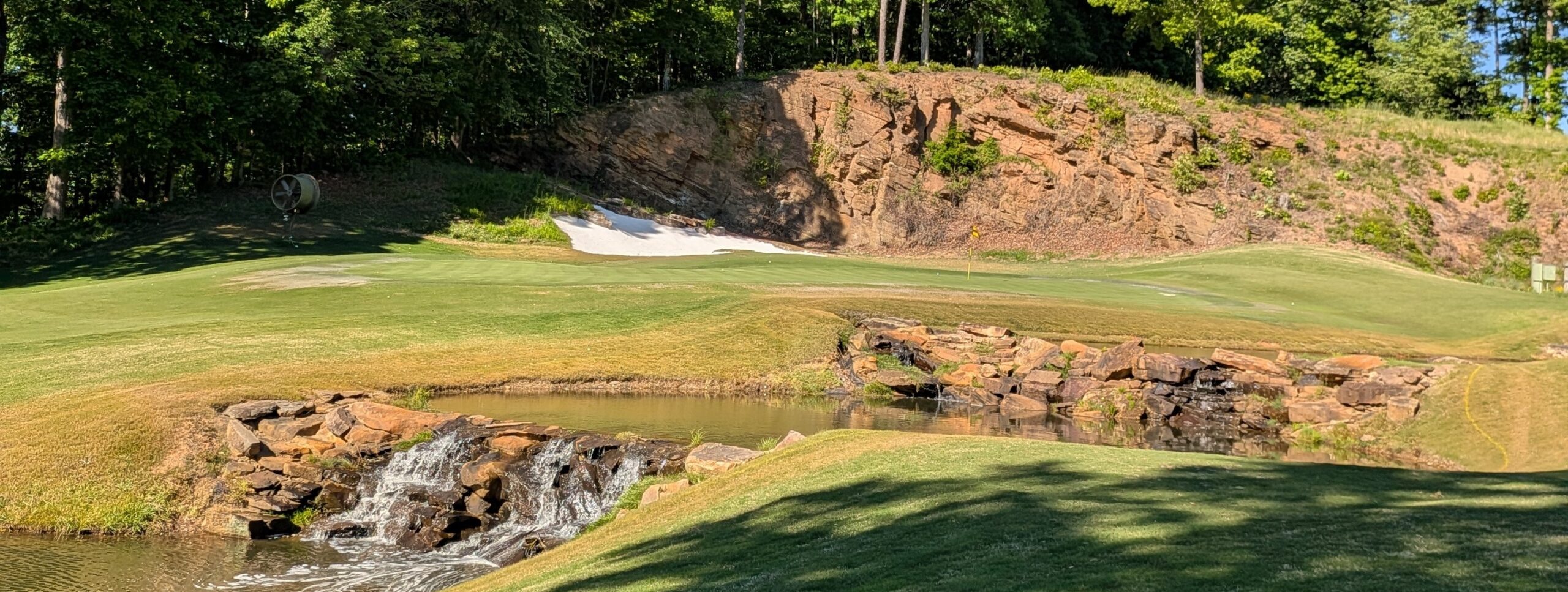
The drive to the seventeenth tee is straight up to the top of a hill where a mid-length (very long from the tippy-tips) par-3 awaits to take you right back down. The signature hole at The Standard Club, the seventeenth green sits below a red rock formation behind the green and a frontal pond/creek that gobbles up anything short. Fortunately, the green is large here, and with only one greenside bunker to contend with, this hole is an opportunity if the tee shot is well struck.
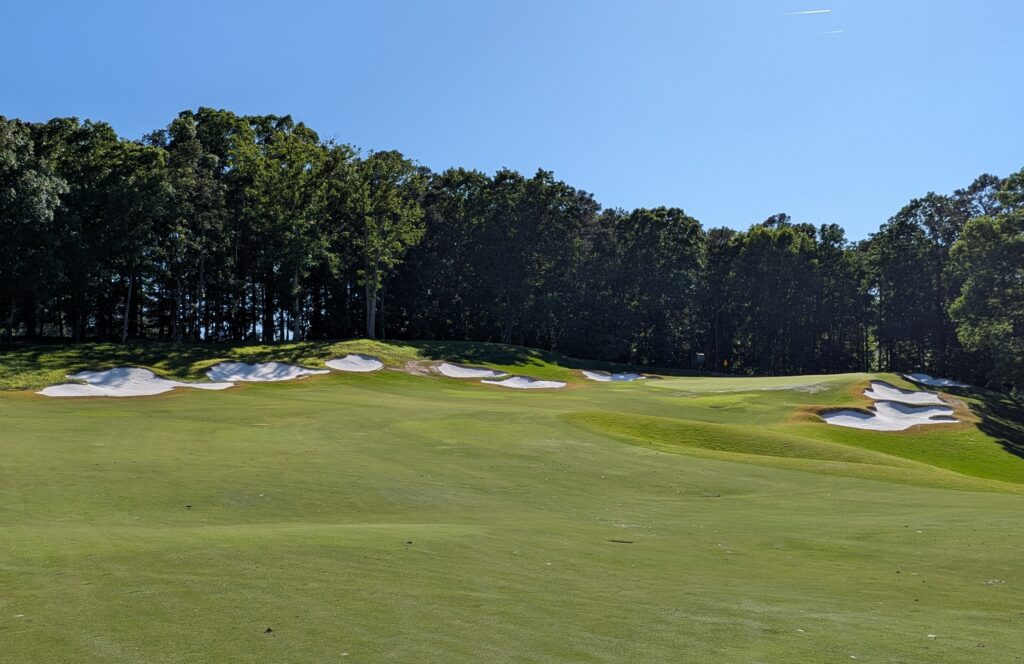
Lastly, the eighteenth, a par-5 finishing hole of considerable length. The tee shot here isn’t the most demanding, which is nice to finish the day. The approach shot or layup is quite the demand, forcing the player to negotiate a steep hill to the right of the fairway, and a litany of fairway bunkers just through the fairway – all of which will need to be avoided. However, with a successful layup, the eighteenth presents another very realistic birdie opportunity, or, a last opportunity to enjoy the view at The Standard Club.
Final Thoughts
The Standard Club was well conditioned, but left just a little to be desired. Clearly, some of the areas around the fringes were a work in progress (but, I trust them to get this fixed in short order). The tees, fairways, and greens were all in above average condition. The course has real character, tying two totally different nines together with its distinctive bunkering and option-rich tee shots. Aesthetically, I was incredibly impressed how beautiful The Standard Club was, particularly because I knew I was weaving through a suburb of Atlanta.
Now, let’s talk about rankings. I haven’t played all the courses in Georgia and come at this from a place of ignorance. But even in a state as deep as Georgia, there is no way there are thirty courses better than The Standard Club. I really am not sure what I am missing. This is a course with great character, incredible aesthetics given its location, no homes on the course, great facilities, above average conditioning, strategic options, high shot values, and plenty of shot options.
So, I look for a second opinion, and Top100GolfCourses.com has The Standard Club as #42 in Georgia. No help. I suppose I am going crazy, but I’m also not afraid to be crazy. So my verdict: The Standard Club is more likely in the top-20 in Georgia than it is outside of it. But, perhaps I’ll confirm when I play the rest of them.
CR&J Final Rating:
Shot Options: 8
Challenge: 7
Layout Variety: 8
Distinctiveness: 8
Aesthetics: 8
Conditioning: 7
Character: 8
Fun: 9
Total: 63/80
Read More: How We Rate Courses
Rating Scale Details:
> 70: Top-50 U.S.
65-70: Top-200 U.S.,
60-65: Best-in-State List
57-60: Best-in-state List Contender
53-57: Very Good
48-53: Good
40-48: Average
< 40: Poor

Author: Kyle Taylor
Kyle is the lead course reviewer at The Course Review & Journal. Kyle has been playing golf for over twenty years, is a plus handicap, and actively competes in USGA and State Golf Association events. By trade, Kyle is an attorney.
Kyle Taylor is a pseudonym used by CR&J’s lead course reviewer to protect personal relationships. The reviews and opinions remain entirely the writer’s own.
Leave a Reply
You must be logged in to post a comment.