
Time to Read:
|
This TPC Southwind course review is based on a round played in April of 2026.
TPC Southwind is a private course in Memphis, TN.
CR&J’s Final Rating: 61/80 (Best-in-State List)
Learn More: How We Rate Courses
Prejudging. It is one of the hardest things to avoid when writing these reviews. Think about it, I have access to Google Maps, and normally I have skimmed other review sites and any Reddit threads. Before I step on property at any particular course, I have a really good idea what the course is about. Part of that is because I print a yardage book and map every new course I play, mostly to assist with club selection on tee shots and aiming points, but also to check any hazards and get an overall feel for the course. Part of what motivates me to write these articles is the hope that others do the same: either before their round, to prepare for the experience, or after, as a kind of debriefing.
TPC Southwind may have been my toughest test yet in setting my negative assumptions or connotations aside.
Realistically, the odds are stacked against this course. The TPC network courses have a reputation, fairly or not, for producing underwhelming golf. Golf Digest recently ranked the 36 courses played on the PGA Tour in 2026. TPC courses made up five of the bottom seven. Only two of the eight TPC stops ranked in the top 22. This doesn’t account for the broader TPC catalog that many find forgettable by consensus: Boston, Sugarloaf, Piper Glen, Harding Park, Summerlin. Whether that reputation is fully deserved is another question. But it exists.
Then there’s Memphis. The money that built Memphis has, by and large, left the city. Memphis was the largest city in Tennessee for some time, and is still the corporate headquarters for FedEx. While FedEx remains, most of the money that sustains high quality private golf clubs has moved to Nashville or other areas of the southeast.
Because the money resided in Memphis 30-40 years ago when golf clubs were being built, or becoming a symbol of prestige, Memphis is still home to four of the top fifteen golf courses in the State of Tennessee (Nashville has 6, Memphis has 4, Chattanooga has 3, Knoxville has 2). Memphis still holds an outsized presence in the state’s rankings, a reflection of a different era of development.
Lastly, TPC Southwind has had a PGA Tour event for longer than I have been alive. That kind of longevity can lend credibility or artificially reinforce it. Paired with these other factors, I presumed this meant that Southwind’s rating as the sixth best course in Tennessee was likely propped up by the Tour’s annual visit. The course was designed by Ron Pritchard and opened in 1988, with the Tour event coming in 1989, meaning the course was almost purpose built for the Tour’s annual stop in Memphis.
Surely, you can understand my apprehension.
What I found was not a dying club with a ranking propped up by the reputation of an important Tour stop. Rather, I found a course that was fun, playable, and (particularly on the second nine) unique and thought-provoking.
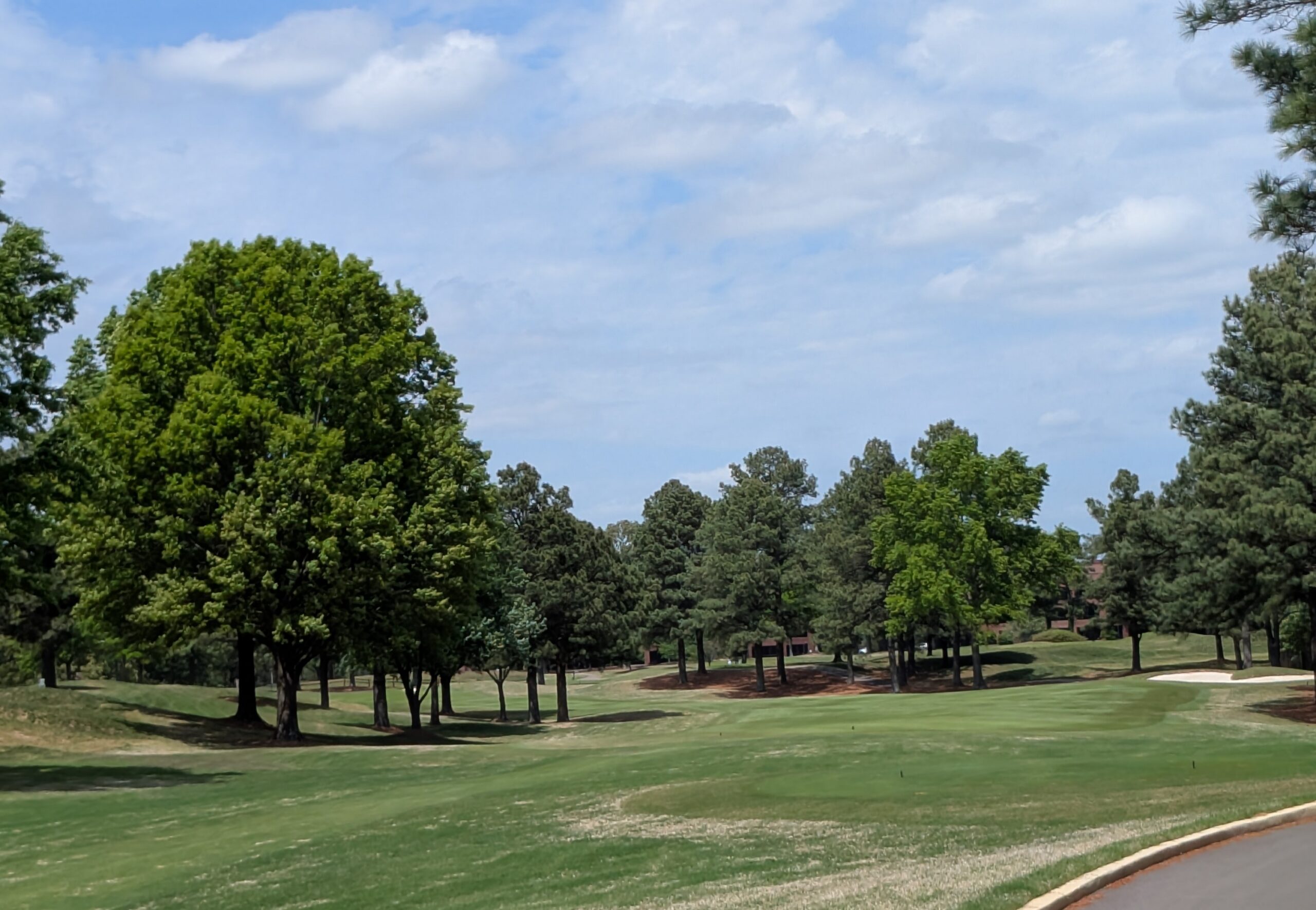
What the course is not is overly aesthetic, which makes it look somewhat bland and uninteresting on TV; my pictures of the place exude the same mediocrity. But the actual golf is well above average, and the course is an exacting, but fair, test of golf.
In a way, I needed a course like TPC Southwind to start 2026. The calendar ahead is loaded for us at The Course Review & Journal with courses that will test everything we think we know about what makes great golf. Southwind was a timely reminder that arriving with a fully formed opinion is the easiest way to miss what’s actually there.
The First Tee
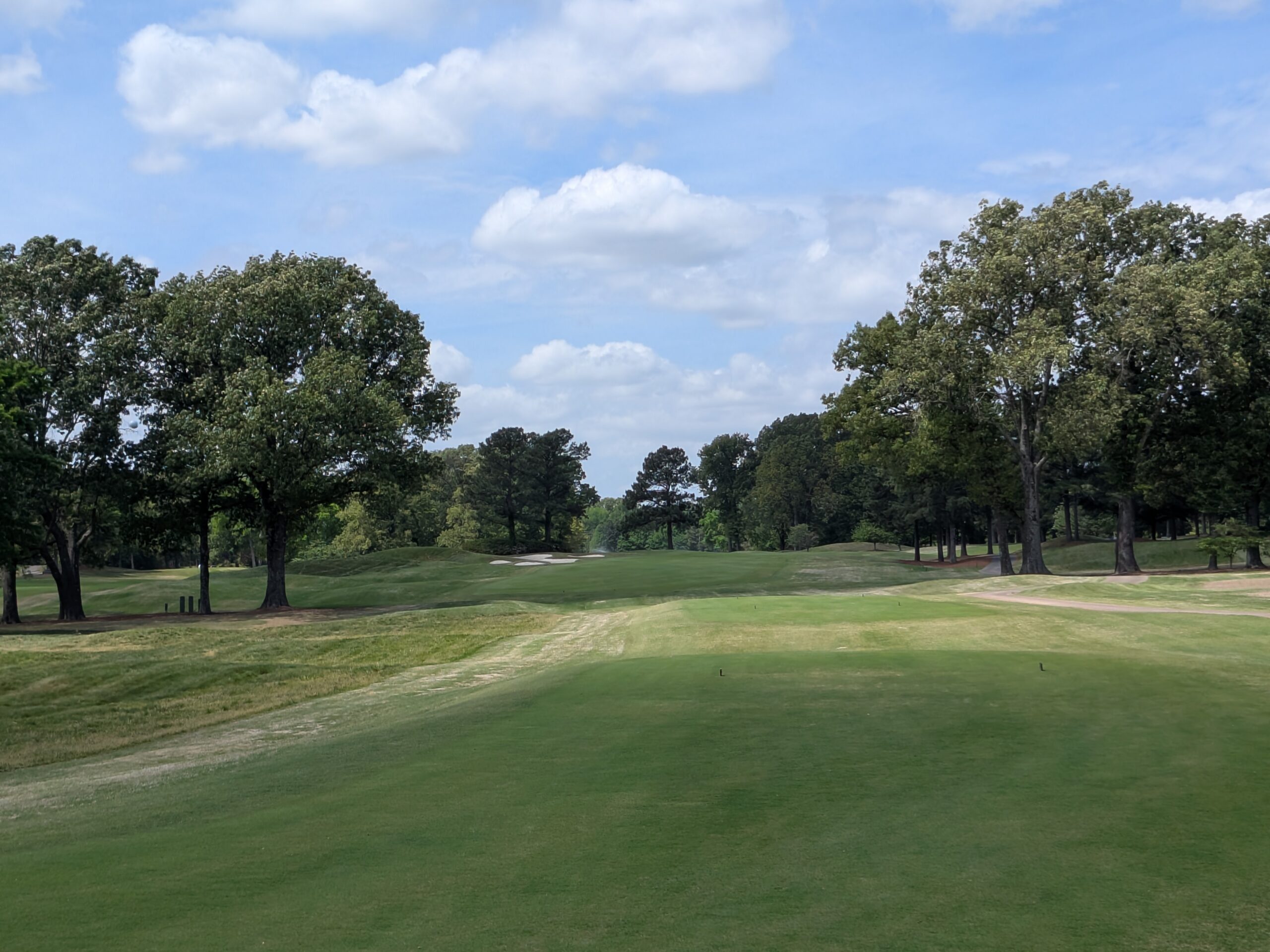
Like TPC Sawgrass, TPC Southwind’s first and tenth holes are nearly mirror images of each other. This is a deliberate choice for a course built to host professional tournaments, where players starting on opposite nines shouldn’t face a meaningful advantage depending on their starting hole. In the case of the opening holes at Southwind, the first is a rather tight dogleg left in which the fairway stops about 80 yards short of the green. The primary task here is to use something less than driver to find the fairway.
This first hole introduces you to a few of the themes of TPC Southwind. First, the course is somewhat tight; not overly so, but the fairways are on the narrow side and many of the holes work around trees positioned strategically close to fairways, tee boxes, and greens. Secondly, the firmness. The firmness may not be entirely intentional, as Southwind just went through an extensive tee and green restoration where some tee boxes and all eighteen of the putting greens were rebuilt.
This recently happened at CR&J’s home course as well, and we also now have bermuda greens. In case this hasn’t happened to you yet, these new greens (particularly bermuda) play very, very firm for the first few years. We are in year four at our home course, and they are starting to soften to where a pitch mark is possible to make with a short iron, but still on the firmer side. Southwind is much earlier in its timeline, and the greens are still very, very firm. For example, compared to a softer bentgrass green, I’d expect 15-20 times the rollout on pitch shots, and shots hit into the greens with long irons will need to hit the front edge to have any chance of holding the putting surface.
Fortunately, the third feature of Southwind is that those very putting surfaces are somewhat benign and do not feature a ton of internal swales and undulation; but rather, a more consistent slope across most of the surface (but for a few holes). On an already tight golf course, this puts even further premium on finding the fairway. Fairway spin rates are approximately double the spin rates with the same club from the rough. To have any chance of holding the greens and remaining in control of the ball, finding the fairway at Southwind is the primary objective.
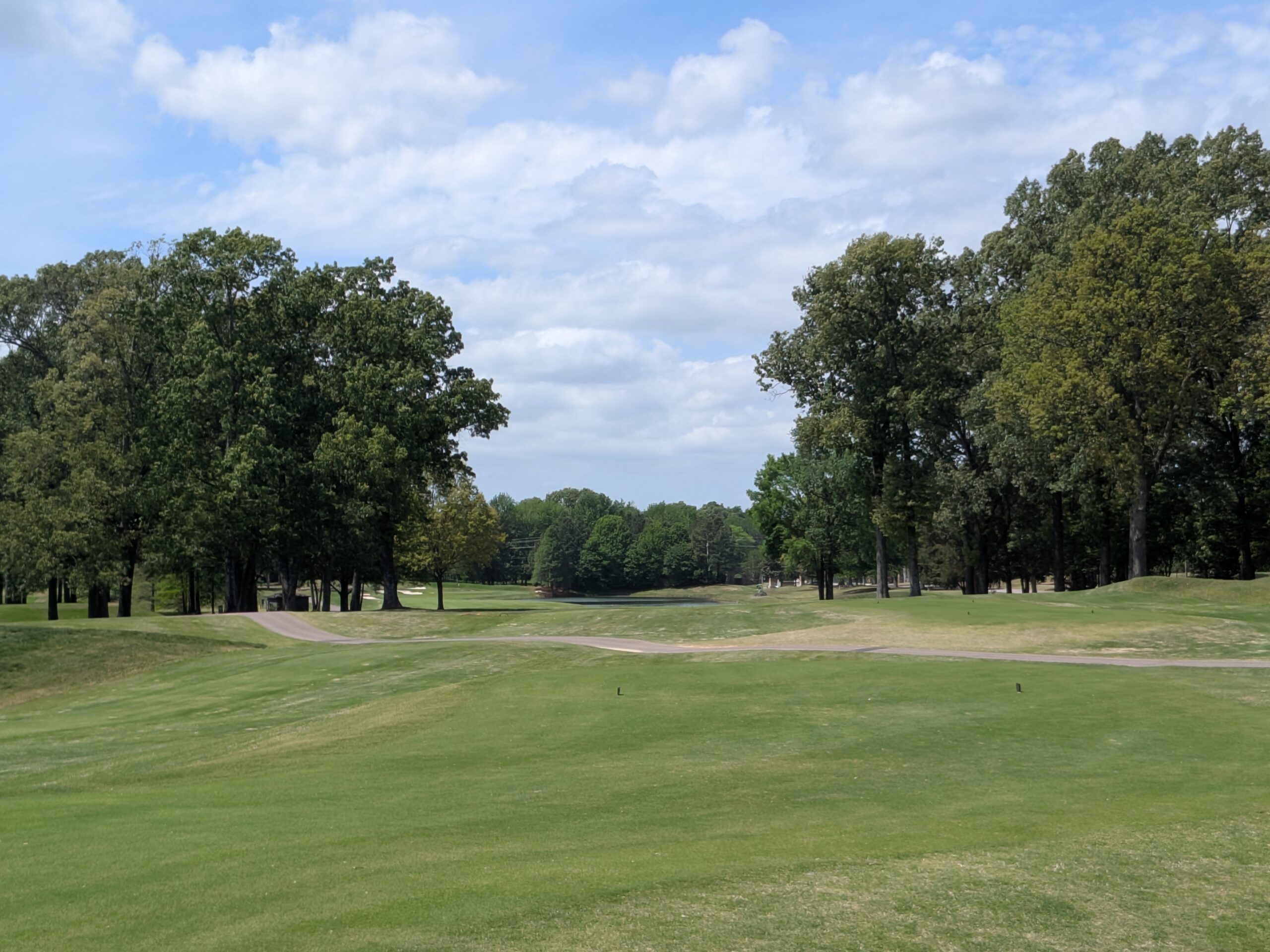
While the first hole doglegs left, the second hole offers relief to those that fade the ball, and doglegs right somewhat similarly. The second is a bit of a shorter par-4, and with a good tee shot, should leave a simple wedge or pitch shot into the green. The second represents a good opportunity for birdie.
On the way from the first to the second, a main road is crossed. The second through the seventh holes are all played on this separate side of the street than the rest of the course, creating a bit of a different feel, especially in terms of backdrop. This bit weaves through the business complex that contains FedEx’s headquarters, among other businesses, as well as an apartment complex. It is a strange but unique backdrop for the front-nine of a golf course.
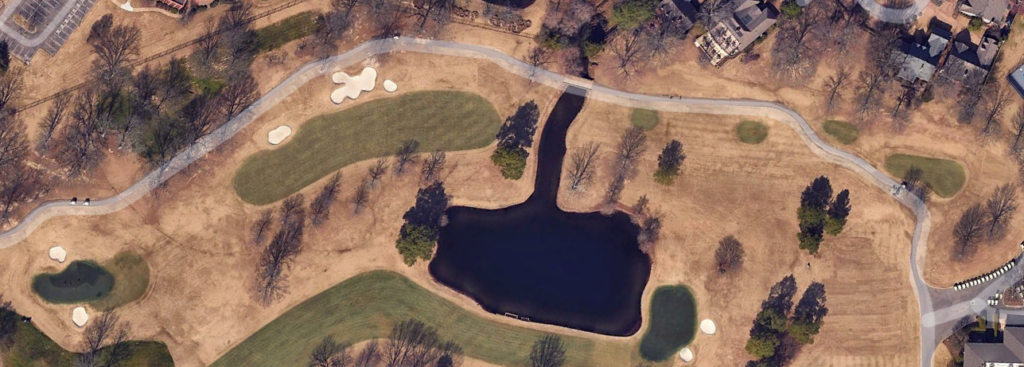
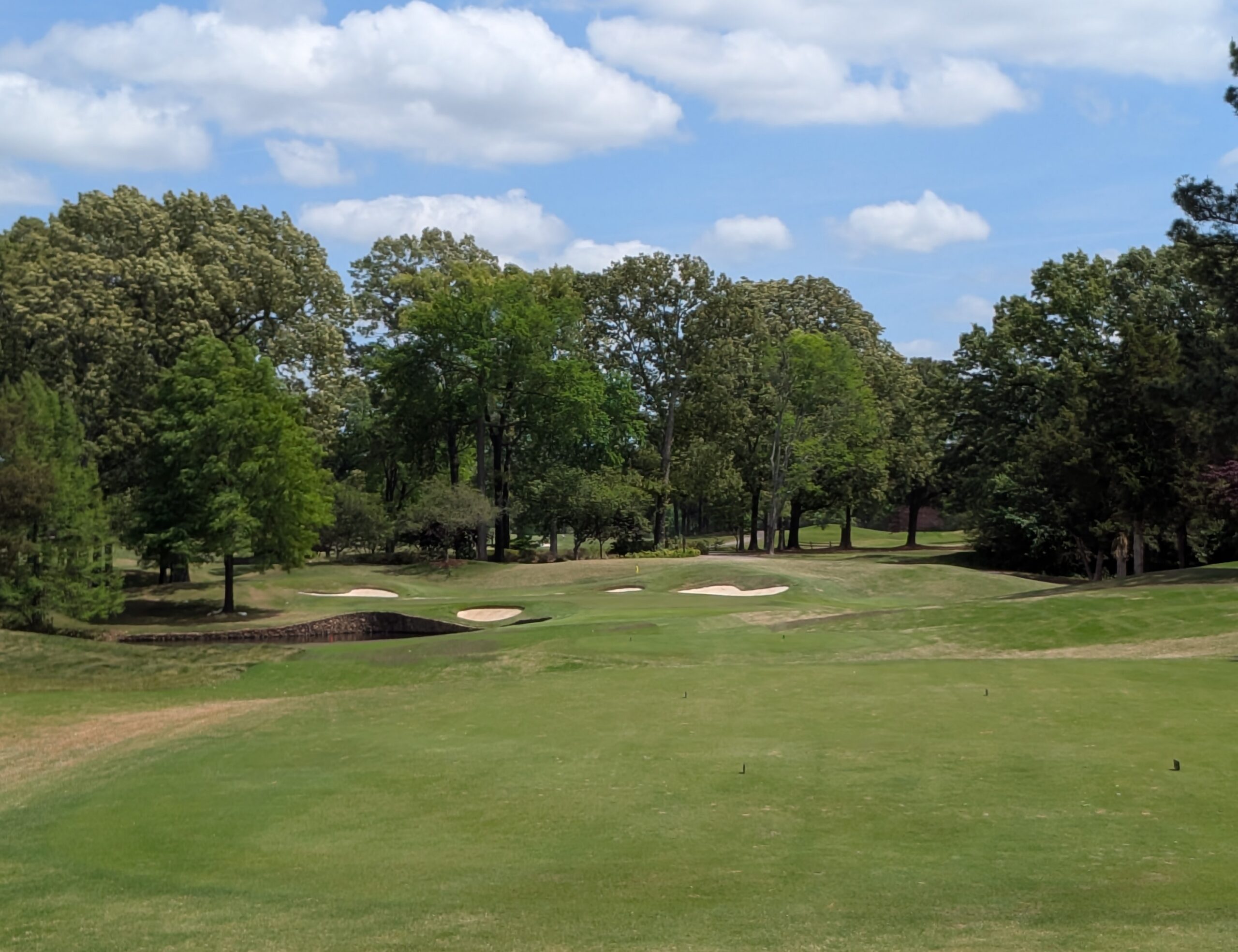
Perhaps the best hole in this six hole “FedEx HQ” stretch is the par-5 third hole, a somewhat reachable par-5, particularly if it is playing downwind. The tee shot asks for a tight draw into a narrow fairway. If successful, a player will have a chance to go for the smaller, narrow green that is protected by a lake that runs to the right of the hole and a few treacherous bunkers to the left.
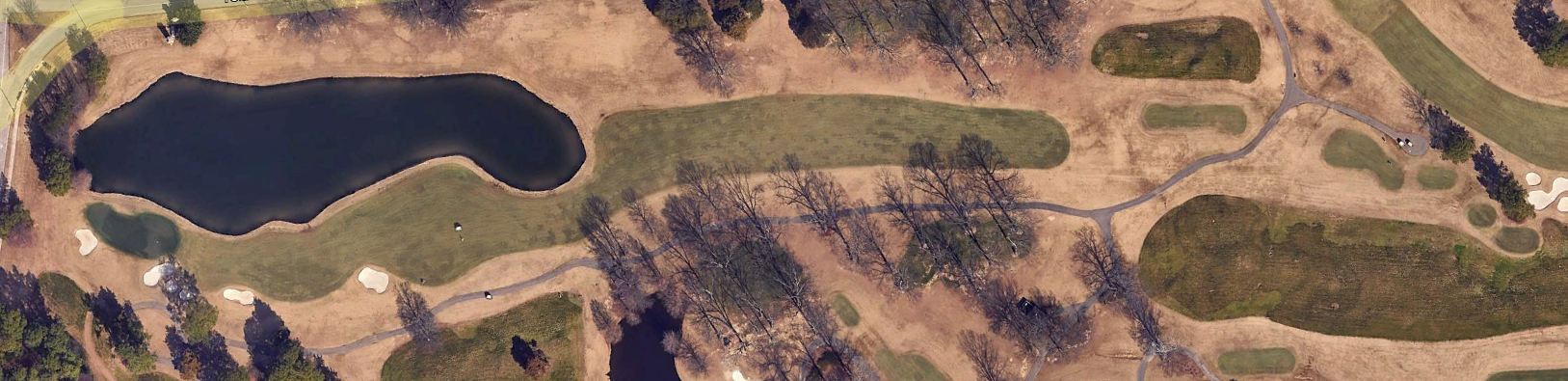
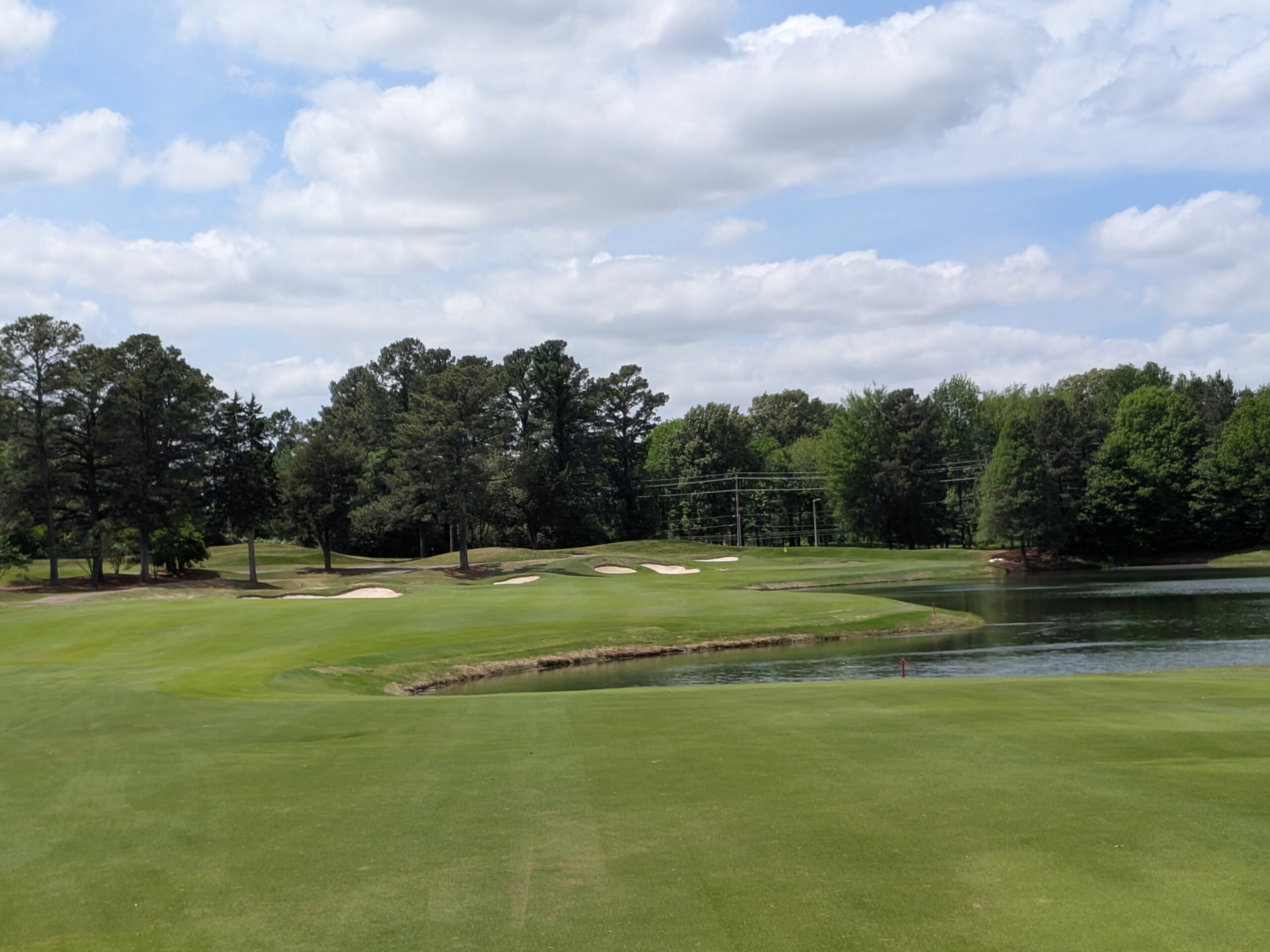
Those that don’t find the fairway are left with a really complicated and uncomfortable layup shot, trying to squeeze a mid-iron into cascading areas of fairway between water and strategically placed bunkers. The green here is narrow, and canted from left-to-right towards the water, making the bunkers on the left of the green a scary place to play a third (or fourth) shot.
The fourth is a simple downhill par-3, with the complication mostly coming from a small, almost hidden pond short left of the green.
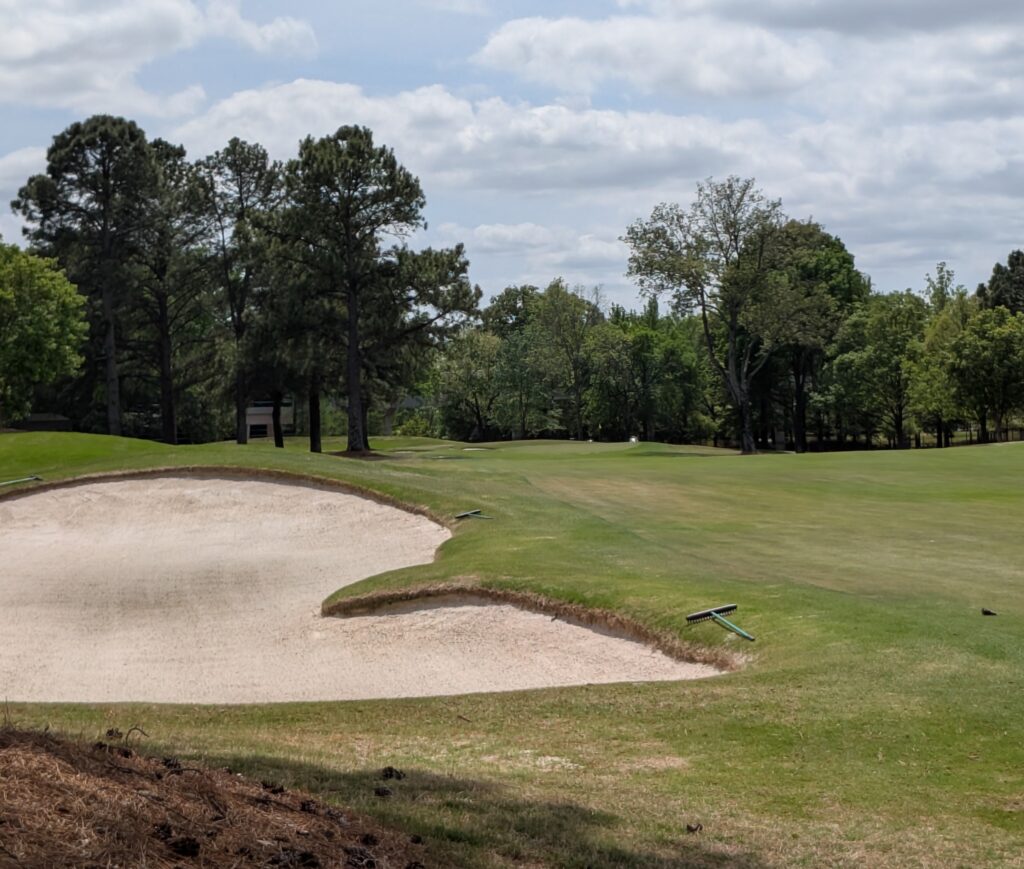
The fifth is a brutally long par-4, or for the members, a shorter par-5, but either way, its a pretty tough hole. This hole doglegs to the left and is protected by bunkers and trees up the left side. One overhanging tree just short and right of the green really complicates the approach into this green, particularly from the right rough or right side of the fairway.
The sixth and seventh, while strong enough holes, are relatively regular par-4 holes, with the sixth bending left and the seventh being long, straight, and a bit tight.
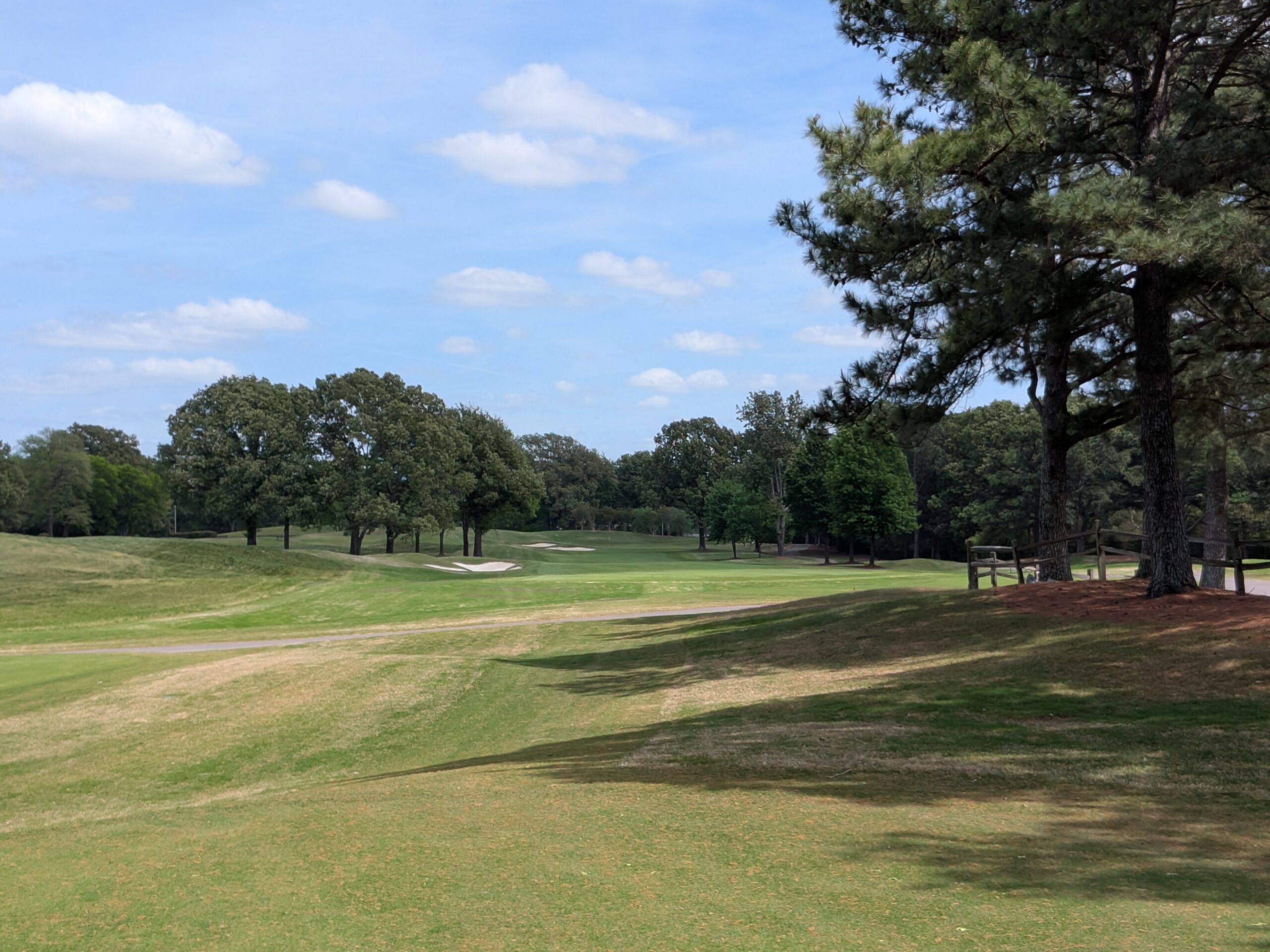
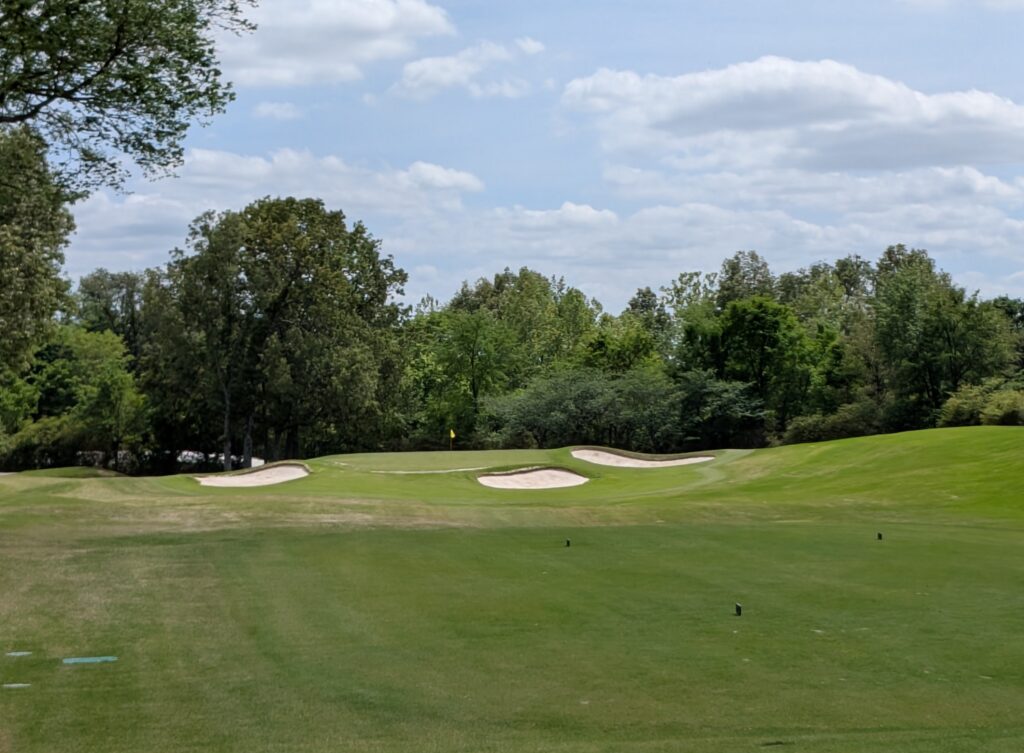
On the way to the eighth, you cross back over the street back onto the main property at TPC Southwind, and I have to say, the holes on this side of the street are undoubtedly better, more interesting golf holes. This starts with the eighth, a shorter par-3 surrounded by frontal bunkers, which requires a precise short-iron to avoid bogey.
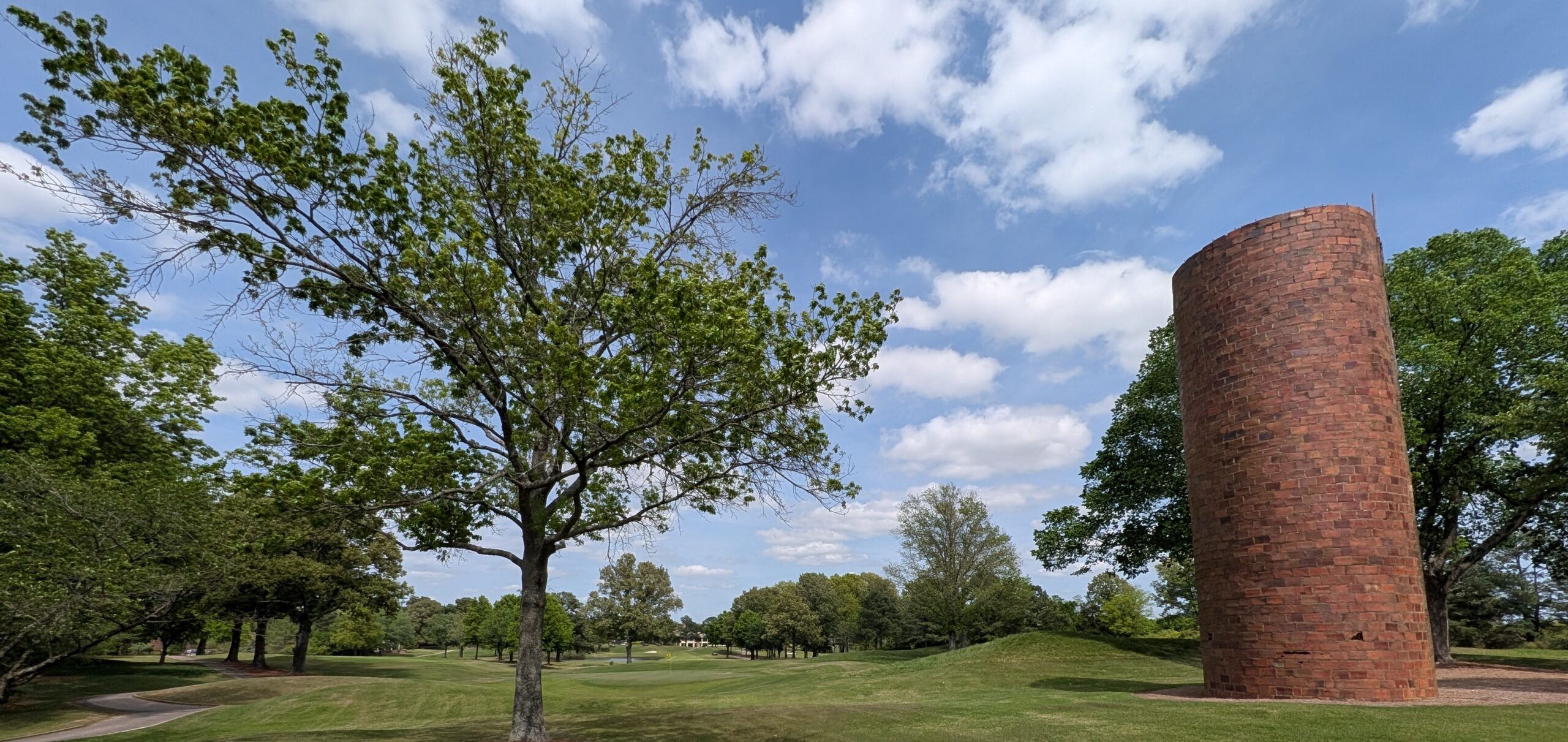
The ninth is likely the signature hole of the first nine and the toughest hole on the front side. TPC Southwind was once a dairy farm, and some of the old silos remain; one of which frames this tee shot on the left.
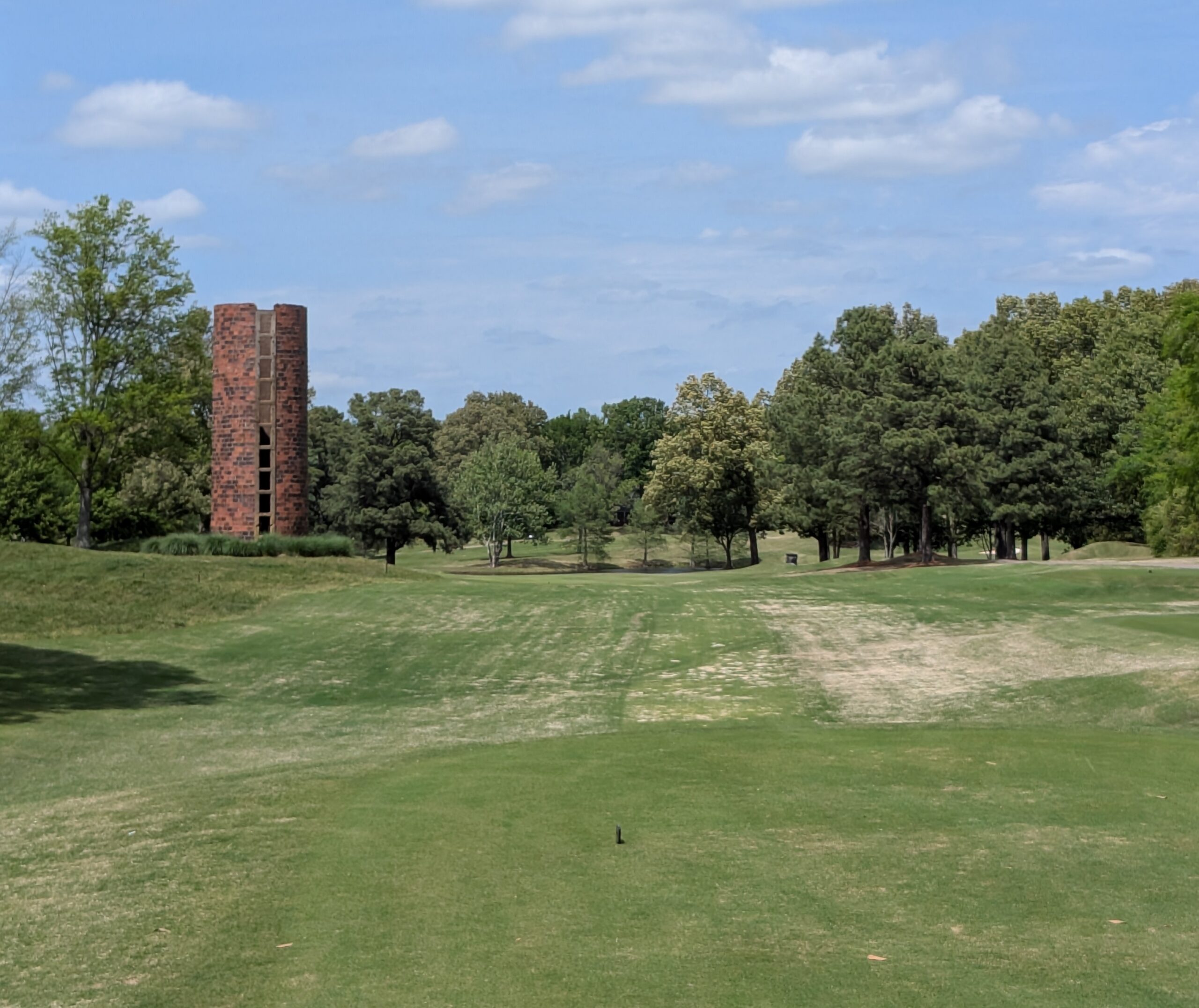
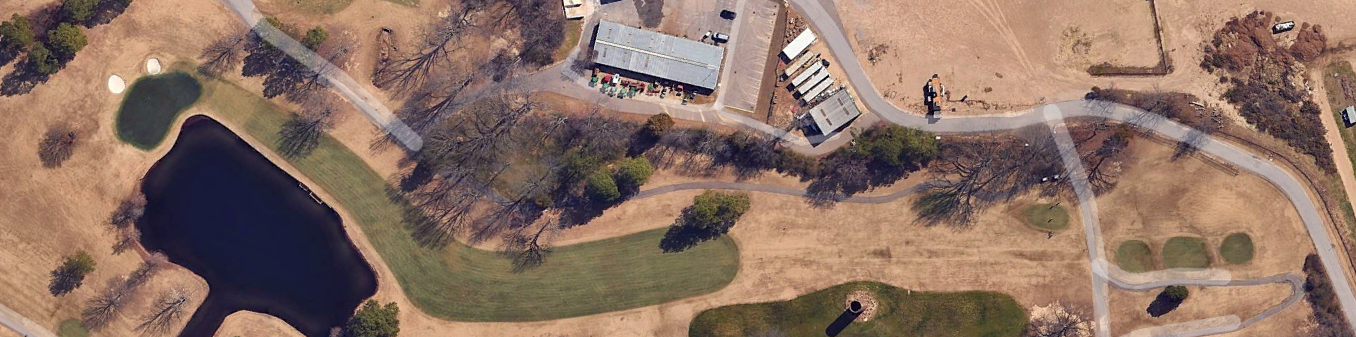
That tee shot is a really tough, downhill, somewhat blind shot into a narrow fairway. Because the hole aggressively doglegs right, getting the right distance from the tee is paramount here. A player needs to get enough distance to get clear of the trees on the right, but not too long because the tee ball could easily roll out into the water.
With the current firmness of the greens, the second shot is very difficult, as the green is narrow to the approach angle, with water short and bunkers long. This is likely the toughest hole on the front side because it requires two perfect shots to score, and once off the beaten path, the recovery shots may be even tougher, as the fairway to the right of the lake is very narrow.
Making the Turn
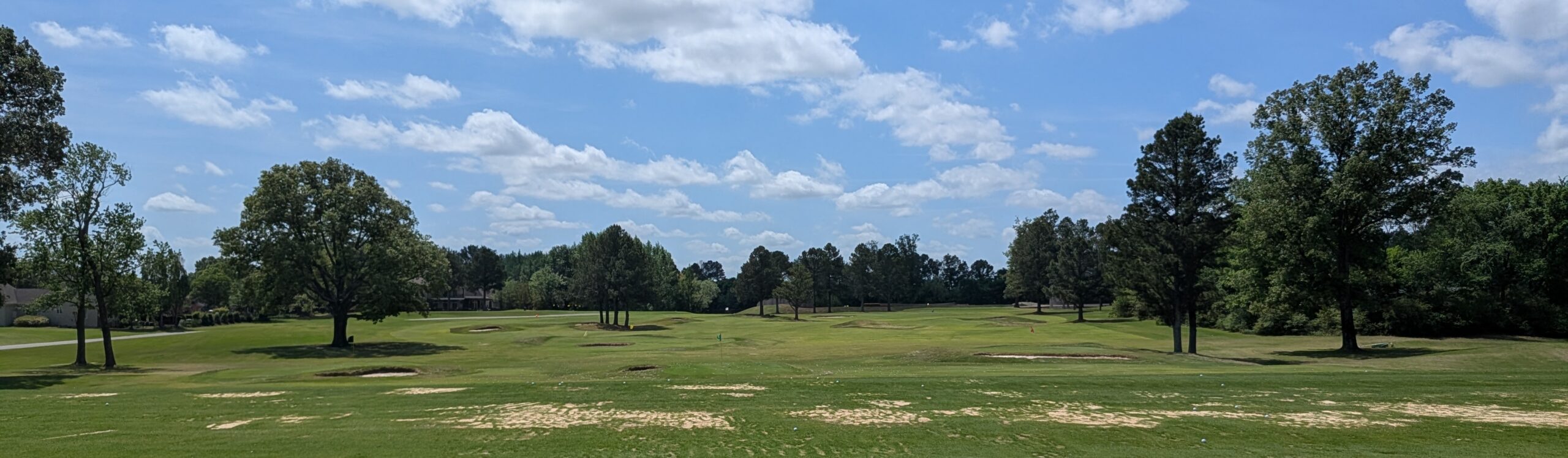
The back nine at TPC Southwind may be one of the best nine hole stretches in Tennessee. But for a few holes, each of the holes possess significant character and provide a good mix of playability and challenge. That starts with the par-4 tenth hole, which like the first, is a tight dogleg left. The tee shot is the primary challenge here, as it likely will require less than driver. However, the second shot very tough if a player lays too far back. This is not a comfortable tee shot; it is one that a player really needs to push as far up as possible without taking on too much risk.
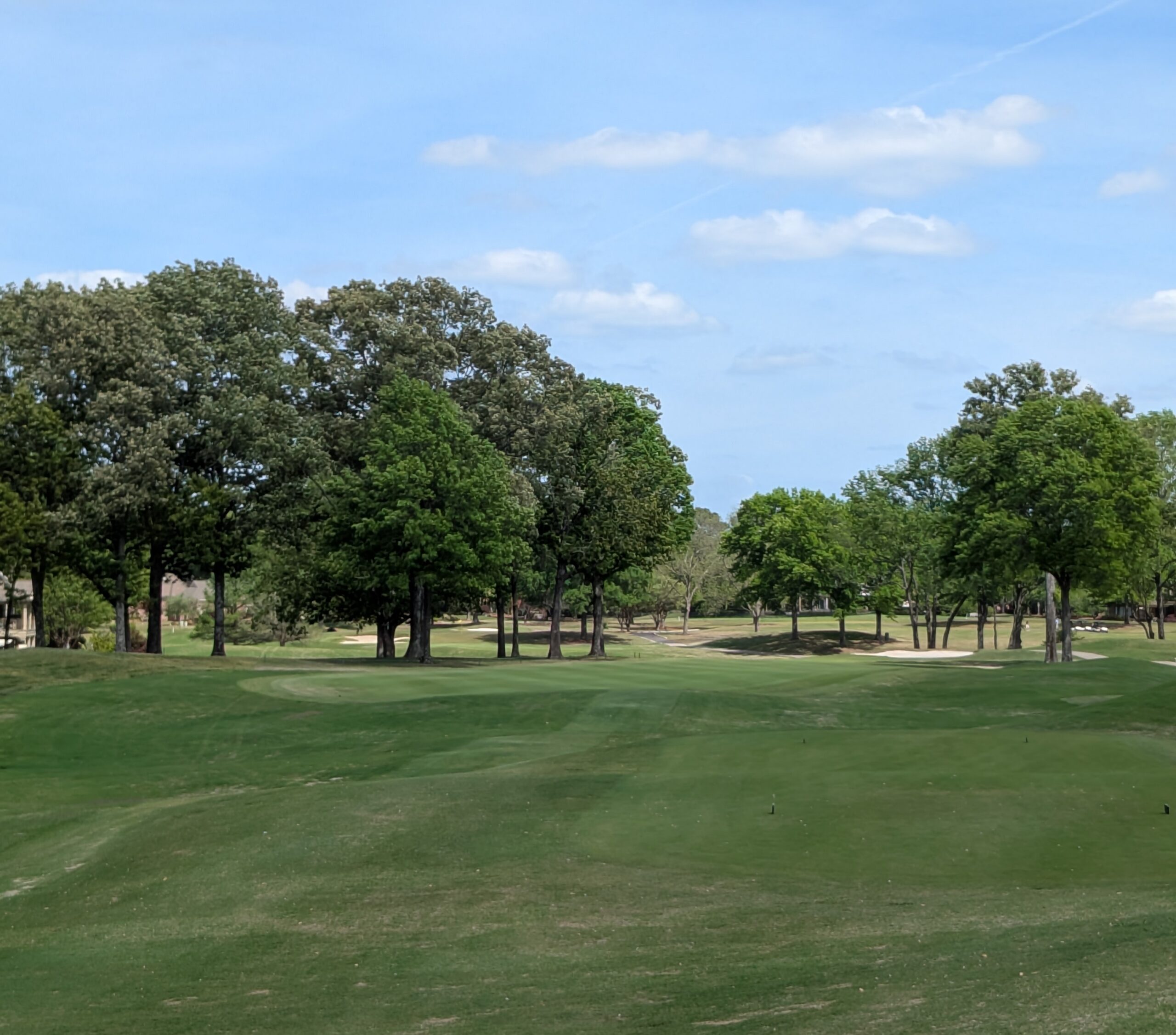
That is because the approach shot here is played to a tricky green that is framed by a few trees left and right. Just putting the tee shot safely behind the bunker might leave 190+ yards into some of the pins here, which is particularly not advisable given the firmness of the greens. On another note, this is one of the most aesthetic shots at TPC Southwind.
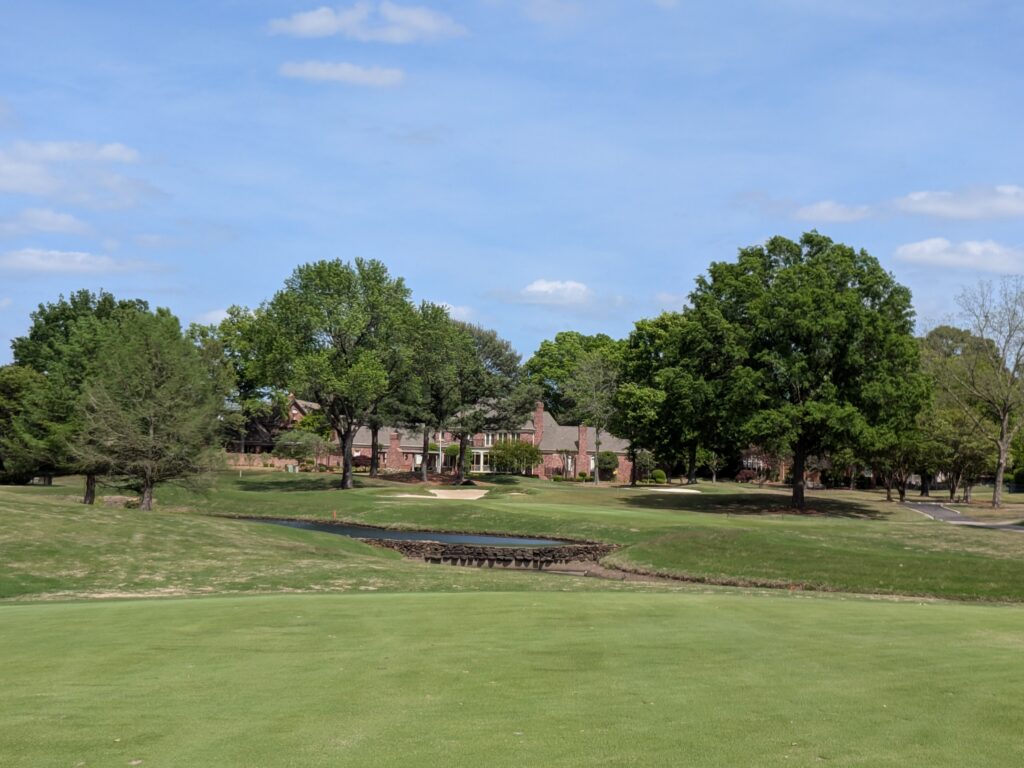
The signature hole of the back nine, which is actually debatable with the eighteenth, may be the island par-3 eleventh hole. What you see is what you get here, a mid-iron into an island green surrounded by water on all sides. There is a catch bunker behind the left of the green and a small, frontal bunker on the island a la TPC Sawgrass.
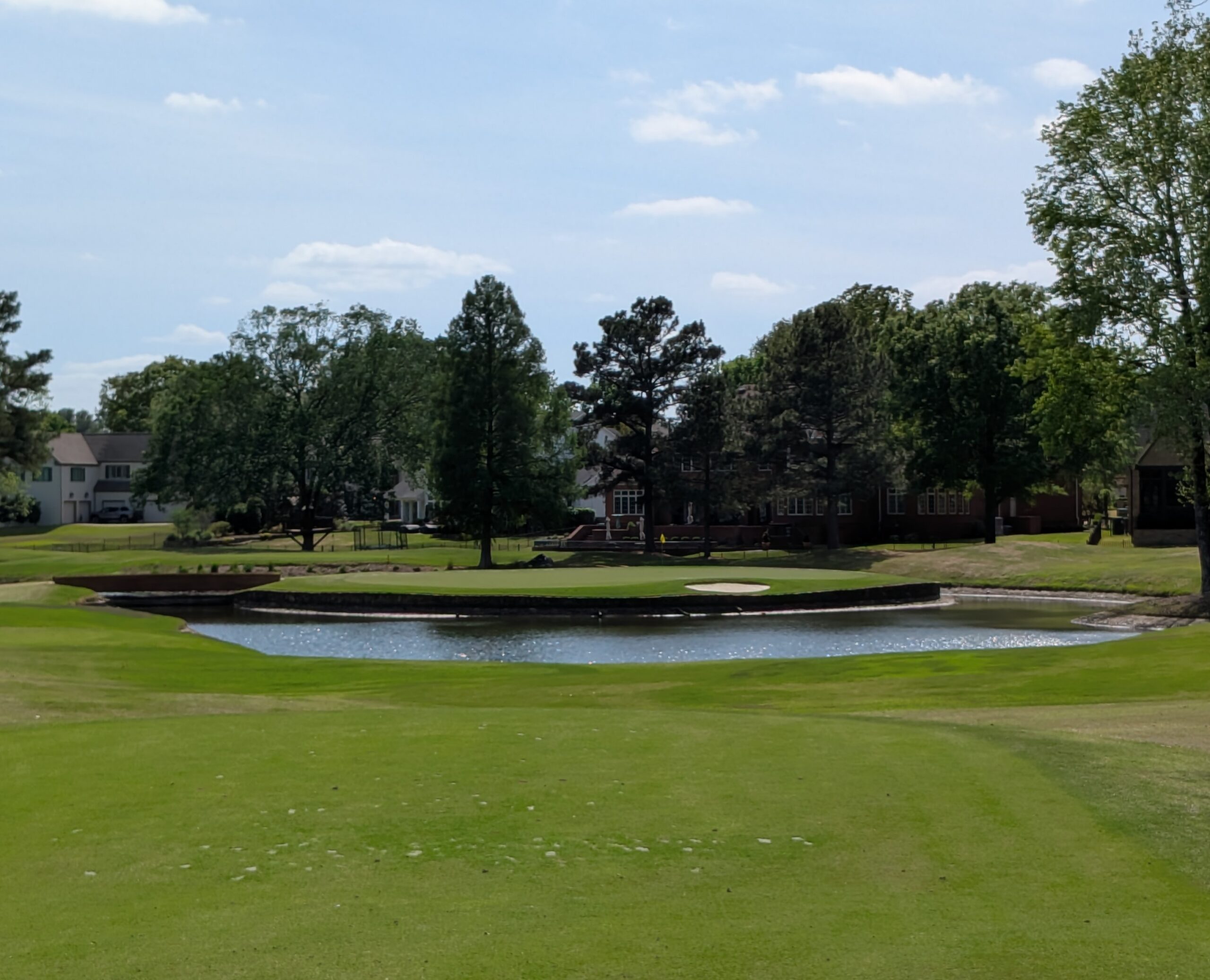
If you are wondering how the islands compare, the island here is about 9,200 square feet; at TPC Sawgrass the island is just 6,000 square feet. But at the eleventh at Southwind, the shot is around 30 yards longer and the island includes that additional bunker. The actual putting surfaces are about the same 4,300-4,400 square feet for both holes.
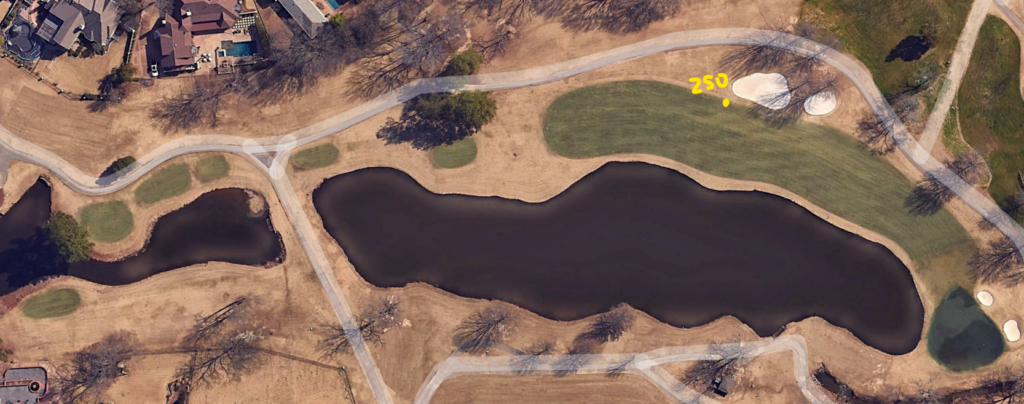
The twelfth hole finishes up this really strong starting trio of opening holes on this second nine. The difficult short par-4 twelfth requires a super accurate tee shot into a very tight fairway smushed between the lake and two fairway bunkers. Many players take less than driver here. The approach shot isn’t that much simpler, as the green is sandwiched between the fronting lake on the front right, a stream behind the entire green, and two bunkers left of the green. This is a legitimately tough short par-4.
The thirteenth hole is a connecting par-4 that doglegs a bit right, and has the ability to play quite long if the furthest back tee is used. Largely the thirteenth connects the course with a really cool three hole section on the other side of a small street laid out in a triangle.
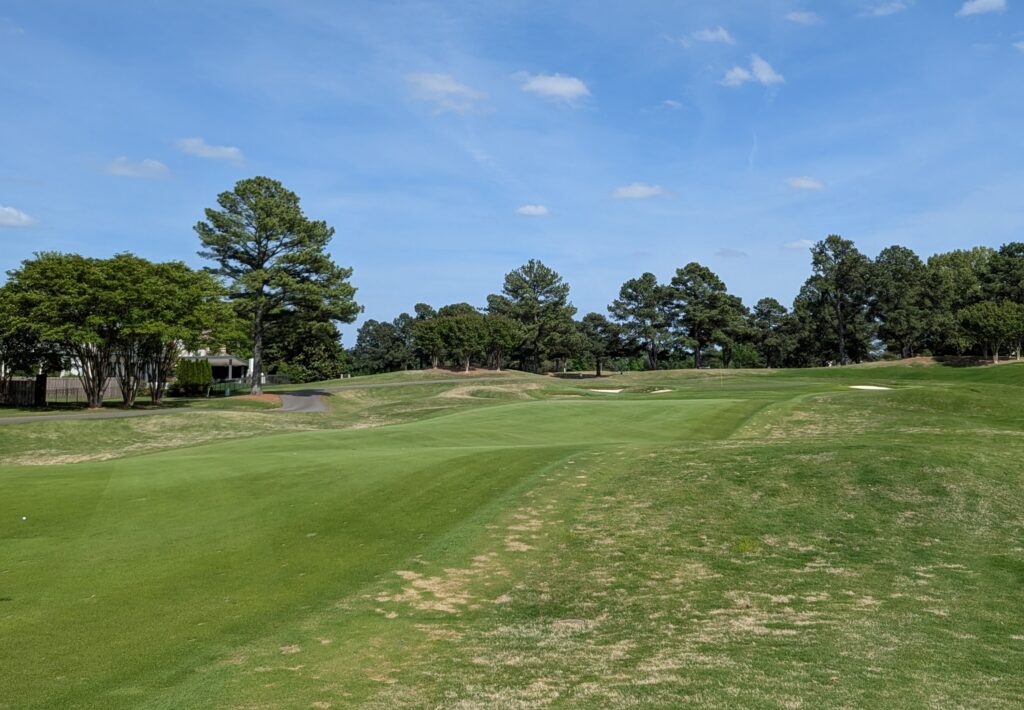
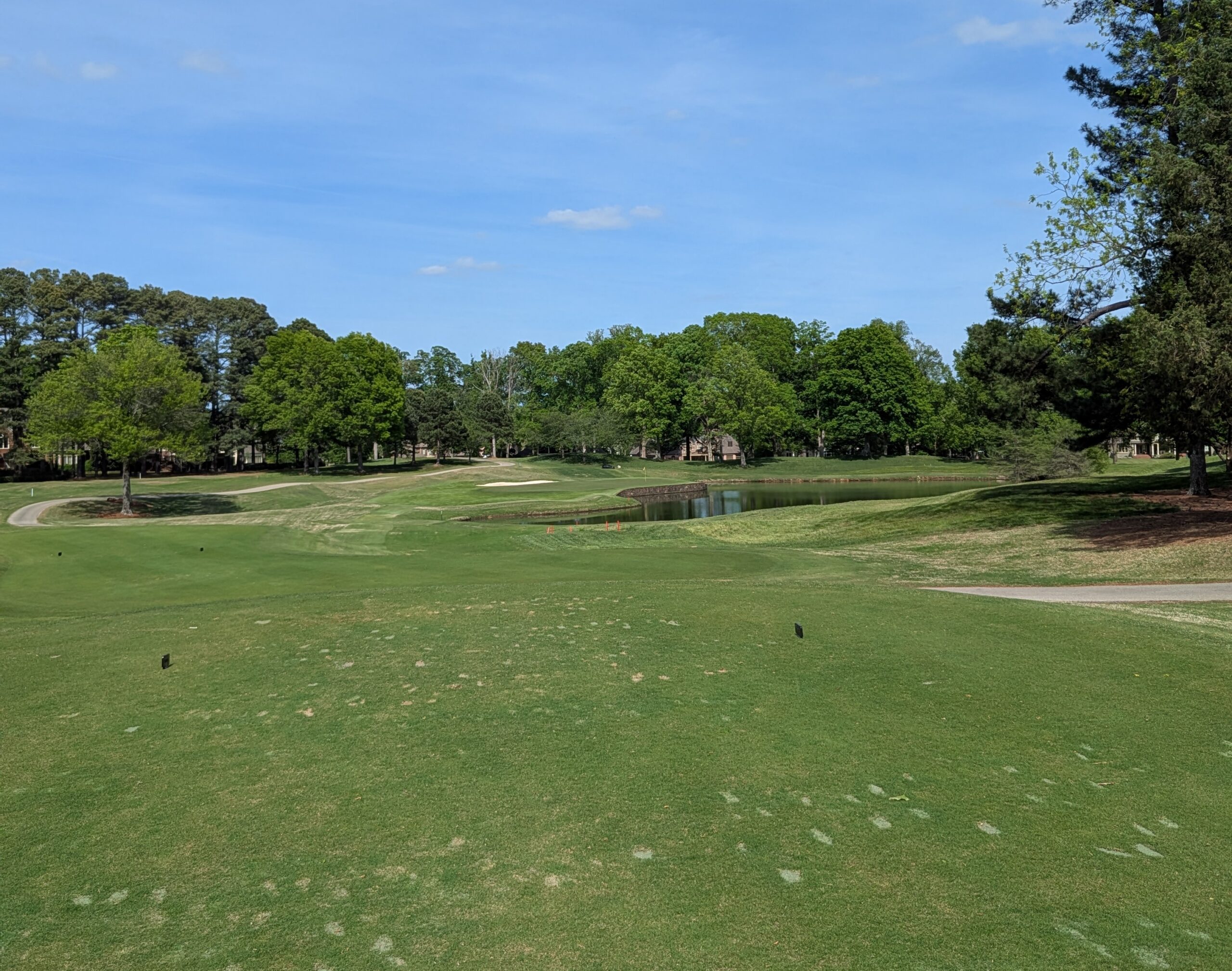
The fourteenth, perhaps another signature hole at TPC Southwind, is a longer, downhill par-3 with a pesky lake to the entire right of the green. This hole normally gets a lot of TV time, so you may remember it. TPC Southwind holds the distinction of seeing the most balls hit in the water since ShotLink debuted in 2003 (and it’s not even close). The 6,298 water balls at TPC Southwind since 2003 are nearly 1,000 more than TPC Sawgrass. A lot of those are certainly on the fourteenth.
The fifteenth is a great hole, and interestingly enough, it is almost a carbon copy of the third hole at Muirfield Village.
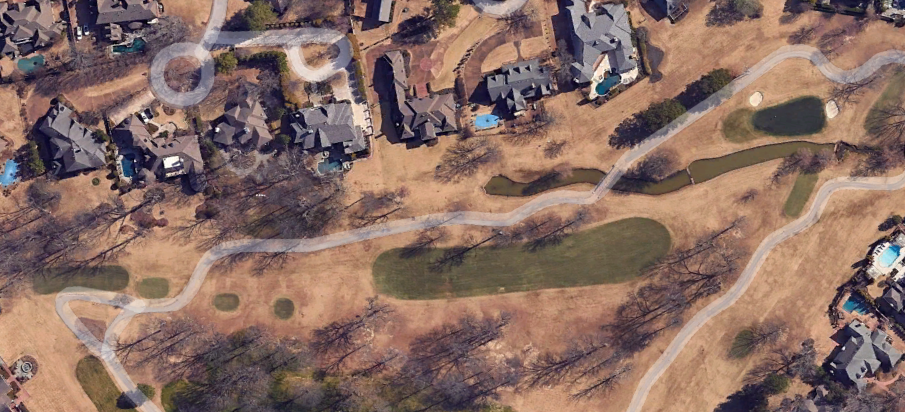
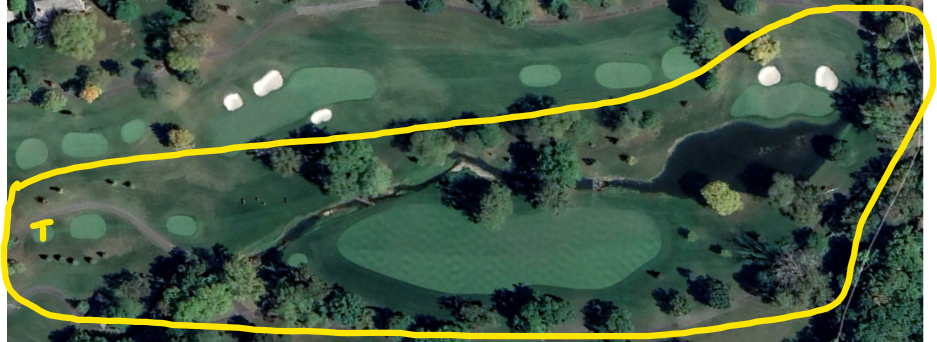
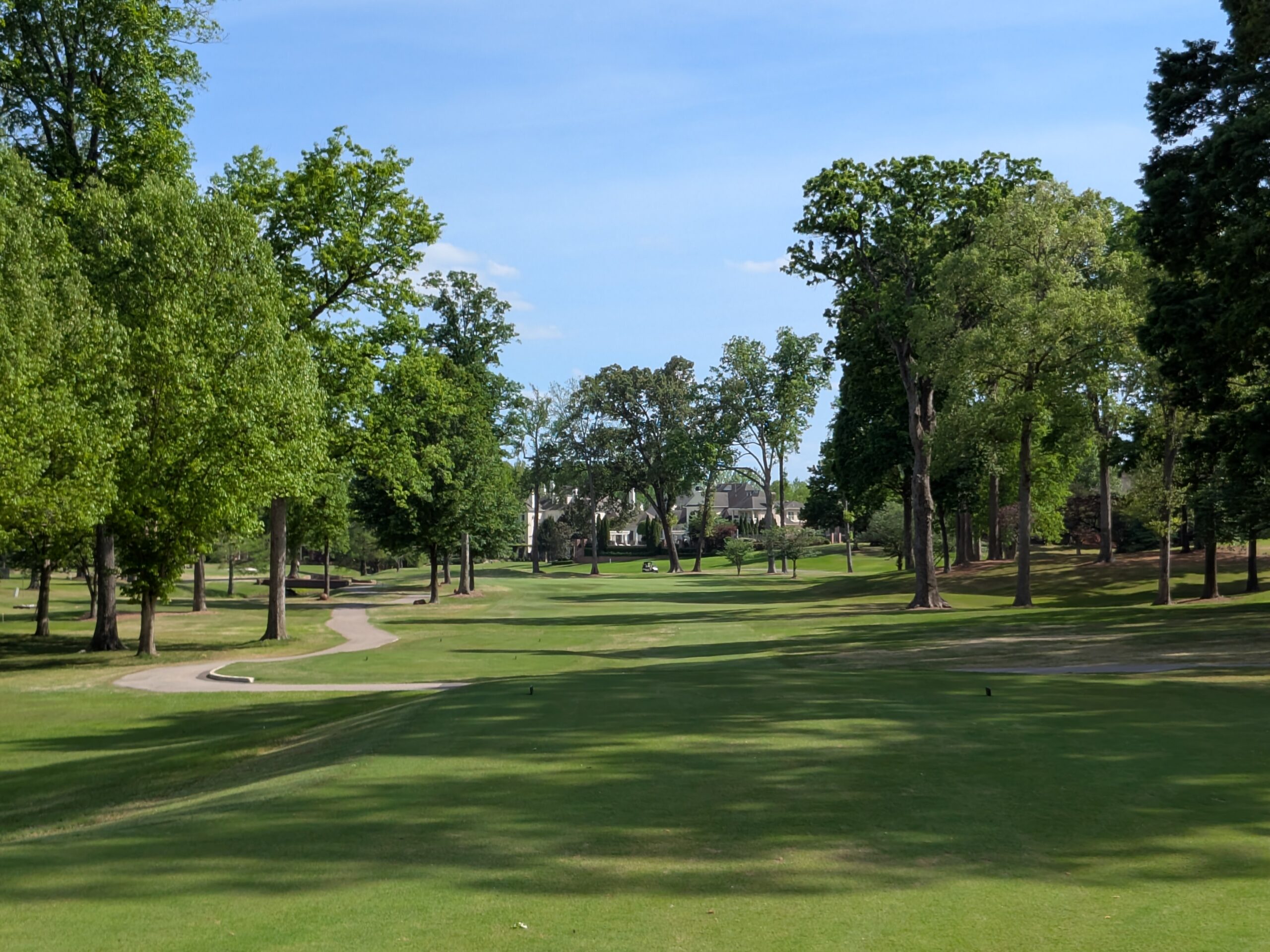
The slight differences are that the lake at Muirfield Village is a bit wider and the fairway might be a touch wider. Slightly different bunker orientation adorns the green, but otherwise, the strategy and lengths of these holes are identical. A good tee shot will setup a really good chance for a birdie; but this is also the kind of hole that can snowball into a double if the player is just a bit off.
The sixteenth is a long, slightly uphill par-5 that doglegs a bit right. The tee shot is a bit tight but the hole opens up once in the fairway. This should represent another birdie opportunity with a good tee shot.
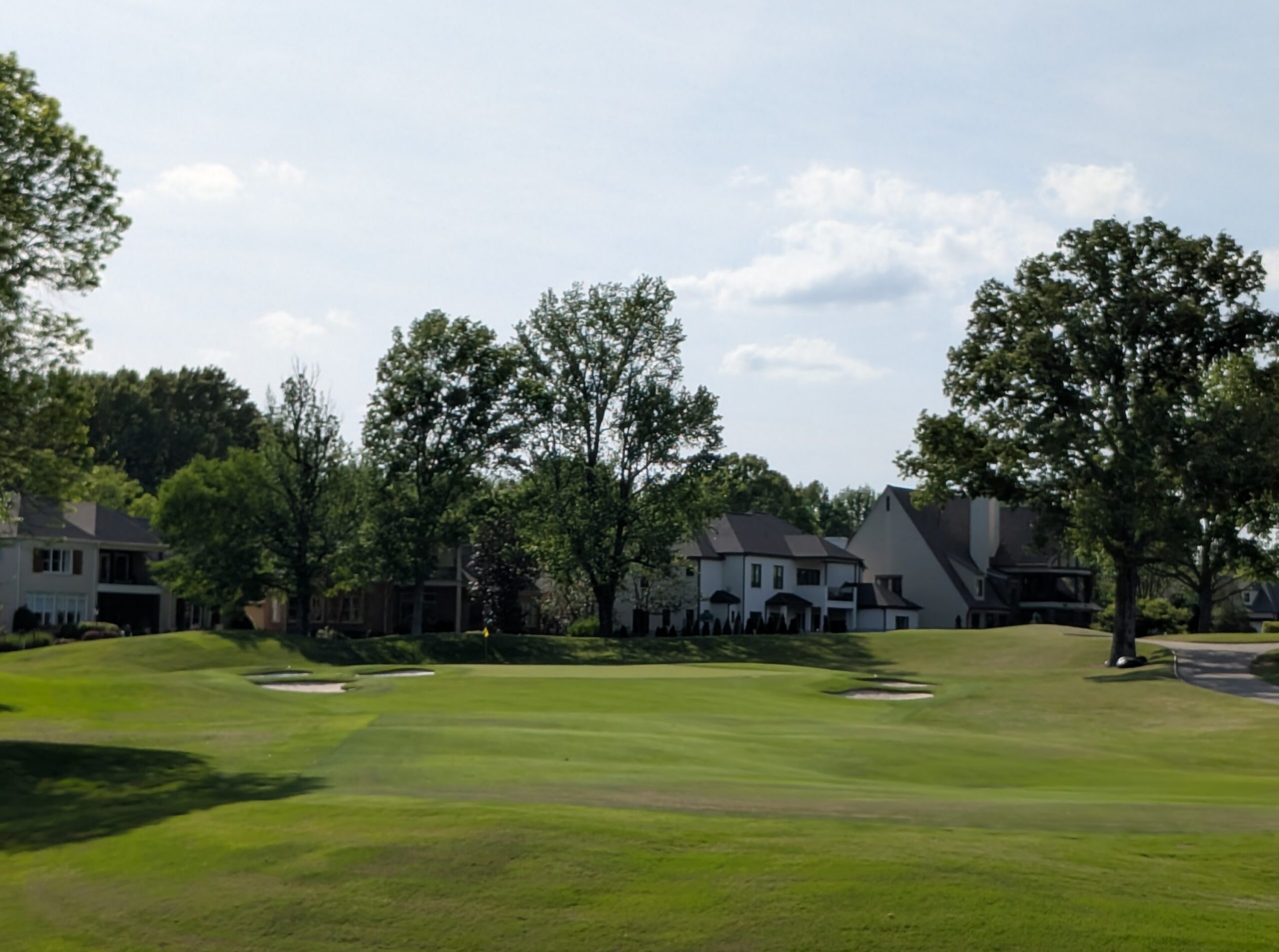
The seventeenth comes back across the street and the forever long par-4 plays a bit downhill. The fairway is bisected by a small stream that splits the fairway just past the landing area for driver. Otherwise, the hole is somewhat uncomplicated, just exacting, requiring a long, straight tee shot and a good long or mid iron into the green.
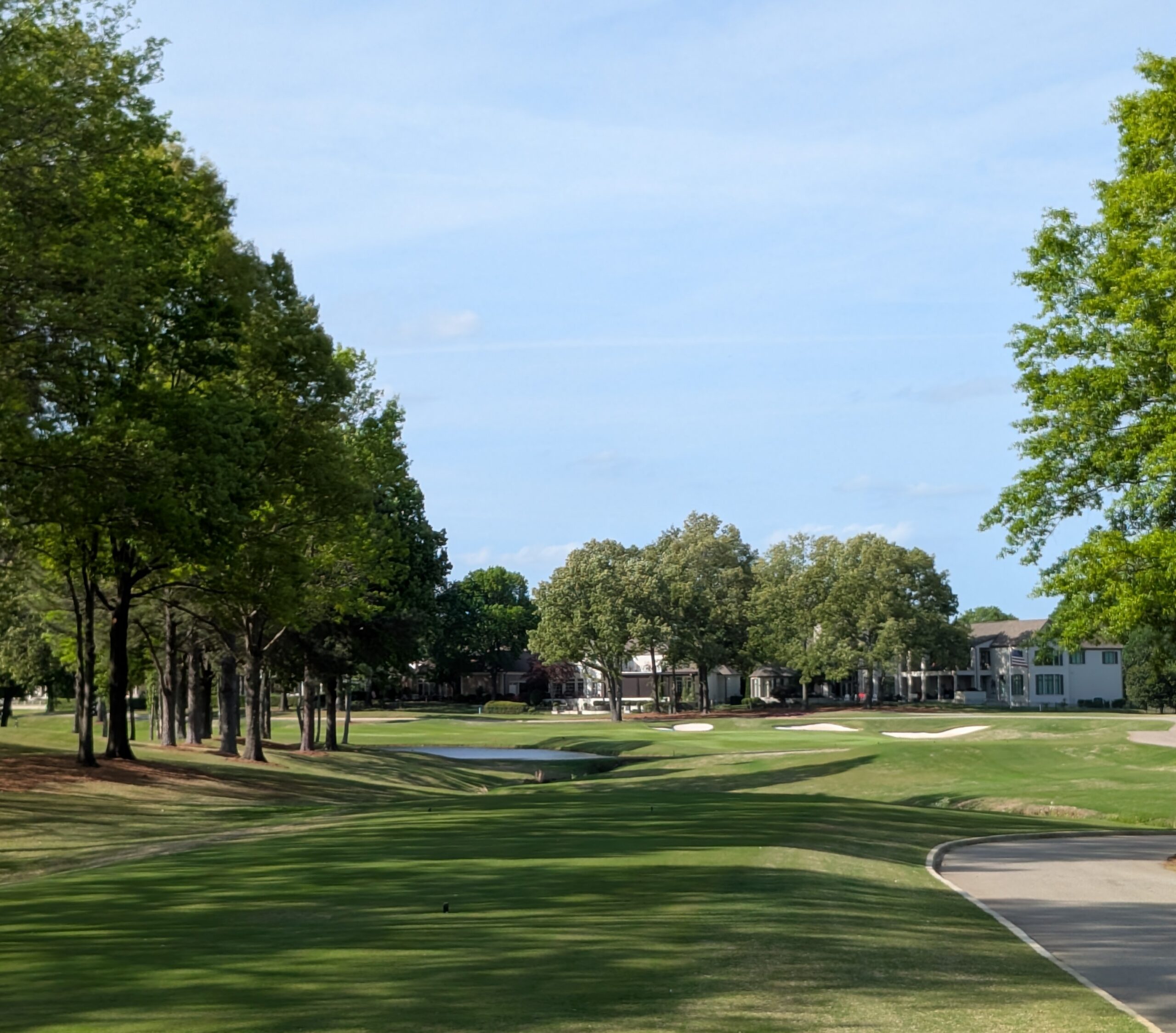
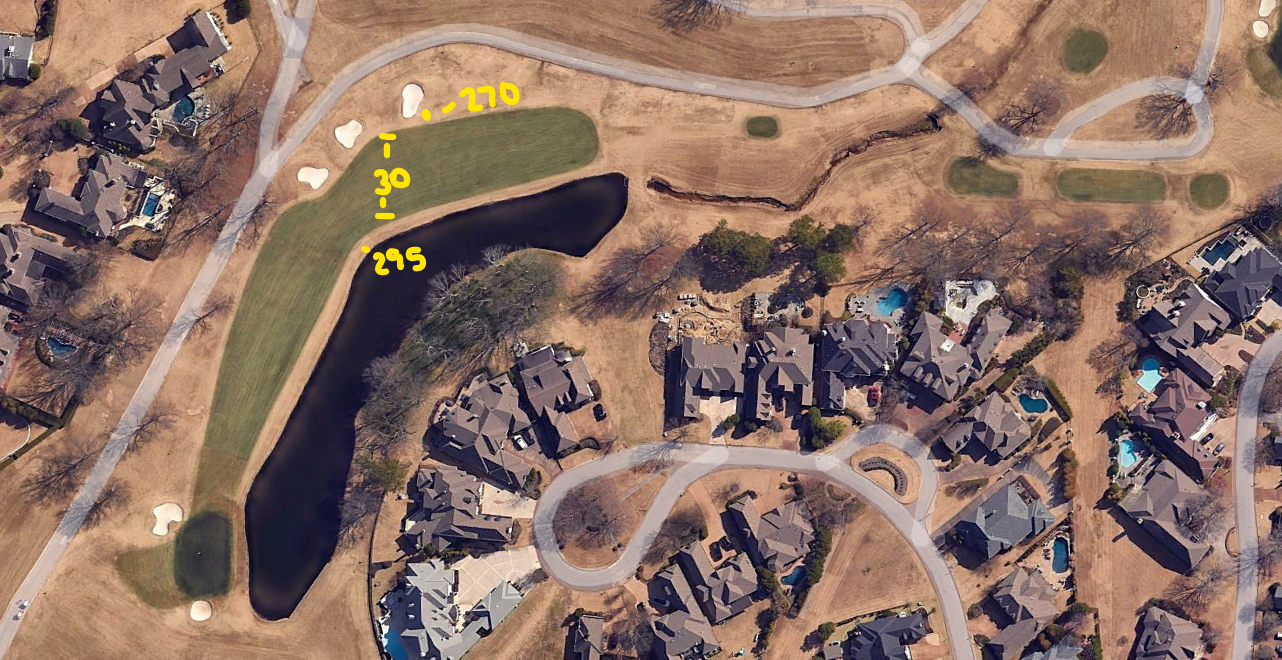
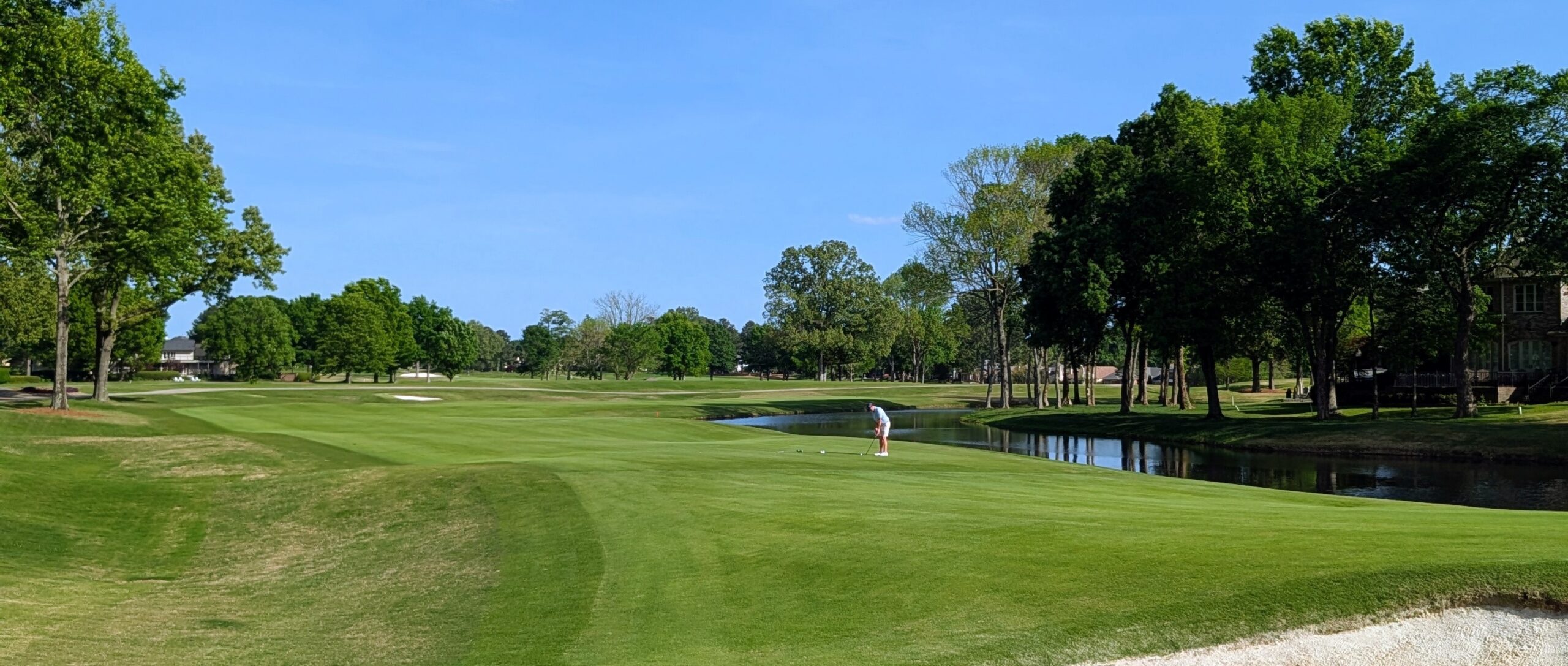
Lastly, and perhaps again arguably the signature hole at TPC Southwind, the par-4 eighteenth; a near 90-degree dogleg protected by a lake on the inside of the dogleg, and three cascading bunkers on the outside. The trouble is not over after the tee shot, as the lake extends up to the green and the approach shot can be a long one, bringing that danger back into play on the second shot.
This is just a legitimately tough hole and its no surprise that the eighteenth, and the fourteenth, normally lead the FedEx St. Jude Tournament in double bogeys.
Final Thoughts
TPC Southwind was fantastically conditioned for mid-April. The fairways were among the best we have played and their greens were coming in nicely considering the newness and time of year. The facilities exceeded my expectation as well, as they had a great clubhouse, locker room, and practice facility.
The course is a really fair test of golf. It is difficult, but not overly so, and I found myself in no situation where I felt like I was being punished despite hitting a good shot, or faced with a shot that was impossible to get close. It was just a fair but exacting test of golf, which really is what golf should be. There are no circus putting greens, impossible up-and-downs, or tee shots that were too crowded. The routing keeps the holes close to other holes, but the playing corridors were wide enough where I was never afraid of an errant ball from another hole. I also loved the variation in design, as holes go right, left, and straight and have a good variation of long and short.
I arrived at TPC Southwind with very low expectations and left wondering what a non-resident membership would cost. It was that impressive; just not in the Top 200 kind of way. Aesthetically, the course is not Top-200 quality, but the thoughtfulness in design and golf-first playability choices really showed. TPC Southwind is a course that deserves its place among the top courses in Tennessee.
CR&J Final Rating:
Shot Options: 8
Challenge: 8
Layout Variety: 9
Distinctiveness: 7
Aesthetics: 6
Conditioning: 8
Character: 7
Fun: 8
Total: 61/80
Read More: How We Rate Courses
Rating Scale Details:
> 70: Top-50 U.S.
65-70: Top-200 U.S.,
60-65: Best-in-State List
57-60: Best-in-state List Contender
53-57: Very Good
48-53: Good
40-48: Average
< 40: Poor

Author: Kyle Taylor
Kyle is the lead course reviewer at The Course Review & Journal. Kyle has been playing golf for over twenty years, is a plus handicap, and actively competes in USGA and State Golf Association events. By trade, Kyle is an attorney.
Kyle Taylor is a pseudonym used by CR&J’s lead course reviewer to protect personal relationships. The reviews and opinions remain entirely the writer’s own.
Leave a Reply
You must be logged in to post a comment.