
Time to Read:
|
This Kelly Plantation Golf Club Course Review is based on a round played on April 3, 2023.
Kelly Plantation Golf Club is a public course that is in Destin, FL. The maximum green fee is around $120/round.
CR&J’s Final Score: 50/80 (Good)
Read More: How We Rate Courses
On paper, Destin, Florida is an area rich in golf course quantity, but for some reason lacks in golf course quality. The small town of Destin has 7 golf courses, and another 17 courses within a 20-mile range – a wealth of golf holes for an area quite small in size. However, none of the courses in Destin rank in Top100GolfCourses’ top-50 courses in the state of Florida, with Sandestin Resort’s Burnt Pine and Raven courses being the highest ranked at 63th and 75th respectively.
It is actually pretty wild to think that so many golf courses were built in such a tightly packed area, and none of them are considered to be elite golf courses. Just from a development perspective, it is clear that golf is important to this area of Florida, so it almost comes as a surprise that the Destin area (and even the greater panhandle) does not have a singular course inside the top-30 in Florida on Golf Digest’s best-in-state list or inside the top-40 in Top100GolfCourses list.
Of the public options in the Destin-area Kelly Plantation appears to be the best the area has to offer, with stiff competition from Sandestin Resort’s Raven Course and Regatta Bay across the street. Kelly Plantation comes in at 90th best in Florida on Top100GolfCourses’ list, so I was fairly excited to play here and came in with high expectations, as I quite enjoyed The Raven (which is similarly ranked) and have played several courses in Florida that were not on this list that I thought were quite good (Championsgate’s International Course, for example). Further, as the staff reminded us more than once while on property, Kelly Plantation was also #1 in Florida on GolfAdvisor (now called GolfPass) in 2016 and has remained ranked in the top-20 in Florida on that site since.
Kelly Plantation is a Fred Couples/Gene Bates et. al. design which marked my first play of their designs.
The First Tee
The practice facilities were perfectly fine for a course of this caliber and after a warmup we were off to the first tee, a mid-length par-4 that was essentially straight away. I’d love to see how the course was developed, because I’d be willing to bet the first and second holes were built last. The first and second are basically a snoozefest, and feel like a bit of an afterthought. The first is almost perfectly flat, uninteresting golf hole. The second, a shorter par-5, runs basically parallel with the first, before it doglegs a bit away from the first tee. These holes are set off to the side of the golf course essentially on their own.
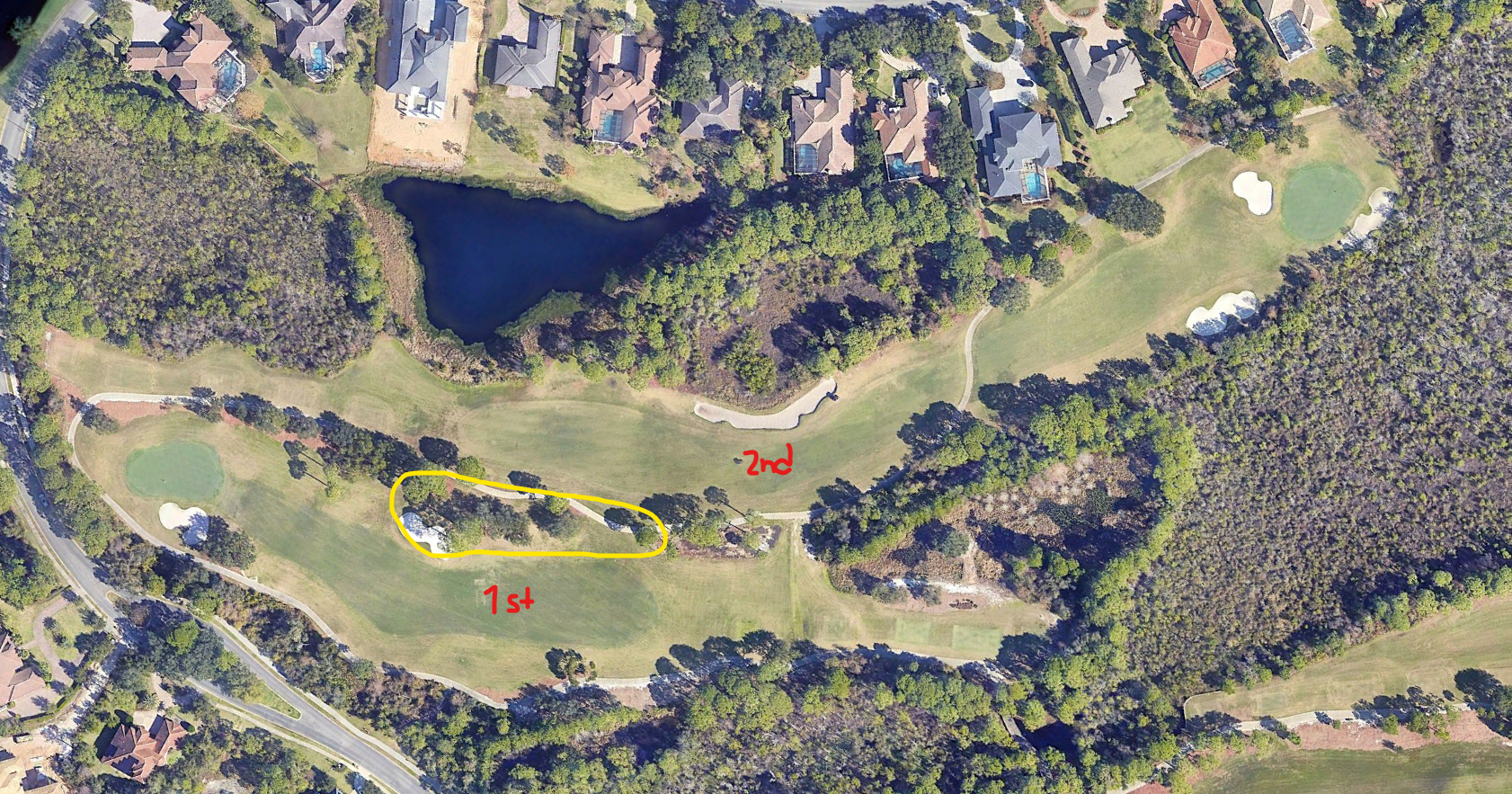
The area right of the first tee, and subsequently right of the second tee, has to be a relatively dangerous area to stand. The area I have highlighted in yellow is hot slice land for both tees, and with vacation golfers being the main clientele of Kelly Plantation, this course has undoubtedly seen its fair-share of hot slices. I quite hate how these two holes are laid out, and those houses in the top of the picture were clearly the priority here, rather than the golf, because these two holes are too close together and the pinch in the fairway of the driving area of two is just 21-yards wide. These are very poor golf holes, for safety reasons, as well as strategically.
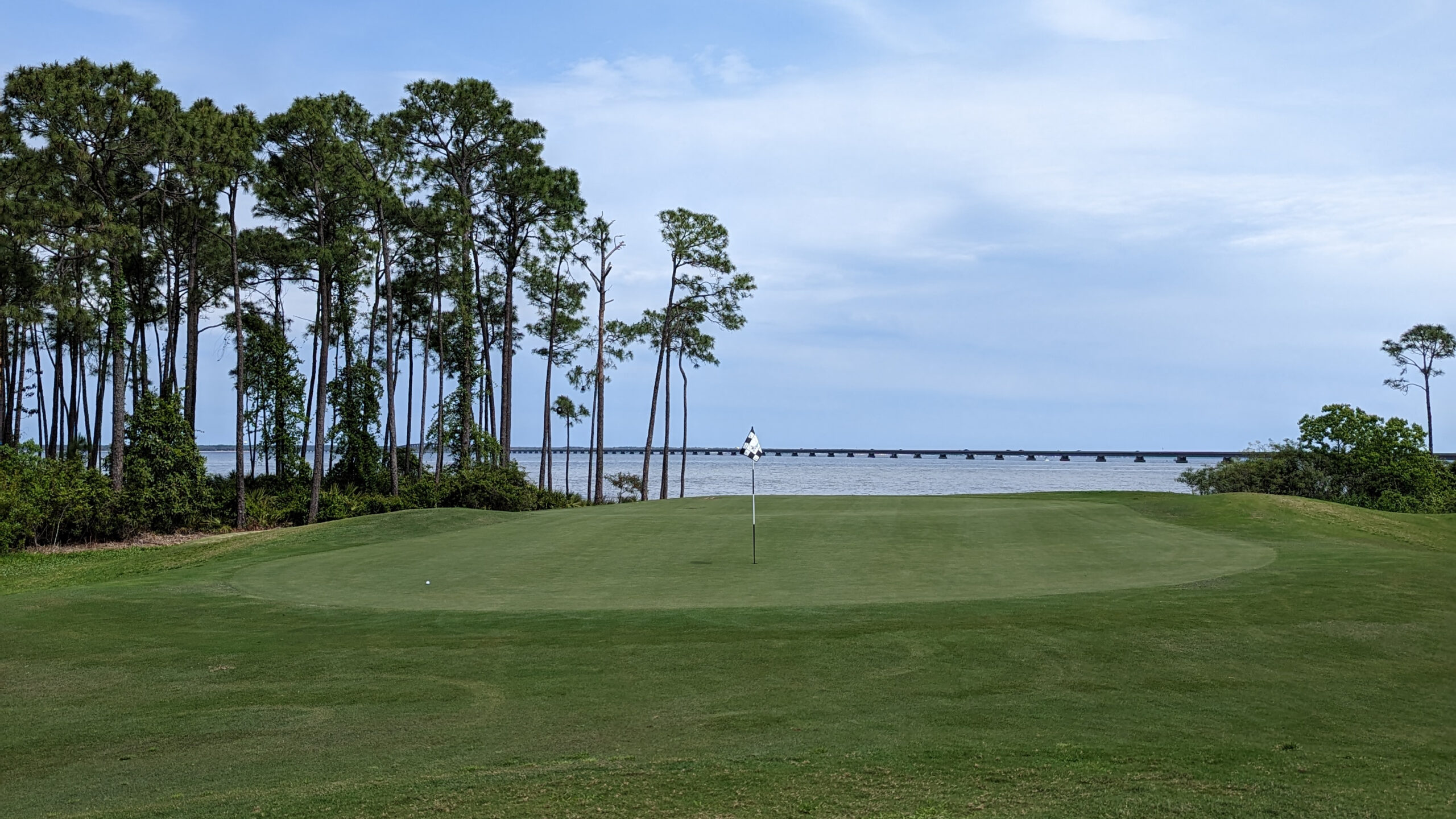
Fortunately, the golf course quickly picks up in quality, as the next stretch of holes are the most scenic on the course.
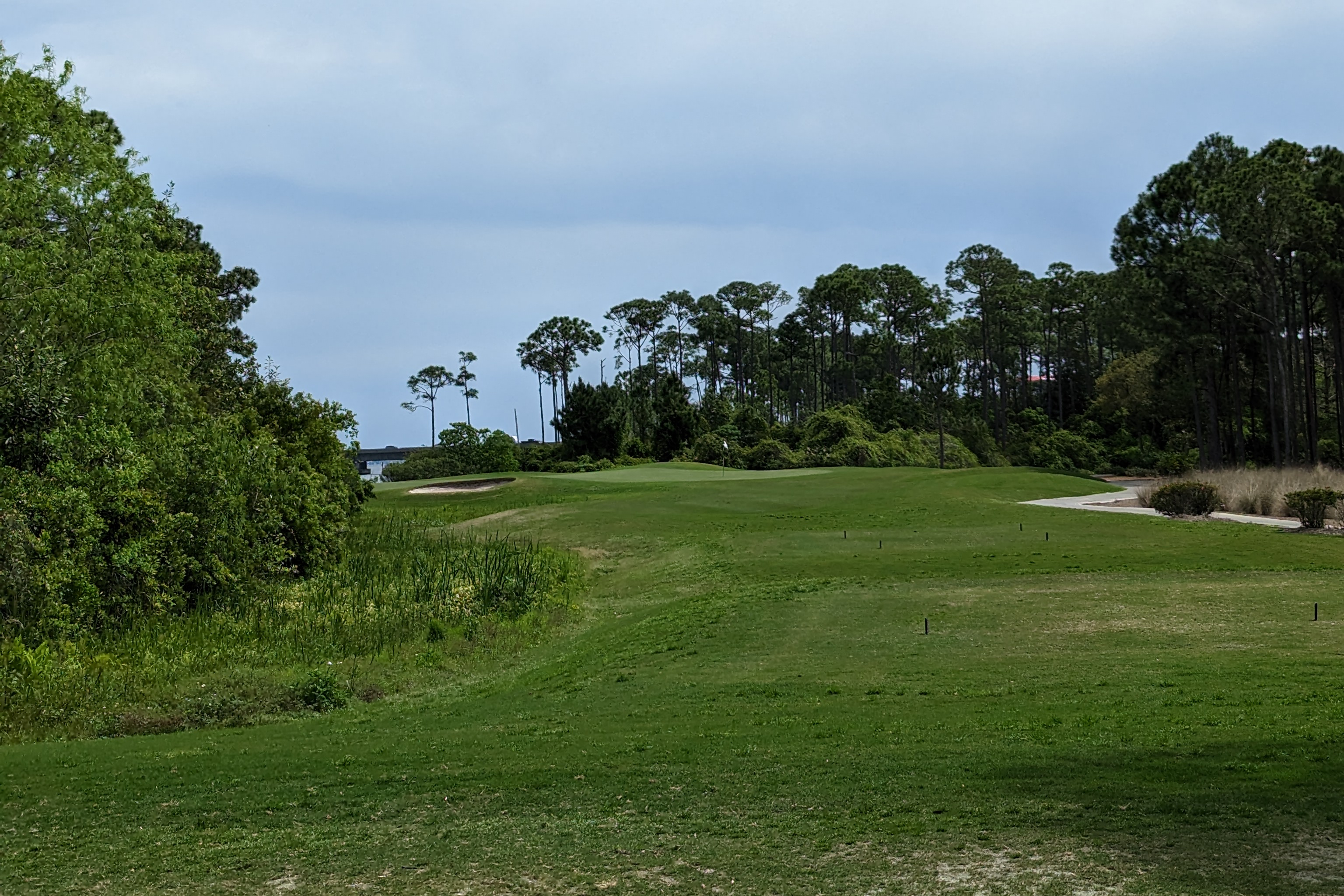
The third hole is a mid-length par-3 that works towards an intercoastal waterway that flank the third and fourth on the left. Likely the best par-3 on the course, it features a receptive green for a right handed player, as it is further on the left than right. While the water is certainly viewable from the tee, it is not in play, but the water view opens up on the walk up to the green.

The fourth hole is a straight-away par-4 that also runs parallel to the water and also features a fantastic view. The fourth is one of the most difficult holes at Kelly Plantation, as a sneaky pond right of the fairway lies in wait for anything too far right of the fairway.
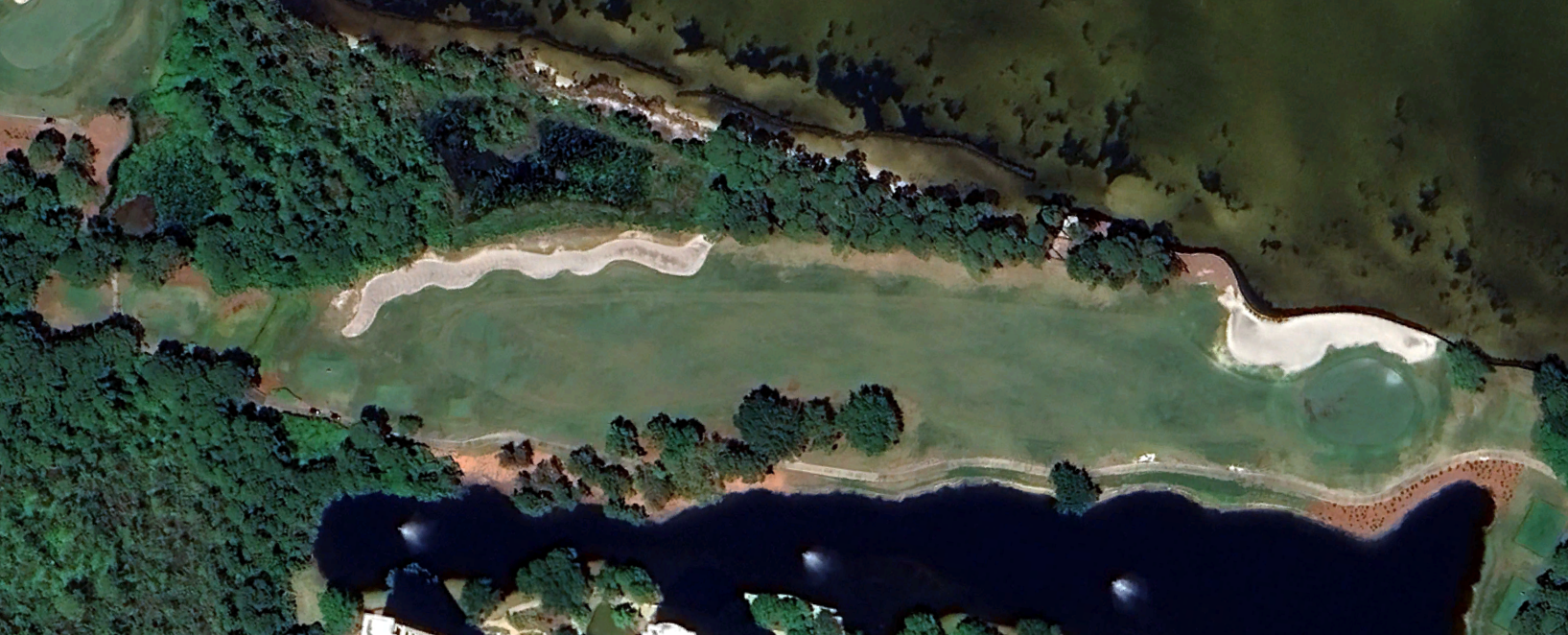
Knowing the water runs to the left of the hole, the average player naturally is thinking right center with the drive. But as an illusion, the closer water hazard is actually the right hazard, with the water left of the hole more visible, but much further from the center of the fairway. The drive on the fourth is also a bit narrow, pinched by the group of trees right of the fairway. Overall, the fourth is probably the best hole on the course from a design and aesthetic perspective.
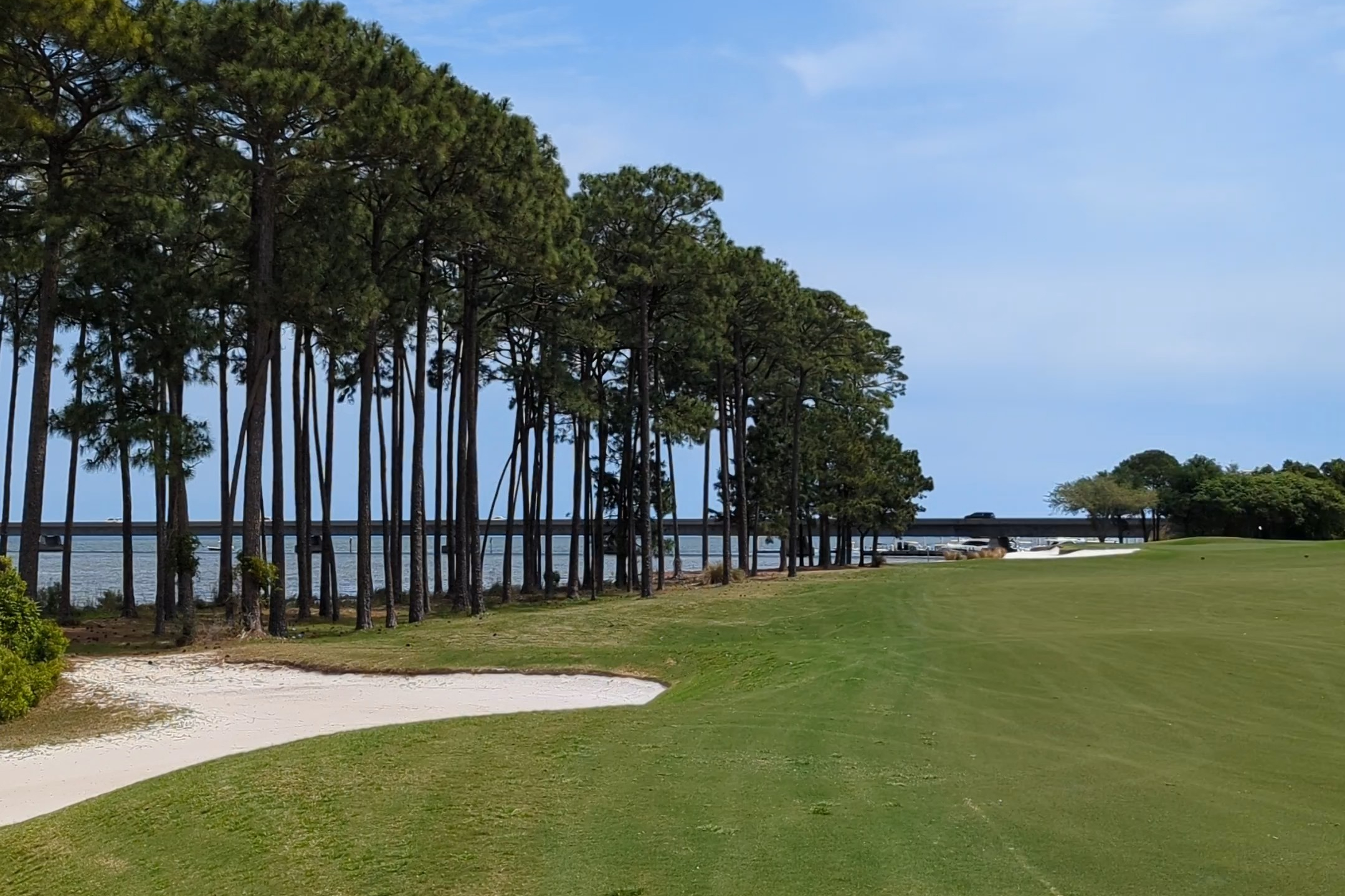
The fifth hole begins to work away from the waterway as a longer par-4. There isn’t much of a strategy element to this hole, other than two greenside bunkers that protect the back-left side of the green. The green here is rather sloped, particularly in the front-right quadrant, where I managed to find a quick three-putt.
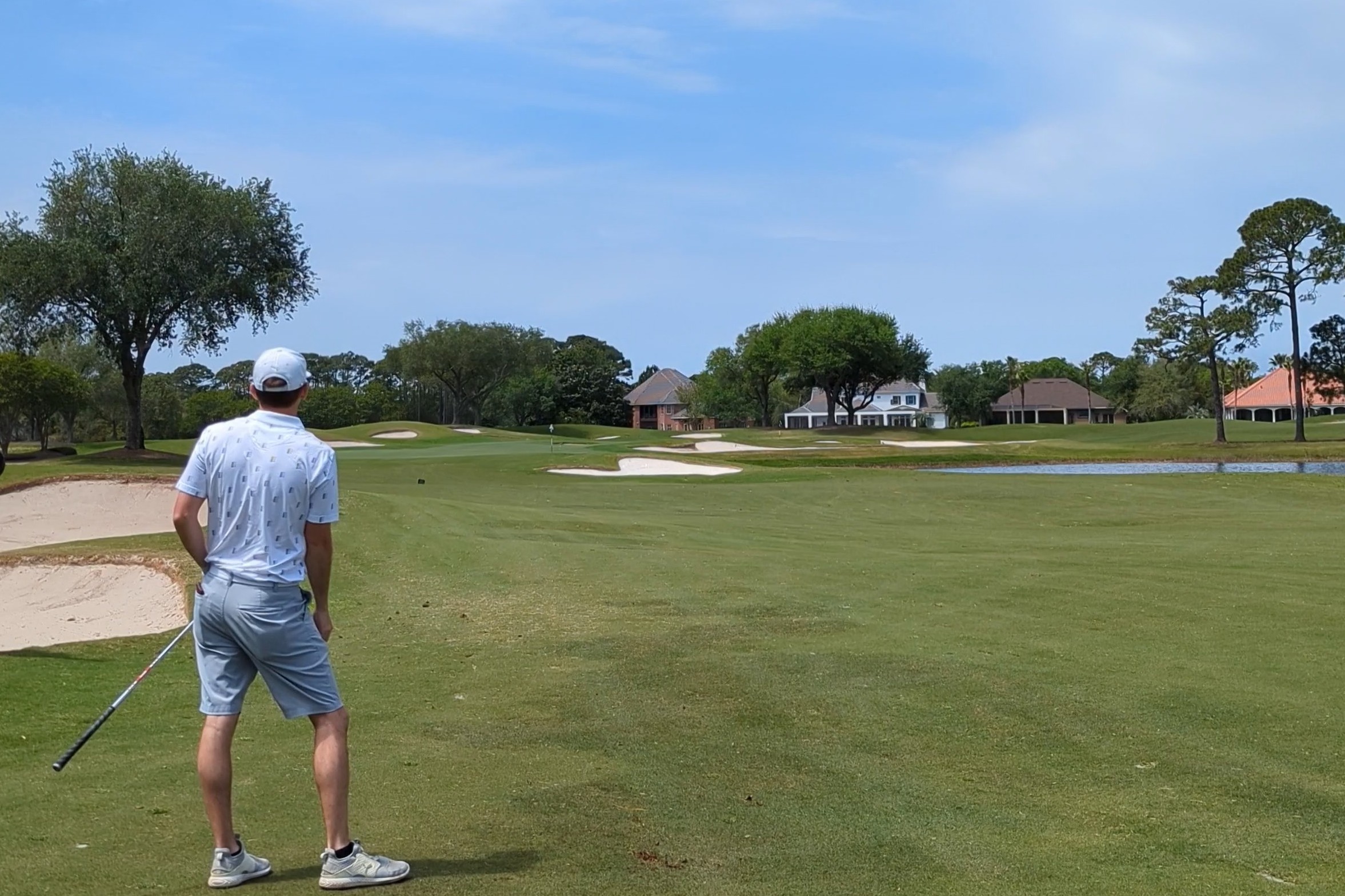
The sixth is an awkward par-5, mid-length and mostly straight away slammed between a row of houses on the right and a four-lane highway on the left. The drive is complicated by 4 fairway bunkers, three on the right, in which the fairway must nip and tuck between. The approach shot can be challenged by trees that could potentially block and approach shot laying in either side of the fairway around 100-yards short of the green. My complaint about the fifth and the sixth is simple: they aren’t bad holes. They are just boring.
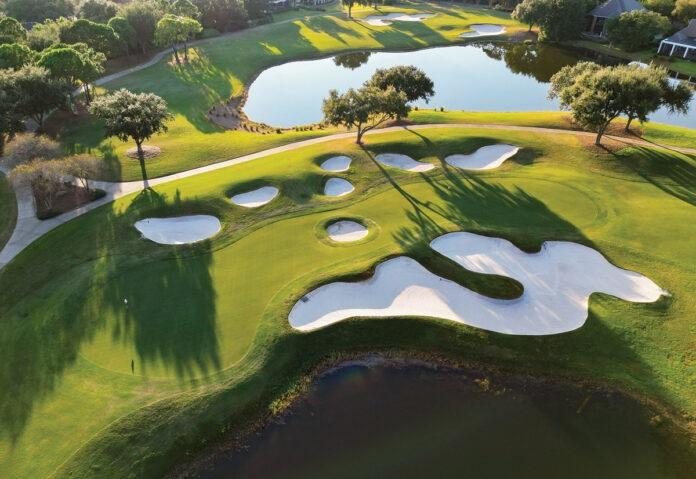
The seven and eleventh holes share a double green with a Riviera-esque bunker splitting the green into two distinct sides: one for the seventh and one for the eleventh. The green is heavily fortified on the seventh’s approach by water and sand on the right and more dotted bunkers on the left. The seventh is a shorter par-4, and the water that flanks the green left extends down the entire fairway, which commands an accurate tee shot. However, should the tee shot find the fairway, a birdie chance may lie in wait, as the double green is generous on both sides.
Just as the seventh and eleventh greens converge, the eighth and twelfth tees are in close proximity as well, and both play as longer par-3 holes. We almost played the wrong hole here, and something tells me we wouldn’t have been the first newcomers to play the twelfth as their eighth, before realizing their mistake. The eighth has a small pond that quarters the front right of the hole, but is well out of play for all but the most poorly struck tee shots.
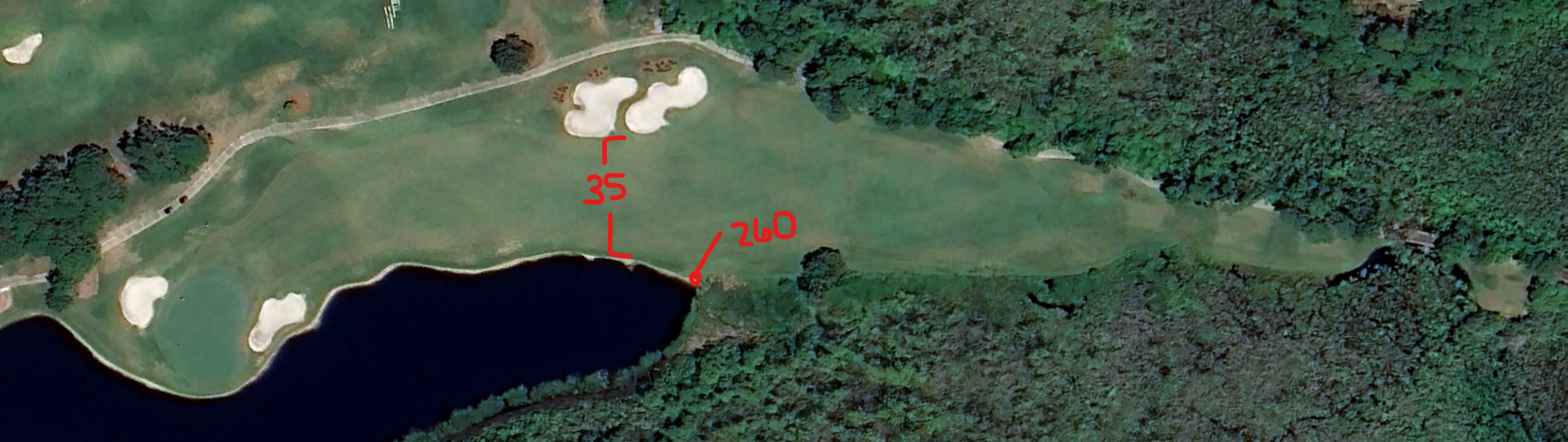
The ninth hole may be one of the most challenging holes at Kelly Plantation, as the longer par-4 has a very challenging drive which provides a few options: (1) a player can choose to hit driver from the tee, but the landing area is significantly narrowed by two well-placed fairway bunkers on the right, and an encroaching pond that runs lengthwise from around 260-yards from the back tee, up to and around the green. (2) a player could back down to a 3-wood, but then the approach becomes much more complicated due to length, as less than driver will likely leave greater than 175-yards into the peninsula-green, which is undoubtedly the most heavily-sloped green on the golf course. Neither option is without risk, but the player is forced to decide whether they have the most appetite for risk on the drive or on the approach.
The ninth also exhibits proper bunker placement, which I often complain about when it is done incorrectly. Here, the bunkers serve to push the player’s eyes more towards the water hazard. So many designers will mistakenly put a bunker between the fairway and the lake or on the left side short of the water in designs like this, especially on daily-fee courses. Couples et. al. make no such rookie mistake here.
This nine, overall, isn’t a bad nine. I haven’t been overly critical to this point and there are some interesting holes. The problem is just simply the first, second, fifth, sixth, and eighth holes could be on any golf course in America, and they wouldn’t be out of place. But on this course, that does have some holes with significant character, the holes that lack the natural features (with the exception of the seventh) have little to no character at all.
Making the Turn
The tenth is a medium-length par-5 with a tricky forced carry right before the green, supposedly to force most players to play this par-5 as a three-shot hole.
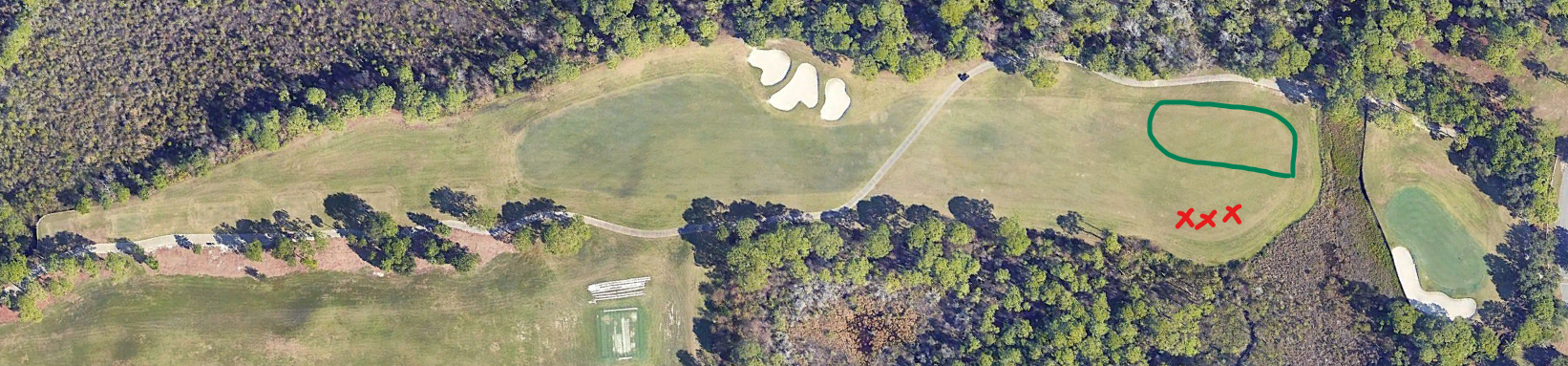
The hole is part strategic, and part heroic. If you do lay up, which presumably most will as the forced carry ends with a wooden retaining wall to carry, the left side of the fairway is clearly more strategic, for the improved angle into the green. Playing left leaves the player a clear shot straight up the length of the green, while the right side of the fairway forces the player to negotiate with a greenside bunker and a narrowing green from that angle. For those with significant length, the hole also offers a heroic opportunity to carry the wooden retaining wall onto the green from over 225 yards. All in all, provided the player doesn’t find trouble, this hole should yield a reasonable chance at birdie, and is one of the strongest holes on the back nine.
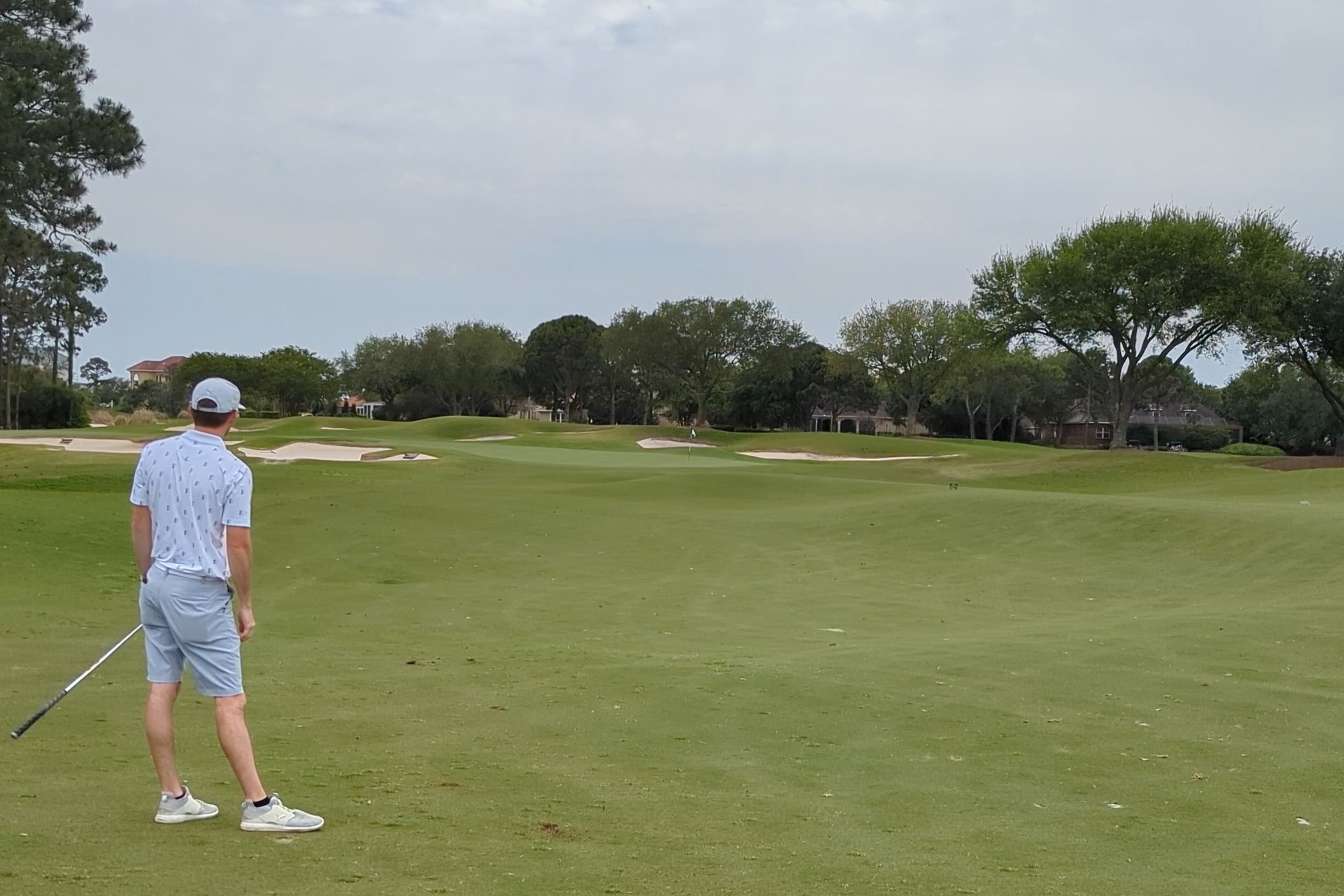
The eleventh hole plays into the shared green with the seventh as detailed before, and like the seventh, is also a shorter par-4 that will leave a low iron or wedge approach. Overall, this hole is pretty bland, outside of the cool shared green.
The twelfth is pretty similar to the eighth, its neighbor; a long par-3 with a touch of uphill to a large green protected on the front left by a few bunkers. A Best Western hotel provides the backdrop for this hole; so if you’ve forgotten you’re in the Florida panhandle, this will serve as your reminder. I would imagine there’s an occasional drunk heckler from the balconies above.
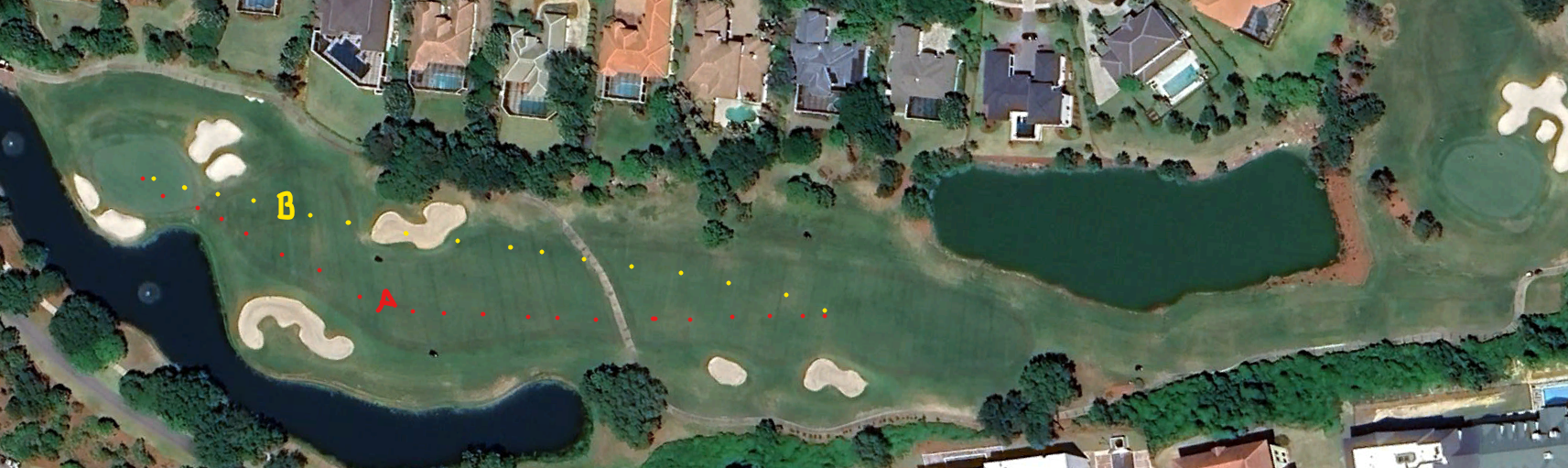
The thirteenth hole is probably the most confusing hole to play at Kelly Plantation, and actually has a significant elevation change for a Florida golf course, as the approach shot really drops downhill on this short par-5. The hole gives you a few options, but all of them are a bit tough to see on your first play through. In hindsight, you could lay up with a short club between the bunkers, or attempt to carry the right hand bunker and bounce the ball down onto the green, but the second option will require a bit of fade, and brings in the risk of the encroaching water that gets closest to the green just short and left on the hole. Depth perception is key here, because the overhead view shows a significantly different hole than your eyes perceive while playing.
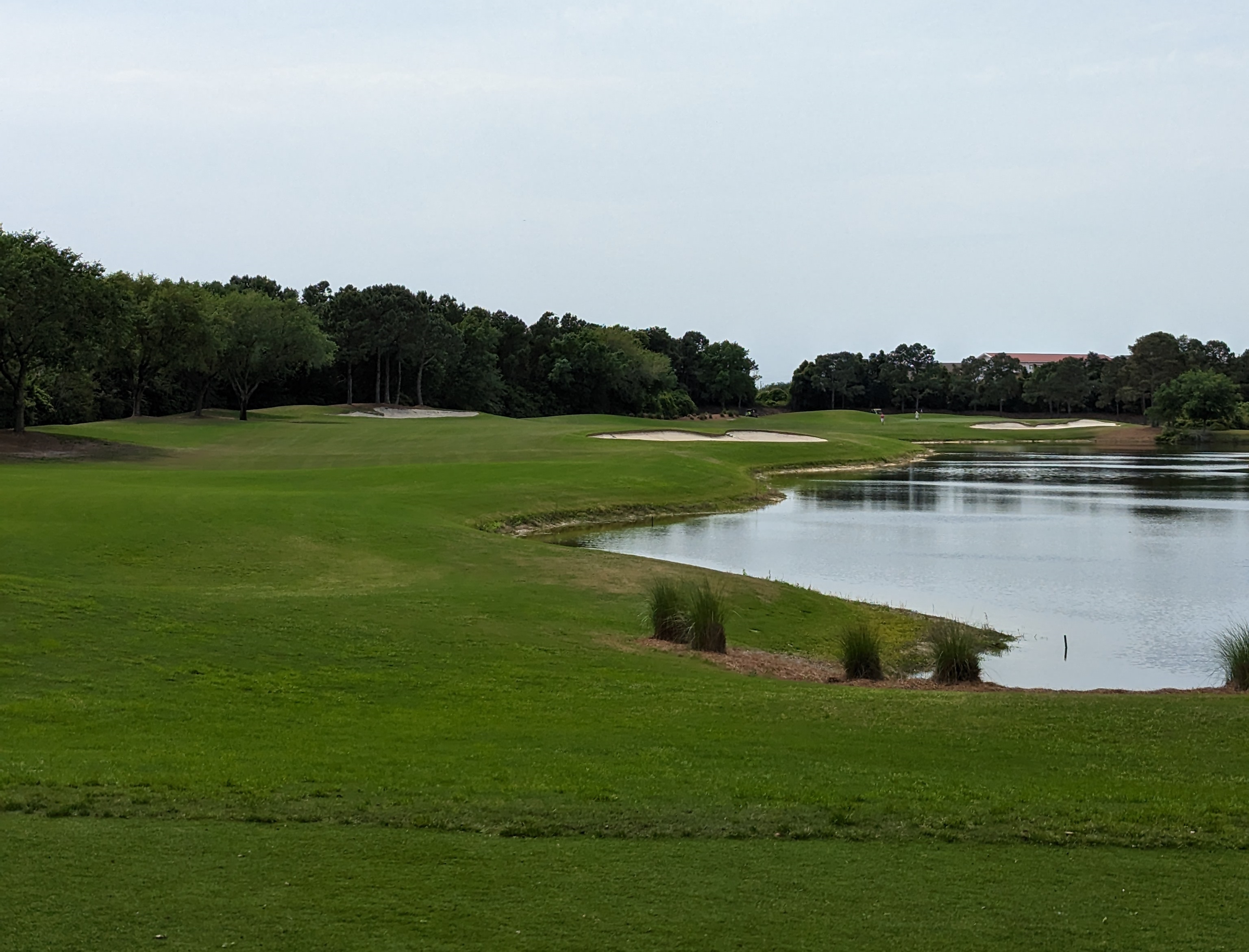
The fourteenth is an attractive but somewhat mundane mid-length par-4 that provides ample space for a drive, but a pond does flank the entire hole to the right. The oddly distanced cross bunker, sitting around 200 yards from the back tee, serves as a visual distraction but largely sits in fly over territory for most well struck tee shots.
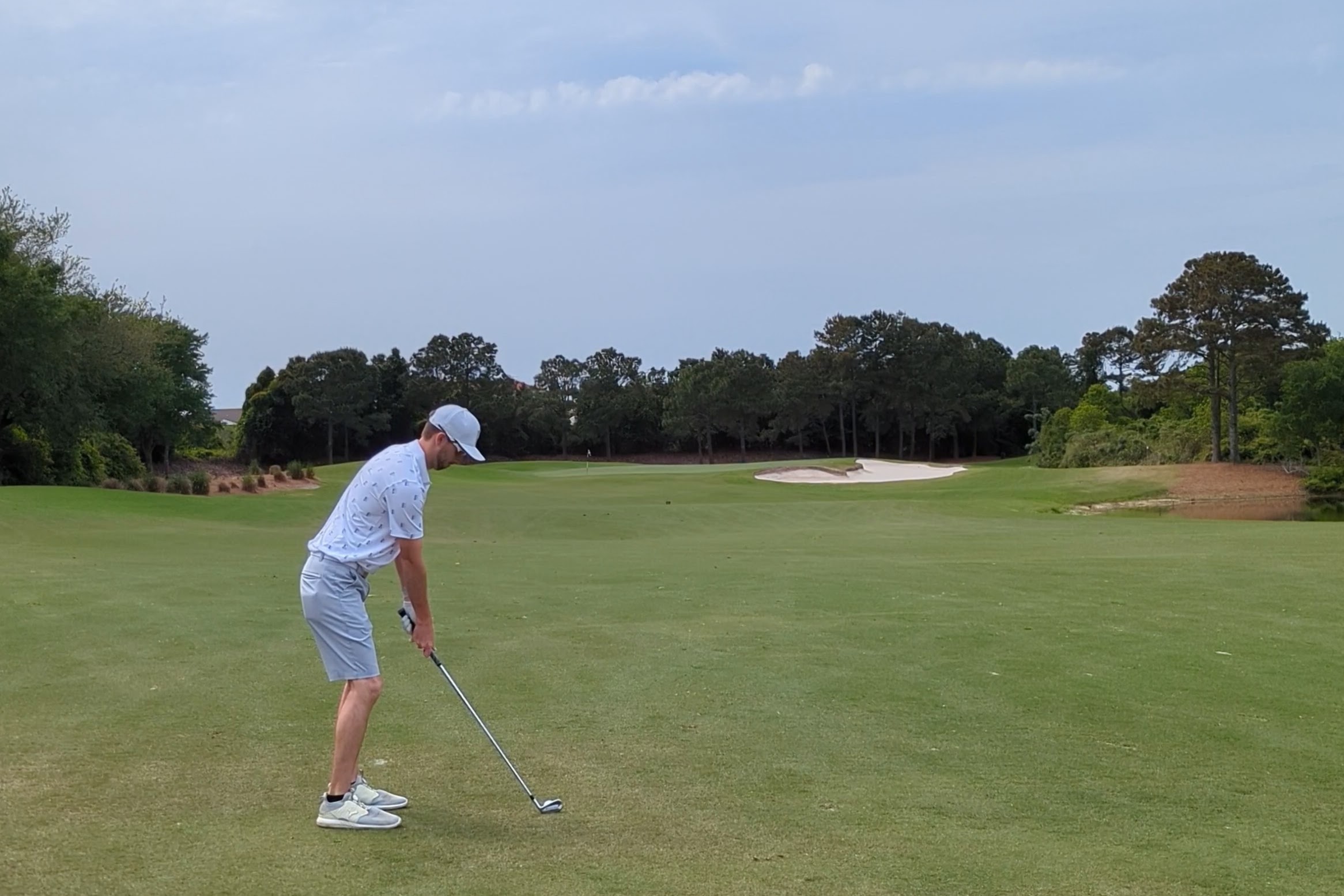
The approach into the fourteenth green is again mundane but attractive, and I think the slope of the fourteenth green is evident from this picture.
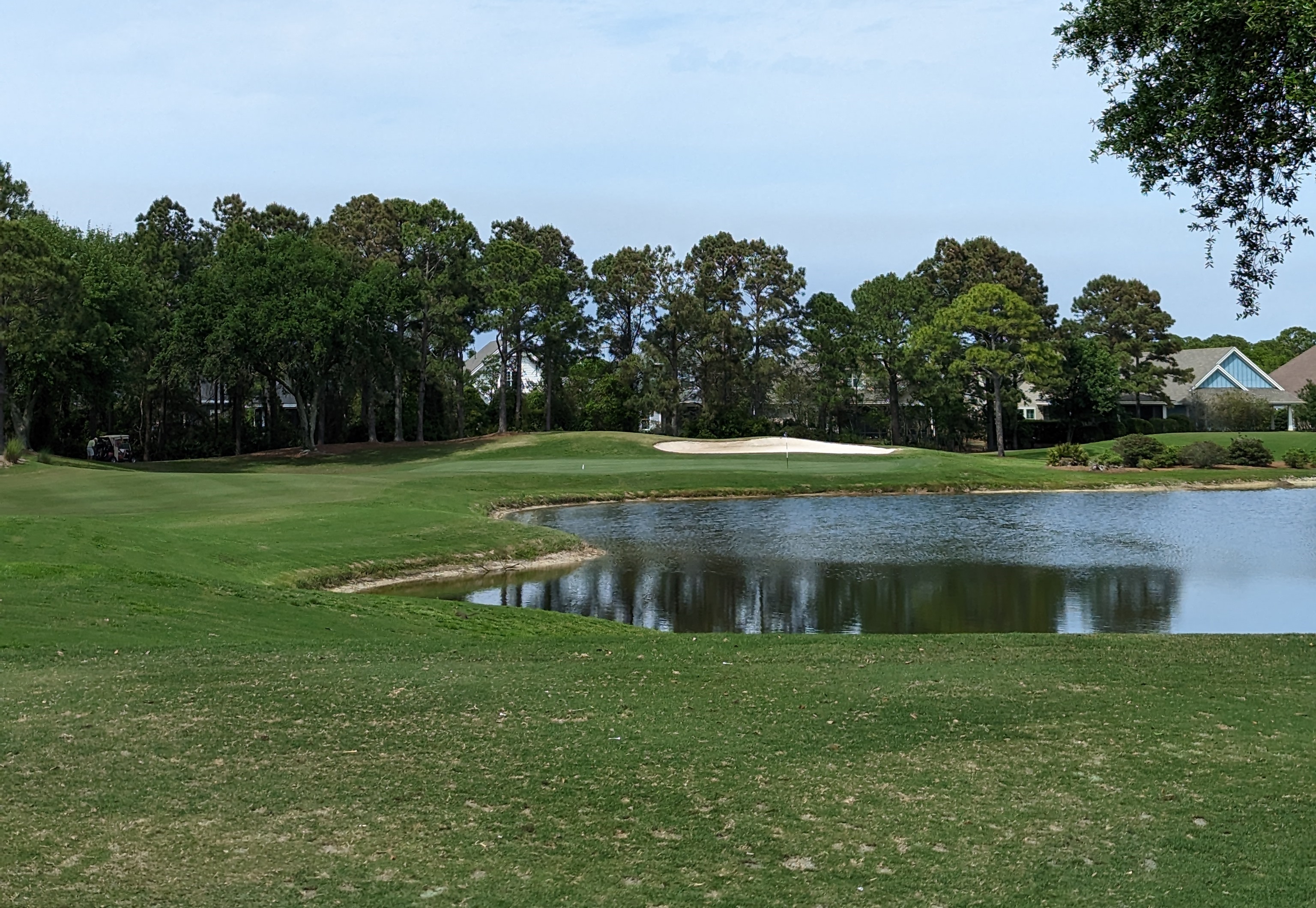
The fifteenth is another par-3, one of three on this side, as Couples et. al. decided to go with three par-3s, three par-4s, and three par-5s on this nine. This may be the best of the bunch for those that like short par-3s, and the front right pin is certainly a risk-reward shot. The hole is just 150 yards from the back tee, but you must control the spin into the right-hand pin positions, as the green is just 13 yards between water and sand. More than one in our group spun this shot back into the water on the right side.
The sixteenth is probably the worst hole on the back side: a straight and long par-4 featuring no bunkers or hazards. I’d say the fun-factor of this hole was near zero, even with the birdie I made.
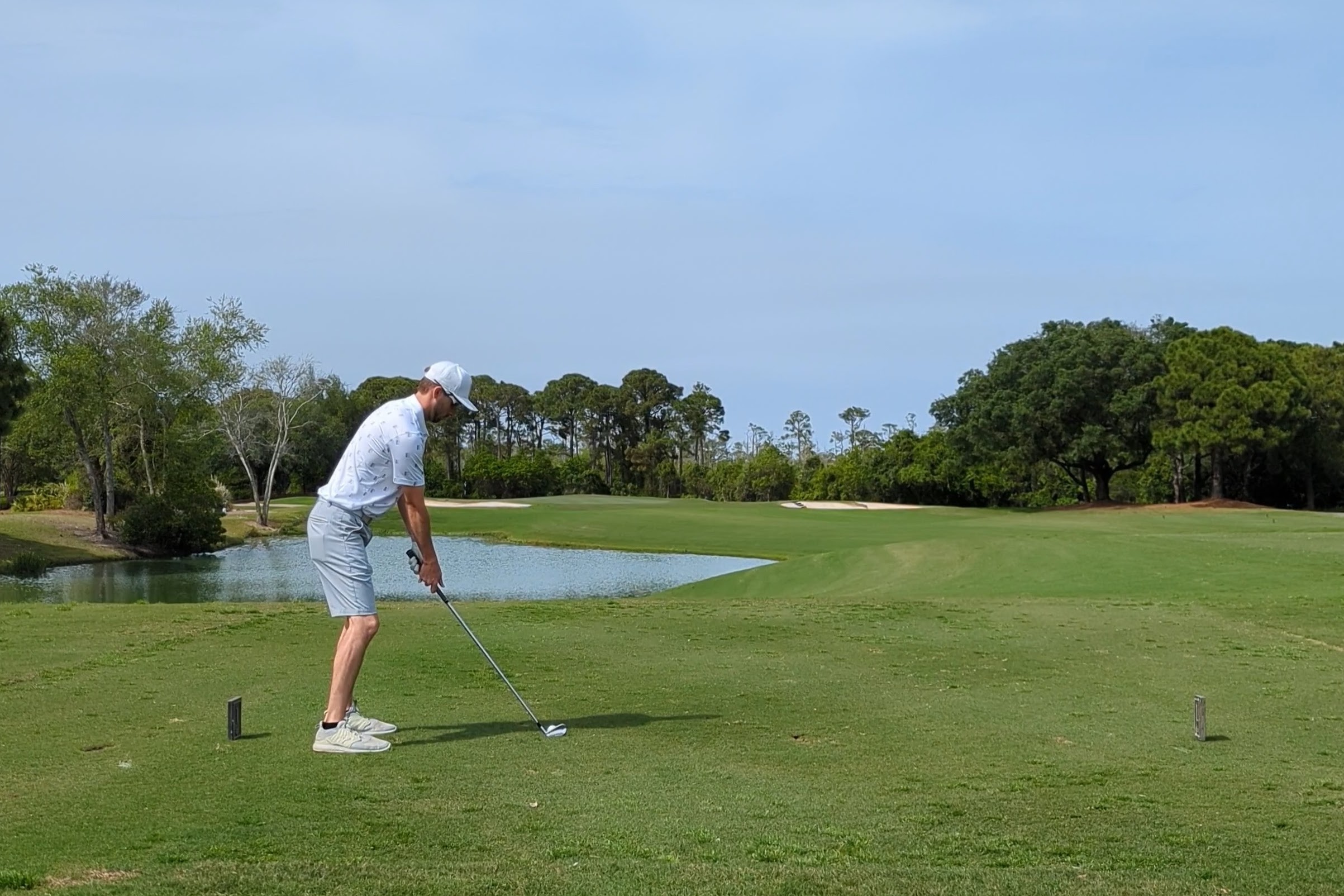
The seventeenth hole is the last par-3 on the course, and probably the worst, as the longer par-3 plays into a large, round green with significant undulation. This area, sixteen and seventeen, kind of feel like an afterthought in the development, and the energy and interest in the round were both starting to temper after the water balls on the fifteenth. This is another hole that could be placed on any course in the U.S. and wouldn’t feel out of place.
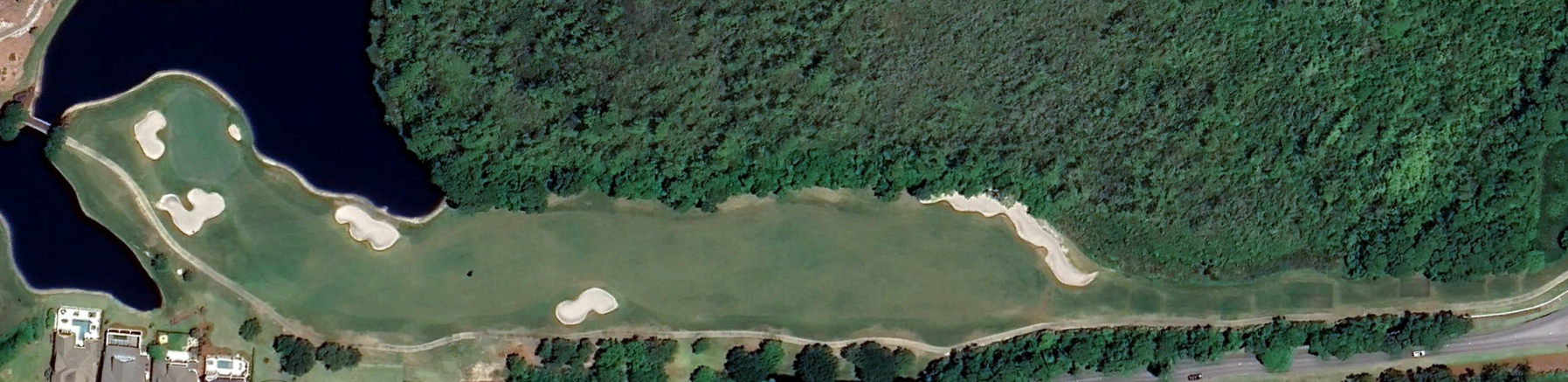
Then, we moved to the finishing hole, which is admittedly a pretty strong finishing hole and a nice eighteenth. Not excessively challenging, and pretty easy to play as a three-shot hole, but certainly has some heroic elements to the design, enticing the player to shoot for the peninsula-green on this medium-length par-5. A worthy finishing hole and one that could certainly provide a spark in match play.
Final Thoughts
Kelly Plantation causes me a bit of cognitive dissonance. For one, some of the holes clearly have some distinct character and thoughtful strategic design – perhaps more than you would expect from a resort or vacation golf course. However, its overall rating suffers because too many of the holes are essentially characterless. Also, and of course this can vary depending on the time of year and maintenance schedules, but the course was not in the best shape when we played. There were weeds here and there, the tee boxes a bit barren, etc., which shouldn’t exactly be the case for April in Florida. I certainly cannot say its always like that, having only played it once, but it left a bit to be desired on the day we played. Mostly, this is a case of expectation management: Kelly Plantation is a fine golf course and provided an enjoyable round, its just not one that I’m eager to return to play.
CR&J’s Final Rating:
Shot Options: 6
Challenge: 6
Layout Variety: 7
Distinctiveness: 6
Aesthetics: 7
Conditioning: 5
Character: 6
Fun: 7
Total: 50/80
Read More: How We Rate Courses
Rating Scale Details
> 70: Top-50 U.S.
65-70: Top-200 U.S.,
60-65: Best-in-State List
57-60: Best-in-state List Contender
53-57: Very Good
48-53: Good
40-48: Average
< 40: Poor

Author: Kyle Taylor
Kyle is the lead course reviewer at The Course Review & Journal. Kyle has been playing golf for over twenty years, is a plus handicap, and actively competes in USGA and State Golf Association events. By trade, Kyle is an attorney.
Kyle Taylor is a pseudonym used by CR&J’s lead course reviewer to protect personal relationships. The reviews and opinions remain entirely the writer’s own.
Leave a Reply
You must be logged in to post a comment.