
Time to Read:
|
This Turtle Point Yacht & Country Club course review is based on a round played in 2026.
Turtle Point Yacht & Country Club is a private course in Killen, AL.
CR&J’s Final Rating: 57/80 (Best-in-State Contender)
In 2024, standing on the beautiful 18th green of the Fighting Joe course at The Shoals admiring the beauty of the perched position overlooking the Tennessee River, I spotted something: another golf course. Right across the river! I went home and researched and knew one day, I’d have to drive back to Killen, AL (otherwise known as the middle of nowhere) to play it.
That course was Turtle Point Yacht & CC, and like The Shoals’ courses, they were designed by the legendary Robert Trent Jones, Sr. But, unlike The Shoals, they were actually designed by RTJ Sr., rather than one of his firm’s proteges. The Shoals opened in 2002, two years after RTJ Sr.’s death and was largely executed by mentee Roger Rulewich. Turtle Point Yacht & CC was designed in the 1950s and opened in 1961. Despite being just 1.7 miles apart (all water carry), these two RTJ Sr. courses couldn’t be more different, and represent different eras of the same designer.
Much like Pete Dye went through wild swings in his design language as he aged, RTJ Sr. must have as well, albeit on a smaller scale. To me, RTJ Sr. designs of his later years are largely preposterous: long (sometimes cartoonishly so), difficult, tons of water and hazard, frustrating. Yet, his earlier work is much more revered (and higher ranked), like Peachtree, the Highlands Course at Atlanta Athletic, Spyglass Hill, Firestone North Course, and Real Club Valderrama. All of these courses were designed from 1950-1970s and represent RTJ Sr.’s best work.
Turtle Point Yacht & CC, while lesser known, was also opened right during this stretch of RTJ Sr.’s most revered courses. Accordingly, Turtle Point fits in as less penal, less gimmicky, and more cohesive and refined than other outlandish RTJ Sr. credited designs, such as the two 8,100 yard monsters across the river.
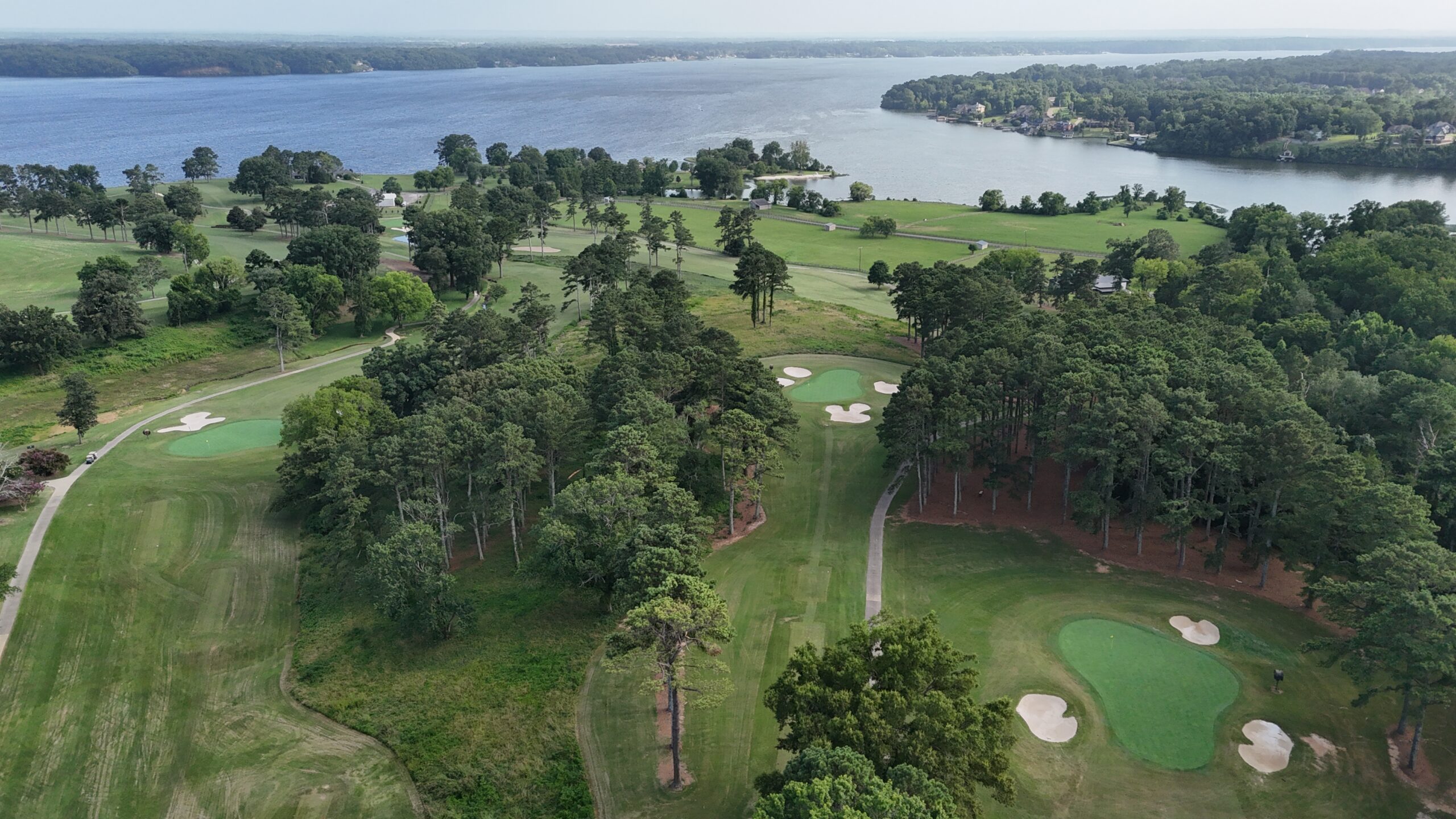
Rather, Turtle Point is just 7,100 yards from the back tees, has very few holes in which water comes into play, and mainly uses the rolling hills rising from the river, the river’s wind, and the tall pines as the hazards to be negotiated. There is no doubt that Turtle Point Yacht is a time-capsule of golf from a bygone era, largely of simplicity, shot making, and challenging green complexes. But, while the routing’s restraint is admirable, and certainly makes for a good round of golf, Turtle Point produces a round that is gentler than what makes a course memorable today. It’s actually an ironic concept: the courses making waves in golf and architectural circles today are preposterous and RTJ Sr. certainly had a flair for absurdity. Yet, reviewers largely dislike later RTJ work, and love the absurdity of Gil Hanse, Rob Collins, and (sometimes) Bill Coore. I think the tension there is the modern absurdity is somehow challenging and fun, where RTJ’s brand of absurdity was brutality.
Turtle Point is neither. It is sophisticated, restrained, and classical. Just not as memorable as absurdity rewards.
The First Tee
Turtle Point shows this restraint from the first hole. The mid-length, par-4 first is an uphill dogleg right that works around a singular fairway bunker on the right. That bunker is the summit of the fairway landscape with the land running away on each side to varying degrees from that bunker.
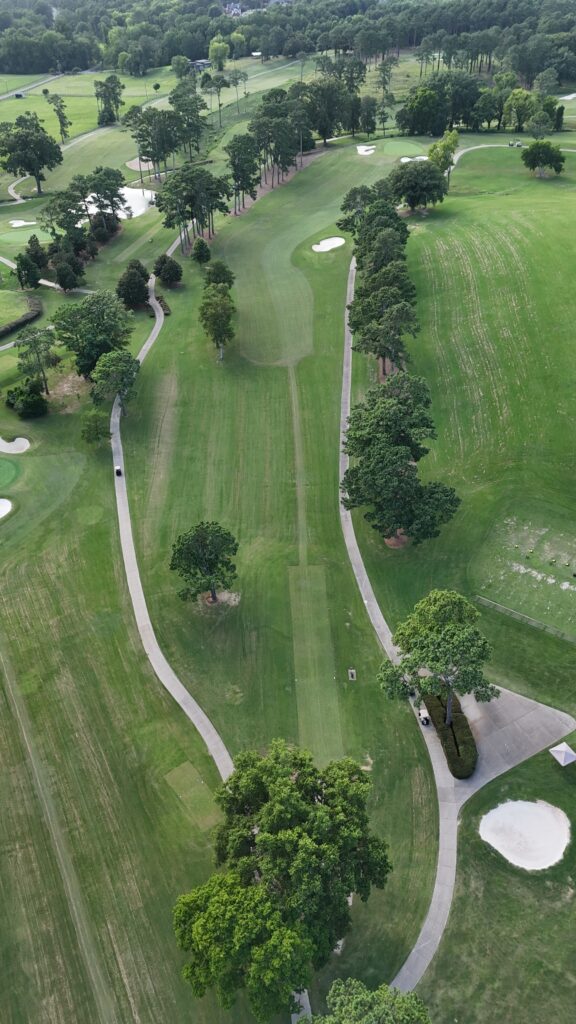
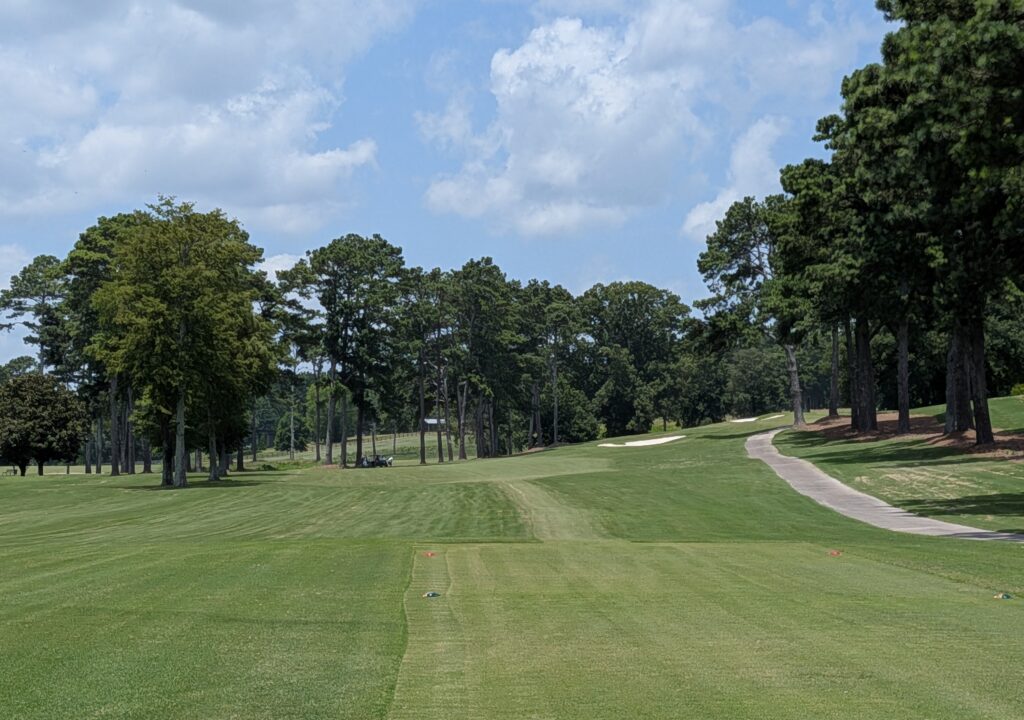
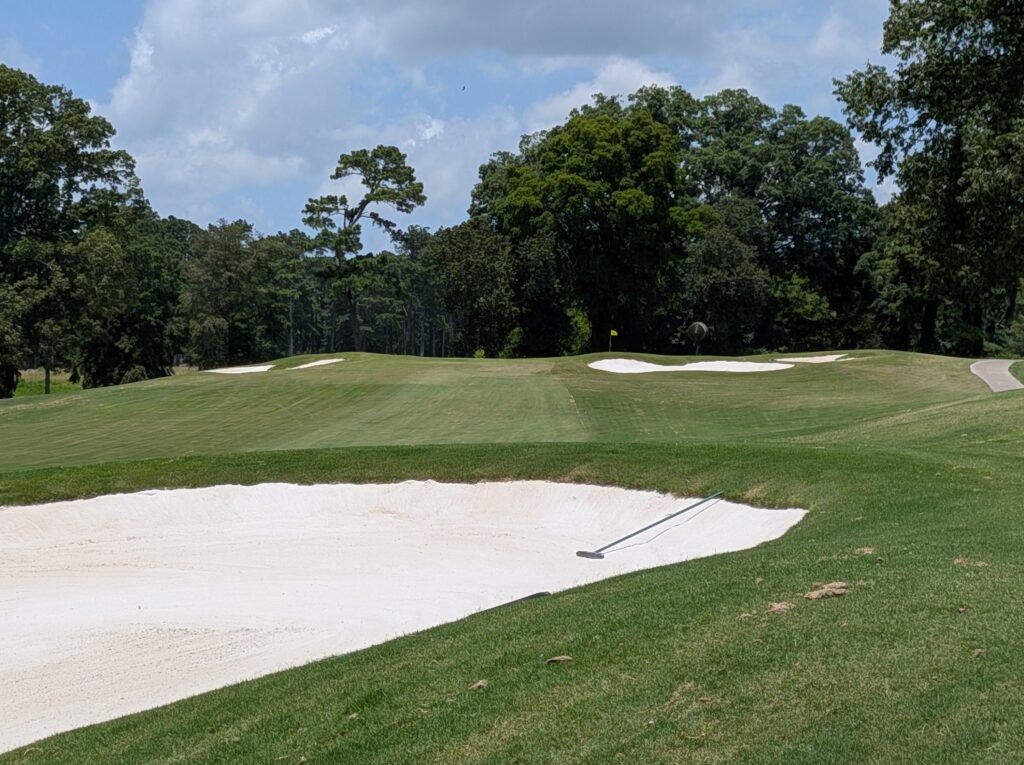
This means most tee shots will bounce left and makes the left side of the fairway and left rough a popular spot. From there, the green is elevated and protected by three surrounding RTJ style cloverleaf bunkers.
The first green felt like one of the smaller, tamer greens on the course, meaning that the first should yield a number of birdie opportunities. The greens here, despite being pretty far south, are still bentgrass, reflecting the classic style of the course and the tee boxes are still cut in the narrow, contiguous ribbons that are RTJ Sr.’s signature style.
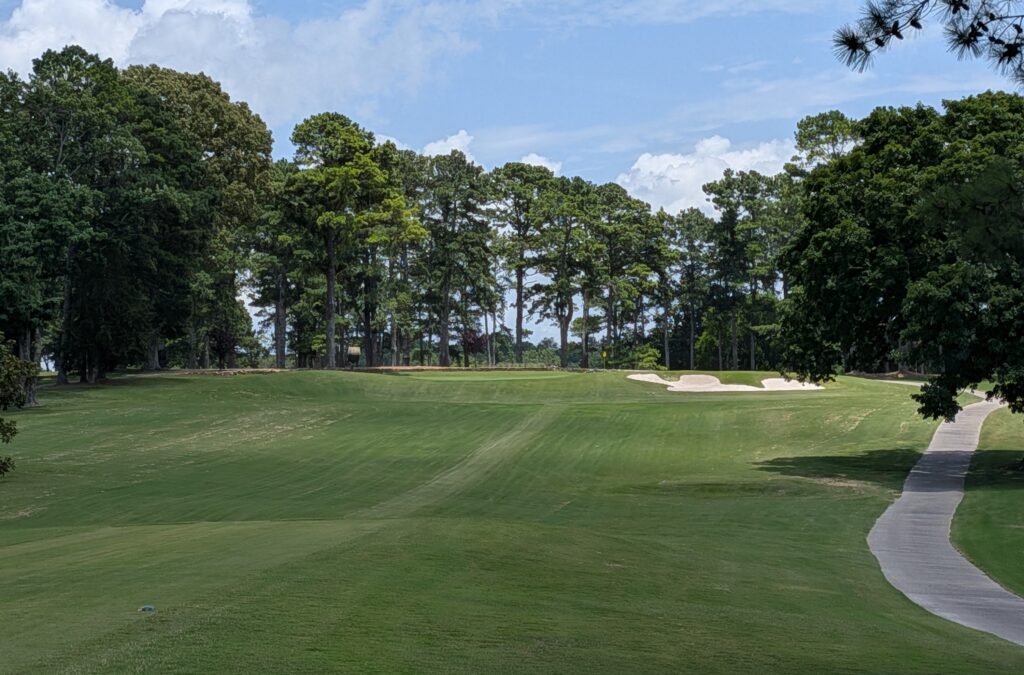
Another one of RTJ Sr.’s signatures are brutally tough par-3’s, and the second hole at Turtle Point fits that theme. 220+ yards and uphill from the back tee, playing across the prevailing wind, makes this a truly difficult par-3. Fortunately, the green here is large and the softer bentgrass greens are receptive to long-iron approaches.
Turtle Point also removed some of the original bunkers sometime during COVID, and a bunker to the left of the second is the first instance of that.
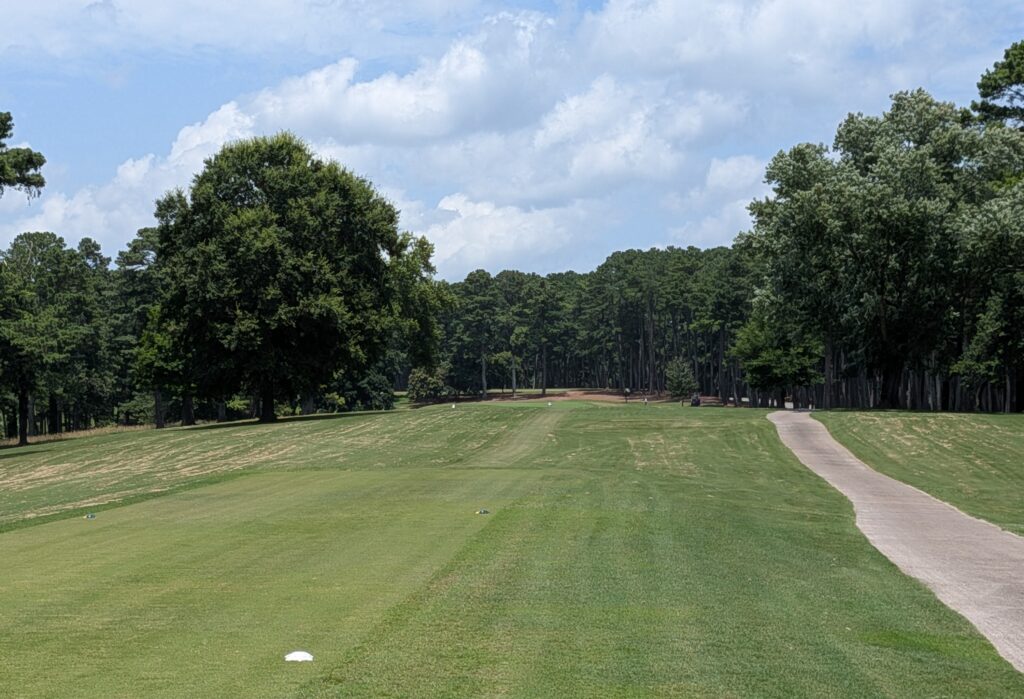
The third hole is a laser straight par-4 that gently works downhill. Long on the scorecard, the hole plays directly downwind as well, meaning a scoring club should be in hand for the approach shot. The surface here is slightly two tiered, bisected front and back.
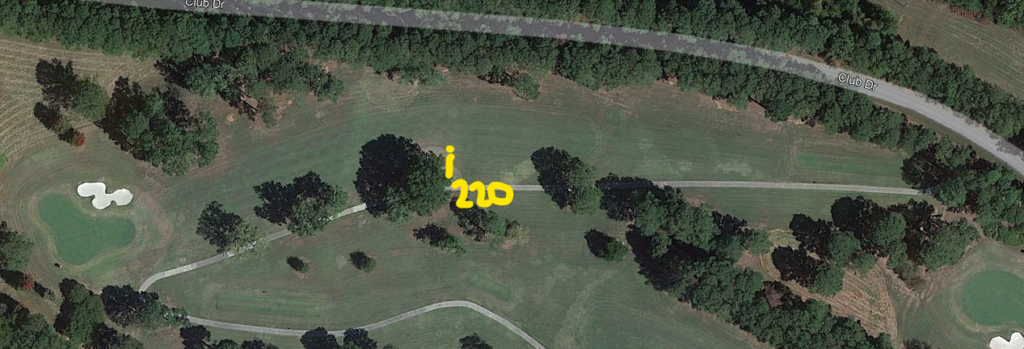
The fourth hole is a tough short par-4 in the corner of the property at Turtle Point, furthest from the river. The hole is flat but tight from the tee, and nearly requires a shot longer than 220-yards from the back tee to avoid being blocked out. Because the hole also bends to the left at this distance, it requires a player to control the distance so as to get by the intruding tree, but control the runout into the rough on the other side. A mediocre tee shot here can send this short par-4 sideways in a hurry.
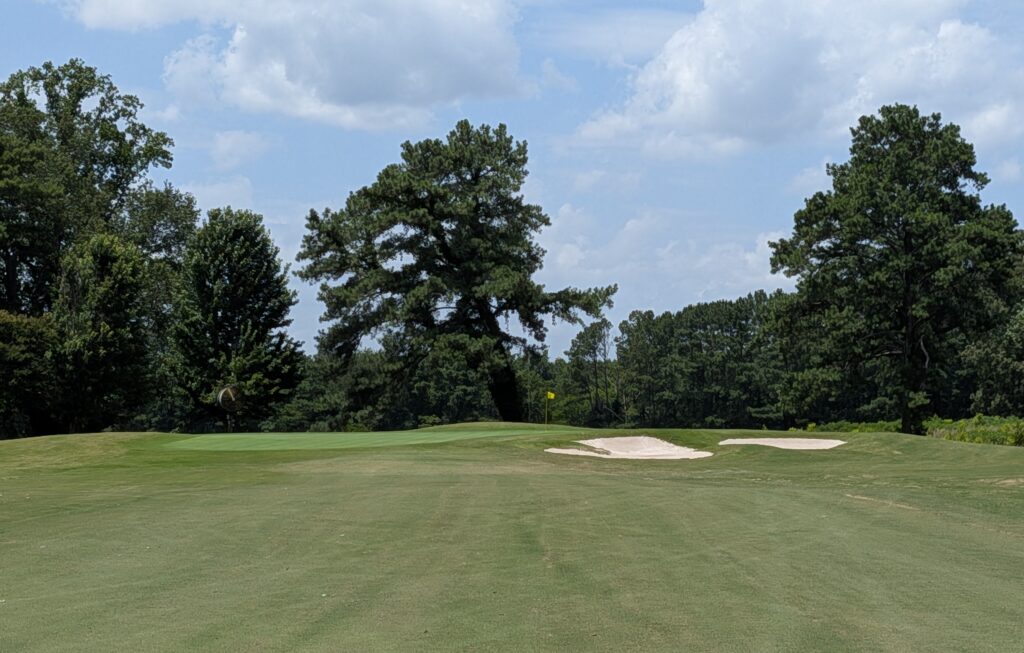
However, if the fairway is found, most of the hole locations here appear accessible (apart from the back right location) and a good birdie look would be expected.
The fifth is a fun, longer-but-downhill par-5 that works over a ridge and back downhill as the course begins to head back towards the river.
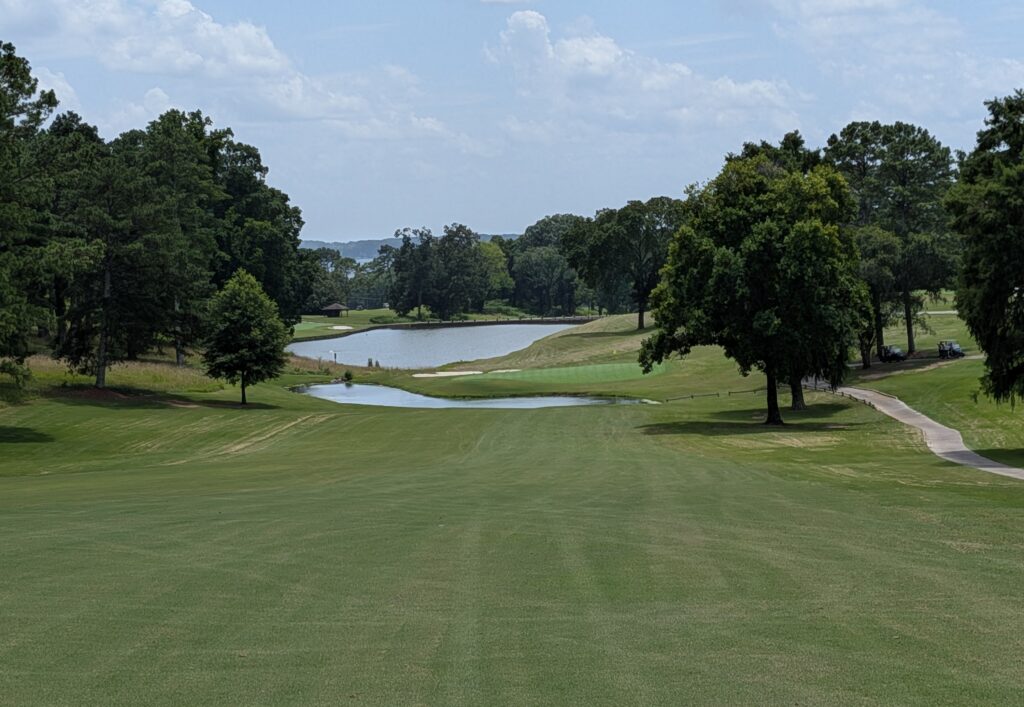
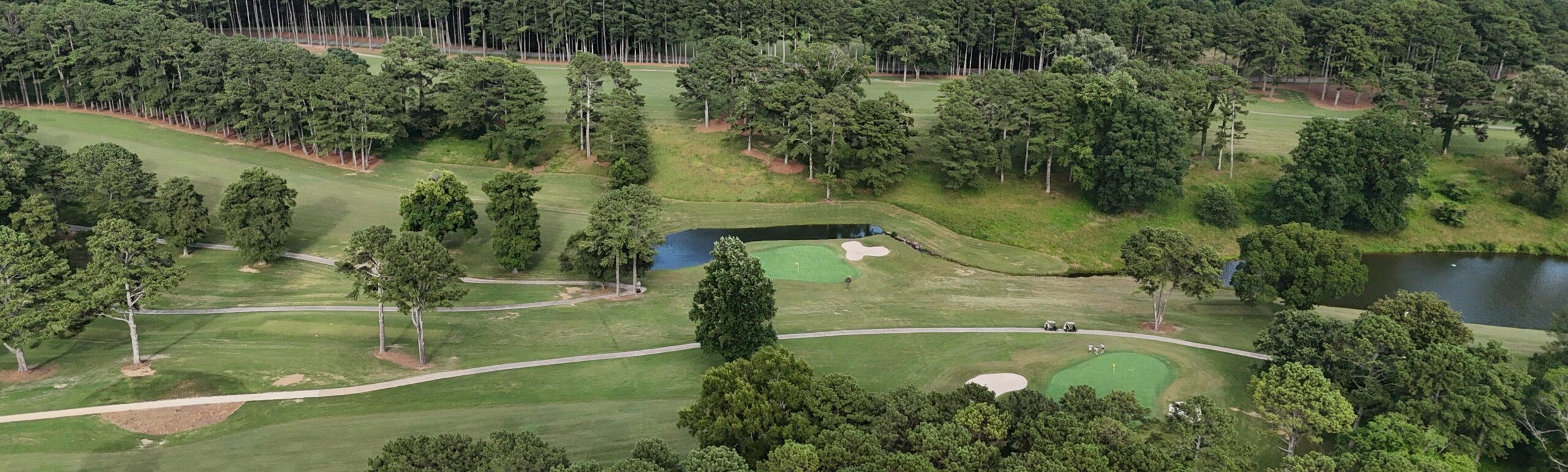
If the fairway is found, most players will likely layup of the pond short of the green, but the longest players will have the chance to go for it in two, as the only real trouble here is the pond. Clear the pond and you’re in good shape. However, laying up to the bottom of the hill is a reasonable play as well. The green here is very graded in the front right portion, and will repel weak wedge shots away from center hole locations.
The sixth is one of the more interesting holes I’ve played lately. The sixth is a longer par-4 that doglegs sharply to the left. However, unlike almost any dogleg-left hole I have ever played, this hole is not receptive to a draw – at all. A large tree hugs the line right off the right edge of the tee box about 50 yards away. A draw generally must be pushed a bit, and a push off the tee here is a certain double bogey.
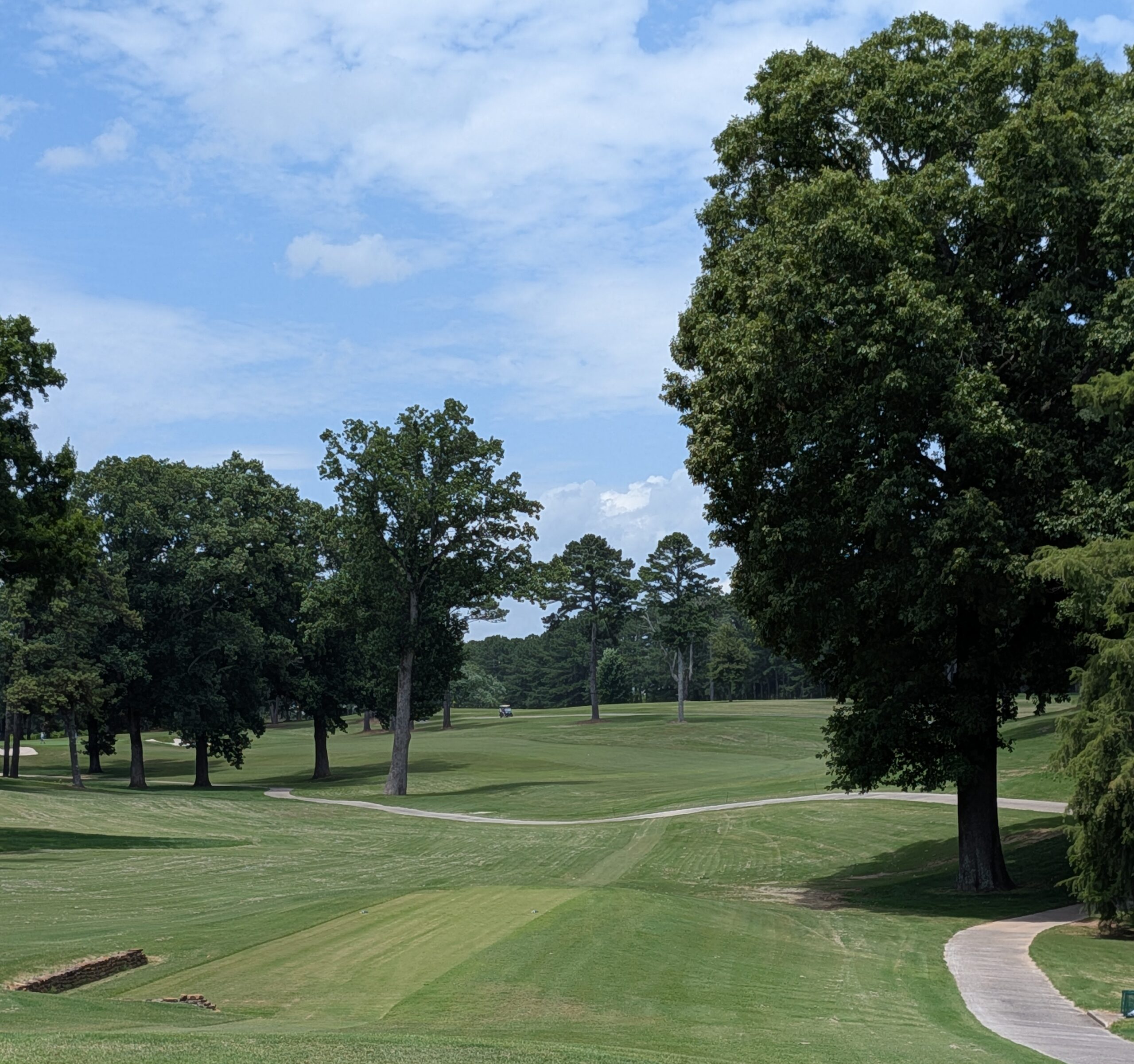
Rather uniquely, the singular shot shape that works at the sixth is a pull-cut into the fairway, that slopes heavily from right to left and catches those fading balls and feeds them left. The drive must be left of the tree on the right, but then curve right to miss the tree on the left. And, it must be played with driver to get the ball far enough not to be blocked out by the trees on the inside of the sharp dogleg on the approach shot.
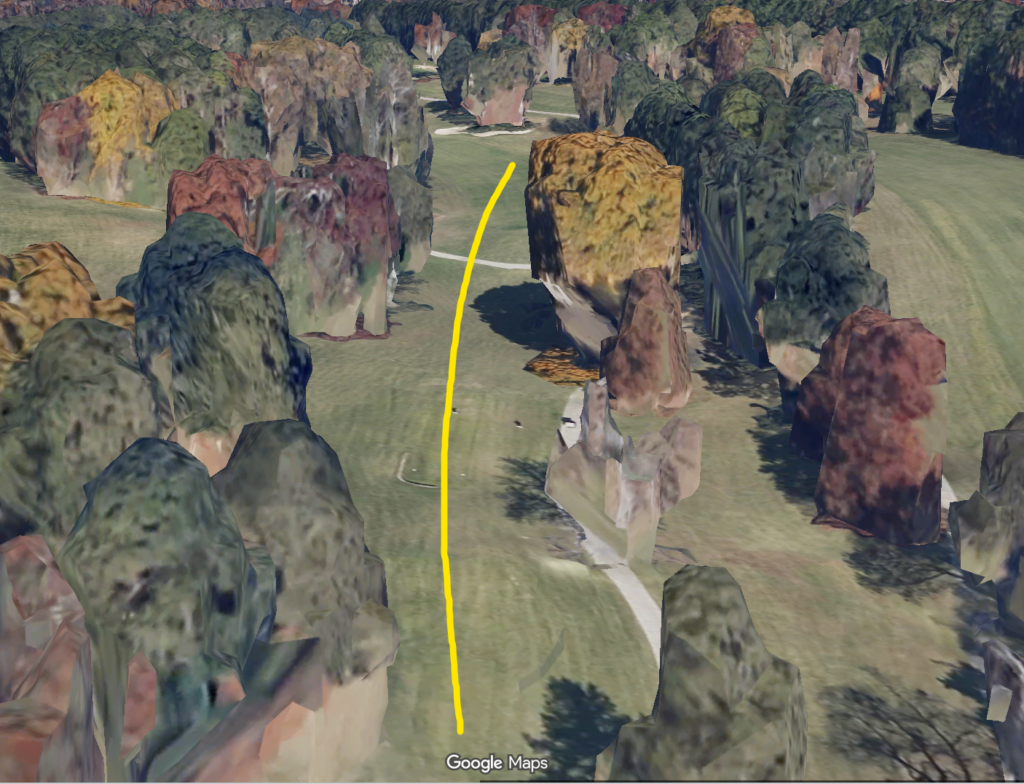
I naturally hit a pull-cut with driver, but if the sixth were mirrored the other direction, it would be my personal nightmare. Prayers to you if you hit a draw.
The green here is anything but tame, featuring a large ridge bisecting front left from back left, a bowl front middle, and a narrow, high precipice on the far right. A tough two-putt on an already tough hole.
The seventh is a longer, straightaway par-5 of little interest back towards the river. Dead straight, decently wide, partially blind from the tee, and not a fairway bunker for the length of the hole. However, the eighth is RTJ’s ode to Augusta National’s twelfth at the mid-length par-3.
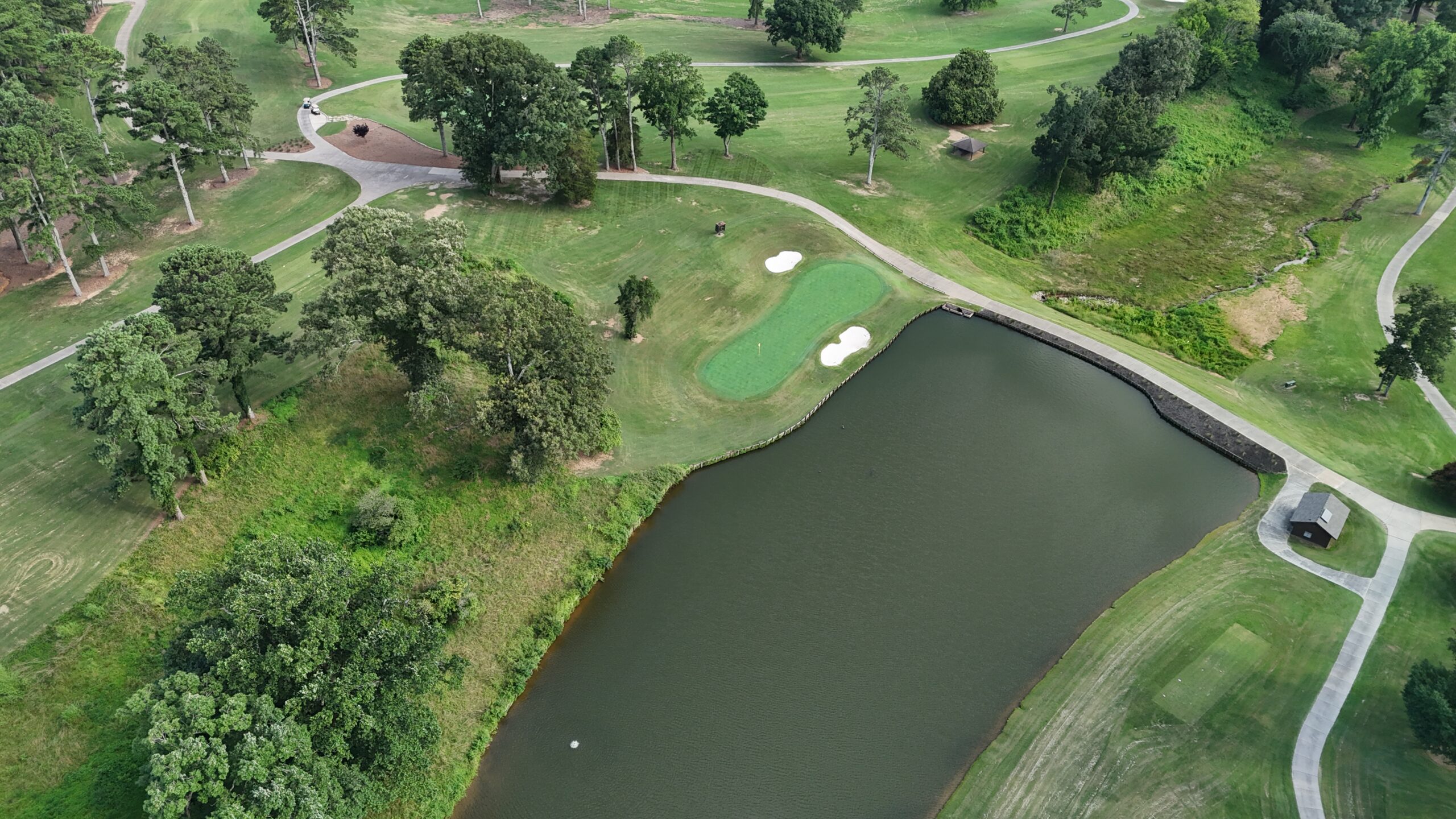
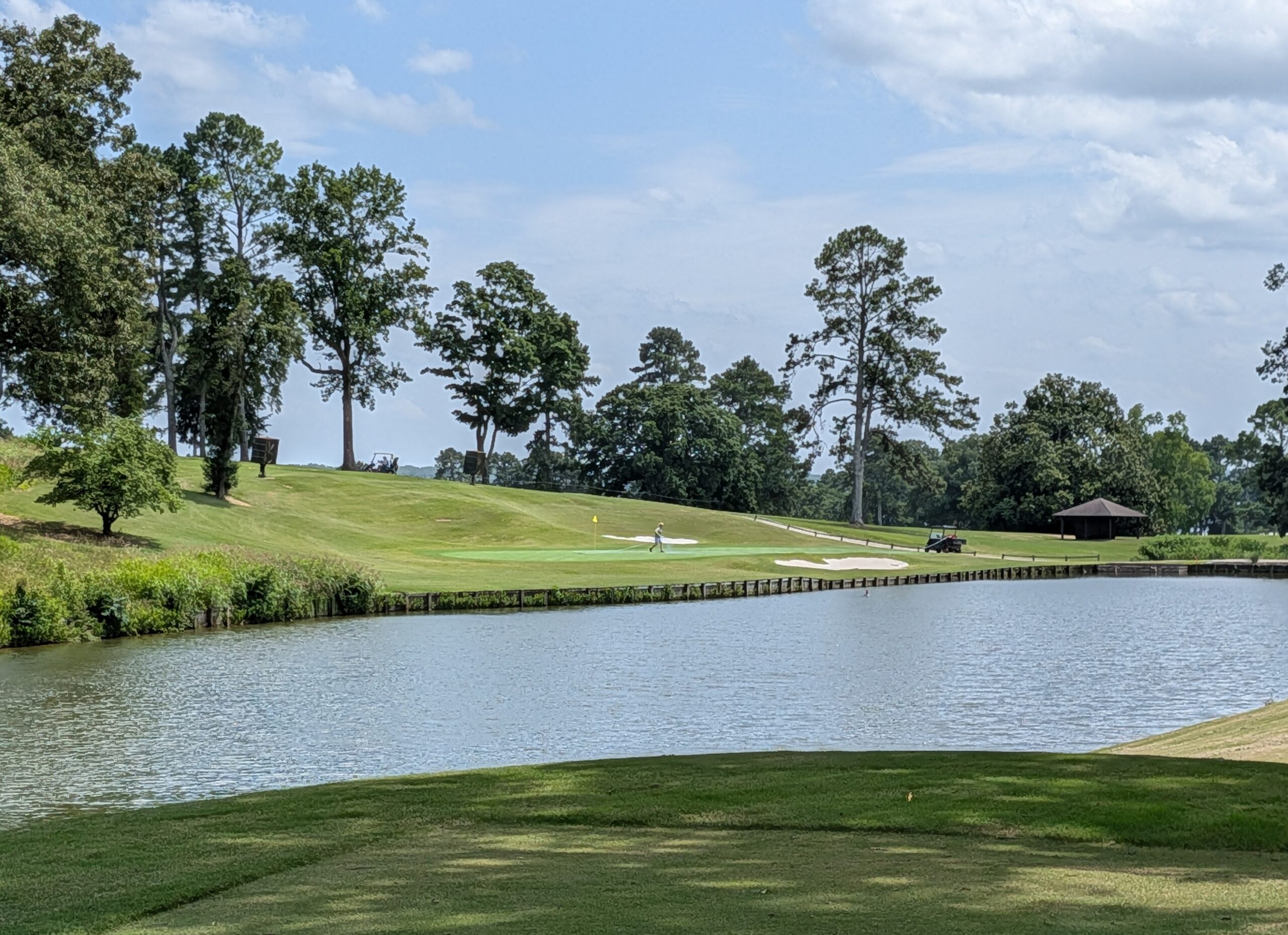
The eighth is a simple par-3 with a very long, narrow green, and is visually similar to the twelfth at Augusta, just a bit longer and played from a different angle. From the back tee, this hole can play between 150 to 190 yards, and the narrow green angled from left to right makes approaches hard from any distance, as pulls will miss long and pushes will come up short in the water. The green is similar in shape and size as the fourth hole at Spyglass Hill, another RTJ Sr. design, but this one predates that famous skinny green. The eighth’s is 50 yards long by 11 yards wide, Spyglass’s fourth is an even more aggressive 57 yards by 7 yards, but has no adjacent penalty hazard.
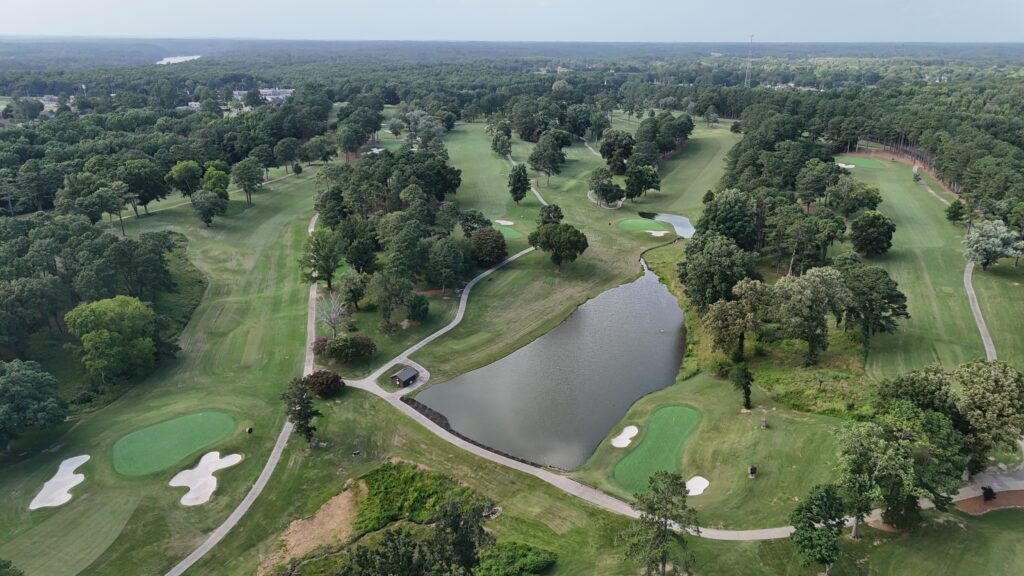
This hole used to feature one extra bunker behind the green, left of the remaining bunker. Now, a grass depression in the steep hillside occupies the spot.
A short drive awaits to the ninth, where the course will complete its return downhill to the Tennessee river, on an aesthetic long par-4 played into the prevailing wind.
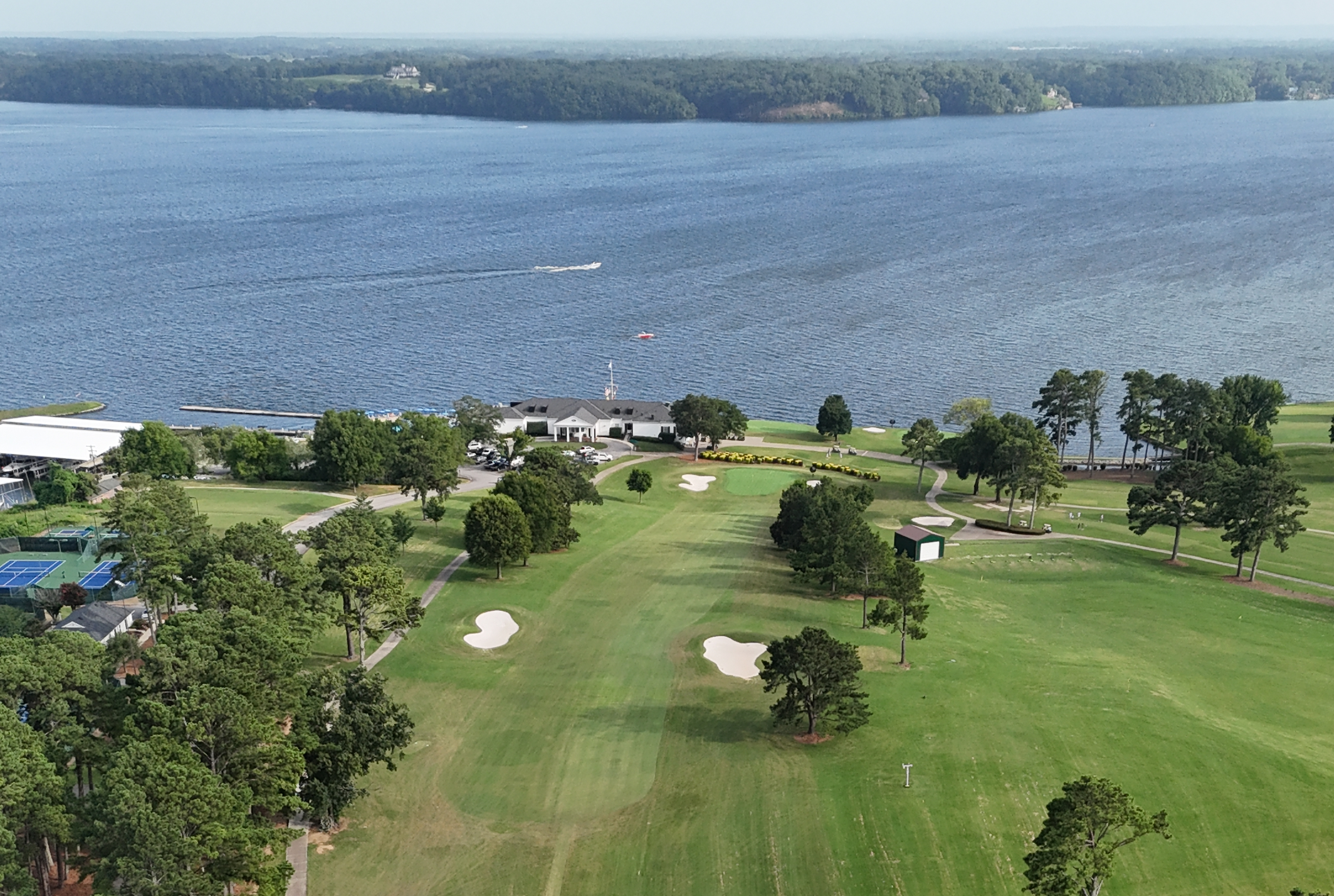
From the ninth tee, all that can be aimed at is the two fairway bunkers in sight, but longer players will be able to carry these bunkers and get the ball bounding down the hill towards the hole.
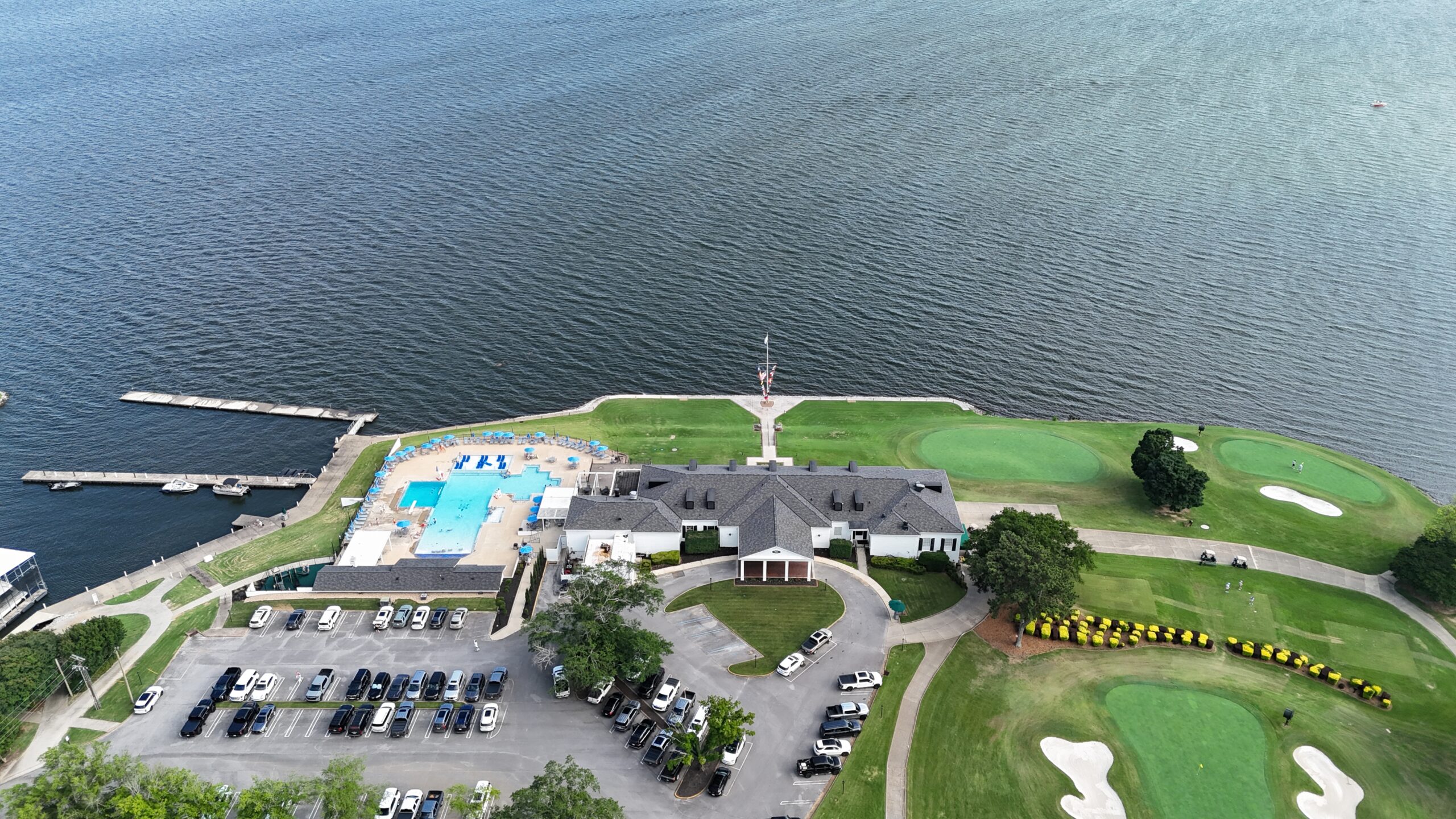
Once in the fairway, a steeply downhill shot of some 15 to 20 yards awaits, likely into the wind, creating a really tough club selection into a very tame, simple green in front of the clubhouse and river.
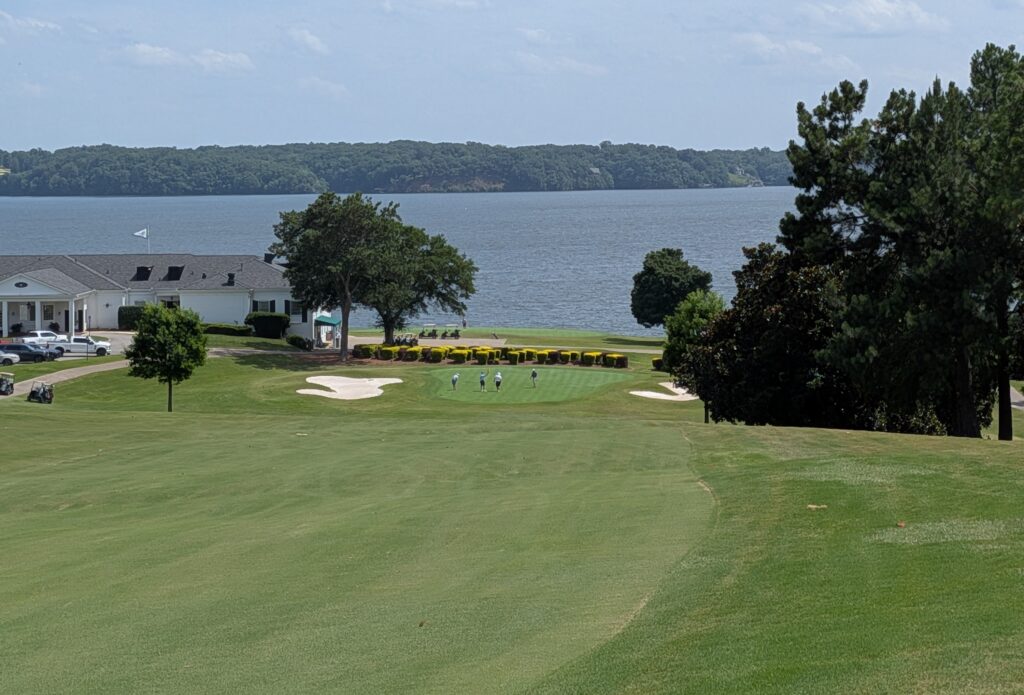
Two cloverleaf bunkers await on either side for any pushed or pulled approach shots, which is easy to do from distance.
Making The Turn
Like so many classic courses, the tenth starts with a par-3. So many older courses do this because the area near the clubhouse becomes cramped needing a small area to house the clubhouse, club facilities and amenities, a driving range, the ninth and eighteenth greens, and the first and tenth tee-boxes.

The tenth is often relegated to being a connecting par-3 that connects the clubhouse back out to some open space to route the back nine. Here, the tenth doesn’t feel like an afterthought though; another long par-3 with the tee box right in front of the golf shop.
Rather, the tenth is a thoughtfully designed hole with very unique green, having a narrow finger extend short left of an otherwise circular green, surrounded by simple bunkers.
The eleventh is certainly an interesting hole, perhaps my least favorite on the golf course. The eleventh is a 90-degree dogleg par-5 which requires a layup off the tee with something less than driver into a wide fairway. Or conversely, a player can try to hit a high cut around the corner.
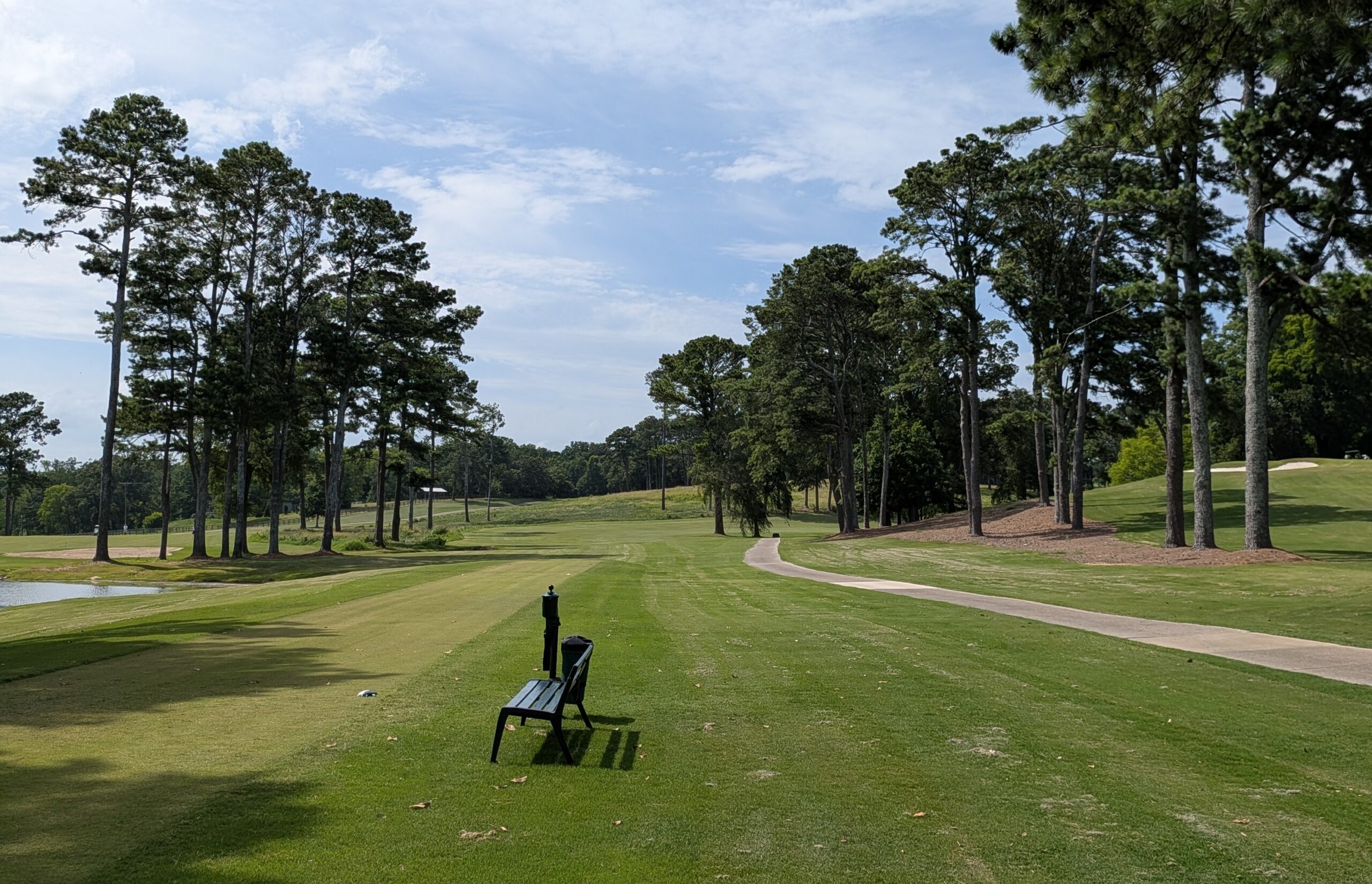
But beware. Rather unfairly, hidden by the tree is a small stream that runs up the right of the fairway. Any attempt to shorten the dogleg must carry both the tall trees and the stream, and any tree strike on this hole is a certain water ball.
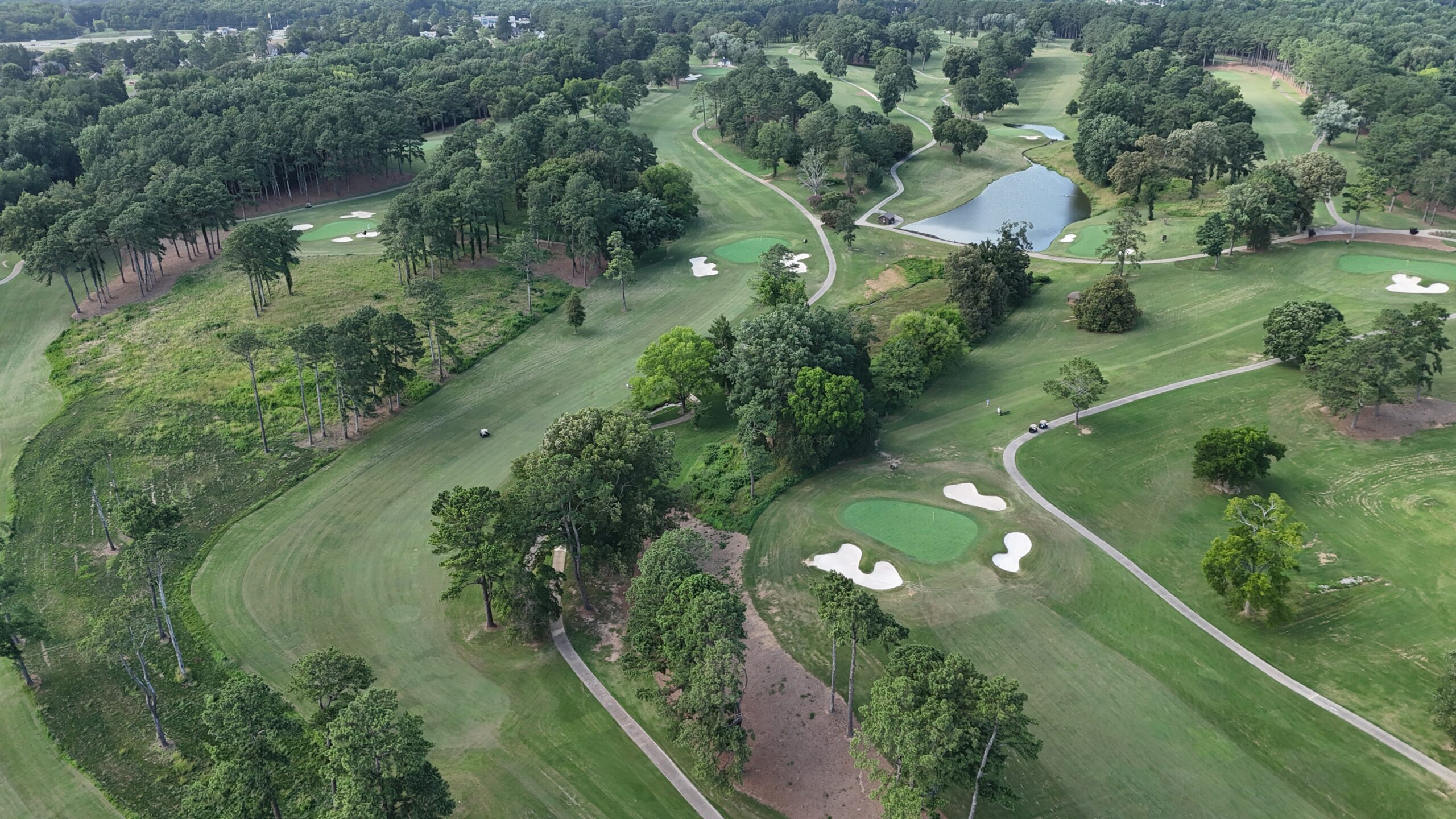
If the fairway is found, an uphill approach awaits to a green flanked on either side by bunkers. The putting surface may be the most severe at Turtle Point, with a large rise from a lower front portion to a higher back half. The combination of difficulties I found to be out of character: 90-degree dogleg, hidden stream (on a course with almost no water), and an uphill approach to a particularly penal green? Pick a struggle, I say. Everyone in our group made bogey or worse.
The twelfth follows up with another tough tee shot, requiring a slight fade on a long par-4 to a fairway that feeds everything right.
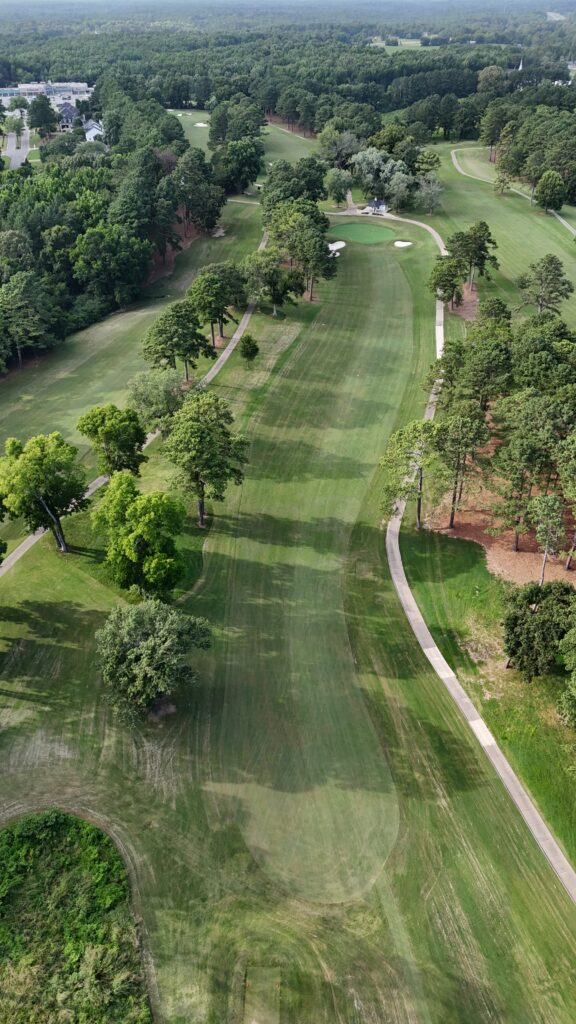
However, if you face the unfortunate fate of getting stuck on the hill, left of the center of the fairway, an impossible shot awaits.
From the fairway, the hole actually gently peels back to the left as it climbs the hill, and the tree on the inside of the bend is very tall and protrudes out into the fairway considerably. Drives that finish in the left half of the fairway are effectively blocked out, due to a combination of distance and height. Unless you hit long irons unreasonably high, a low, running shot is the only option, as a draw around the tree is not advisable with the ball below the player’s feet.
I found this hole to also be a bit unfair, or maybe I just found the unfair parts of the eleventh and the twelfth. That’s golf sometimes.
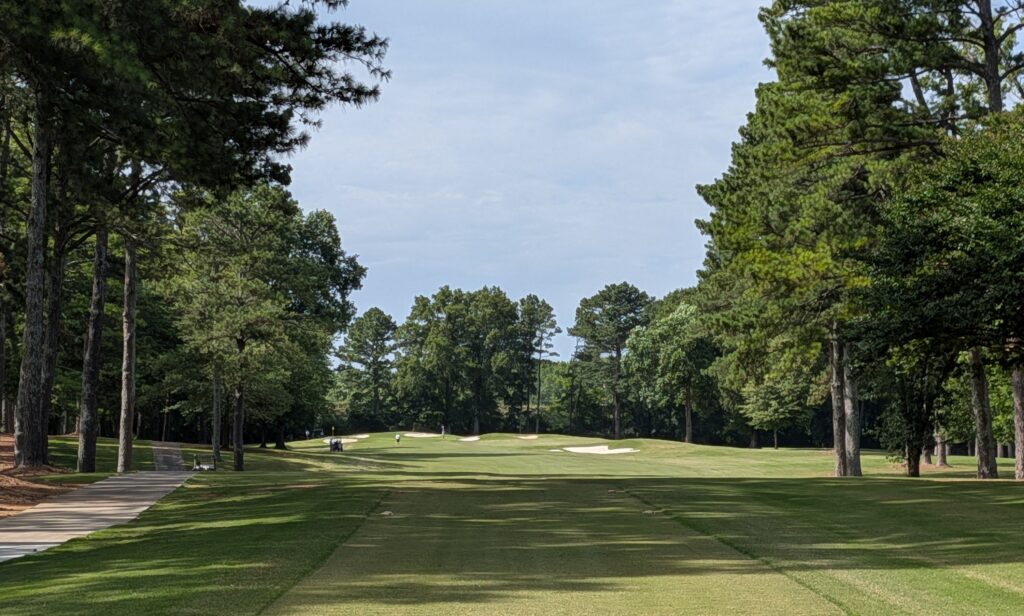
The thirteenth and fourteenth holes are essentially dueling out-and-back shorter par-4 holes. These holes are a bit tight from the tee and present some options to layup short of the bunkers or challenge them to have a very short wedge in hand on approach.
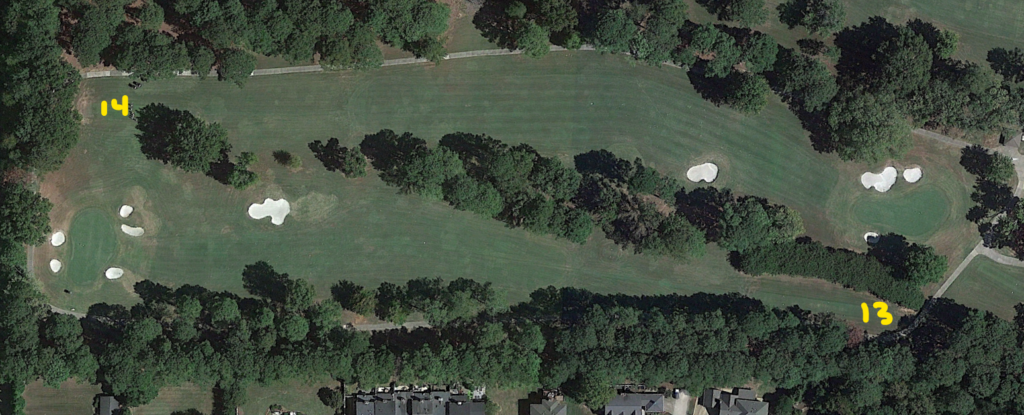
These holes appear to have had the biggest bunker rework, with the fairway bunker on the thirteenth being visibly reduced, and the fairway bunker on the fourteenth added. Before that bunker was shortened, I’d imagine it was a popular spot, and the new bunker on the fourteenth calls driver into question. Both changes have altered the strategy on these holes. The greenside bunkers were also significantly reworked on both holes, with most of the bunkers being reduced in size.
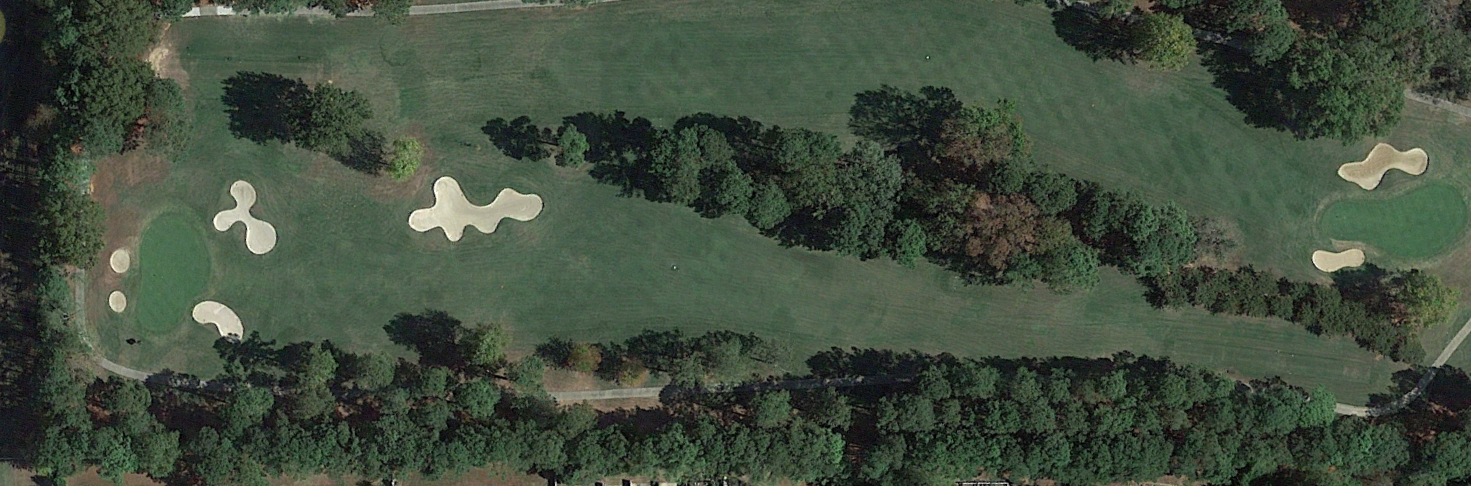
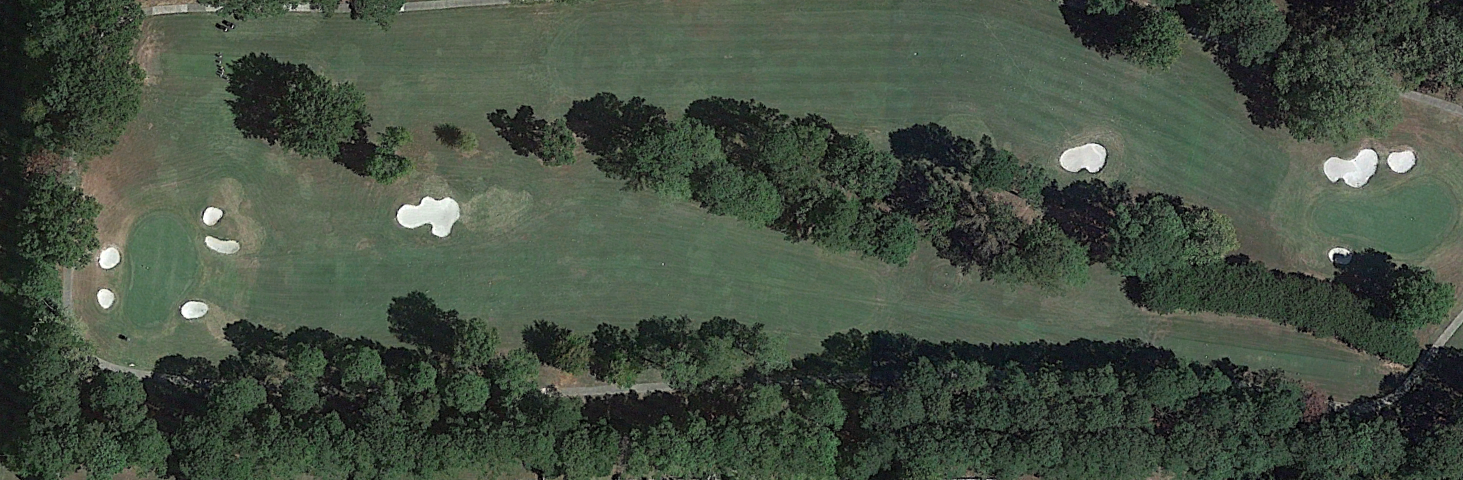
However, if I am being honest from a strategy perspective, I’m not sure the juice was worth the squeeze there.
The fourteenth turns back down towards the river for the final time and the fifteenth continues that straight march as a mid-length par-4 through the pines.
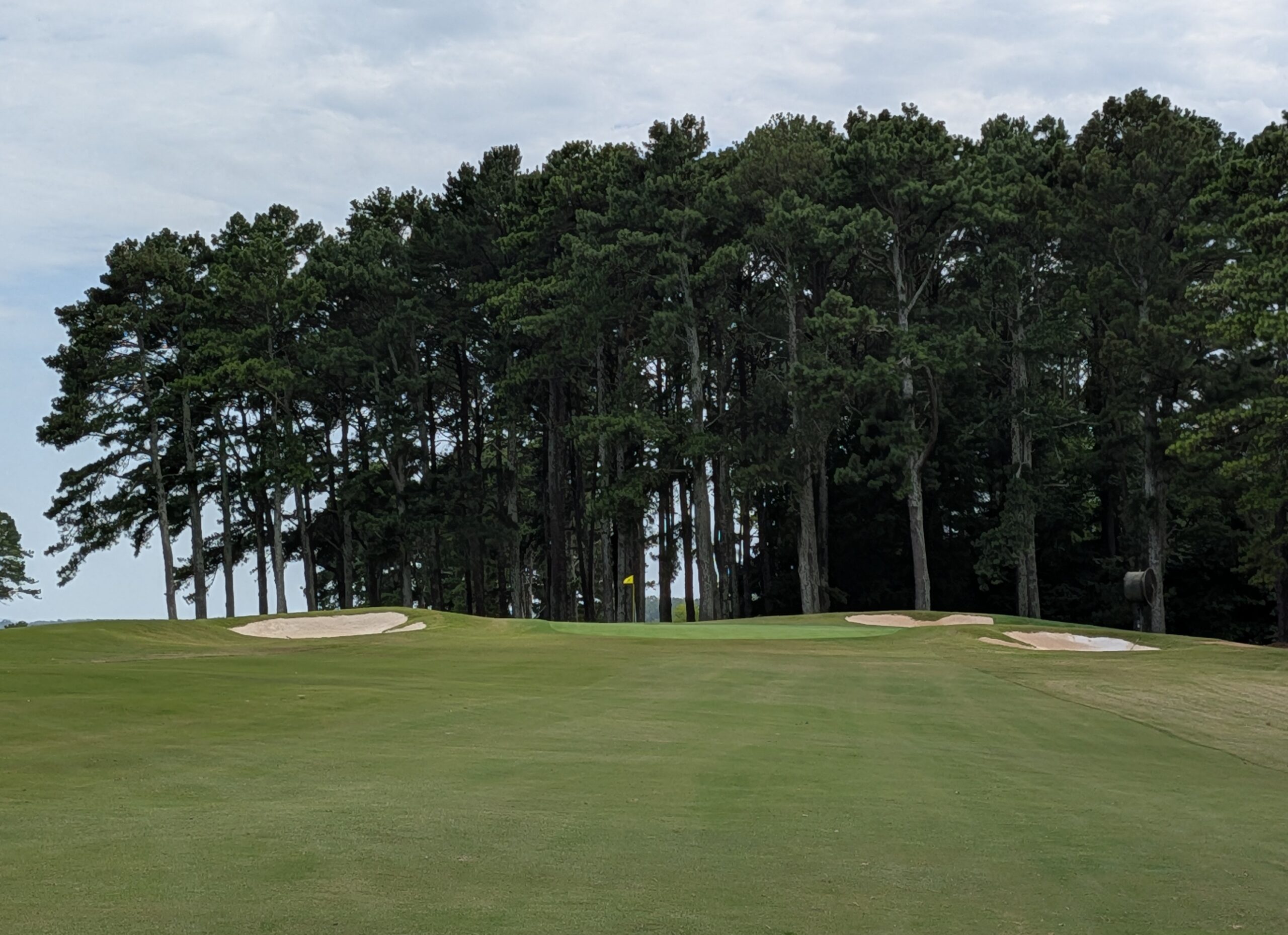
RTJ Sr. uses no fairway bunkers here, like several other holes throughout the round. The fifteenth uses the left-to-right hillscape and tall pines to frame the hole instead. This restraint is aesthetic and architecturally consistent, but it does mean some holes ask less of a player off the tee than others. On a few holes, the simplicity reads as restraint becoming absence.
The sixteenth is another classic RTJ Sr. par-3, slightly downhill with the beautiful Tennessee River back in view through a narrow chute of tall pines.
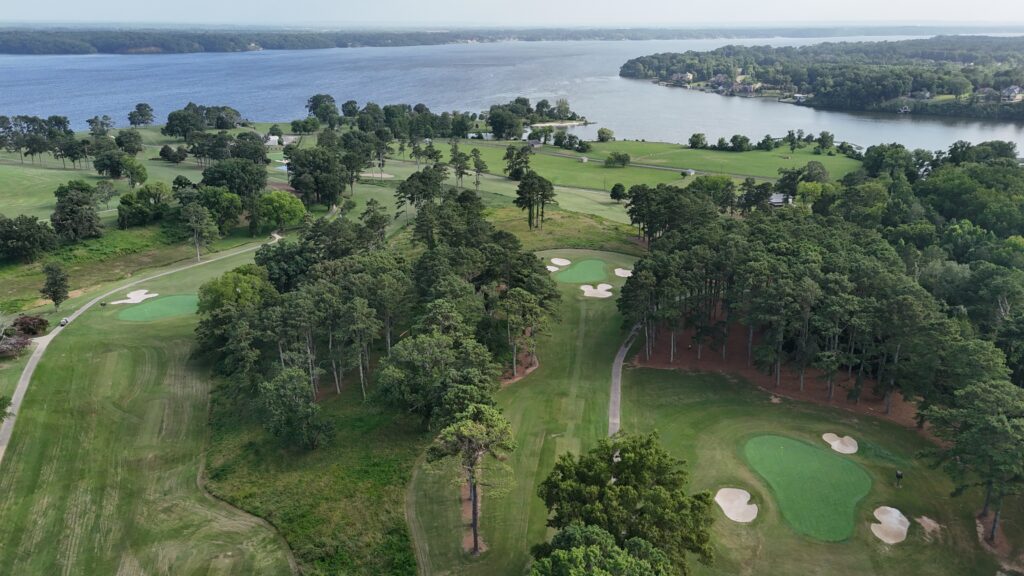
Bunker renovation actually added a back left bunker here by splitting an old, larger bunker in two, and reduced the back right bunker. Strategically, a net zero. But, the hole didn’t need much. It is already a great hole, perhaps the feature hole at Turtle Point, and one of the prettiest views of the Tennessee River on the property.
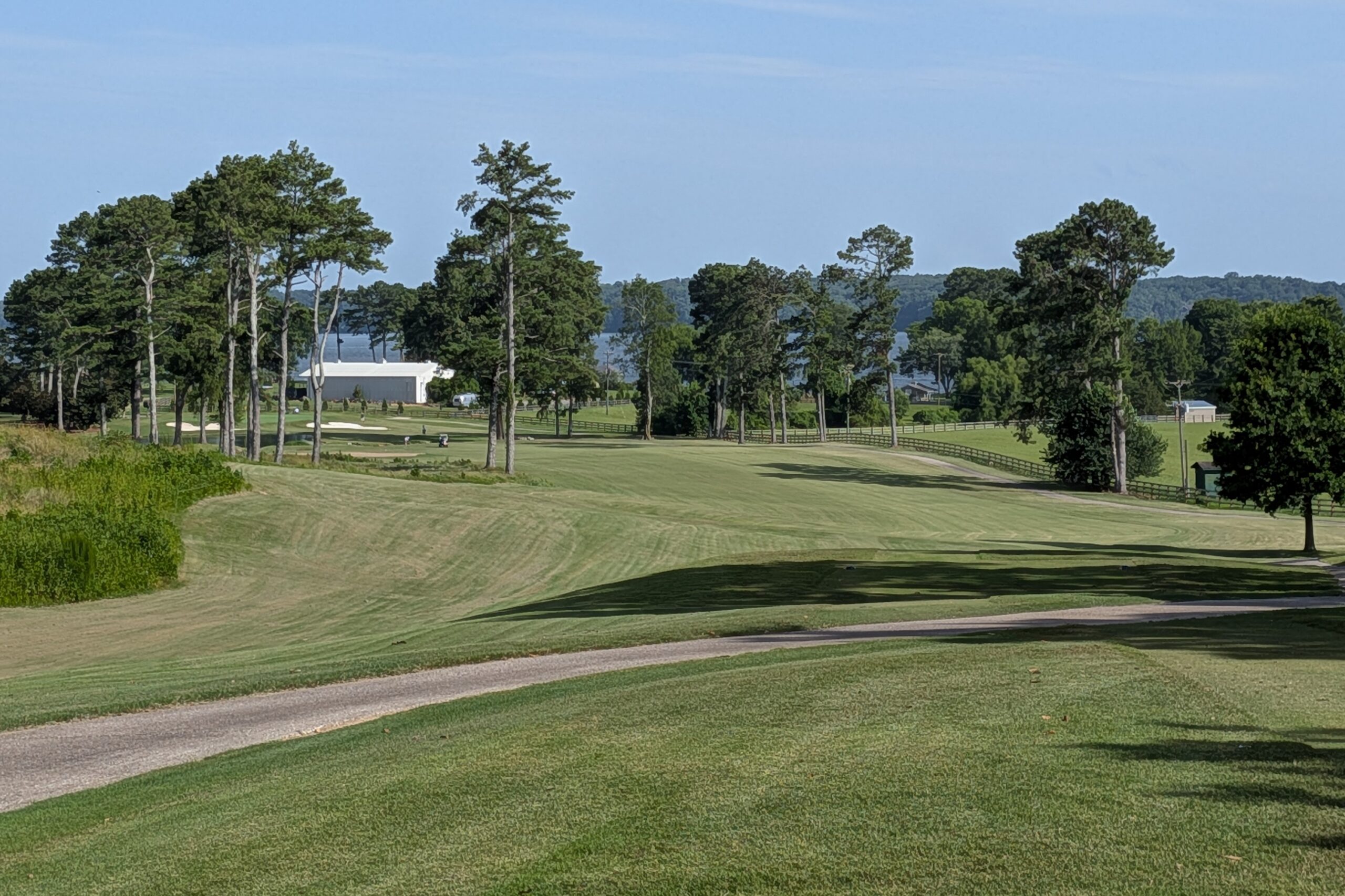
The seventeenth tee is almost disorienting as there doesn’t appear to be a lot of room to aim the tee shot on this shorter par-5. A farm (and associated OB) squeezes the right side of this hole with a grass lateral hazard on the left. Two tall pines on the left act like a foul pole on this hole; squeezing a draw between the fence line and the foul poles being the objective.
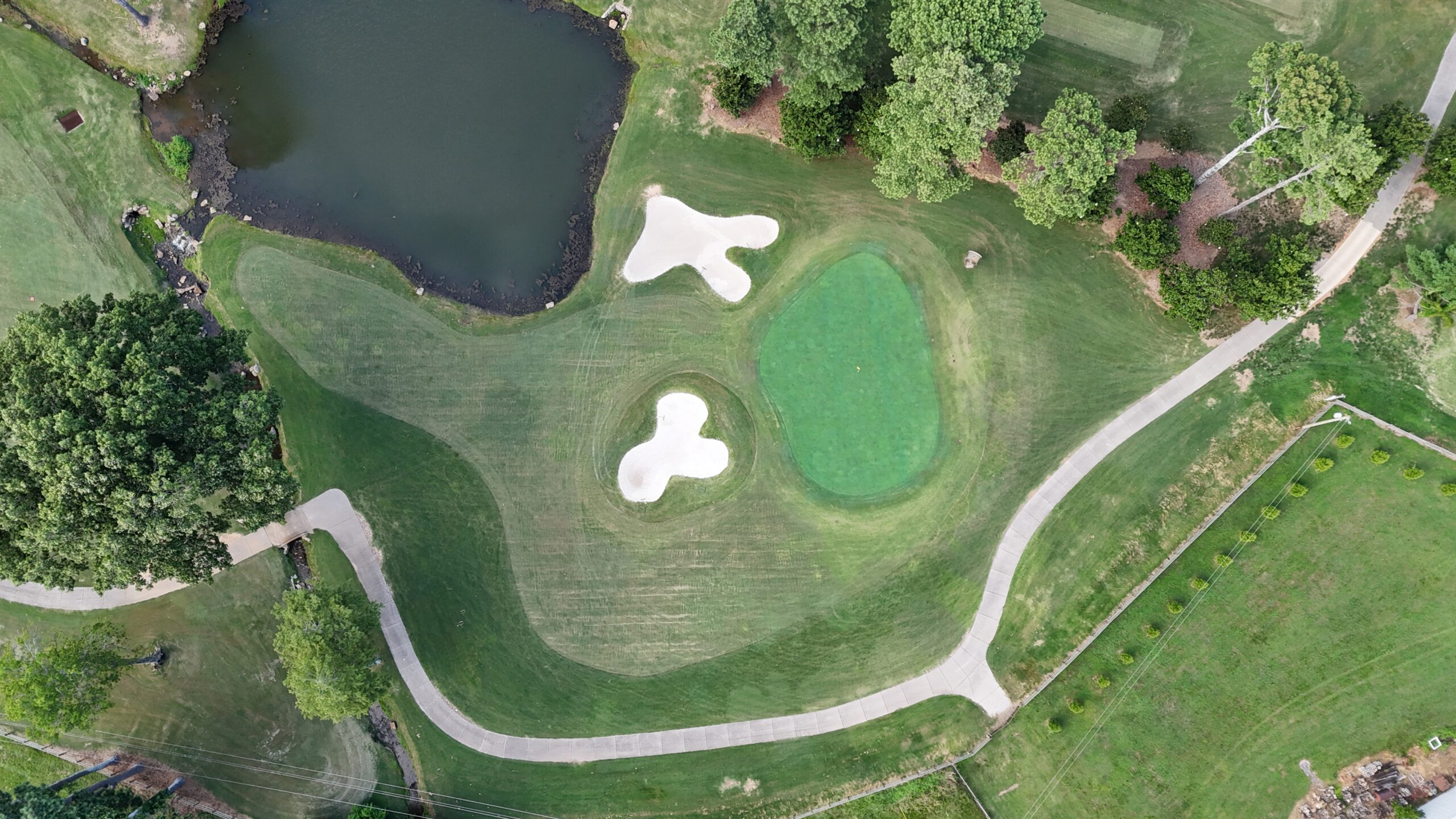
In the fairway, a decision awaits. Many players could probably get this green in two, but a tall tree on the right blocks the bailout area. A frontal stream crosses and turns into a pond short left of the green, so naturally, players will want to miss right. The tall pine blocks that bailout, and a tree strike is a certain visit to the stream. While bailout room technically exists, being blocked off by the tree makes going for this green in two risky business. Layups aren’t much simpler, as they have to get closer to the stream than comfortable to avoid the third shot being compromised by the outstretched branches of the same tree.
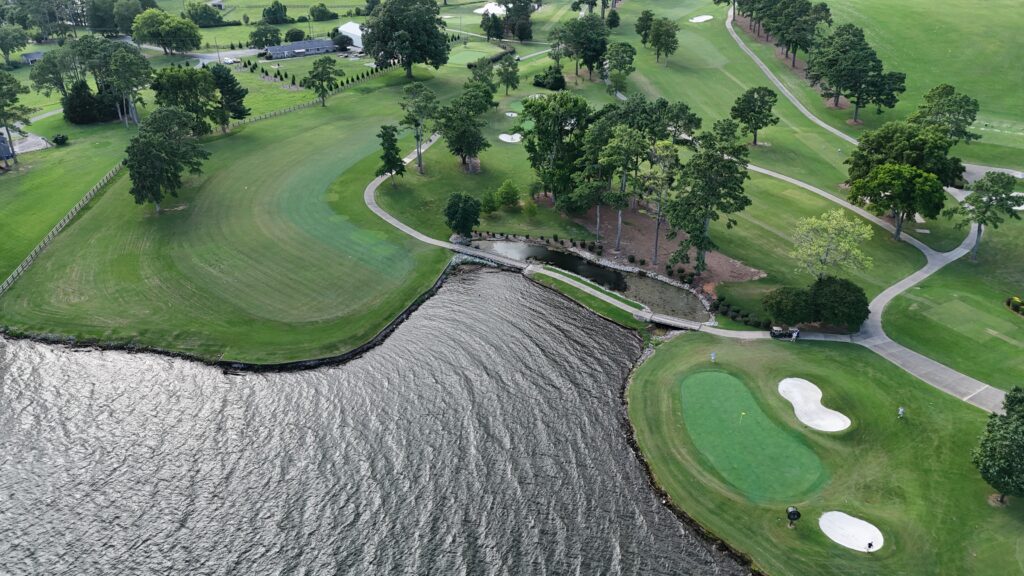
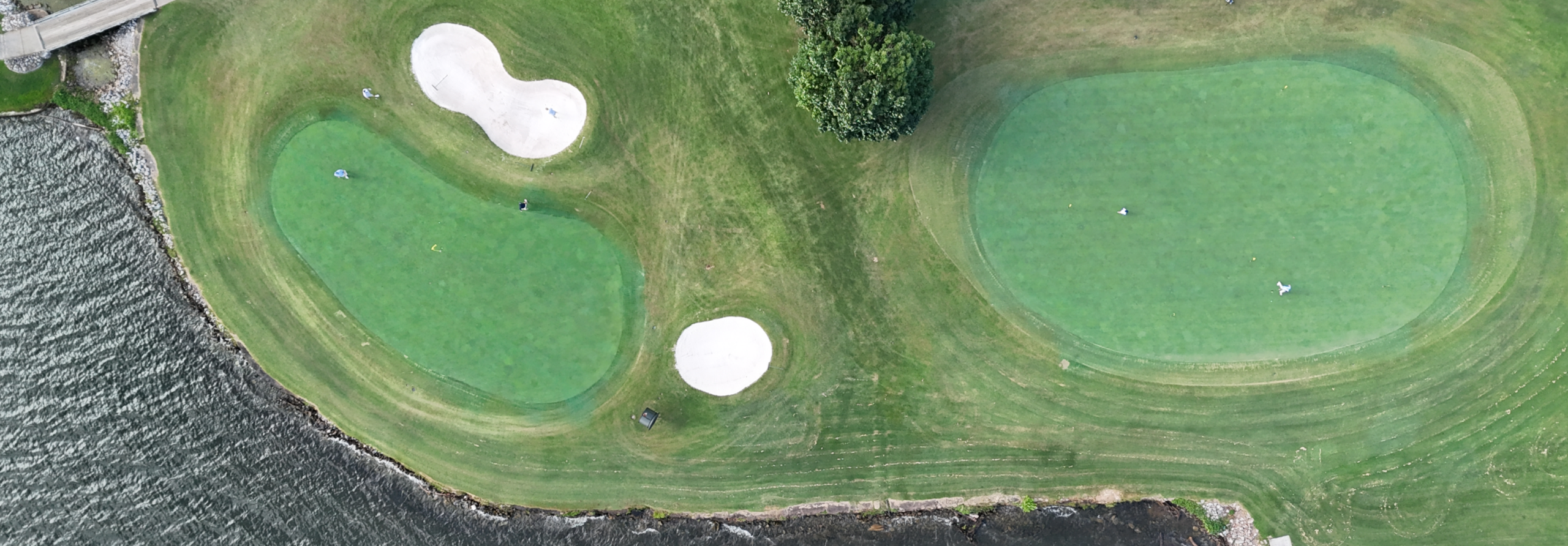
Then, the eighteenth, a somewhat forced, 90-degree dogleg across a small inlet of the Tennessee River. The fairway is wide here but the eighteenth requires a layup off the tee due to the distance. Once in the fairway, the hole is beautiful and the wind speed certainly increases on the exposed banks of the river. A kidney bean shaped green protected by the water demands an accurate short-iron approach, but a birdie isn’t unlikely here if the obvious obstacles are avoided.
Final Thoughts
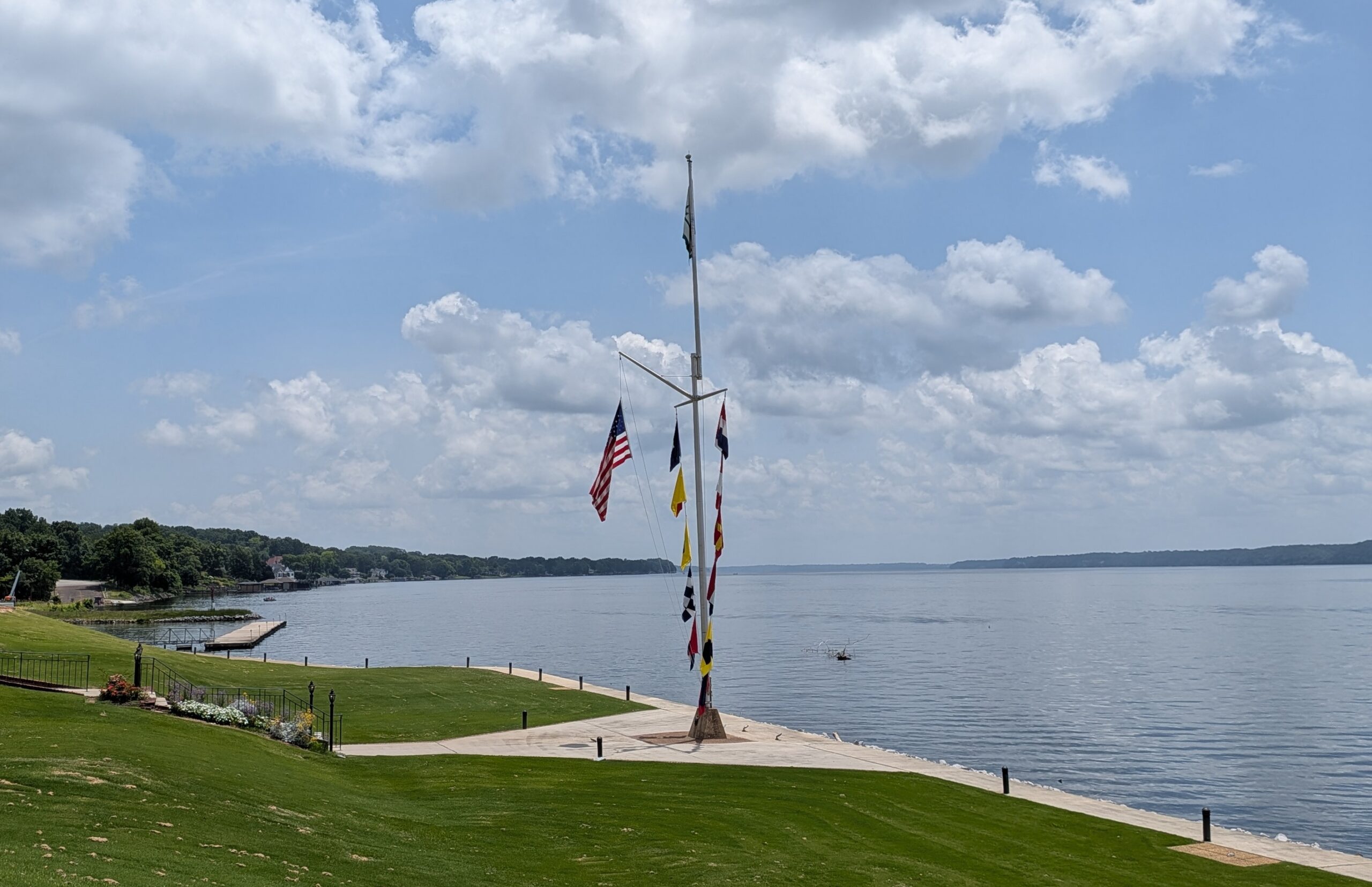
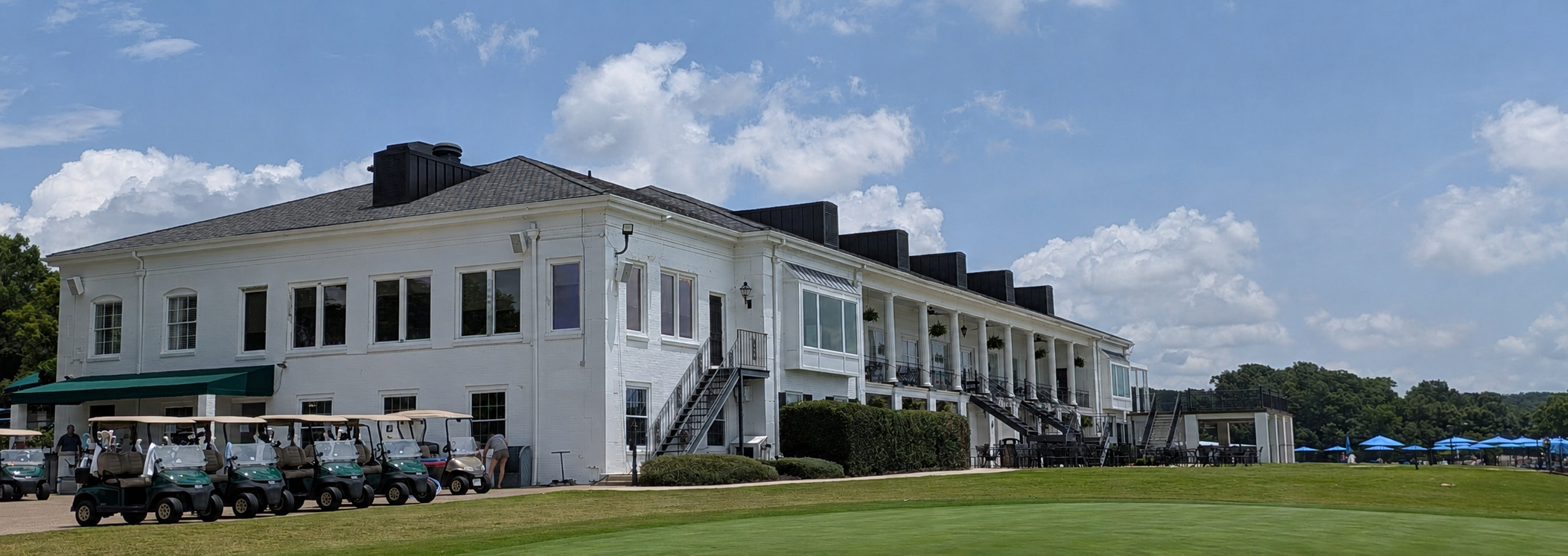
Turtle Point Yacht & Country Club was a great round of classic golf. Conditioning was good, the condition and speed of the greens were above average for Bentgrass in the south in the summer heat, and the course being built on the banks of the Tennessee River give it incredible views. The clubhouse is beautiful on the outside but the interior is dated, which is almost cool and reflects the retro golf round you’re about to play.
While Turtle Point is a fun, classic golf round, it feels like it may have been passed by in modern golf. Its location (precisely in the middle of nowhere) and classic styling have it overlooked in the modern golf landscape. However, GolfDigest ranks Turtle Point as the sixth best course in Alabama, a clear signal of well-earned respect, even if this reviewer would likely have it a few spots lower on that list.
RTJ Sr.’s routing here is masterful, using the hillside to work away and back to the river on both nines, and finding those natural greensites that feature the river as much as possible. That routing, along with some of the great holes like the sixth, eighth, ninth, and closing stretch will make it a mainstay in the Top-10 in Alabama as-is for decades to come.
But, if any course could benefit from a smart, targeted remodel, its Turtle Point. Turtle Point’s restraint, on some shots, read as strategic interest sacrificed to a quieter aesthetic. A targeted remodel could protect the course, by enhancing the holes that currently feel underdeveloped against the strongest holes on the property.
The views, aesthetics, and genius routing of the property are fantastic, but finding ways to enhance the memorability and strategy of some of the weaker holes would elevate Turtle Point immensely. Right now, the course is a fantastic walk through a living history, but one I fear may get left behind.
CR&J Final Rating:
Shot Options: 7
Challenge: 7
Layout Variety: 6
Distinctiveness: 5
Aesthetics: 8
Conditioning: 7
Character: 9
Fun: 8
Total: 57/80
Read More: How We Rate Courses
Rating Scale Details:
> 70: Top-50 U.S.
65-70: Top-200 U.S.,
60-65: Best-in-State List
57-60: Best-in-state List Contender
53-57: Very Good
48-53: Good
40-48: Average
< 40: Poor

Author: Kyle Taylor
Kyle is the lead course reviewer at The Course Review & Journal. Kyle has been playing golf for over twenty years, is a plus handicap, and actively competes in USGA and State Golf Association events. By trade, Kyle is an attorney.
Kyle Taylor is a pseudonym used by CR&J’s lead course reviewer to protect personal relationships. The reviews and opinions remain entirely the writer’s own.
Leave a Reply
You must be logged in to post a comment.