
Time to Read:
|
This Double Eagle Club course review is based on a round played in 2026.
Double Eagle Club is a private course in Columbus, OH.
CR&J’s Final Rating: 64/80 (Best-in-State)
As I drove away from Double Eagle Club reflecting on my day, I had a song stuck in my head. I hadn’t heard it in years; I had to Google a fragment of the lyrics to figure out the name. It turned out to be “Everything You Want” by Vertical Horizon. The song describes a specific phenomenon in a relationship where a person checks all your boxes – they have a nice personality, good looks, and a sense of humor – yet for some reason, the spark isn’t there and you can’t quite put your finger on why. Most of us have known someone like this; the person we couldn’t quite fall for, and couldn’t quite say why.
Double Eagle may be the golf course equivalent to this situation. On paper, it is everything you want. It has picture perfect conditioning, rivaled by only the very best golf courses in the world. It was designed by Tom Weiskopf and Jay Morrish, who have designed other great golf courses. The duo earned a reputation for option-based golf, in which they used double fairways, multiple routes to the green, and drivable par-4s in their designs. The membership at Double Eagle is small, almost guaranteeing that you’ll have the golf course to yourself.
This is the recipe for success in private golf: pristine conditions, an interesting course laden with option-based strategy, and a peaceful surrounding. It’s everything you want.
Yet, the consensus that has developed around Double Eagle since its opening is that the course doesn’t quite live up to the billing. Upon its debut, it was highly ranked, and by 2009 had climbed to 56th in GolfDigest’s annual course rankings. But the consensus has since shifted. Double Eagle has precipitated down GolfDigest’s rankings, down to #138 and #6 in Ohio. It is now thought about as a distant fourth-best in Columbus, behind neighbors Muirfield Village, The Golf Club, and Scioto. It does not crack either Golf Magazine’s Top 100, nor Top100GolfCourses.com’s Top 100. In fact, Top100 ranks Double Eagle as #12 in Ohio, which seems a bit disrespectful, but is further evidence of this shifting consensus. A Google search of Double Eagle Club uncovers more critics than defenders. My personal circles repeat this refrain about Double Eagle.
This is to say nothing of the experience. Double Eagle is an incredible, exclusive experience that any golfer would be lucky to experience. I knew that would be the case before I arrived. But I wanted to try to understand why the consensus has soured on Double Eagle Club in recent years and if that consensus was correct or a product of groupthink, perhaps just a critical fashion that had turned on a course that hasn’t actually changed.
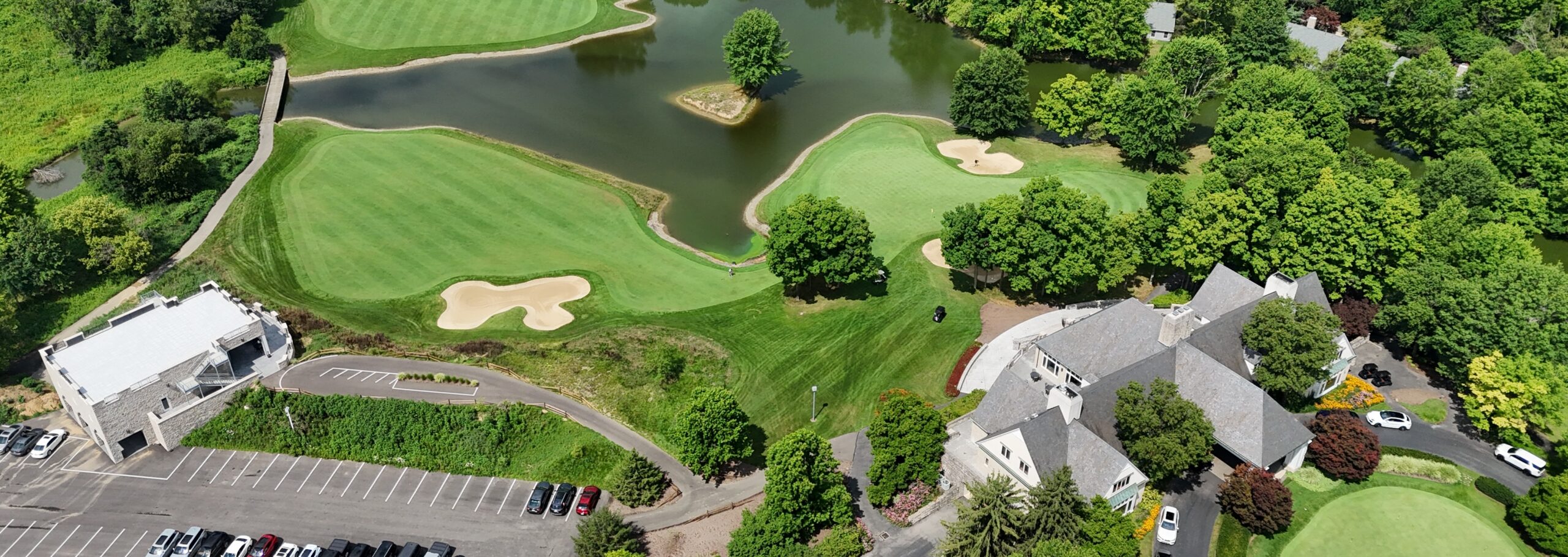
The First Tee
The first and tenth holes are parallel par-4 holes that are separated by a massive fairway bunker. The first is the longer of the two and features a wide fairway and a significant forced carry to the first green.
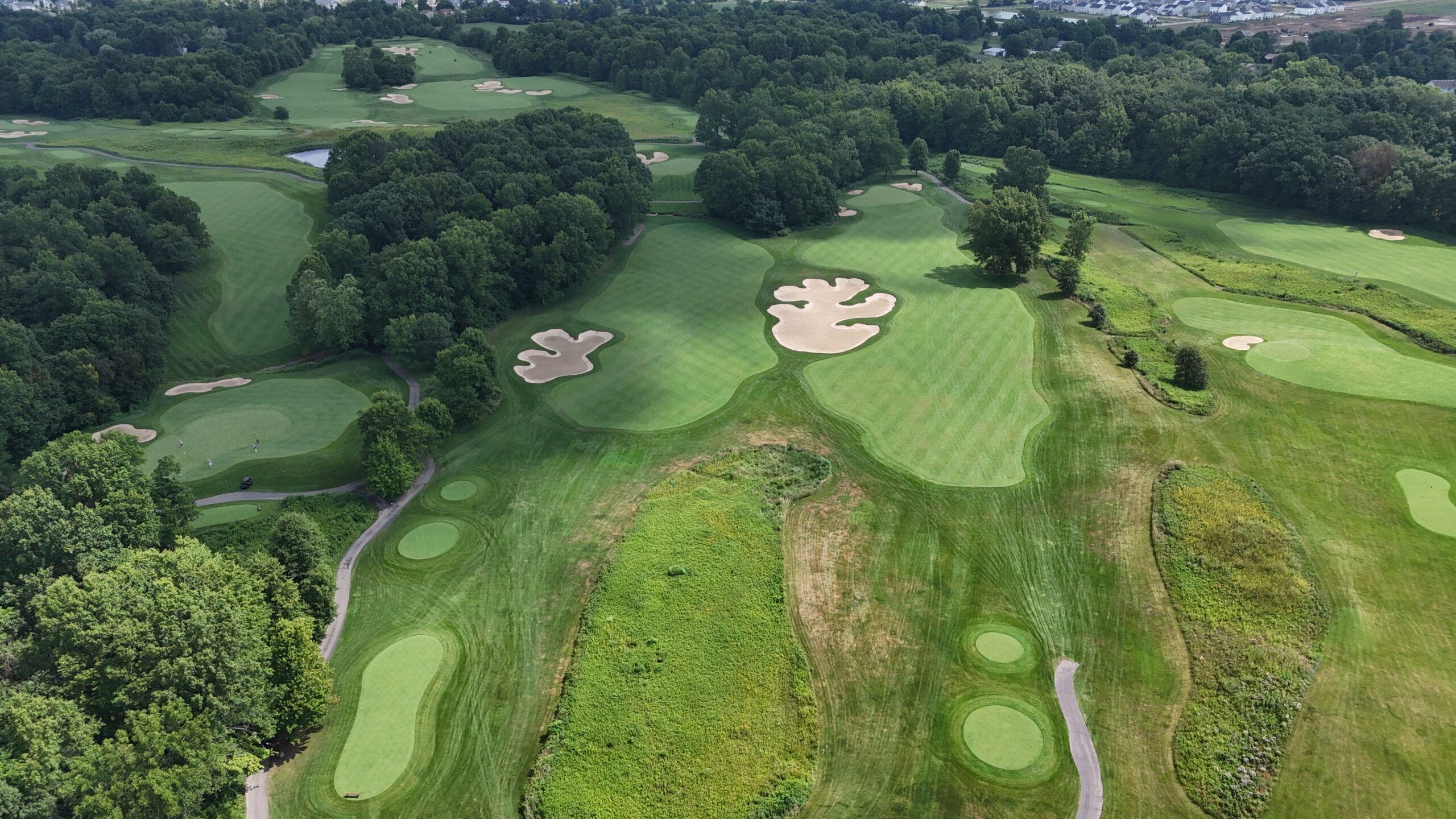
The first hole also has a bunker to the left, mostly eye candy, as most will easily carry. Angles are important here, as the forced carry also squeezes through a narrow chute of tall trees, meaning those on the extreme left and right of the wide fairway may have to shape their approach through the trees to reach the green. Those in the rough may get blocked out entirely.
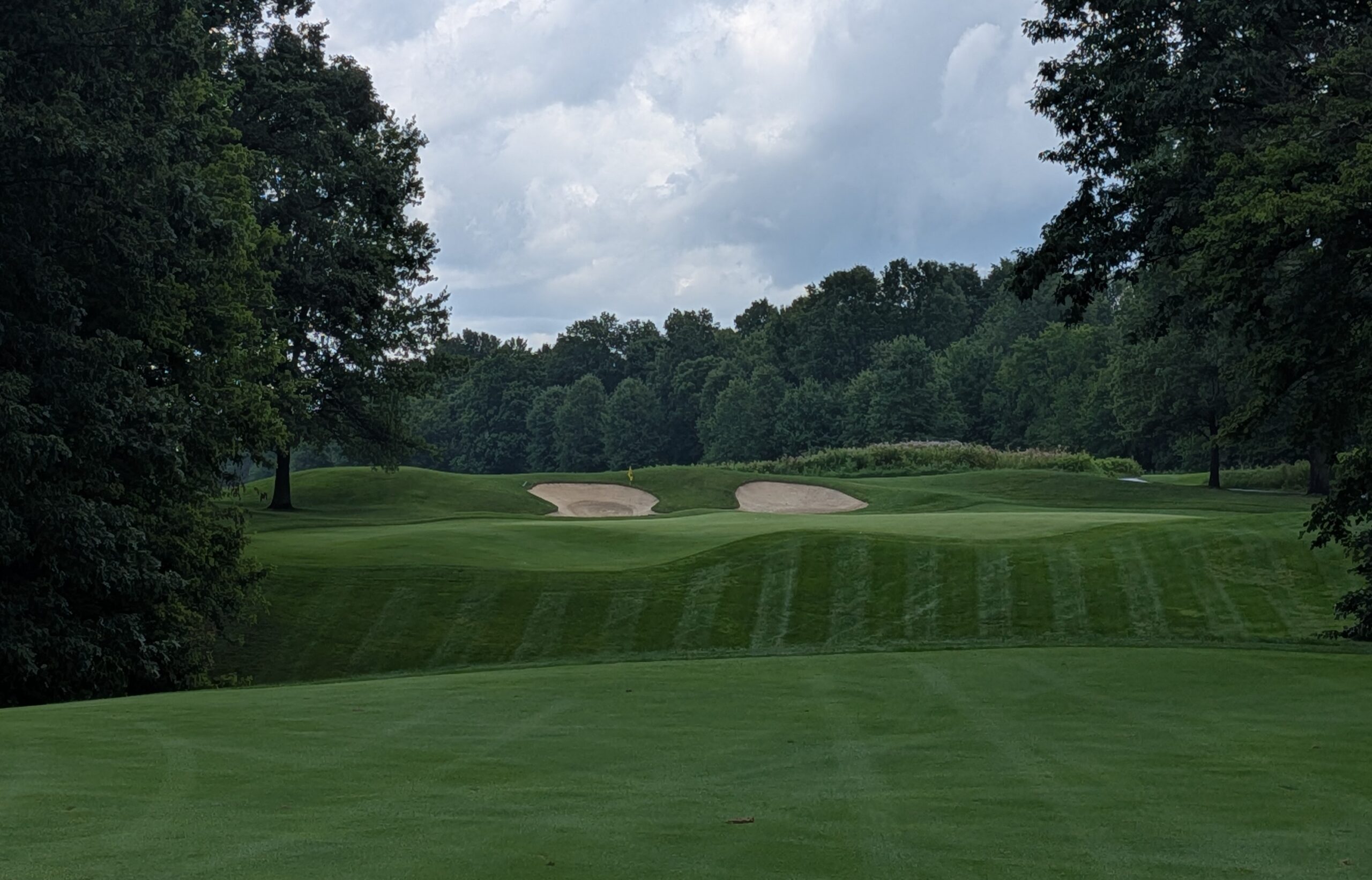
The first green introduces you to the putting surfaces, which are somewhat unique among this caliber of course, and the subject of the first consensus criticism at Double Eagle: flatness. Double Eagle’s greens do not have a ton of internal undulation or general slope. Our caddie told us that everything breaks even less than you see at Double Eagle. It can be difficult because golfers naturally want to see break in putts, and there are some areas of slope, and a few of significant slope. But on the whole, Double Eagle may have the flattest greens in the top-200. The challenge on Double Eagle’s greens to the golfer is their ability to hit a straight putt and read subtle breaks rather than large ones.
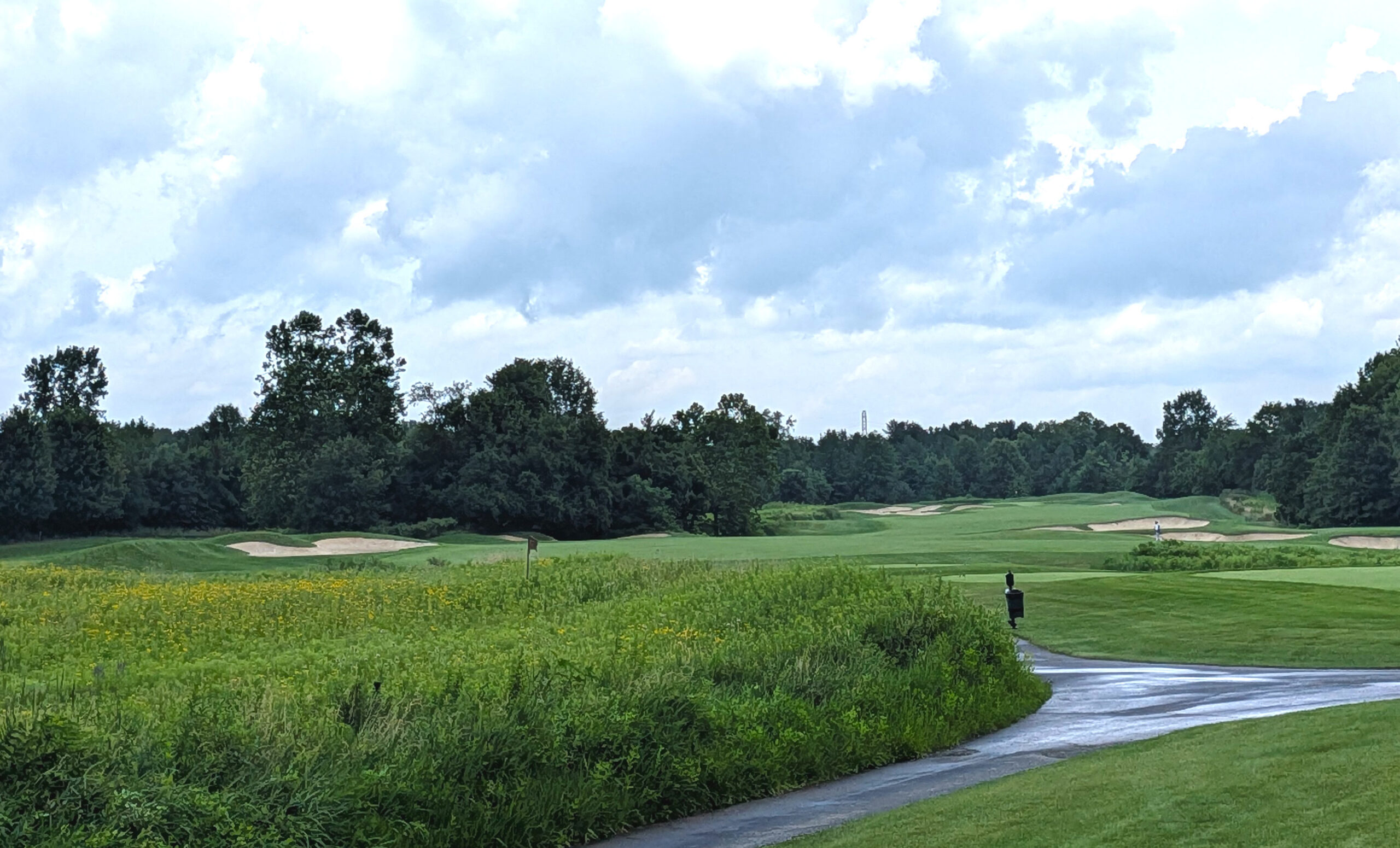
The second hole is a medium length par-5 with the first double fairway, a stream bisecting the hole perpendicularly, and two distinct routes to play the hole. Within those routes lie multiple different strategies as well.
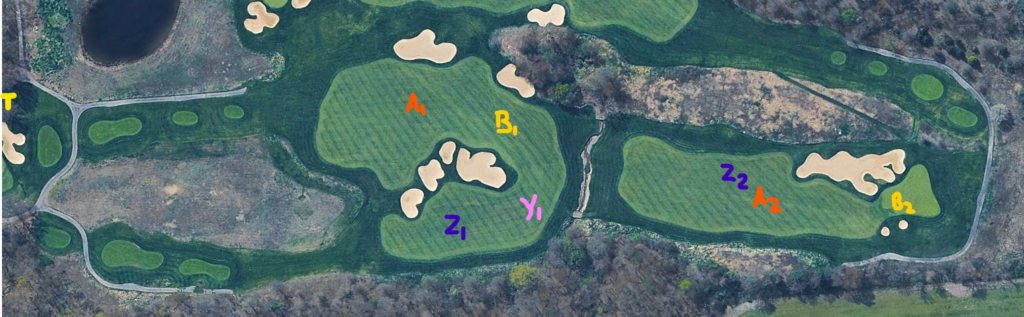
Left presents two options (A & B), one of which lays back into a very wide part of fairway with less than driver from the tee, and elects to play the hole as a three-shot par-5. Option B pushes the driver up the left and leaves just 230 yards into the green if accomplished. However, Option B is narrow and comes from a bad angle.
Going right also presents two options (Y & Z), laying back with Option Z (which I can’t imagine anyone ever does except from those right tee boxes) or trying to make it a two-shot hole with option Y. Option Y is by far the riskiest, but has the best payoff with an angle straight up the green from around 225 yards. From the furthest back tees, Option Y requires a carry of around 300 yards, with significantly less carry from any of the other teeing grounds.
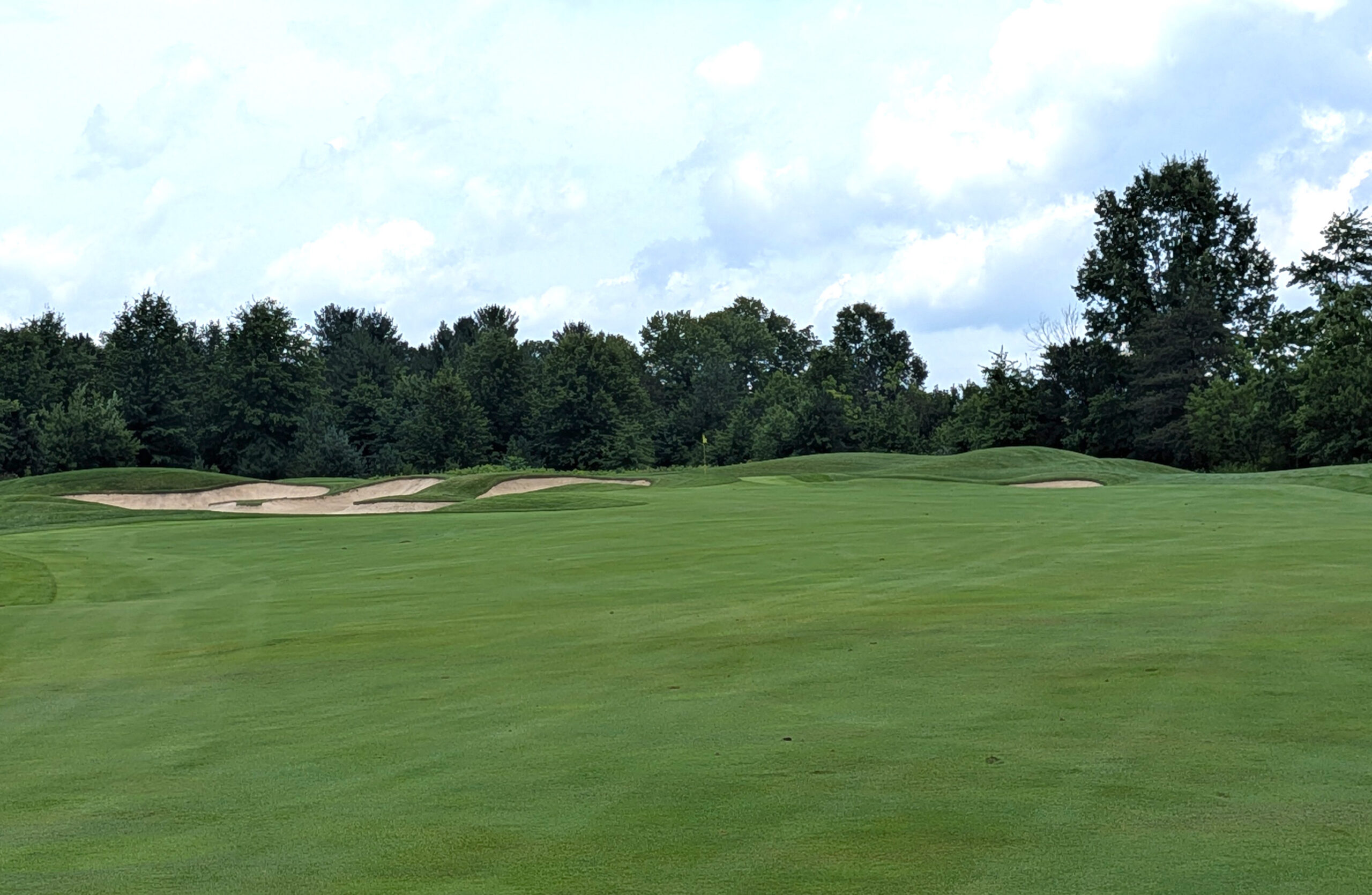
If choosing to layup and play as a three-shot hole, the layup is uncomplicated and the green is pretty large, leaving an easy wedge to another relatively flat green. The front right portion on this green does have a bit of slope, however.
This is the kind of hole that makes me think perhaps the popular consensus that Double Eagle lacks “architectural interest” may be overblown. This is a great par-5; a player could play this hole every day of the week with different strategies and different outcomes. It has the strategic and heroic elements that Weiskopf and Morrish executed elsewhere.
The third turns 180-degrees and plays as a mid-length par-4 back towards the clubhouse from the furthest edge of the property.
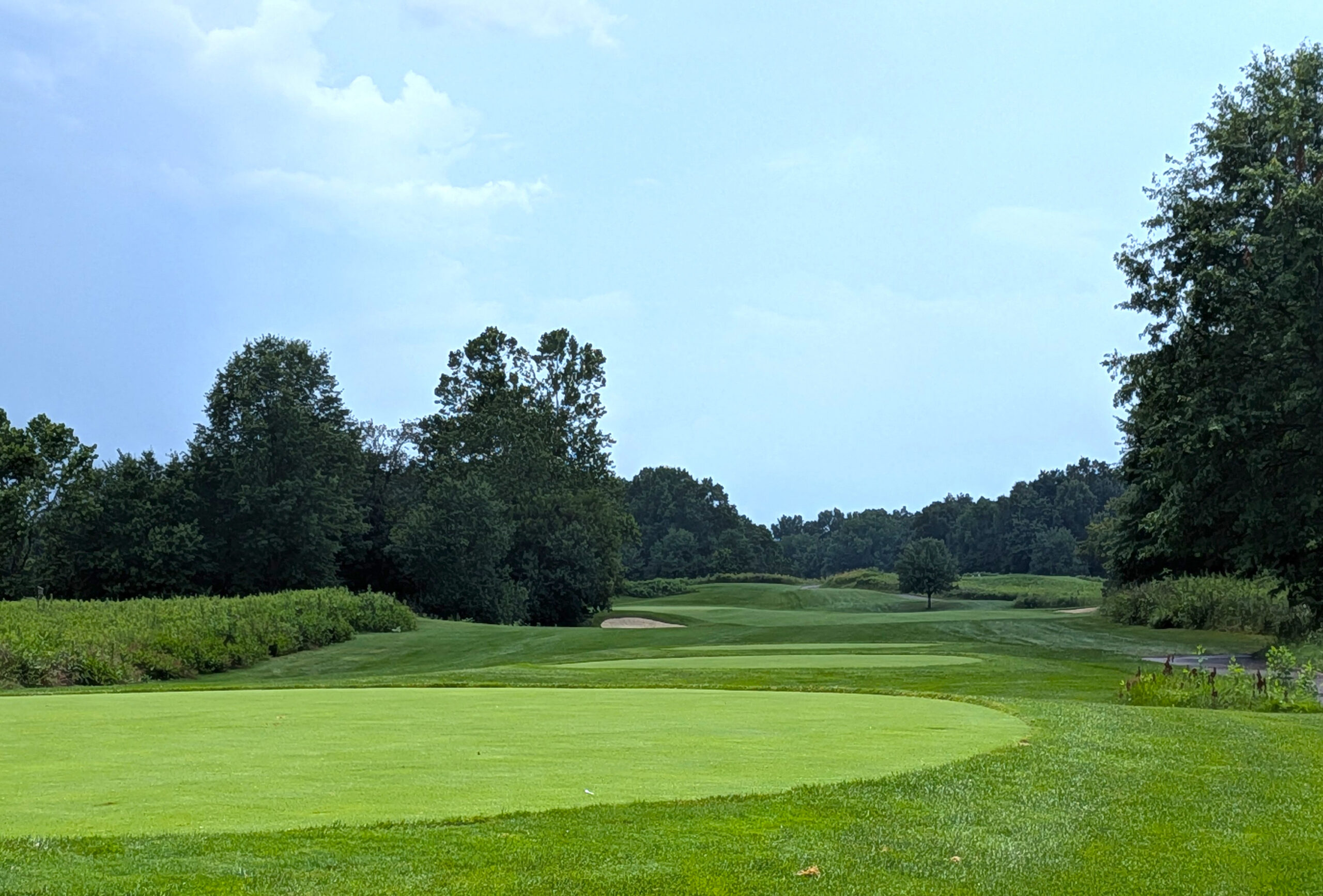
This is a fine hole, nothing special, but nothing offensive. The thing from this area of the property I noticed was that it appears flat. It actually is not flat, there’s gentle rolling hills around, but I wonder if some of the current negative consensus about Double Eagle is based on the perception of flatness. It doesn’t appear to me that Weiskopf and Morrish took advantage of any of these rolling hills to create reveals or vistas, and many of the holes come off very visually similar and flat. While consistency is to be rewarded, too much consistency makes it hard to remember the round. A four hour round must have some reveals, some picture worthy moments, or something novel or memorable to create those mental sticky notes on the round.
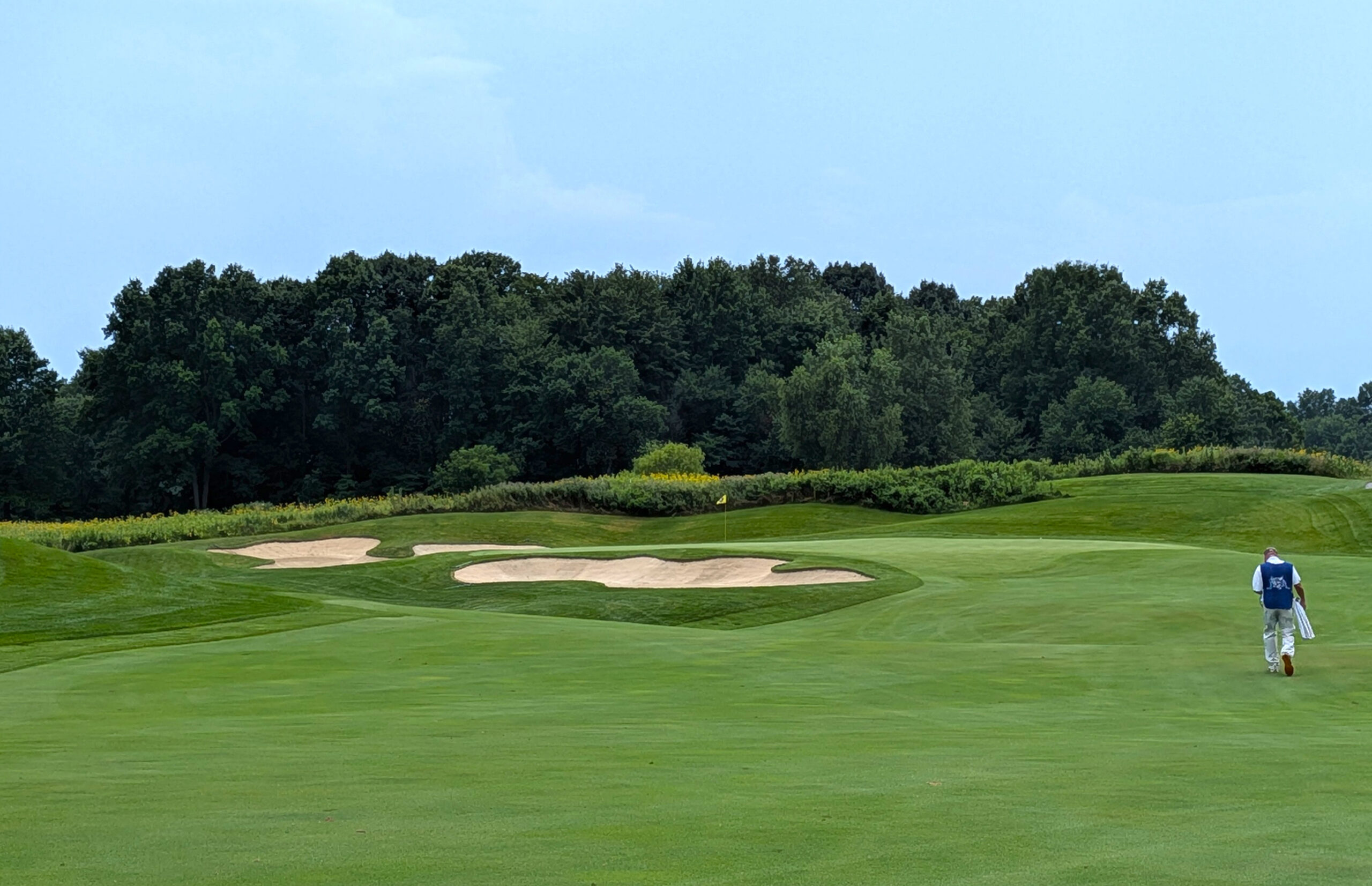
While the second is a great hole and the third is a perfectly fine hole, they both play flat, which doesn’t allow for the strategy elements of the hole to be properly assessed and appreciated from the tee.
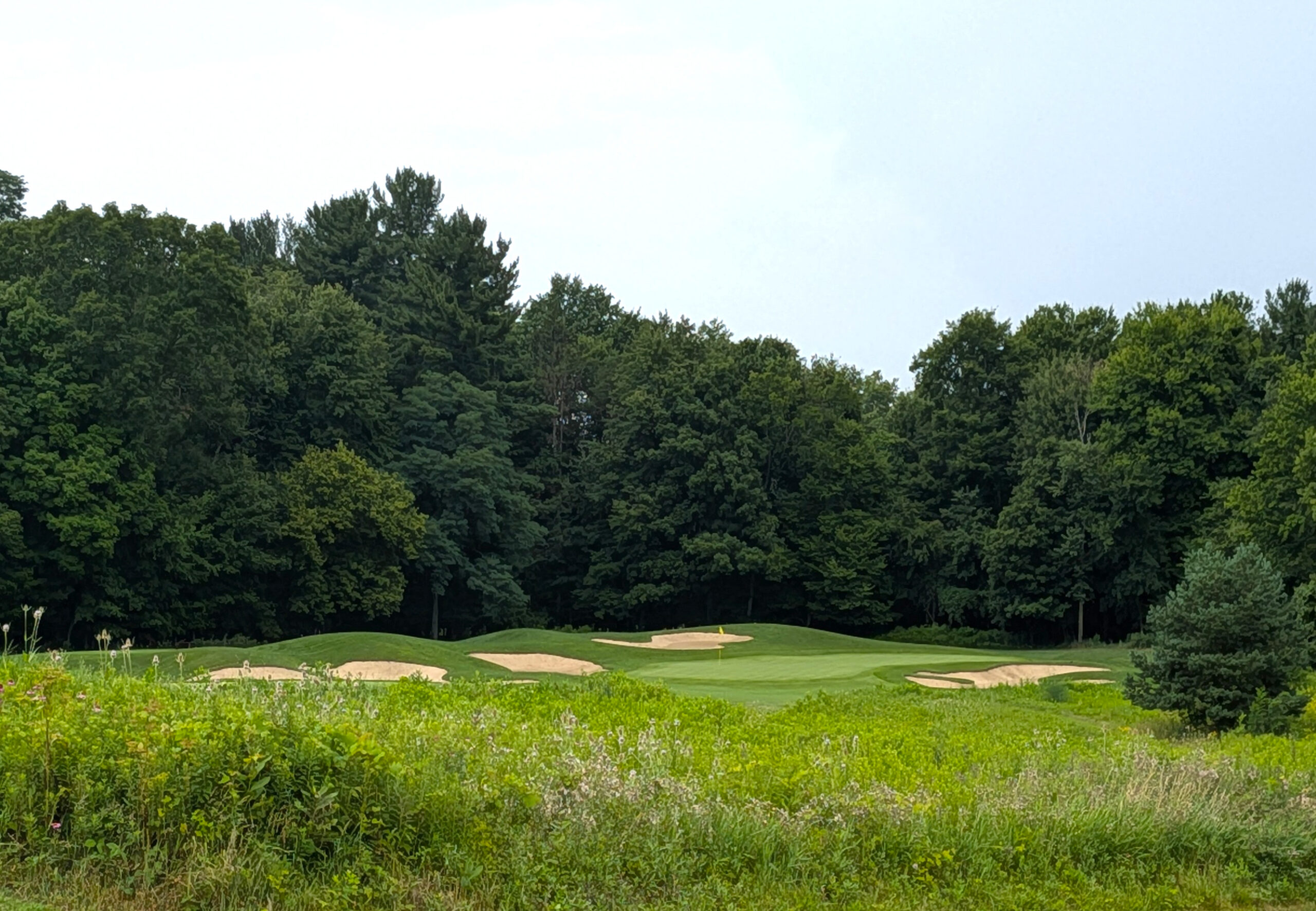
The fourth is a similar mid-length par-3, also a bit flat and generic playing over to another corner of the property. The green here is heavily fortified by large bunkers on each side, and the narrow green and accompanying fairway wind through the bunkers like a slithering snake.
At this point in the round, I was starting to swing the other direction about the consensus. Maybe it was right. So far, these holes could be anywhere in the world and they’d fit in. The only strong holes were the second, which was a bit too flat to truly appreciate, and a nice shot with a high shot value on the approach at the first. Perhaps this wasn’t one of the best 200 courses in the U.S.
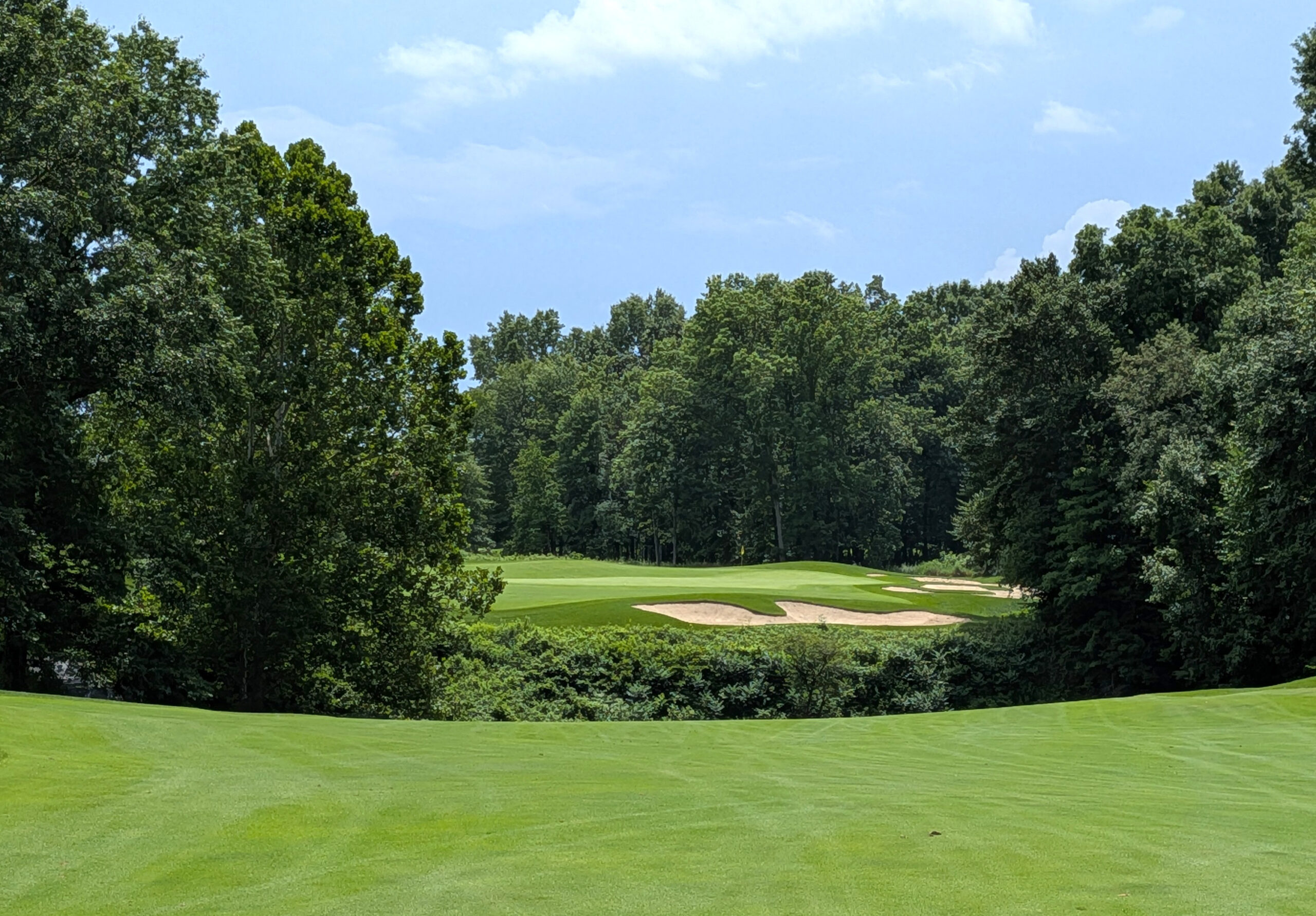
The stretch from the fifth through the seventh began to swing my thoughts back in the other direction. The fifth is a mundane tee shot into a flat, bunkerless fairway that leads to the first real “reveal” of the round.
The fifth is a long par-4 that features a significant carry through another narrow chute to a massive, well guarded green perched on the other side. Balls that end on the right side of the fairway, like the first, can get blocked out. The approach shot here is so similar to the approach at the first because the same winding creek that creates the forced carry on the first also creates the carry here. The green is guarded on the right, but some bailout fairway exists on all other sides, which was a smart choice considering most will have 200+ yards into this green. The fifth was a unique and memorable hole that I was able to distinctively remember after the round.
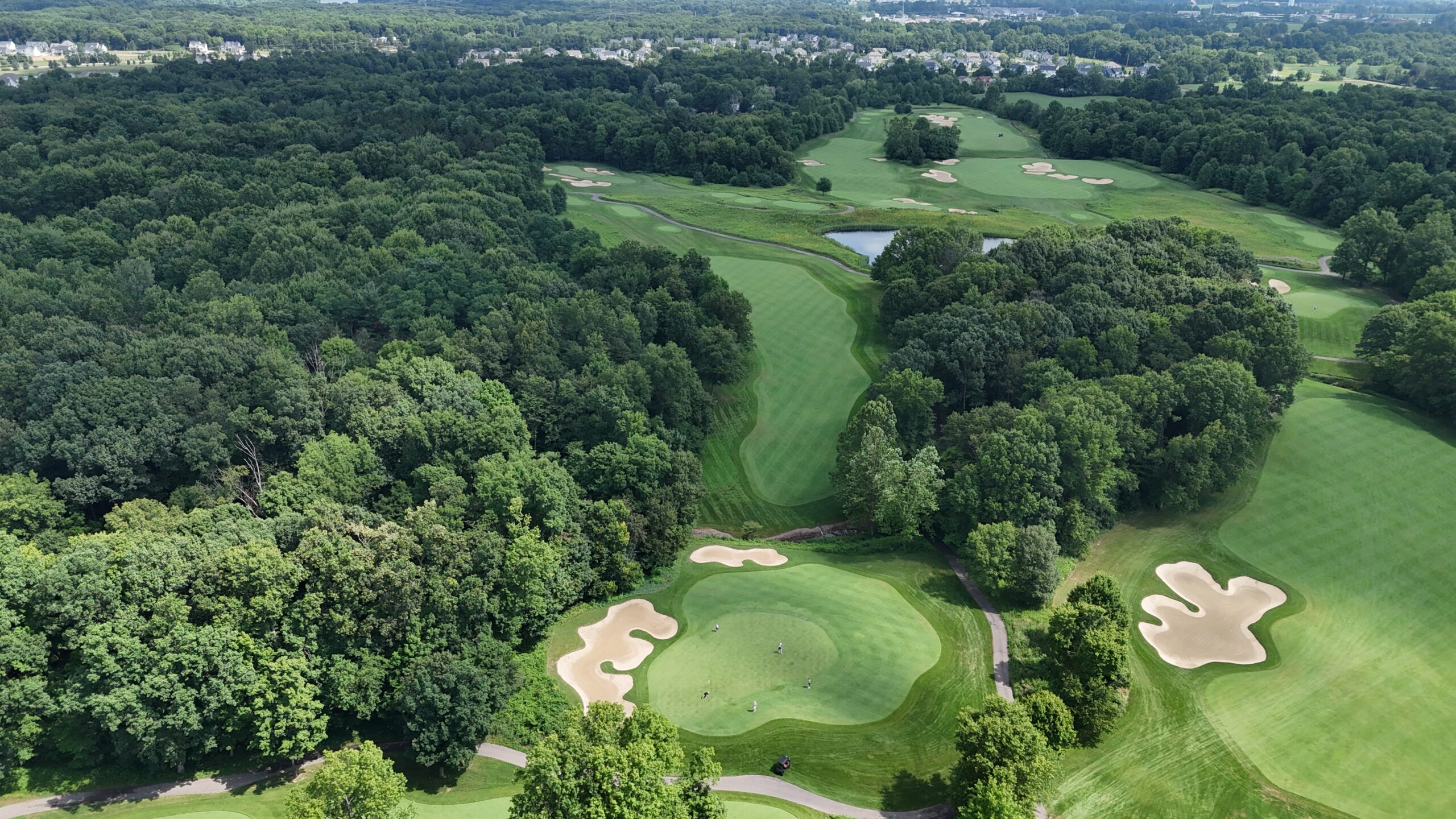
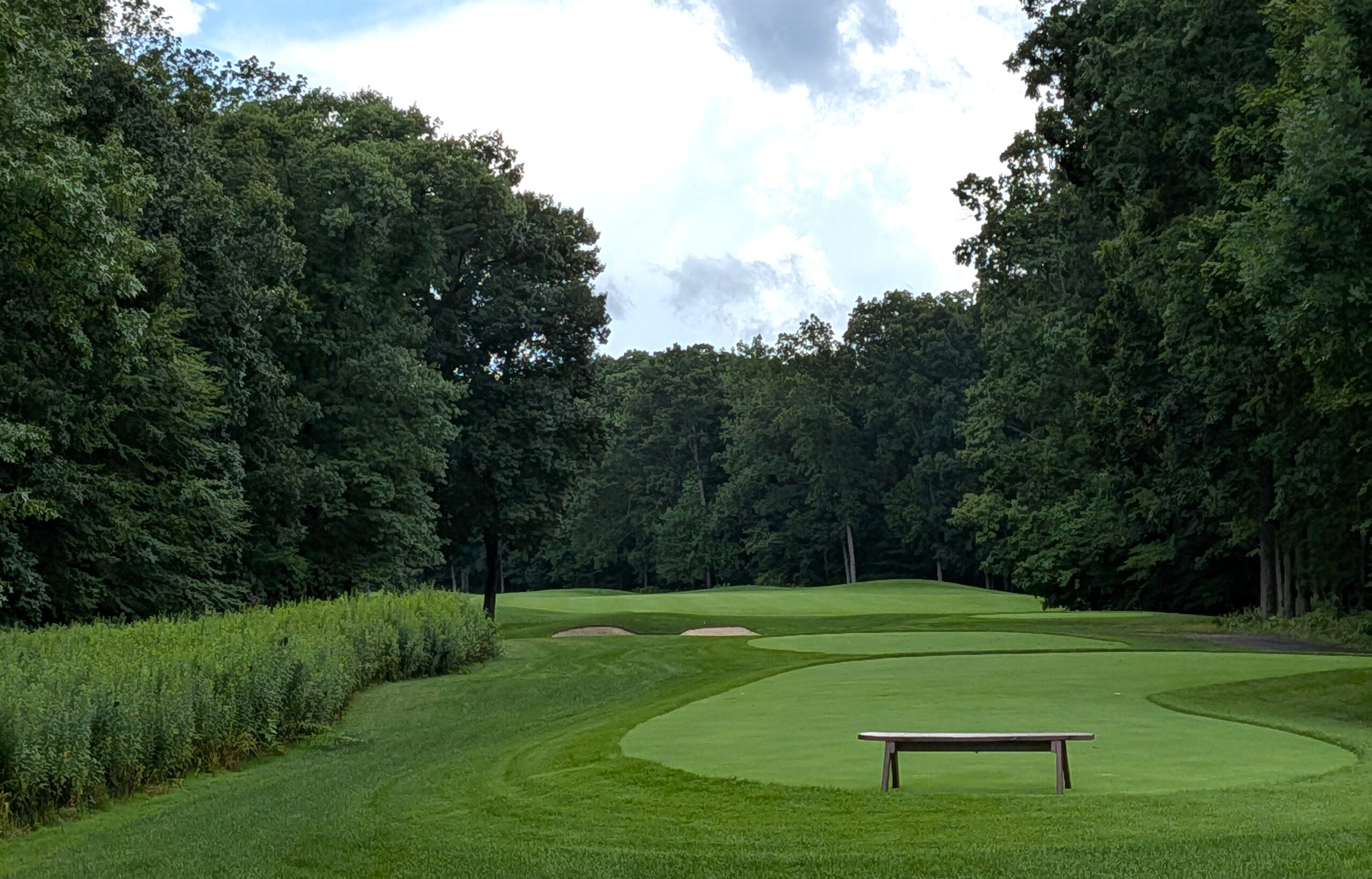
The sixth was a great hole as well, a long par-5 with a unique green. Again here, the tee shot was relatively uninteresting into an unguarded fairway that gently bends from right-to-left. The tee shot is framed tightly by tall trees, giving a midwestern-Sahalee-vibe.
Once the fairway is found, a decision looms, but going for this green in two seems ill-advised. The green here is perched with a significant runoff to a creek that fronts the green and wraps around the right side. All other flanks are significantly covered by bunkers and long rough.
I suspect most will play to wedge distance into the green, which is certainly the better decision, but that wedge shot is no layup. Spin must be controlled on this smaller green, especially to back right pin locations.
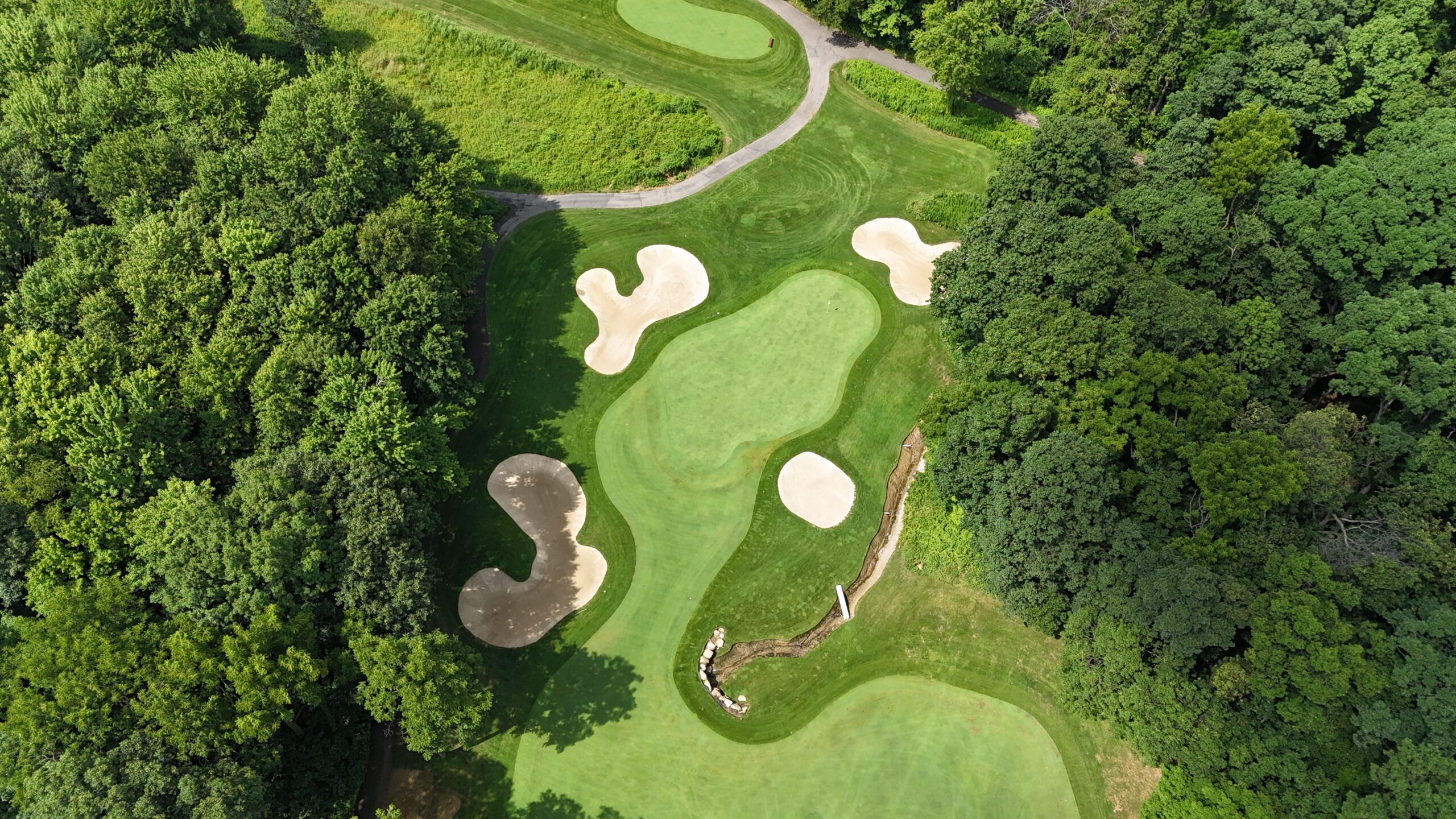
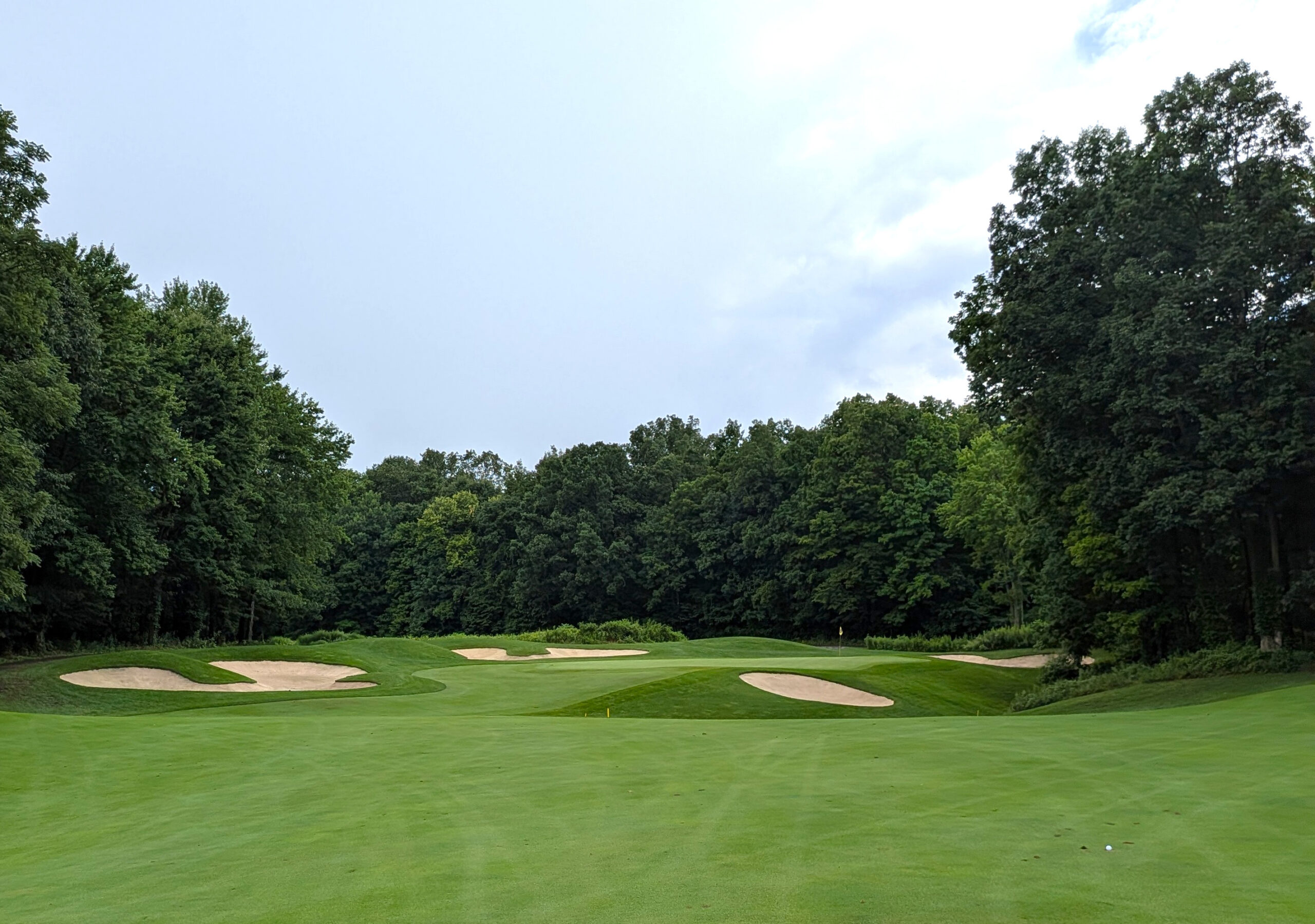
The seventh hole finishes up this interesting stretch of the course with a controversial short par-4. This time, a forced layup leads to a short forced carry. The entire hole plays through yet another narrow chute of trees, that further narrow and overhang much of the area through which the ball must be played.
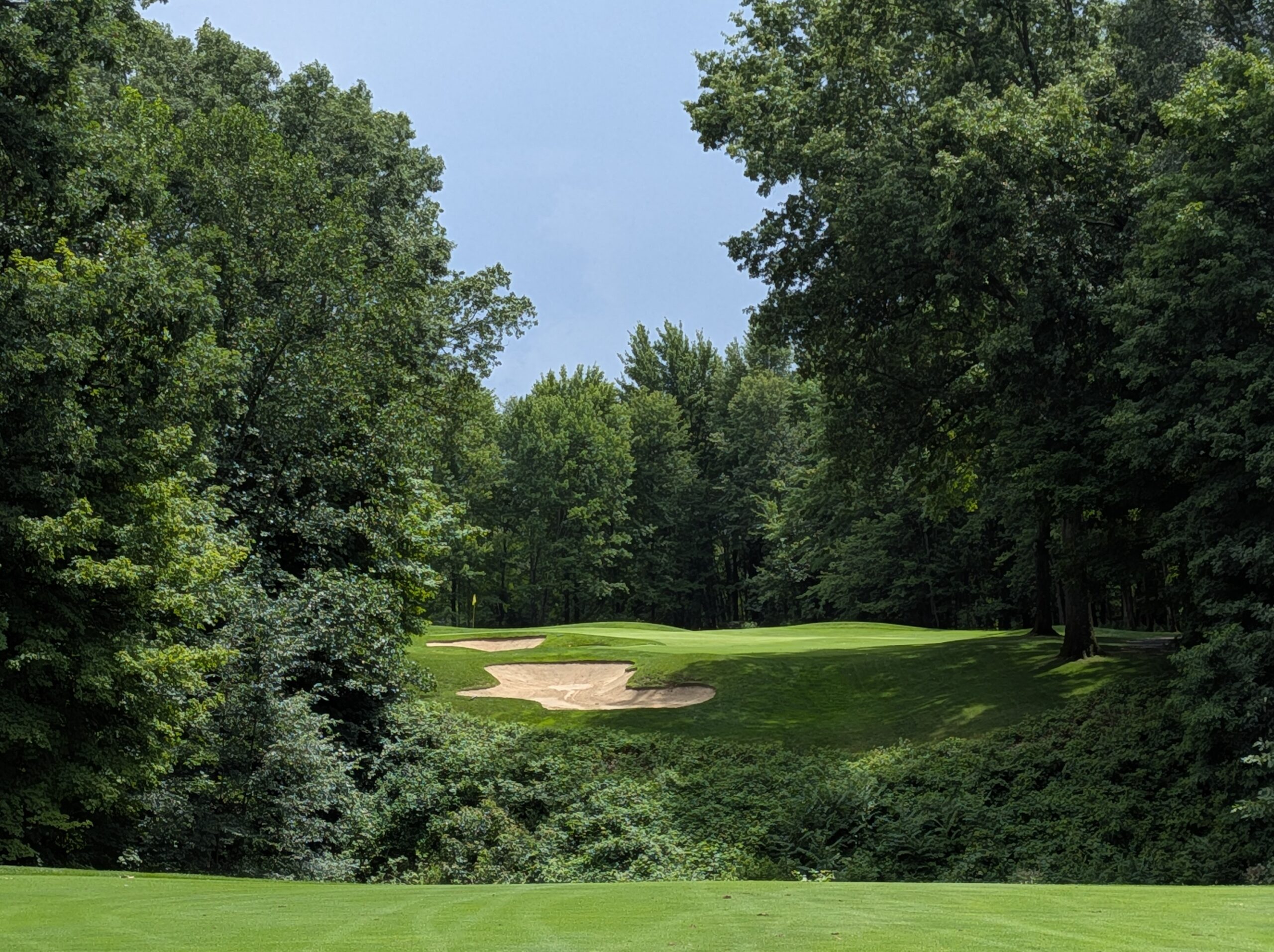
This hole is honestly overly tight and a bit out of character for Double Eagle. Where the sixth hole was Sahalee-vibed, the seventh is Sahalee-adjacent. If the course were mine, I’d consider removing some trees to open up both the tee shot and the approach. However, it must be said that for as negative as I found the hole, in retrospect, a controversial hole does help add those mental sticky notes to the round. It isn’t a grand reveal or photo-worthy moment that captures your attention at the seventh, and the forced carry is similar to the shots already played on the first and fifth. Rather, it is a hole that is difficult and out of character that creates some memorability. As the old adage goes, all publicity is good publicity, and while this hole is a bad hole in my eyes, it’s enough to create a natural inflection point about the round, but not offensive enough to ruin it.
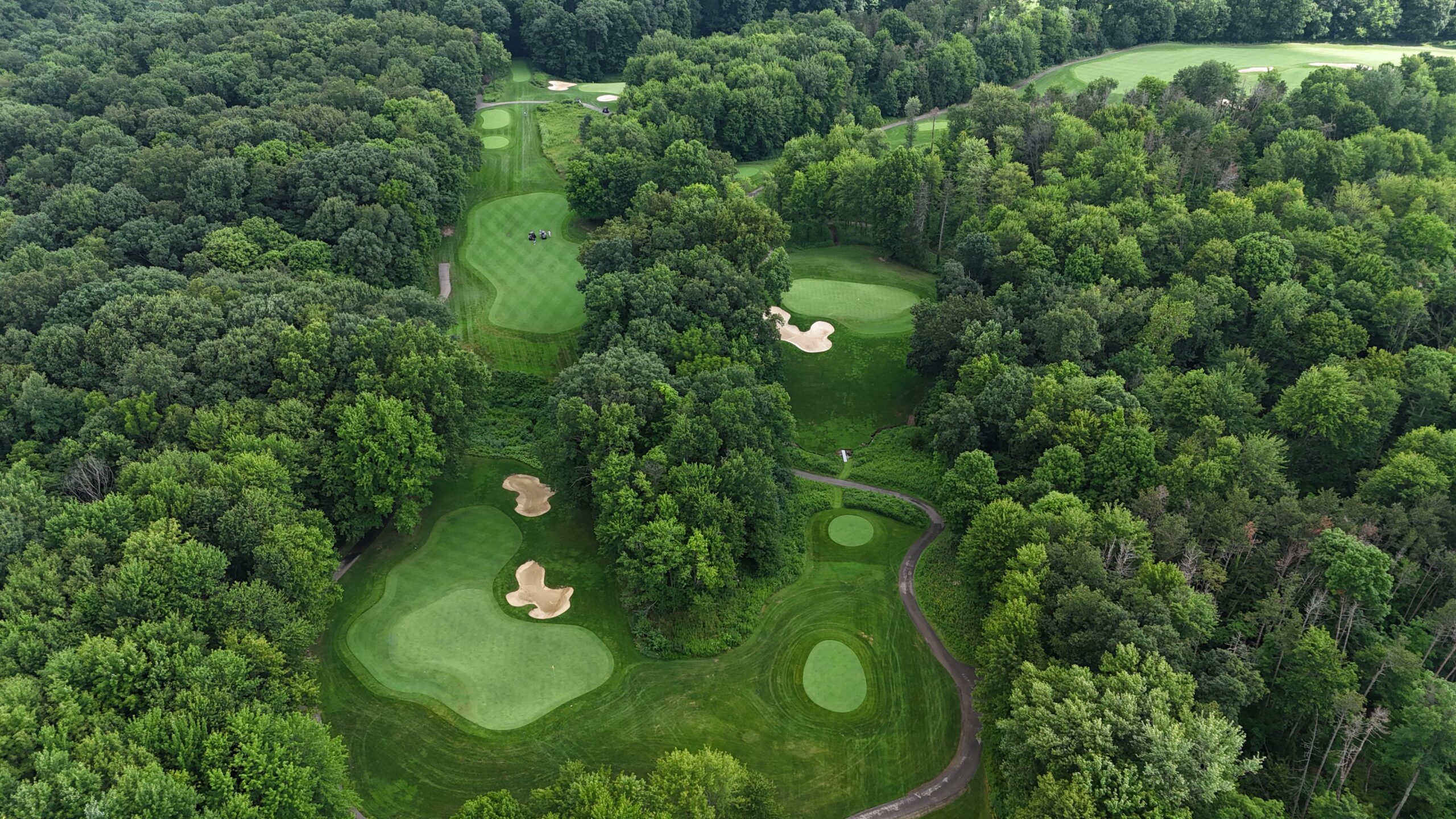
The eighth is a mid-length par-3 that plays over the same ravine that makes the forced carry on the seventh, only this time through a much wider space between the foliage. Yet again, this par-3 could be anywhere in the world and not be out of place. Neither of the par-3 holes on the front nine at Double Eagle have the kind of character you would expect from a course of this caliber. Par-3s are like bathrooms on a home. The smallest rooms in the house and somehow the rooms that make homes sell the fastest. Unfortunately, these bathrooms are builder-grade: nothing offensive, but nothing special.
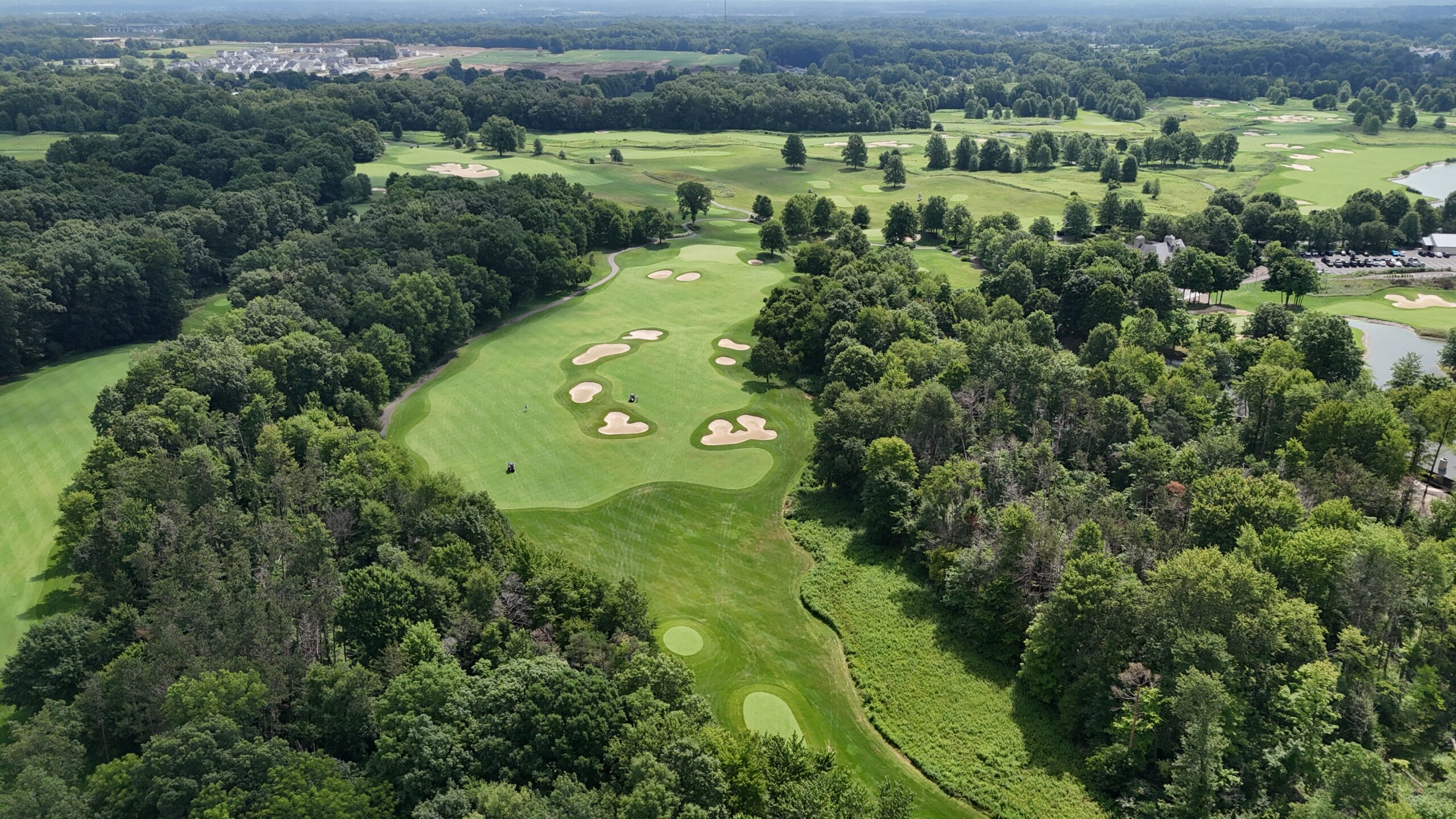
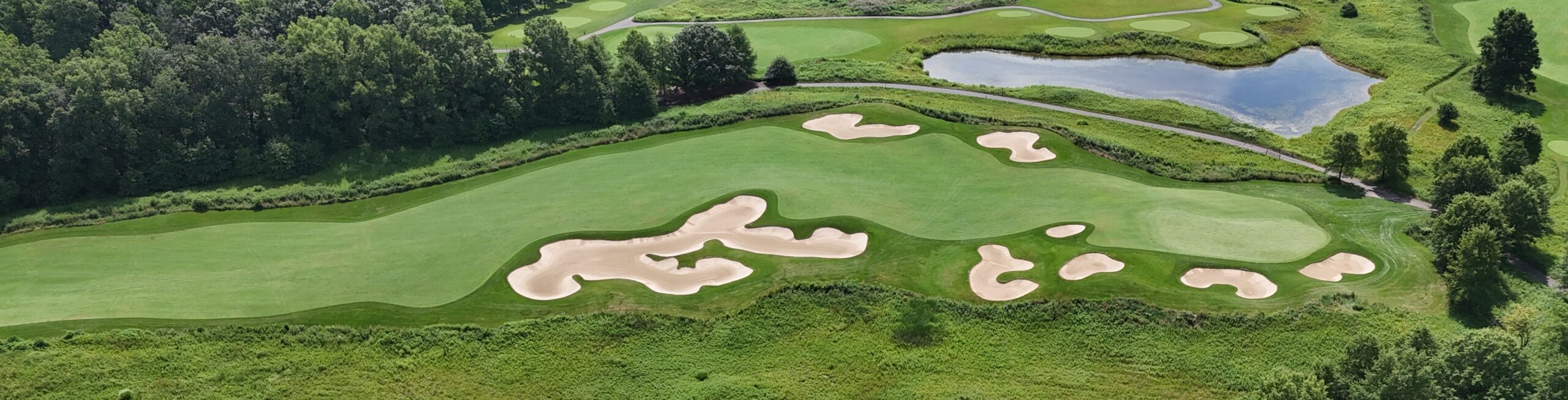
The ninth hole has an interesting history and design. The ninth is the second of the double fairway holes featuring a line of “spectacle” bunkers dividing the fairway into roughly equal halves. Apparently, founder and owner John McConnell was fond of the spectacle bunkers at the fourteenth at Carnoustie, and specifically requested that Weiskopf and Morrish create their own version.
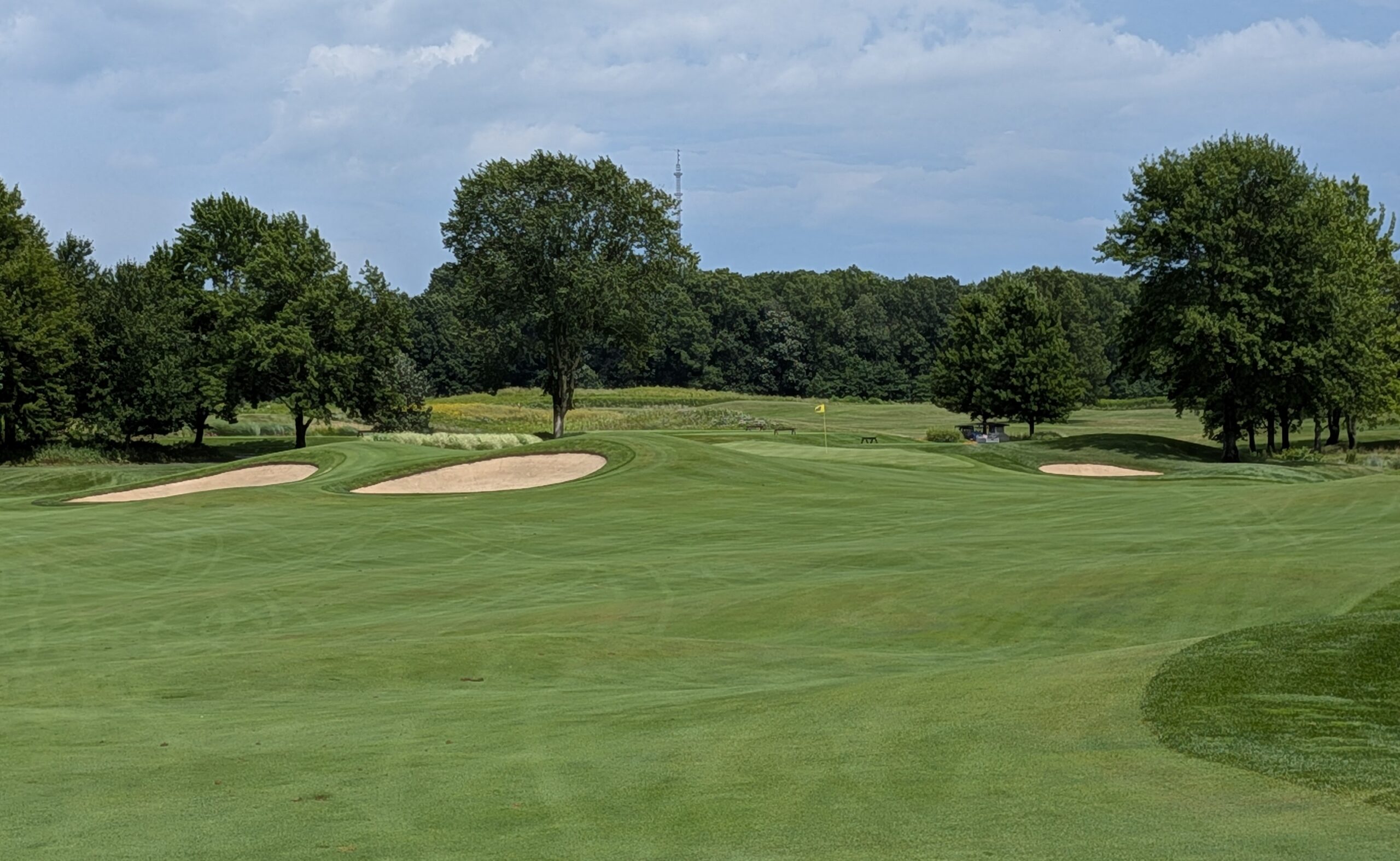
What they devised was an interesting adaptation under this instruction, with the “spectacle” bunkers obscuring the left half of the large green, placed about 25 yards short of the green. While another out of character element, I didn’t hate it, as it is at least a point of interest, although their placement keeps them mostly out of play for all but the worst of shots.
Making The Turn
The tenth is the parallel par-4 running to the right of the first hole. The tee shot is a bit tighter than the first as deep fescue runs the length of the hole right, and one lone tree frames the right side of the fairway.
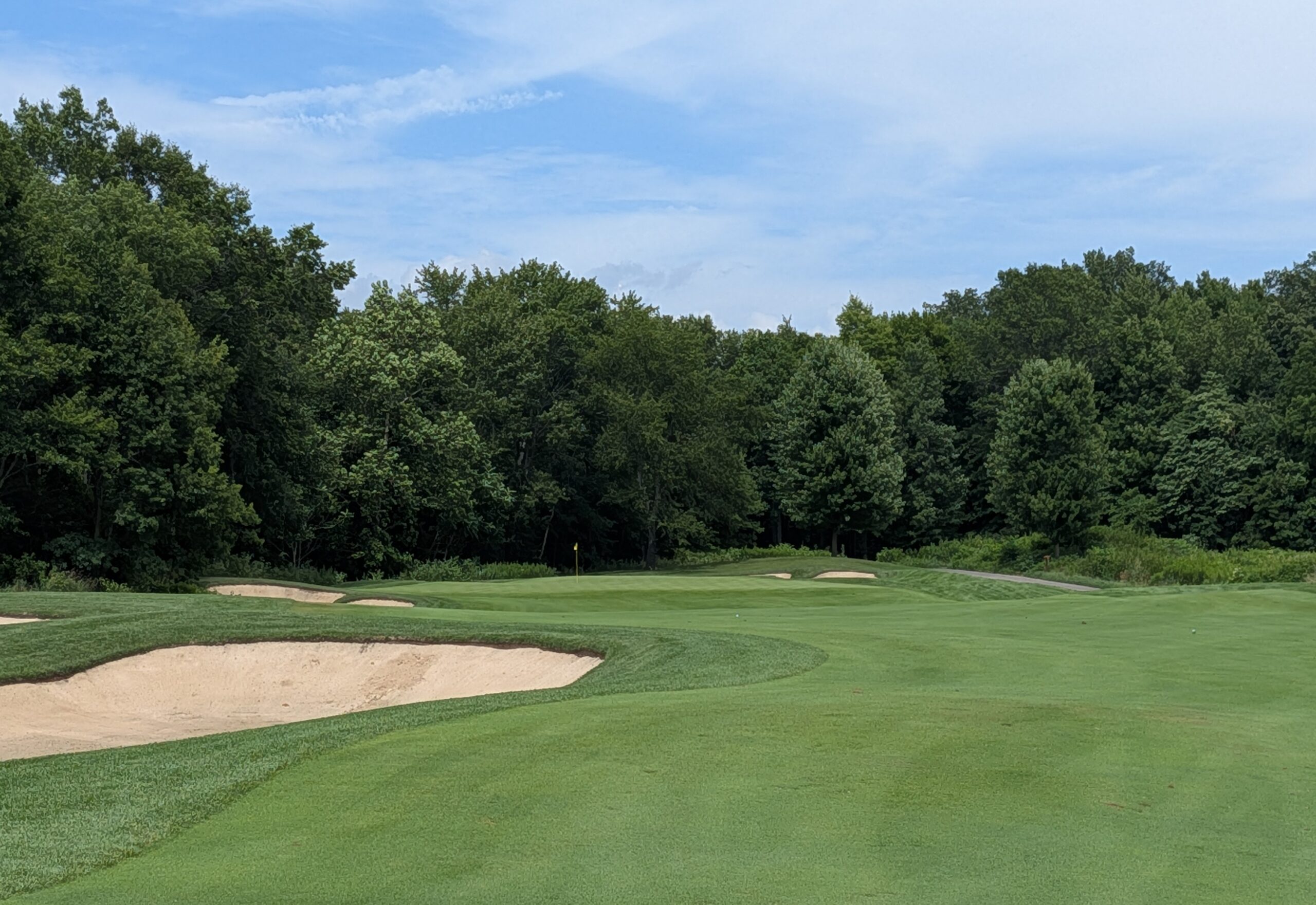
Once in the fairway, the green is an interesting shape, essentially a triangle with its longest side on the front of the green; a wide mouth narrowing on both sides the deeper the pin is in the green.
Next is the forever long par-5 eleventh hole: a true three-shot par-5 which played into the wind on my date of play. The eleventh is a hole that photographs wonderfully from the drone.
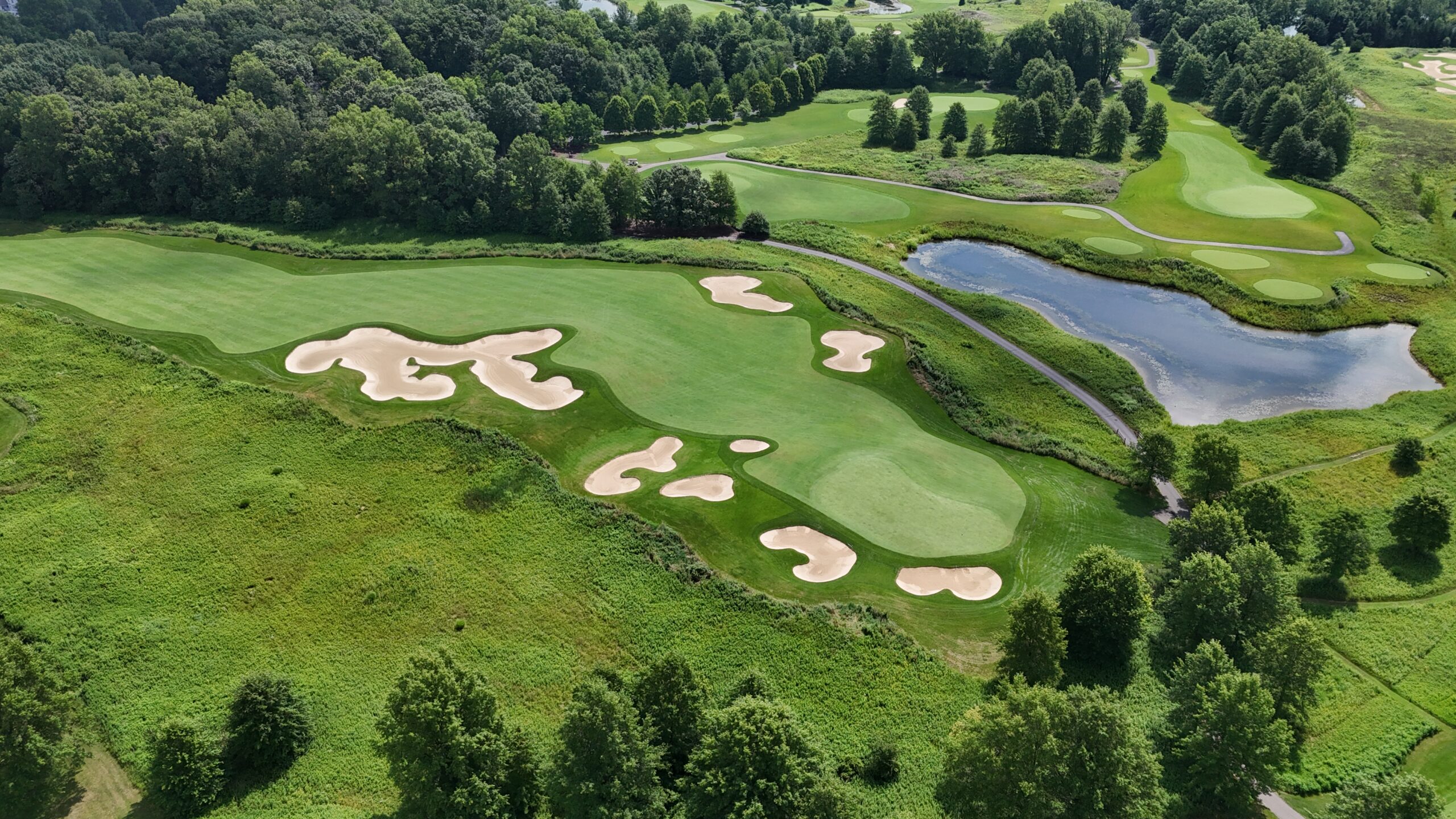
The large and plentiful bunkers that run up the right side of the hole, on the inside of the slight dogleg, are gorgeous from the sky. The only real problem here is, again, the flatness. From the ground level, you really can’t see all this beautiful design. It is hidden in the flatness. And I don’t mean topographically flat; visually flat. The eleventh has mounds up the right side, but they serve to obscure the view of these great bunkers rather than enhance them. Rather, a player can only really see the two bunkers which frame the layup left fairway.
The twelfth hole may be the best hole on the property. The long par-4 challenges a player to hit driver into a narrowing area between a plethora of bunkers. The other option is to take less than driver and just carry the cross bunker on the right into the widest area of the fairway.
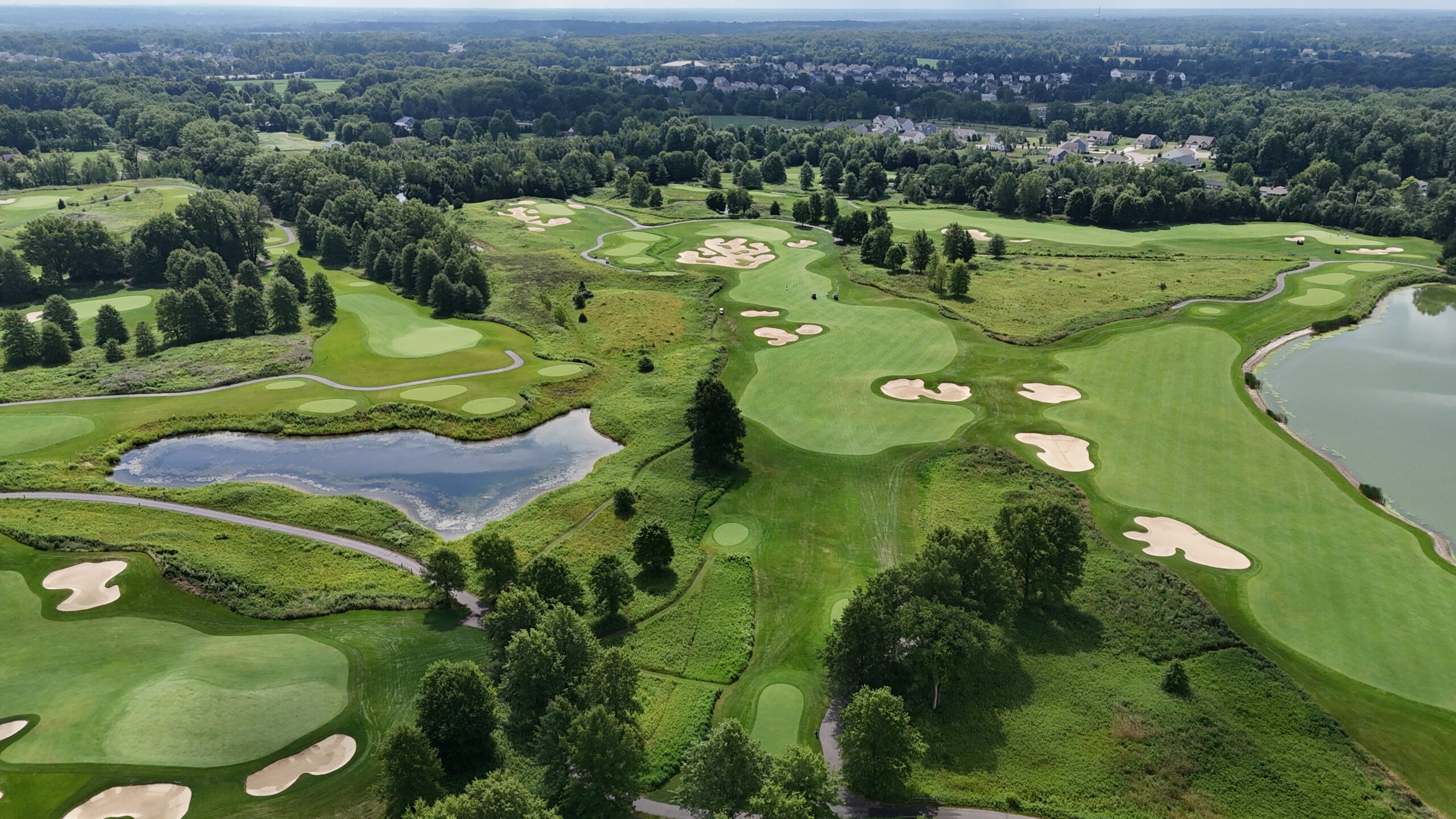
But beware, that wide area is a long way from home, and using less than driver from the tee on this already long par-4 makes this hole feel more like a par-5. A massive bunker swallows the entire area short left of this green.
The twelfth through the fifteenth play in a triangle in the front corner of the property near the entrance, and the twelfth and thirteenth form one leg of that triangle. The short par-3 thirteenth is a nice changeup from the front side par-3s.
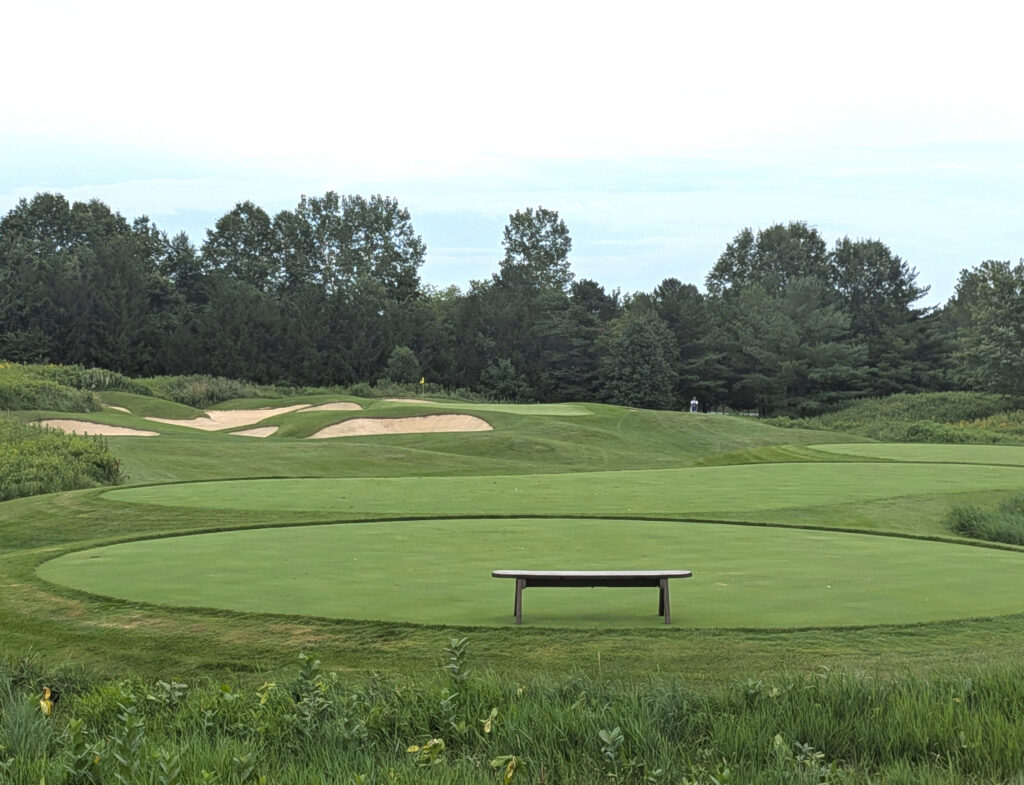
Here, the green sits perched on a flat area just above a ridge on the right and many, deep bunkers on the left. Nothing here but an aerial attack. The green, like most all the others, is quite tame here, meaning this short par-3 should yield some birdie opportunities.
The second leg of this triangle, the par-4 fourteenth felt mostly like a connecting hole to me, but was adequately designed in this corner of the property. A mostly straight hole, the fourteenth’s fairway bends right and then back to the left in a contrived manner, making the hole feel like a dogleg right from the tee, but a dogleg left from the fairway. One centerline bunker protects the middle of the green in what is likely the least bunkered hole on this back nine at Double Eagle.
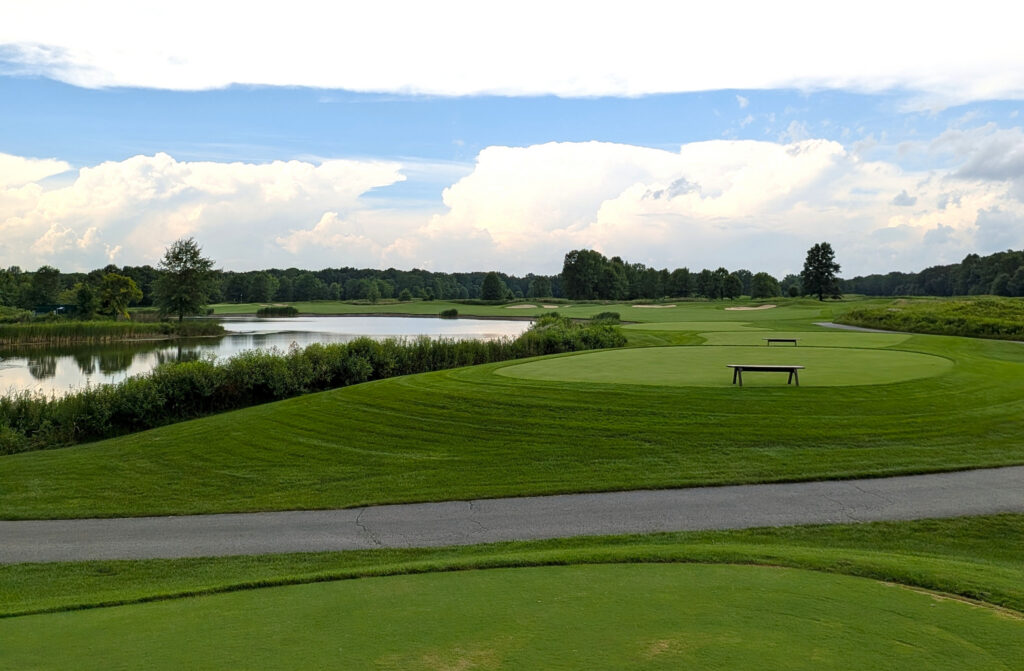
The fifteenth hole caught me a bit off guard, as suddenly, we were on a brutally long cape template hole with a water carry demanding that you pick the right line. The fifteenth is certainly an aesthetic hole that allows you to view the entirety of the cape, but almost feels out of character for two reasons. First, it is a template style hole; the type that has been built on a ton of different golf courses. That part is okay, but to my recollection, this is the only hole at Double Eagle that uses a lateral water hazard as something that needs to be carried. Double Eagle has a reputation for having a lot of perpendicular forced carries, this is just the opposite. This carry is lateral, not forced, and rather, you must pick off as much as your driving distance will allow.
Secondly, the green here may be more severe than any other putting surface at Double Eagle, with the front right portion of the green possessing significant right-to-left slope. All of a sudden, I was playing a different golf course for a hole.
The fifteenth was a critical moment for this review, because this was the first moment I had reached for my camera out of desire to photograph, rather than obligation for the review. The fifteenth is a beautiful hole and represents a huge reveal in the round, but by this point, it is too late.
Three hours into the round and hours since the fifth hole happens too late to save the distinctiveness of the course, even if you fail to notice how out of character the hole is compared to the rest of the course. The holes from the first to the fourteenth are good holes, but nothing pops as a “picture worthy” moment or scene that anyone can easily remember. A truly elite course must have those bookmark moments in the round, and the must come quicker than every couple of hours.
It isn’t a fair comparison, but think about Augusta National (I choose that because people know the holes). The downhill shot at the second. The approach on the third. The downhill shot at the par-3 sixth. The drive on the tenth. Amen corner. The approach on the fifteenth. The tee shot on sixteen. The drive on eighteen. Those are all bookmark moments that make a round easy to remember, distinctive, and is why Augusta National is forever locked in to the top-5 of anyone’s list. Double Eagle has strong holes, most all of them, and nearly nothing offensive or unfair; just no bookmarks.
The collective cynicism in the case of Double Eagle is justified, it may just be that it goes too far. Double Eagle is far better than the twelfth best course in Ohio.
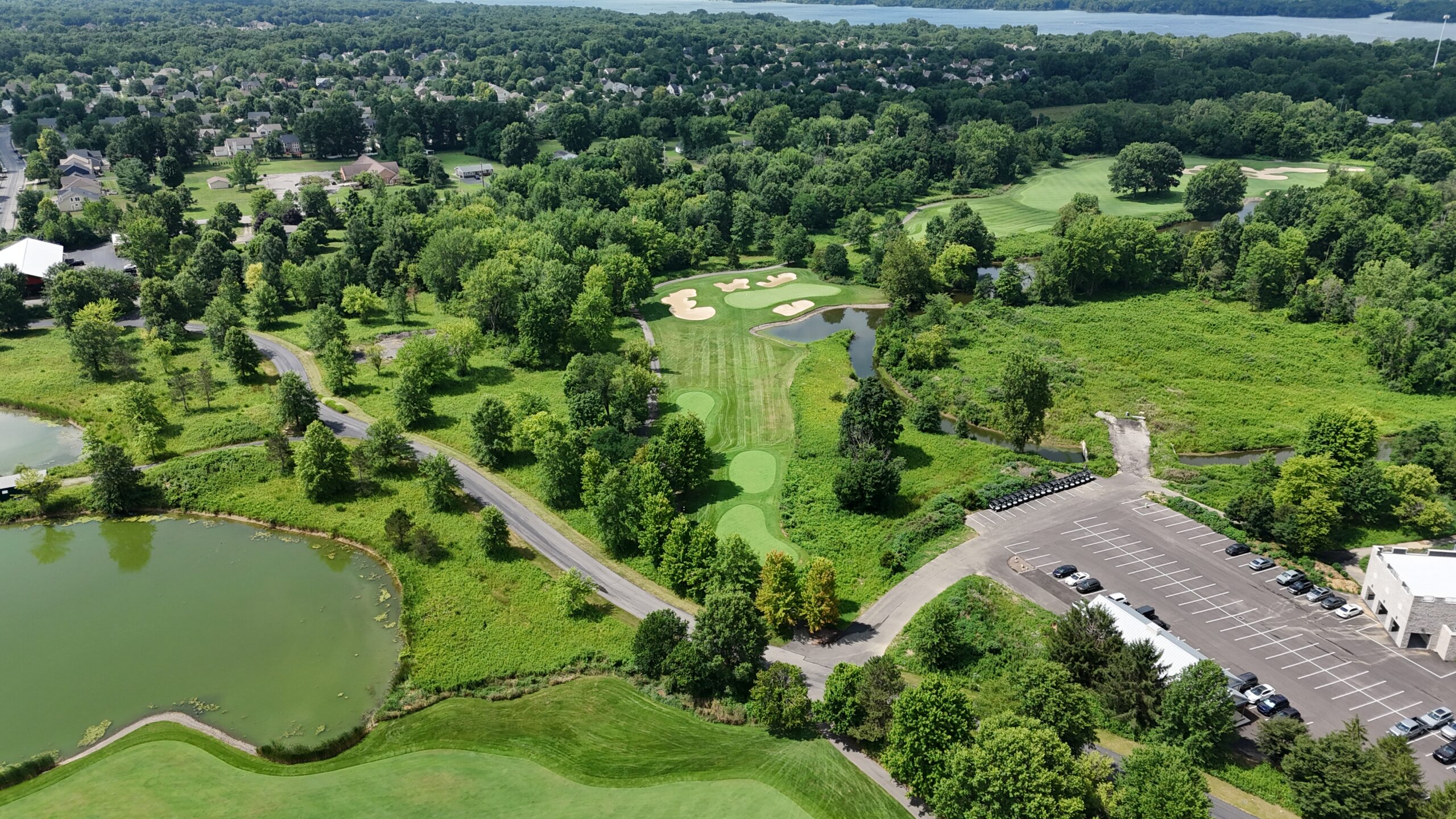
The sixteenth is a fine mid-length par-3 with a water hazard intruding in from the right. The seventeenth a really fun drivable par-4 with plenty of options that, again, photographs better from the air than the ground. I really wonder if this hole wasn’t placed a bit too late in the round, as it is the best or second best hole on the course, and the hole with the most life on a course that desperately needs the life.
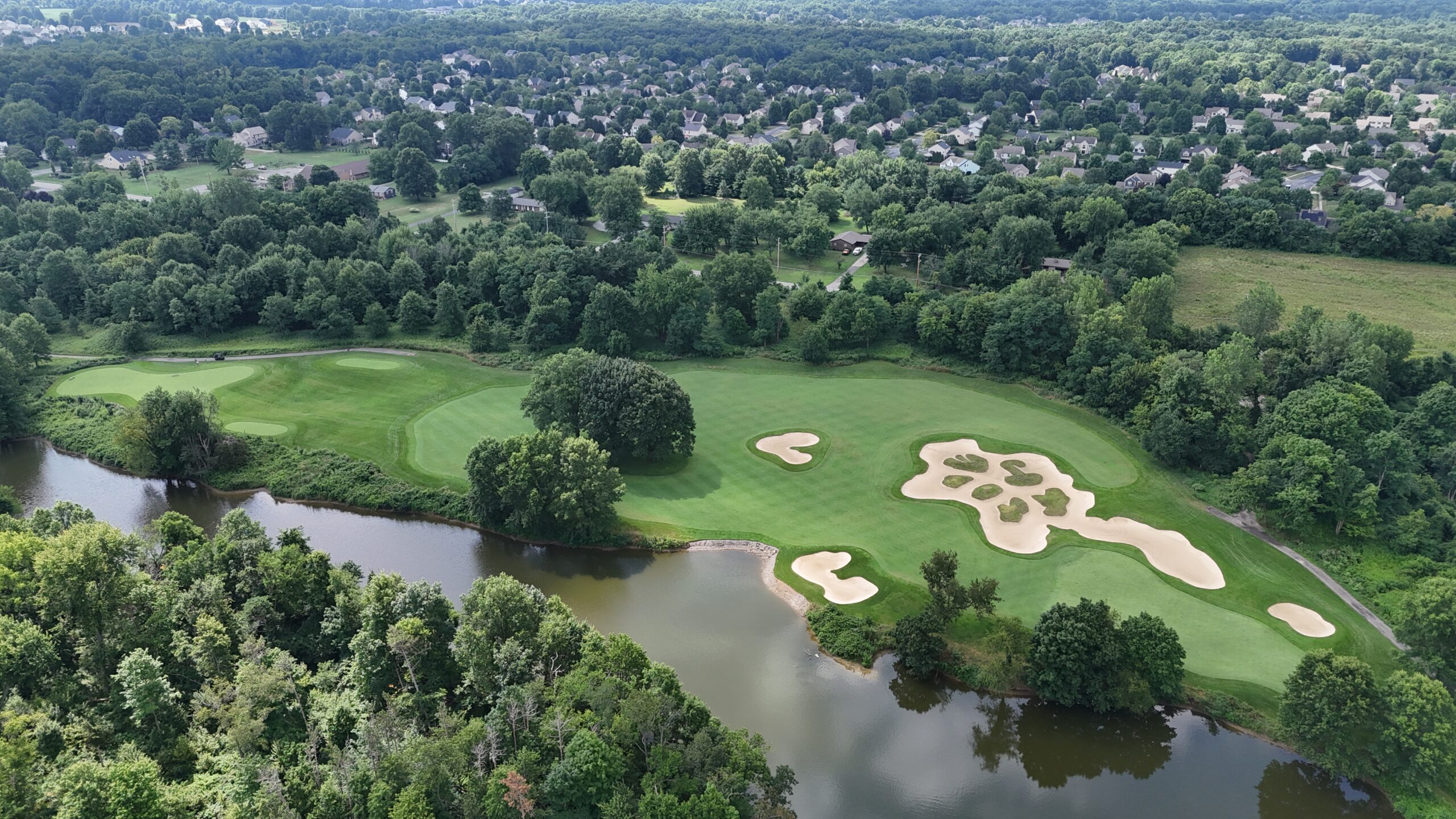
The problem isn’t just that Double Eagle lacks reveals entirely; it’s that the reveals it has arrive after the golfer has stopped expecting them. The fifteenth and seventeenth are strong holes, but by the time the fifteenth appears, the round has trained you to skim rather than remember. A course’s best moments have to be distributed across the routing, not saved for the third act.
The eighteenth a fun closing par-5 with a forced carry over the water, a fitting way for it to end at Double Eagle.
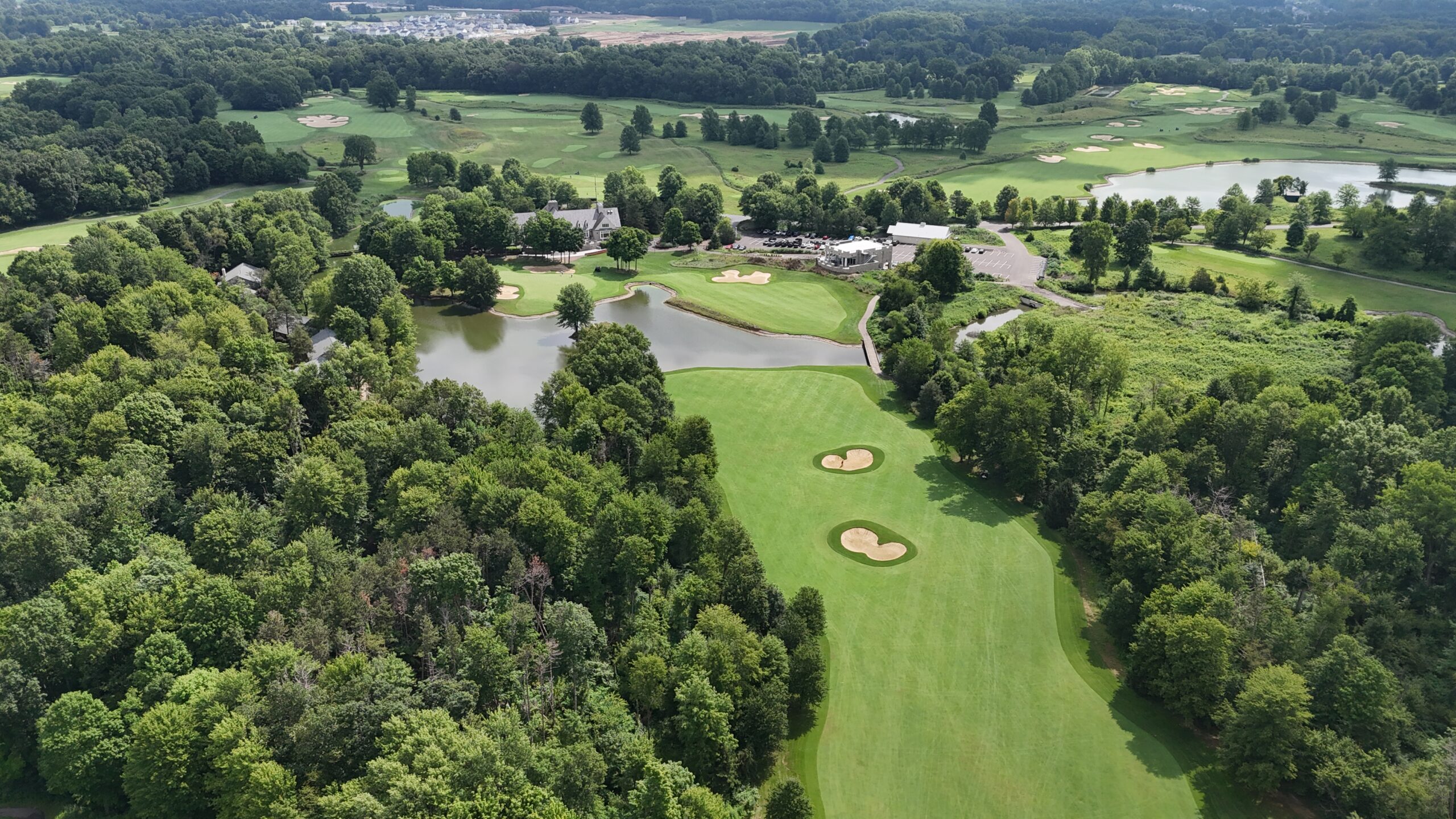
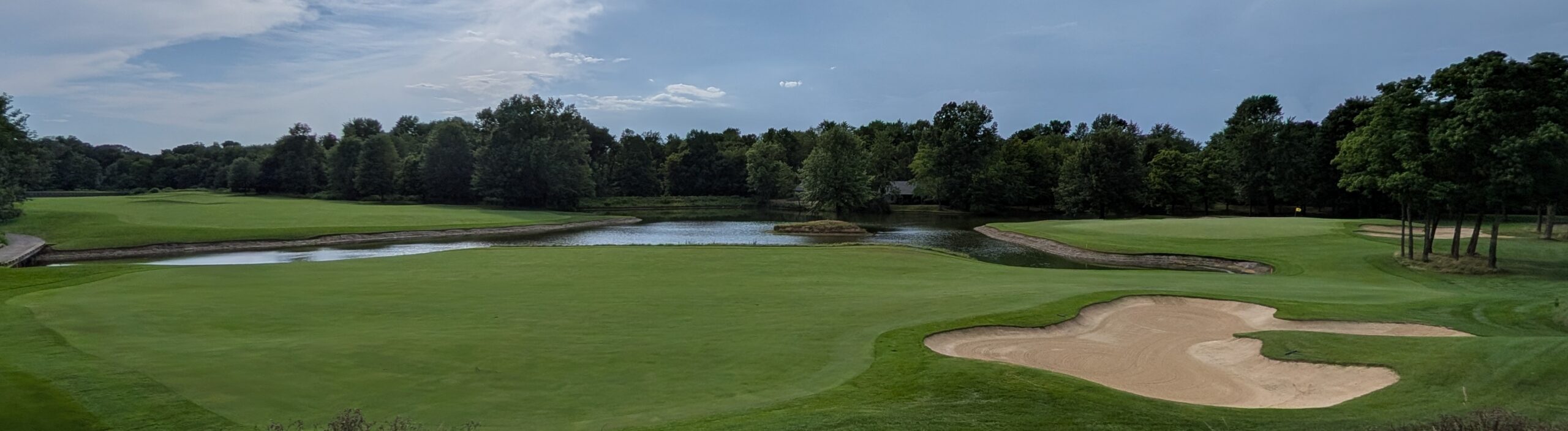
Two centerline bunkers complicate the drive into the wide fairway. Depending on the outcome, the option to layup before the water, go out to the right on the “island,” or go right at the pin over the water all exist. The green here is decently sloped from back-to-front to help catch long iron approaches (but repels wedges).
Final Thoughts
The moral to this story is two-fold. Double Eagle is probably not within the best 200 courses in the U.S. It lacks those bookmark moments that help a course be distinctive and memorable. It lacks a certain elite aesthetic that it could never have due to being located in Columbus, OH near no major lakes, rivers, or oceans. To some extent, the modern, critical consensus of Double Eagle is correct.
But it is overblown. There aren’t twelve better courses in Ohio than Double Eagle. There aren’t twelve better courses in any state than Double Eagle. The reason this consensus has developed, in my opinion, is because the average guest wants Double Eagle to be more than it is.
It is incredibly exclusive with few members, it has a fantastic clubhouse; it has a friendly and welcoming membership and vibe; I never felt like I was walking on eggshells. It was a place I’d probably never leave if I was a member. It was conditioned better than any course I have been at in years. But, the actual golf course leaves you wanting more, which maybe leaves a sour taste in some raters, architecture buffs, or review sites’ collective mouths. But the fact is that Double Eagle is still an incredible golf course, even if just a fraction outside Top 200 quality.
CR&J Final Rating:
Shot Options: 8
Challenge: 8
Layout Variety: 8
Distinctiveness: 5
Aesthetics: 8
Conditioning: 11
Character: 7
Fun: 9
Total: 64/80
Read More: How We Rate Courses
Rating Scale Details:
> 70: Top-50 U.S.
65-70: Top-200 U.S.,
60-65: Best-in-State List
57-60: Best-in-state List Contender
53-57: Very Good
48-53: Good
40-48: Average
< 40: Poor

Author: Kyle Taylor
Kyle is the lead course reviewer at The Course Review & Journal. Kyle has been playing golf for over twenty years, is a plus handicap, and actively competes in USGA and State Golf Association events. By trade, Kyle is an attorney.
Kyle Taylor is a pseudonym used by CR&J’s lead course reviewer to protect personal relationships. The reviews and opinions remain entirely the writer’s own.
Leave a Reply
You must be logged in to post a comment.