
The Journal is where CR&J captures the breadth of our golf experience; courses played, places traveled, and ideas that don’t always warrant a full architectural review. Not every course demands 4,000 words, but many still deserve to be seen, rated, and contextualized. The Journal allows us to build a meaningful ratings record, explore regional golf, and document how courses fit into the larger landscape of the game. In each Journal entry, we will try to provide short-form ratings for three to five courses in the same general geographic area.
Read: How We Rate Courses
Courses Reviewed in this Journal:
(Click Link to Jump to Review)
Course Review: Chambers Bay Golf Course
CR&J Final Rating: 68/80 (Top 200 U.S.)
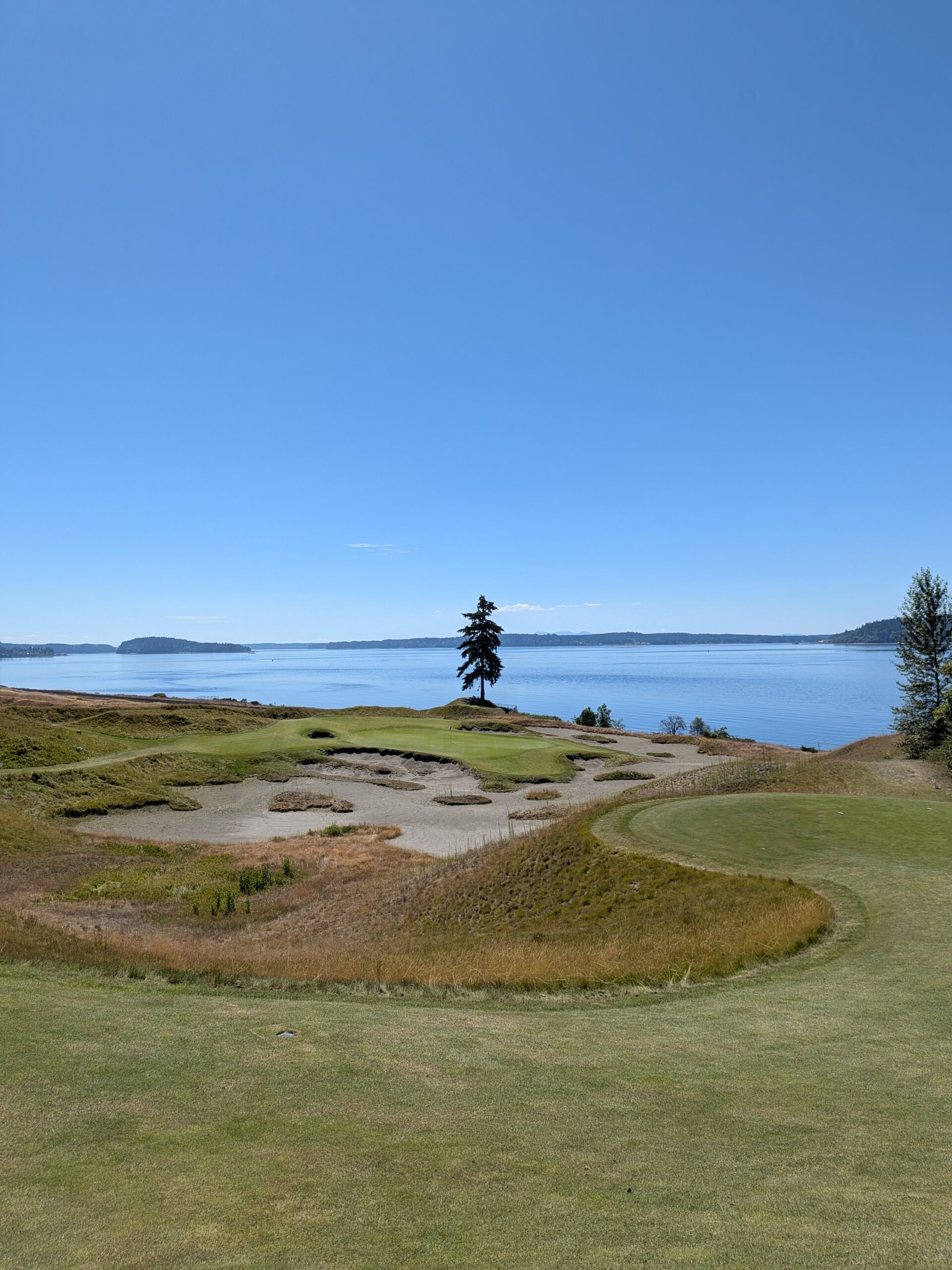
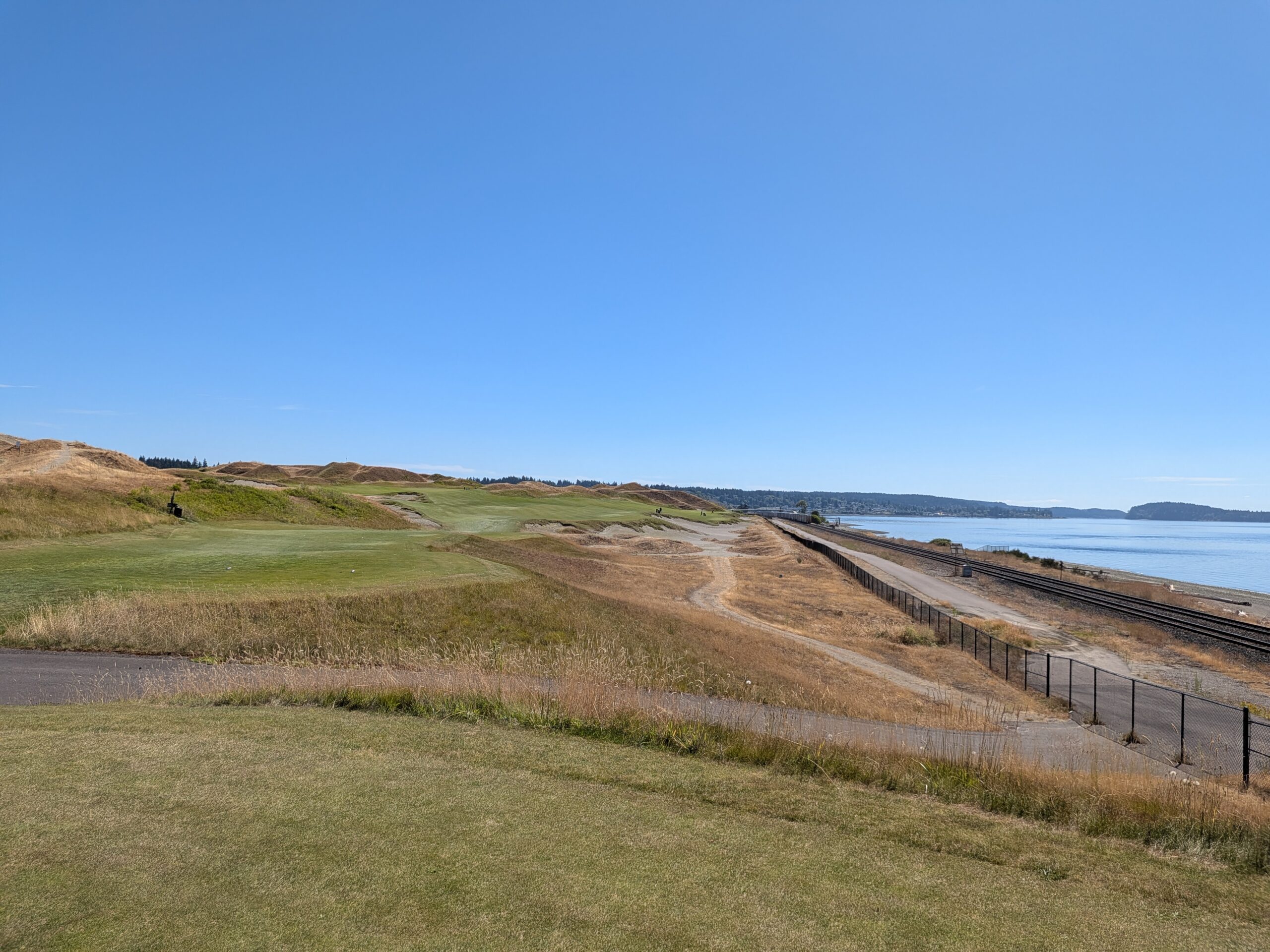
Chambers Bay is a Robert Trent Jones II design opened in 2007 just outside of Tacoma, WA, south of Seattle. Much of the discussion online of Chambers Bay revolves around the U.S. Open contested here, where by all accounts, the putting greens were lost. At the time, Chambers Bay had fescue greens, but has since switched to poa annua. Much has been discussed about this transition, and locals still lament that a national TV audience saw the course at its worst.
And, great it is. Robert Trent Jones II stepped out of his comfort zone here, designing a course that is a modern take on links golf, crafting manmade windswept dunes to route holes through. Primarily, Chambers differs from traditional links golf because of the substantial elevation change. Essentially the property is graded in a single direction, from a high eastern ridge to the low western side bordering the Puget Sound, and the holes rise and fall depending on the direction of the routing, quite substantially. Chambers Bay is a walking-only course, and is a somewhat demanding walk due to the elevation change.
What Works: While all of it is manmade, Chambers Bay sells the illusion; it feels like the golf course was always here, waiting to be discovered. It feels natural, even though it is anything but that. I think that is a great testament to Jones II’s work here. The actual property is also fantastic: the Puget Sound is gorgeous, and the elevation of the property means that the Sound can be seen on pretty much every hole. Despite playing Gamble Sands the day before, Chambers Bay is very distinctive. From an outside perspective, you’d think that Gamble Sands and Chambers Bay may have a similar vibe and character, but it does not. Chambers Bay’s unique take on modern links can be felt on each hole.
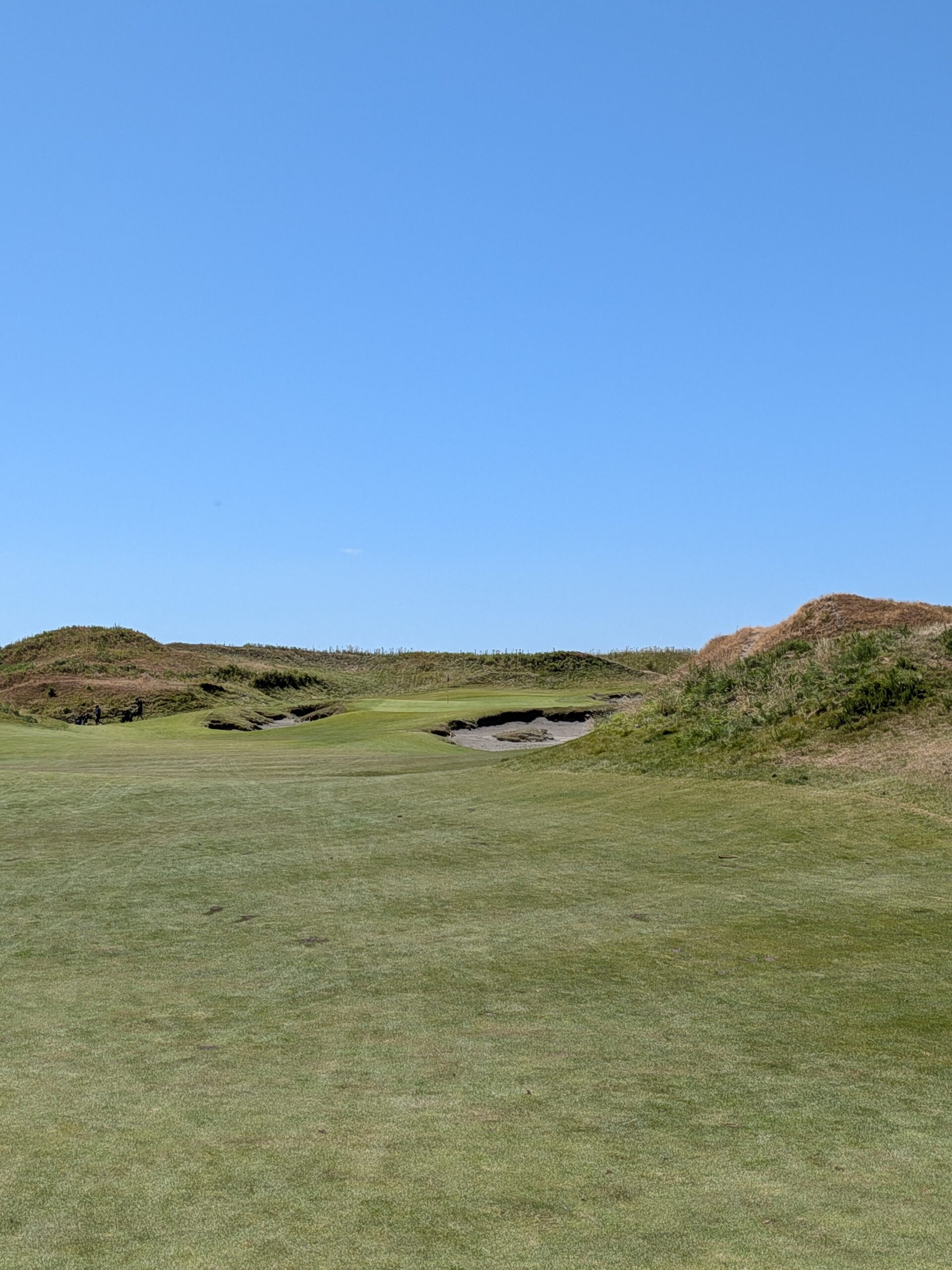
Best Hole: There are so many great holes to choose from at Chambers Bay, but I think a sleeper hole, the mid-length par-4 sixth hole was my favorite. I really liked this hole because the elevation change was minimal, which is a great intermission between the up and down fourth and fifth, and the uphill seventh.
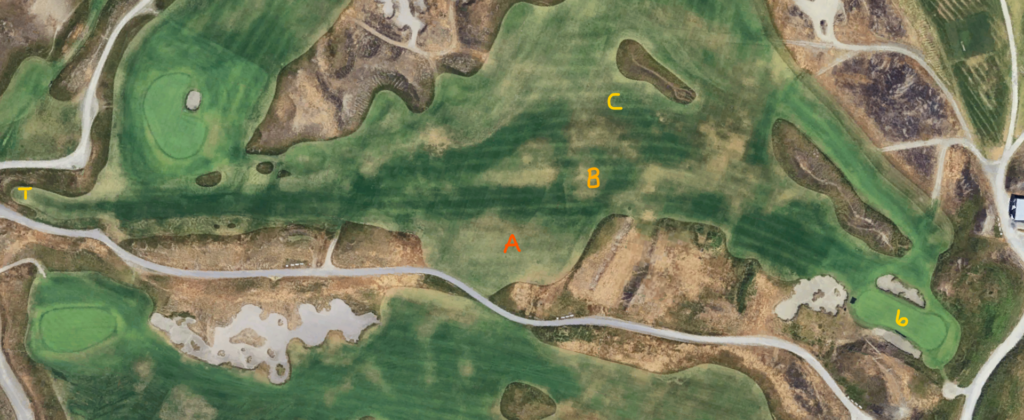
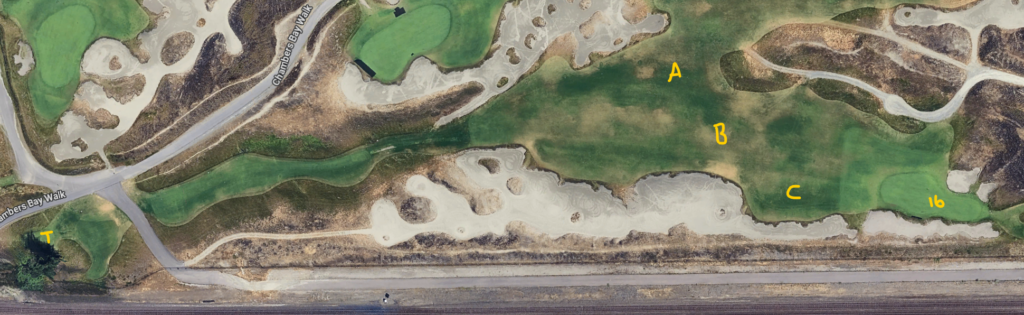
The shot value of the second shot here is great from an aesthetic standpoint first off, but I love that there are three distinct ways to play this simple hole.
- Option A is the least risky off the tee, and can be played with fairway wood. It is actually the straightest route to the hole. But, it leaves an absolutely terrible angle to this long, skinny green.
- Option B provides the most risk from the tee, played as close to the intruding long fescue. However, if the tee shot is appropriately placed, the angle here is fantastic, straight up the long, skinny green with a short iron.
- Option C has ample bailout room left of the tee, but is technically the longest way to play the hole. It also provides a less-than-desirable angle over a very dangerous bunker that flanks the green lengthwise left. Whereas from Option A, the main carry is a short bunker, Option C requires a precise distance AND line in order to carry the bunker on the left.
This is an otherwise simple hole that a lot of players are probably not getting deep into the weeds on the strategy of how to play it, and that is why I liked it most. The sixth is sneaky, simple, and the approach shot into the green tucked behind the bunkers and dunes is very aesthetic.
Interesting Hole: The par-4 sixteenth might be the most interesting hole on the property. Here, the short par-4 presents quite a few options off the tee. This is really a hole where the strategy must start at the pin placement and work backwards. When the pin is in the front or front middle of the green, the three options are dealer’s choice and neither represents a huge advantage. However, when the pin is on the extremely narrow back section of the green, the result of the tee shot will likely dictate the second shot strategy.
The back section of the green is extremely narrow, just around 10 yards wide, and thoroughly fortified on both sides. If either of the bunkers is found, it would be excessively hard to stop the ball in this area of the green, and many players would be forced to play out sideways, like the tenth at Riviera.
This makes Option C much more attractive from the tee, as pushing the ball as far as possible down the right leaves the best angle and shortest distance into this impossibly inaccessible area of putting green. Whereas Option A leaves only the option of hitting it to the fat part of the green and trying for a long two putt. Option B is the danger-zone, as it feels like a green light to go into this back section of green, but is really a yellow light at best.
The sixteenth is an interesting, frustrating little hole where the pin placement will likely determine your frustration level walking to the seventeenth.
Limitations: The limitations at Chambers Bay mostly relate to the conditioning. The conditioning is good, and the greens much better than what was viewed in the US Open, Chambers Bay is still a municipal facility. If you look close as you walk around the property, there are certainly some rough edges, unmaintained areas of waste area where weeds and grass are trying to grow through the waste bunkers, among other slight conditioning limitations.
Final Thoughts: Chambers Bay is a fantastic public golf course, likely one of the best municipal courses in the US, and is a course undeserving of the reputation left by the US Open. I hope that Chambers Bay gets another chance to host a US Open and showcase its greatness, because it is a fantastic golf course.
CR&J Final Rating
of Chambers Bay:
Shot Options: 9; Challenge: 9; Layout Variety: 8; Distinctiveness: 8; Aesthetics: 9; Conditioning: 7; Character: 8; Fun: 10.
Total: 68/80 (Top 200 U.S.)
Course Review: Sahalee Country Club
CR&J Final Rating: 65/80 (Top 200)
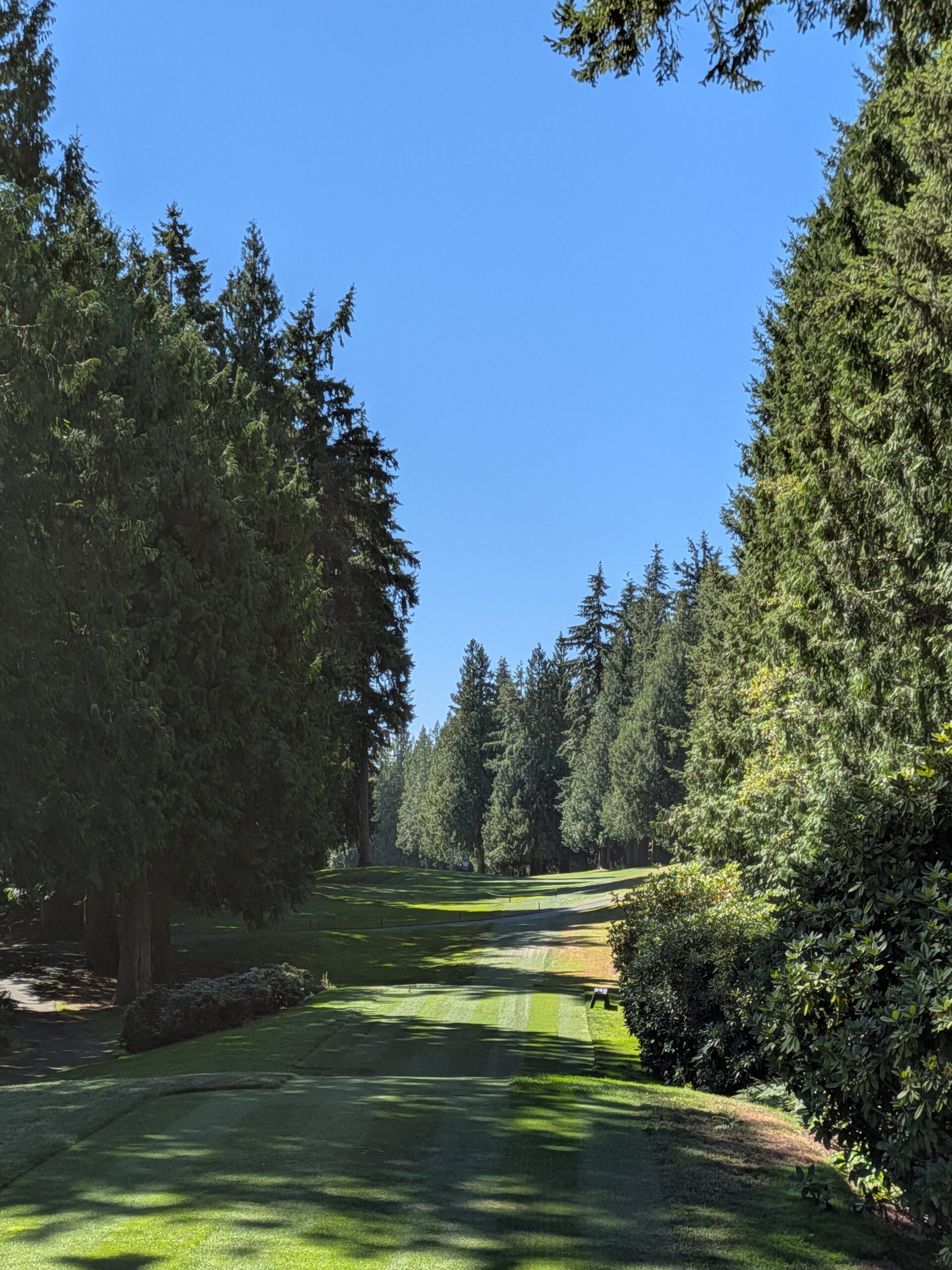
Sahalee may be the most unique round of golf in the United States. Famous for its “sahallways,” Sahalee is considered the most narrow golf course in the U.S., with extremely tall pines lining up just off of each fairway. Industry standard width between tree lines on most golf courses is 65-yards. Rarely do we see holes any tighter than 50-yards, and this would be considered very tight by modern standards. Tree removal and expansive width is very in vogue right now for newly built courses and renovations, like Gamble Sands. Sahalee cuts in exactly the opposite direction, where 40-yards of width in a landing area is considered open, with certain corridors narrowing down under 20-yards.
Sahalee is one of a kind and tough to place on a scale with courses so dissimilar from it. It is a place that puts a premium on accuracy above all else; keeping the ball in front of you and out of the trees, is a complication on every single shot at Sahalee. It also must be noted that Sahalee was in fantastic shape when we played, which is a true feat considering the amount of shade this property gets every day. The trees were so large that by mid-afternoon, there was essentially no sunlight, which makes growing grass hard.
Golf Digest considers Sahalee the fourth best course in Washington, and the #196 best in the US.
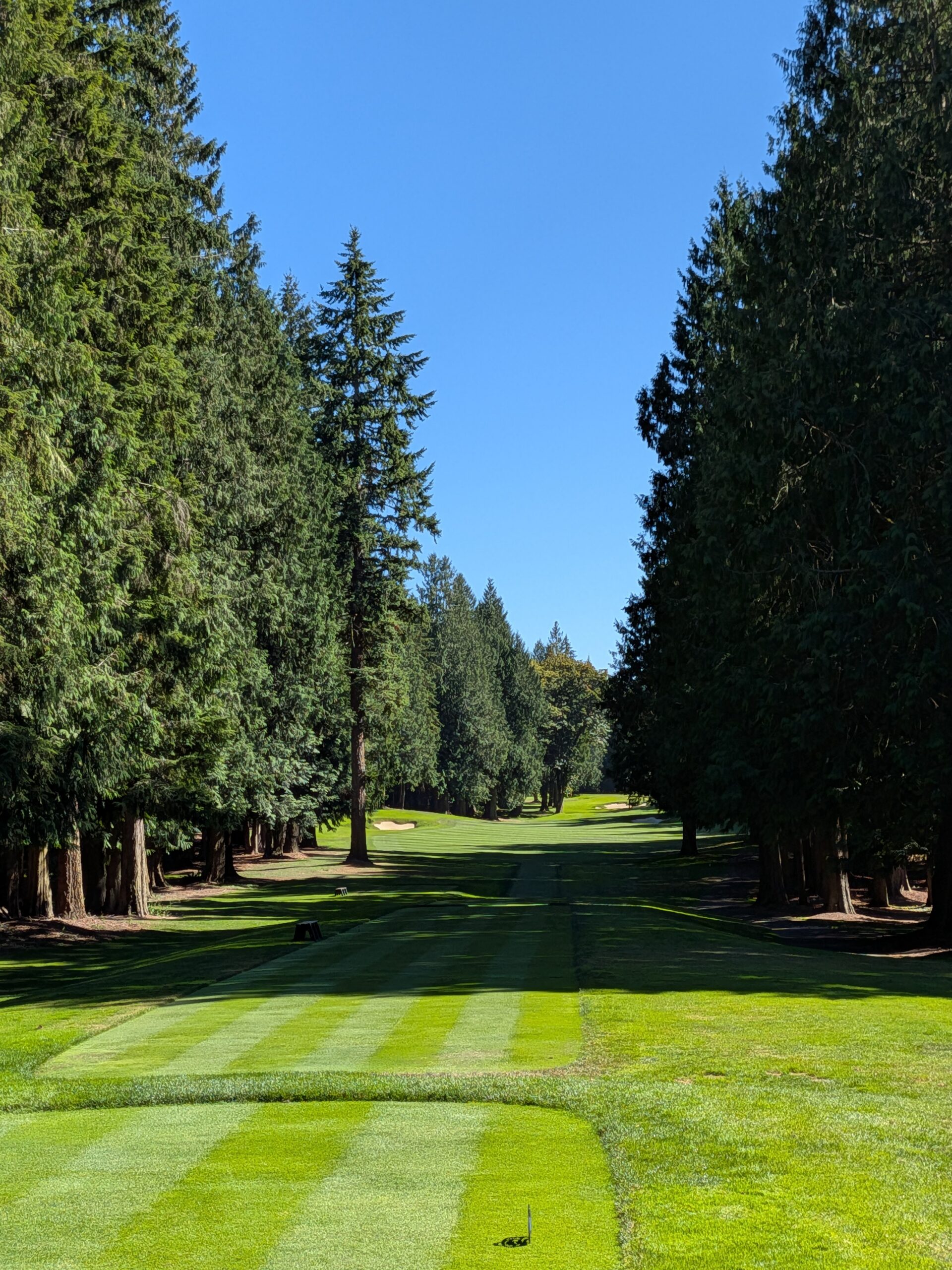
What Works: Sahalee somehow manages this incredible tightness and doesn’t feel brutally unfair. There are unfair moments, no doubt. There will be good shots that end up behind trees, and there will be bad shots that bounce off of trees into good places. But on the whole, it wasn’t quite as hard as I envisioned it being. I move the ball quite a bit, and I envisioned that it would be tough for me to play here with my natural shape, but it wasn’t that bad.
It is also aesthetically brilliant as the natural beauty of the property really shines through. It is so unique to play golf through what feels like a national forest, with towering pines all around. There are also houses surrounding the outside edges of the course, but you would never know, which is a great testament to course planning.
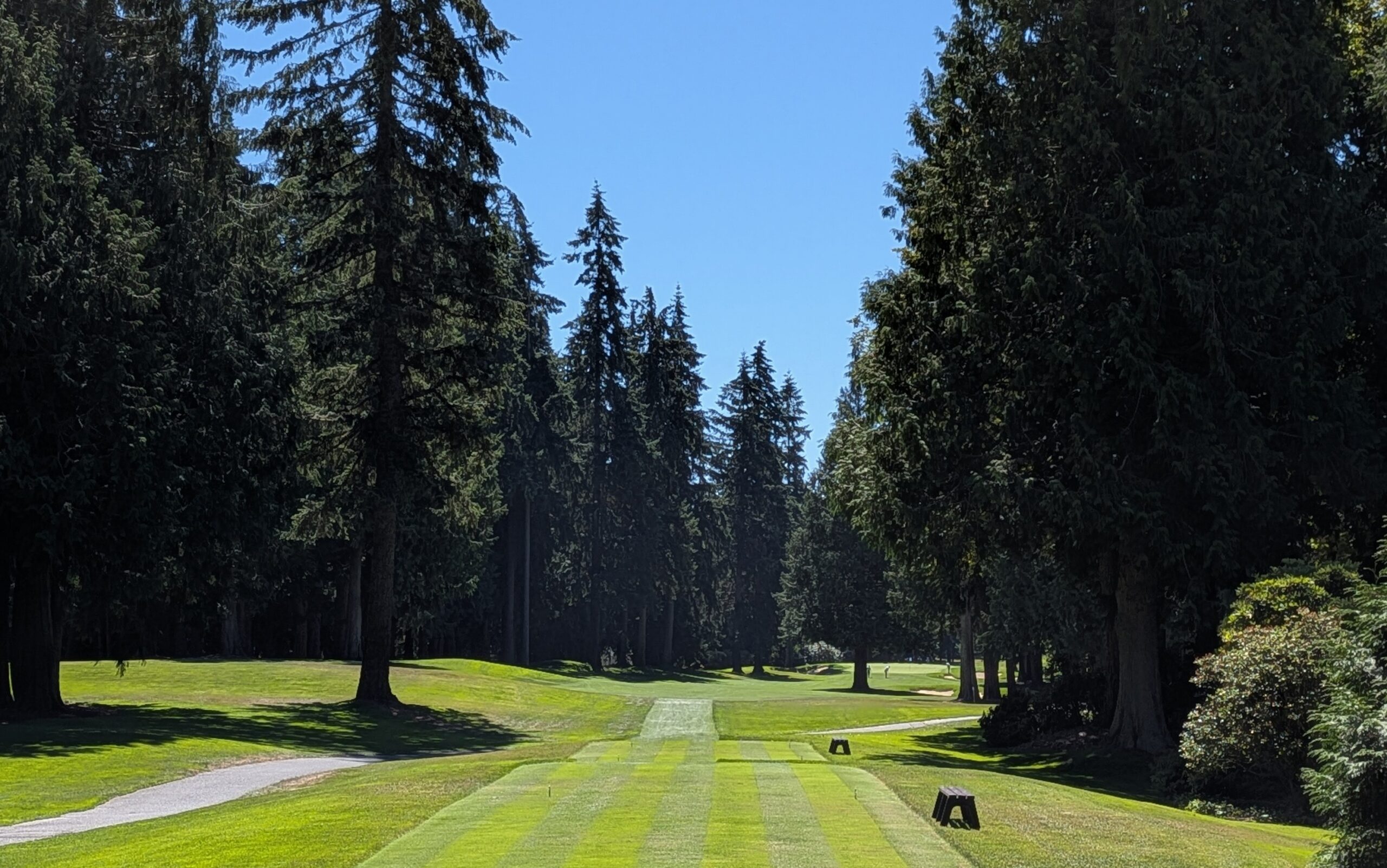
Best Hole: If you’re going to Sahalee, you might as well get comfortable enjoying the most severe version of the Sahallways as possible, and that is the par-4 fourth hole (when playing the South/North routing). The strategy here is to try to play a small fade just to the left of or over the tree in the middle of the fairway. This could be done with a driver or fairway wood, but the fairway narrows around 260 after the bunker.
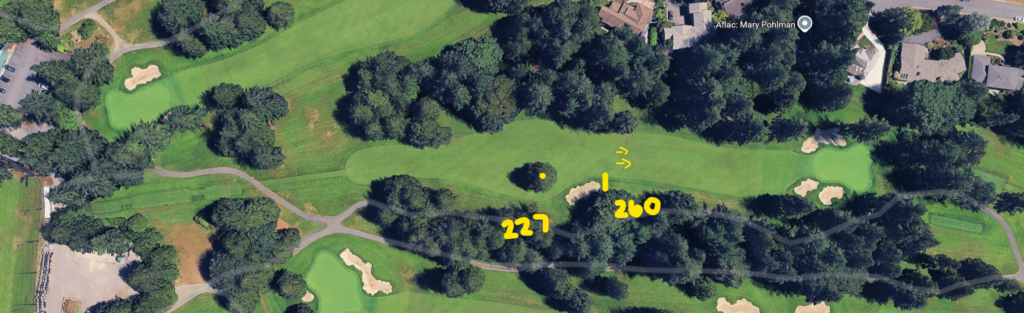
The toughest part here is that the ball must fly through two narrow corridors, the initial gap in the trees around 150 yards from the tee, which is only 14 yards wide. Then again, to the left of the tree bisecting the fairway, which is around 25 yards wide.
After a successful tee shot, a short-iron or wedge will await into a complex putting green with three tongues, sloping largely back to front, and protected by three large greenside bunkers. This might be the most narrow tee shot in America, and isn’t that the reason you came to Sahalee?
Interesting Hole: If there was a hole I disliked at Sahalee, it was likely the mid-length par-4 eighth hole. The hole is a tight, quirky dogleg right.
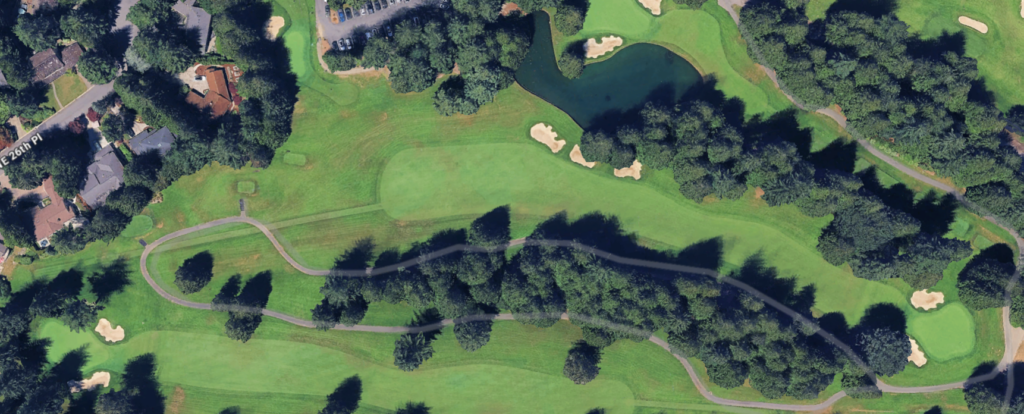
The last bunker is about 275-yards from the tee, and most players will lay up in front of those bunkers. My beef with the hole was that the pond to the left of the bunkers is not visible at all, and actually looks to be the safer side to miss from the tee; that is incorrect. If you find this pond, the drop is also buried behind the trees, which will require a short chip out, effectively making left of the bunkers operate as an internal out of bounds. I’d like to see some of the trees behind the bunker array be removed to allow for some recovery from there, but as you can tell, this is a personal gripe, as this is exactly what happened to me.
Limitations: Sahalee is held back from ascending up the rankings for two main reasons. First, what makes it unique is also what limits it: tightness. This was really fun to play as a one-off, and I would happily play Sahalee every year. But, I don’t think I would enjoy playing Sahalee more than that, and while it would be fun to show off to guests, I’m not sure I’d want to be a local member. It is just really difficult to even play the game and finish the round if you struggle with direction off the tee. The second is that Sahalee is somewhat repetitive in aesthetic and strategy. Every hole is tight and lined with tall pines, which is beautiful, but there are only so many hole concepts that can be designed with such a limiting theme. Sahalee has very little elevation change throughout the round, which makes the routing feel a bit down-and-back, even though it isn’t. It is very easy to get lost in the woods and the aesthetic limits of the venue hold it back. Those limitations are not something that the club could do anything about, but rather, just the nature of the location and style of the course. But, it does create a glass ceiling on potential rankings.
Final Thoughts: Sahalee is a fantastic golf course, and its unique presentation, aesthetics, and challenge make it truly one of a kind, and a bona fide Top-200 course in the U.S., as it does and should continue to round out the bottom quarter of Top-200 lists.
CR&J Final Rating
of Sahalee Country Club:
Shot Options: 6; Challenge: 9; Layout Variety: 6; Distinctiveness: 9; Aesthetics: 9; Conditioning: 9; Character: 9; Fun: 8.
Total: 65/80 (Top 200 U.S.)
Course Review: Salish Cliffs Golf Club
CR&J Final Rating: 58/80 (Best in State List Contender)
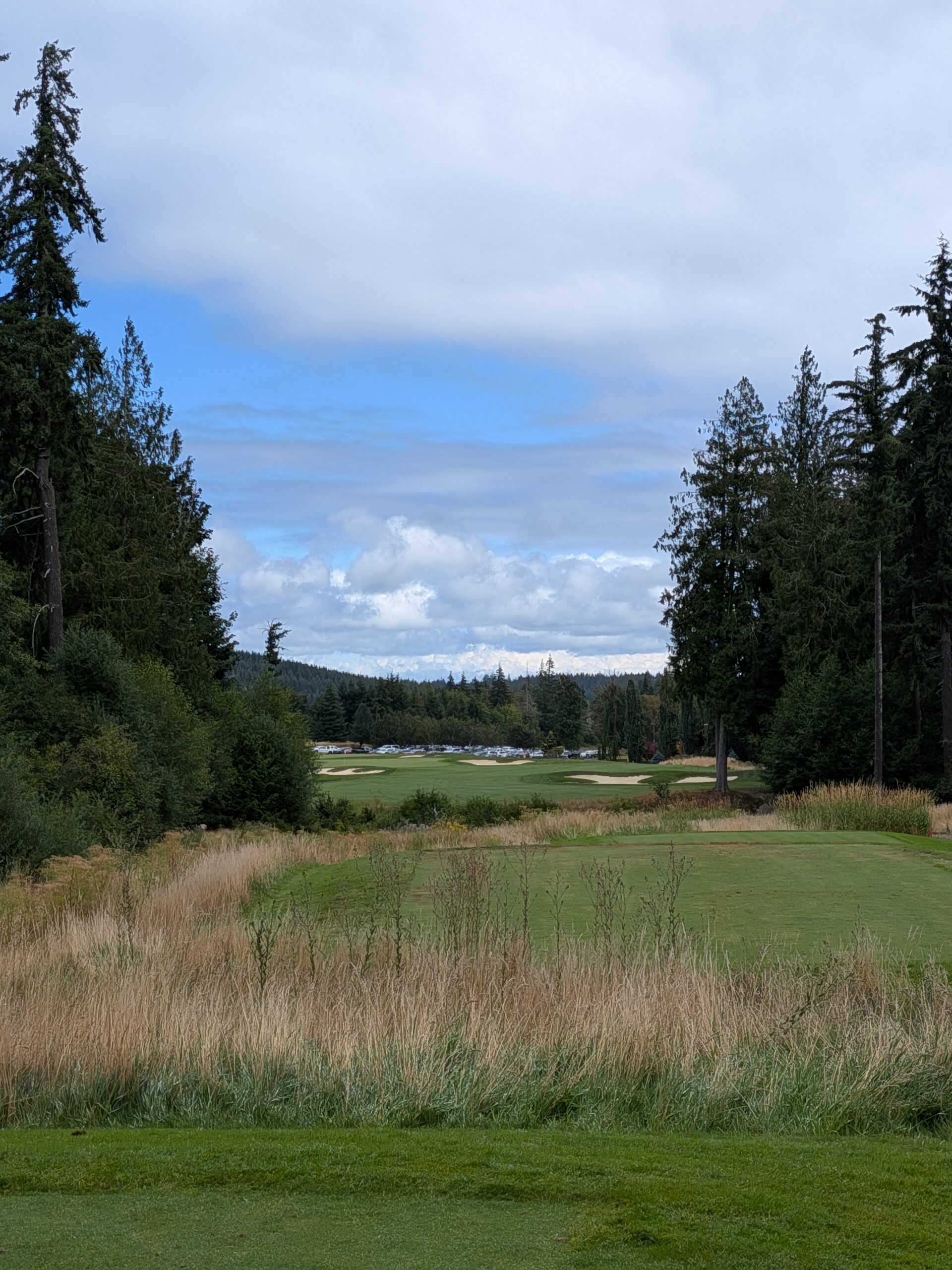
Salish Cliffs is a public course, likely one of the best public courses in the Seattle Area, but is around an hour or longer from Seattle proper on a Native American reservation southwest of Seattle. Salish Cliffs is actually a “casino course,” as the course sits behind the Little Creek Casino.
Salish Cliffs is much more Sahalee than it is Chambers Bay, and features a lot of length and quite a few tight tee shots. This area of the pacific northwest is closer to the coast and is quite windy, and Salish Cliffs rounded out to be one of the toughest courses we played on our trip. Salish Cliffs is a Gene Bates design that currently finds itself #13 of 15 ranked courses in Washington per Golf Digest. Salish Cliffs was in surprisingly good shape; not pristine but perfectly playable. We played from the furthest back tee boxes, which tend to get neglected on public courses as few players use them, and that was the case here for a select few boxes.
What Works: Salish Cliffs is thoughtfully designed, in good condition, and presents an element of difficulty that most public courses do not. The course has plenty of variety in yardage and difficulty, and the views on the first few holes and the back-nine are aesthetic. Salish Cliffs has quite a bit of elevation change as well.
Best Hole: The start at Salish Cliffs is quite interesting, starting with a scoreable par-5, a short, almost drivable par-4, and the longest par-3 I have ever played (more on that momentarily). I would imagine most would focus on this three hole start as being the best stretch of the course, and I would agree. But, I thought the best hole design was the par-4 sixteenth hole.
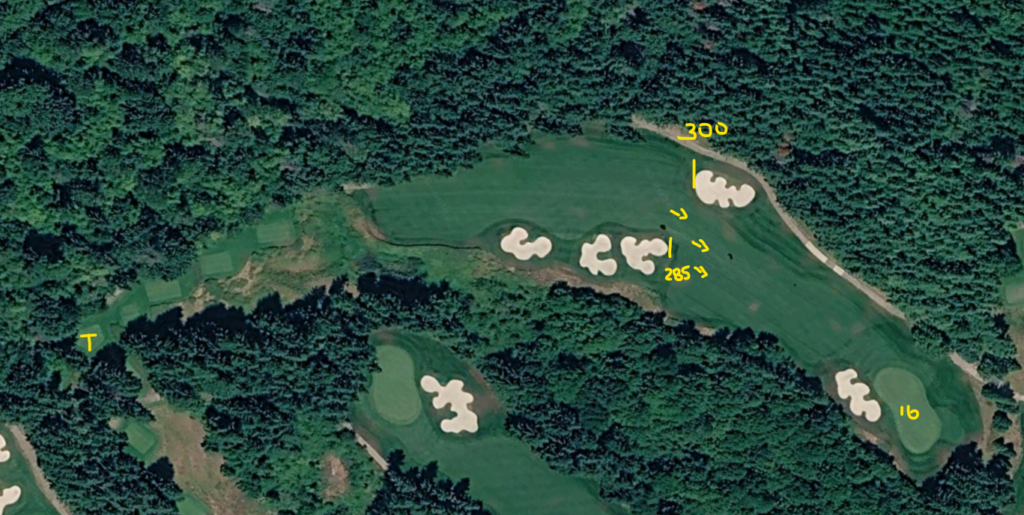
The sixteenth presents two interesting options from the tee, as it bends to the right around an array of bunkers. The tee shot plays quite a bit downhill, and after the bunker array, the hole works even more downhill towards the green. Some players will choose to layup behind the bunker on the left, which actually provides the best angle into the green, which is canted from short-right to long-left. But, this will leave a shot of around 180-yards to the middle of the green.
Alternatively, challenging the carry of the bunker can be handsomely rewarded, as the closer to the bunkers on the right, the more the ball will run out down the hill. Meaning a significantly shorter approach for those who pull it off. But, successful or not, players on the right will have a tougher angle to the green, over the greenside bunker on the short right, into the narrow angle of the green.
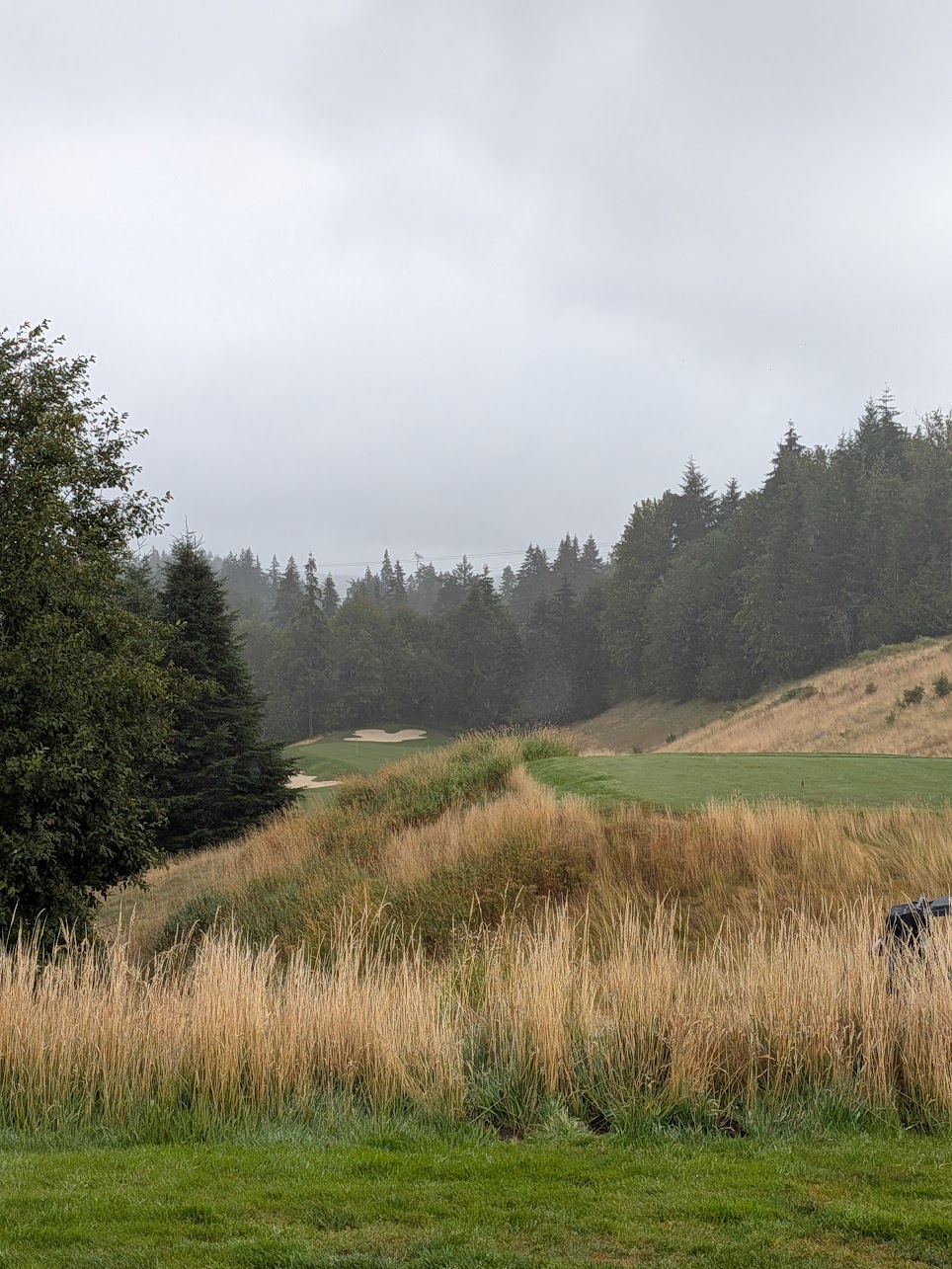
Interesting Hole: Now, back to that starting stretch. By non-adjusted yardage, the downhill par-3 third hole is the longest par-3 hole I have ever played. The 291-yard hole is brutally long from the back tee box, and there is not much room here to miss. A smaller green, sandwiched between a hillside on the right, and a downhill hillscape on the left, to a green in an artificially flattened area on the hillside. Only 39-yards of width, a bit into the wind on our day, meaning I chose my three-wood (adjusted to about 260 because of the downhill) knowing I couldn’t get it all the way there.
This hole is an absolute round wrecker for a first par-3, particularly in the rainstorm we were playing in, and all of us (playing from an assortment of different tees) spent more time looking for our golf ball than we did playing golf. A truly brutal, half-par hole. But, I am not being critical, because the preceding second hole was a par-4 and just 15 yards longer. Bates clearly intended the second and third to play as a pair of par-3.5s.
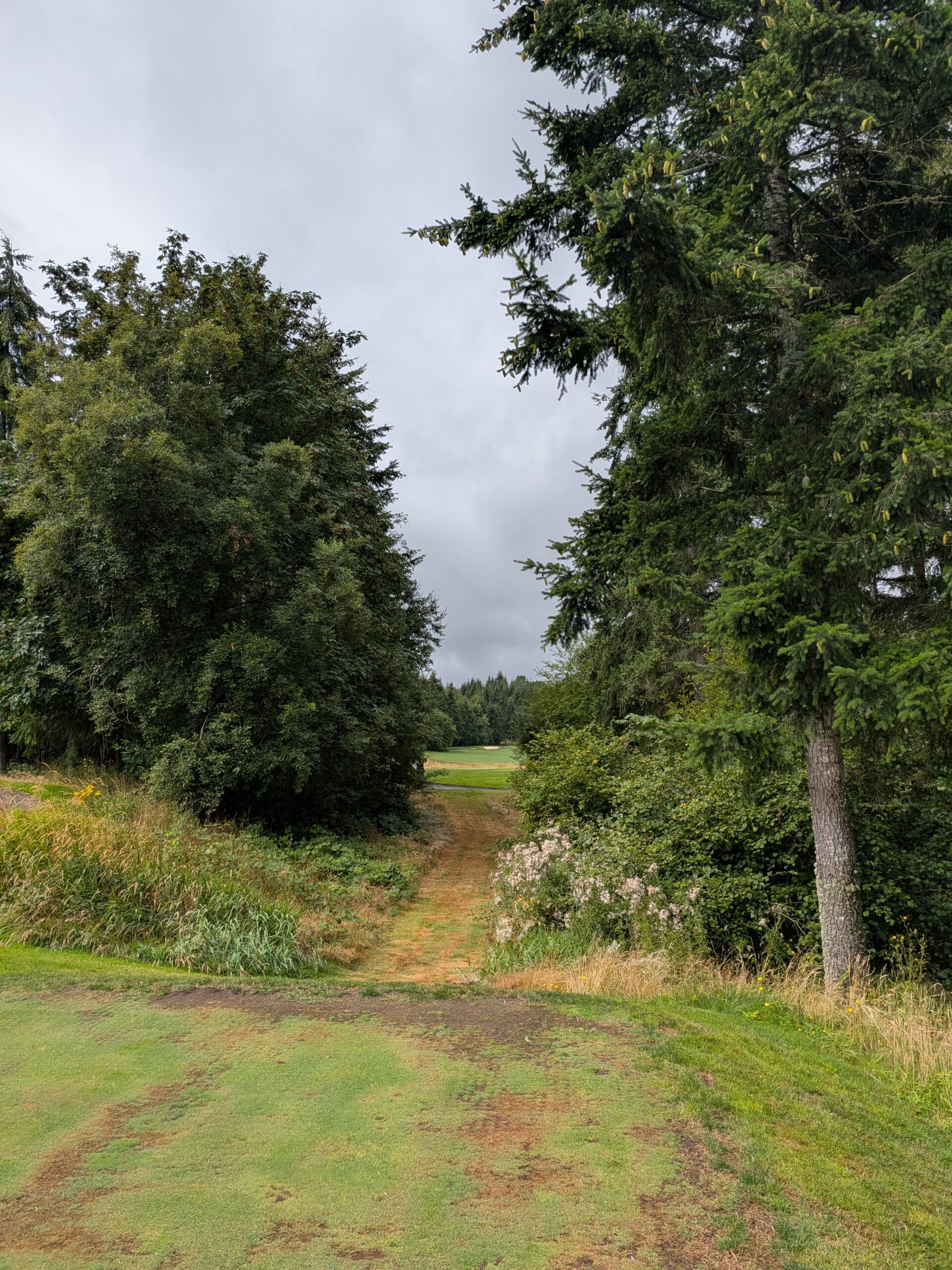
Limitations: As mentioned, Salish Cliffs was in good shape, except for a few of the back tees, where tree overgrowth and disrepair plagued some of the furthest back boxes. While Salish is thoughtfully designed, some of the concepts are quite cookie-cutter, and lack the time-and-place character that we talk about in our methodology. There are some really fun holes, half-par pairs, and plenty of fun to be had, but the limitations here are mostly the lack of any real risks being taken by Bates, other than perhaps the second and third.
Lastly, both an asset and a potential limitation: this place is brutally difficult and fun factor was not quite as high because of that. In the wind and rain, the third, seventh, ninth, long par-5 tenth were all very difficult holes, and the back-nine provides essentially no room to miss off the tee before an errant ball is lost forever. I’d personally like to see Salish Cliffs commit to a bit of tree removal (not a lot, and very targeted) to help open up some areas for misses and to avoid lost balls. Pace of play really stacked up on the back nine, due to moderate shots being unable to be found.
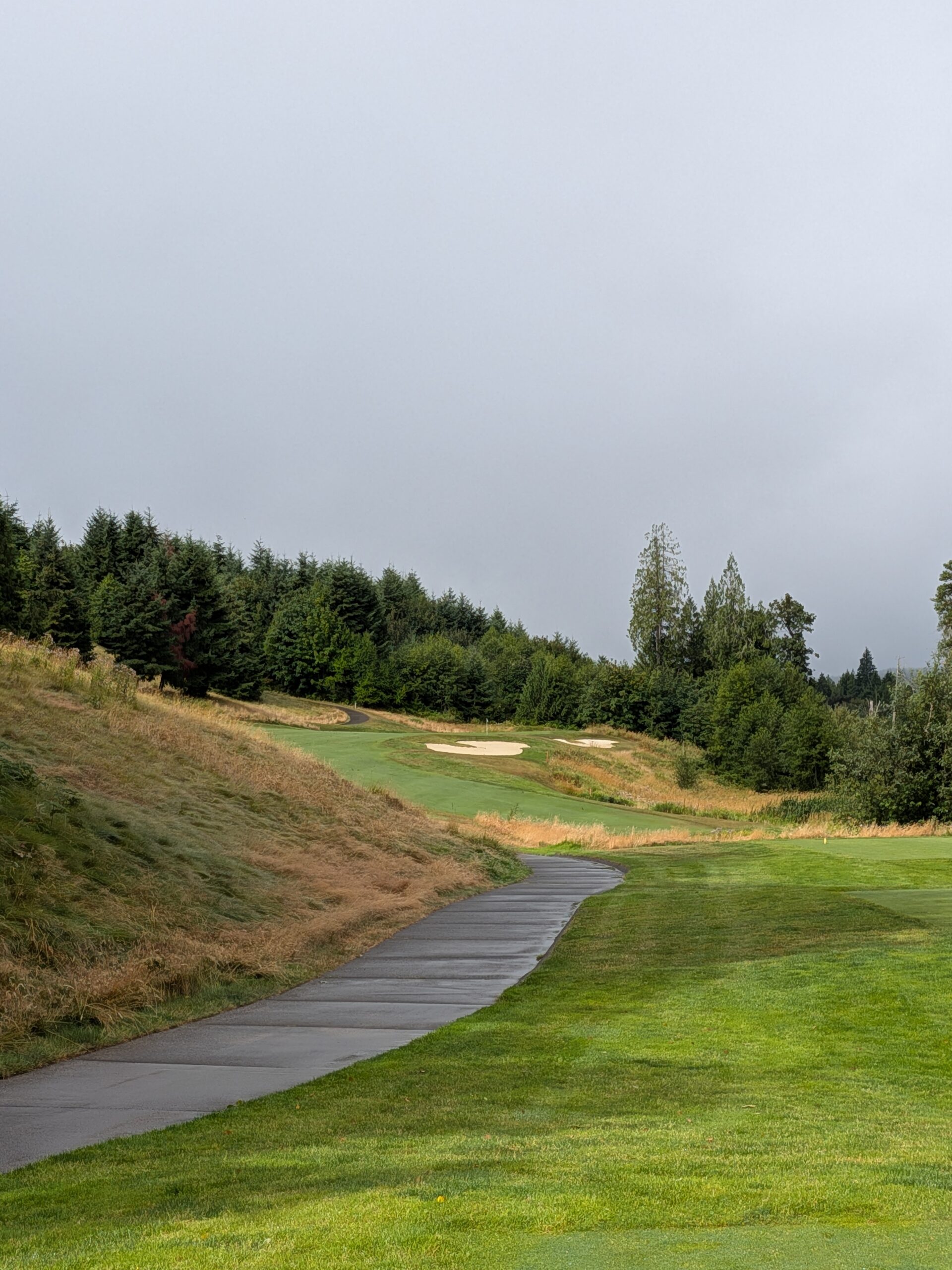
Final Thoughts: If in Seattle, I’d consider Salish Cliffs a must play. While I am not sure it is the best public course in the area (besides Chambers, of course), it is certainly among the best, and the level of challenge that this particular course is capable of handing out on windy days is rarely rivaled in the public golf space. With good enough conditioning, thoughtful design and routing, and great views all around the course, Salish Cliffs is a hit that should round out the best in State list in Washington.
CR&J Final Rating
of Salish Cliffs Golf Club:
Shot Options: 7; Challenge: 9; Layout Variety: 7; Distinctiveness: 7; Aesthetics: 8; Conditioning: 7; Character: 6; Fun: 7.
Total: 58/80 (Best in State List Contender)

Author: Kyle Taylor
Kyle is the lead course reviewer at The Course Review & Journal. Kyle has been playing golf for over twenty years, is a plus handicap, and actively competes in USGA and State Golf Association events. By trade, Kyle is an attorney.
Kyle Taylor is a pseudonym used by CR&J’s lead course reviewer to protect personal relationships. The reviews and opinions remain entirely the writer’s own.
Leave a Reply
You must be logged in to post a comment.